How Much Does It Cost to Build a Deck? 2026 Price & Material Breakdown
Discover how much it costs to build a deck in 2026. Get exact price breakdowns for wood, composite, and PVC materials, plus labor rates and hidden fees.
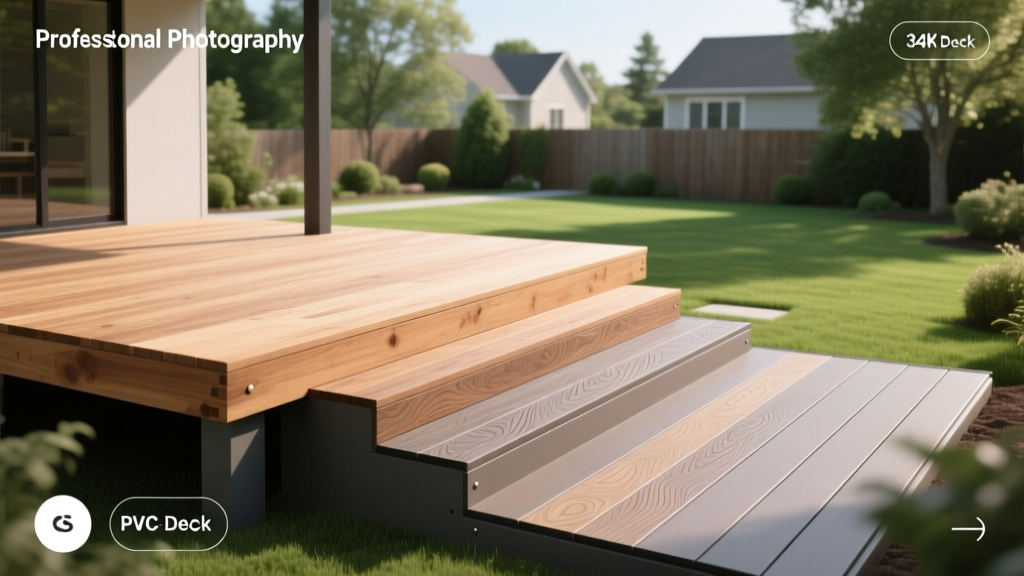
The True Cost of Building a Deck in 2026
Calculating the exact budget for an outdoor living space requires moving beyond national averages. In 2026, the cost to build a deck ranges from $45 to $160+ per square foot installed, heavily dependent on material selection, site accessibility, and structural complexity. A standard 200-square-foot pressure-treated wood deck averages $9,000 to $12,000, while a 300-square-foot advanced PVC build with aluminum railings and helical pile footings routinely exceeds $35,000.
According to Angi's deck cost database, labor accounts for 40% to 55% of the total project cost. However, framing upgrades, specialized footings, and premium railings are the actual variables that cause budget overruns. This guide deconstructs the pricing matrix for materials, structural labor, and hidden site-prep fees to provide an accurate financial blueprint for your project.
Quick Cost Snapshot (Per Square Foot Installed)
- Pressure-Treated Pine: $45 – $65 / sq. ft.
- Cedar / Redwood: $65 – $90 / sq. ft.
- Mid-Grade Composite: $80 – $110 / sq. ft.
- Advanced PVC / Premium Composite: $110 – $160+ / sq. ft.
Decking Material Costs per Square Foot
The surface boards dictate the aesthetic and maintenance profile of your deck, but they also represent the most volatile pricing tier. When evaluating composite and PVC options, you must factor in the required joist spacing. While wood decks can be framed at 16 inches on-center (O.C.), most composite and PVC manufacturers mandate 12-inch O.C. joist spacing to prevent sagging, which increases underlying framing lumber costs by 15% to 20%.
| Material Category | Specific Product Examples | Material Cost (Per Sq. Ft.) | Lifespan & Warranty |
|---|---|---|---|
| Pressure-Treated (PT) Pine | Southern Yellow Pine (Ground Contact) | $4.00 – $7.00 | 15-20 years (Requires annual sealing) |
| Natural Hardwoods | Western Red Cedar, Ipe, Cumaru | $8.00 – $18.00 | 20-30 years (High maintenance for Cedar; low for Ipe) |
| Mid-Grade Composite | Trex Select, Fiberon Promenade | $9.00 – $13.00 | 25-30 years (Fade & stain warranty) |
| Premium Composite | Trex Transcend Lineage, TimberTech Landmark | $12.00 – $16.00 | 30-50 years (Enhanced UV & scratch resistance) |
| Advanced PVC | AZEK Landmark, Wolf Serenity | $14.00 – $19.00 | 50+ years (Impervious to moisture and rot) |
For a comprehensive look at premium product lines and their specific weight-to-span ratios, refer to the official Trex decking specifications, which outline the structural requirements for their heavier capped-polymer boards.
Framing, Footings, and Structural Labor
Homeowners frequently miscalculate the substructure budget. The framing and footings must support the dead load of the materials plus a live load of 40 to 60 pounds per square foot (psf), as dictated by the International Residential Code (IRC).
Wood vs. Steel Framing
Standard #2 grade pressure-treated pine framing costs $8 to $12 per square foot. However, wood framing is susceptible to warping, twisting, and eventual rot at the joist hangers. In 2026, light-gauge steel framing systems (like Trex Elevate or Fortress Evolution) are increasingly popular for premium composite decks. Steel framing costs $14 to $22 per square foot but guarantees a perfectly flat substructure that will outlast the composite surface boards, eliminating the need to rebuild the frame when replacing deck boards in 30 years.
Helical Piles vs. Concrete Sonotubes
Traditional concrete footings require digging below the local frost line (often 36 to 48 inches deep), pouring Sonotubes, and waiting for the concrete to cure. This costs $75 to $150 per footing in labor and materials. Helical piles—steel shafts with helical plates screwed directly into the earth by hydraulic machinery—cost $250 to $450 per pile installed. While the upfront cost is higher, helical piles eliminate concrete curing time, prevent frost heave, and can be installed in a single day, ultimately saving 10% to 15% on total labor hours for large decks.
The Hidden Budget Killers
When contractors provide a base estimate, it rarely includes the ancillary structures and site-work required to make the deck functional and legally compliant. According to HomeGuide's contractor pricing reports, these secondary elements can add 20% to 35% to your final invoice.
- Railing Systems: Railings are priced per linear foot (LF), not square foot. PT wood railings cost $35–$55/LF. Composite railings run $70–$110/LF. Aluminum systems (like AFCO Pro) cost $120–$170/LF, while frameless glass panels easily exceed $250/LF.
- Stairs: Stairs are the most labor-intensive component. A standard 3-to-4 step stair stringer assembly costs $300 to $600 per linear run, factoring in custom tread cuts, risers, and specialized stair railings.
- Demo and Haul-Away: Tearing down an existing 200-square-foot wood deck and disposing of the debris at a local landfill costs $4 to $8 per square foot, adding $800 to $1,600 before new construction begins.
- Permits and Engineering: Municipal building permits range from $150 to $600. If your deck exceeds 30 inches in height, attaches to a masonry veneer, or requires complex multi-tier framing, a structural engineer's stamp will cost an additional $400 to $800.
- Electrical and Gas: Running a dedicated 20-amp GFCI circuit for outdoor outlets or low-voltage wiring for recessed stair riser lights adds $500 to $1,500. Routing a natural gas line for a built-in fire feature or grill station requires a licensed plumber and costs $800 to $2,500 depending on trenching distance.
Size Multipliers: Total Project Estimates
To translate per-square-foot metrics into real-world budgets, here are estimated total costs for three common deck footprints in 2026, assuming standard single-level elevation (under 30 inches high) and mid-grade composite materials with aluminum railings.
| Deck Dimensions | Total Square Footage | Estimated Cost (Composite/Aluminum) | Estimated Cost (PT Wood) |
|---|---|---|---|
| 10' x 10' (Small Patio) | 100 sq. ft. | $9,500 – $13,000 | $5,000 – $7,500 |
| 12' x 16' (Standard) | 192 sq. ft. | $18,000 – $24,500 | $9,500 – $13,500 |
| 16' x 20' (Large Entertaining) | 320 sq. ft. | $31,000 – $42,000 | $16,000 – $22,000 |
| 16' x 20' (Multi-Level + Stairs) | 320 sq. ft. + Stairs | $45,000 – $60,000+ | $24,000 – $32,000 |
Notice the exponential cost jump when transitioning from a single-level pad to a multi-level design. Multi-level decks require additional support beams, doubled-up structural posts, complex stair integration, and significantly more linear feet of railing, all of which drive up both material and labor expenses.
Frequently Asked Questions
Does adding a deck increase home resale value?
Yes, but the return on investment (ROI) depends on the material. According to Remodeling Magazine's Cost vs. Value data, a mid-range wood deck replacement yields an average ROI of 70% to 75%, while a high-end composite deck yields roughly 55% to 65%. However, composite decks offer a superior lifestyle ROI by eliminating 15 to 20 hours of annual sanding, staining, and sealing.
Can I save money by building the deck myself?
A highly skilled DIYer can save the 40% to 55% labor premium by self-performing the work. However, composite decking requires specialized hidden fastener systems, precise miter cuts to avoid exposing the inner core, and strict adherence to manufacturer expansion gap tolerances. Voiding a 30-year composite warranty due to improper 12-inch O.C. joist spacing or inadequate ventilation beneath the deck is a common and costly DIY failure mode.
How do I protect my deck budget from material price spikes?
Lumber and petroleum-based composite prices fluctuate based on supply chain constraints and raw material indices. To lock in pricing, purchase your primary surface materials, framing lumber, and fasteners 60 to 90 days before your planned build date and store them in a dry, climate-controlled garage. Many local lumber yards will hold priced inventory for up to 30 days if a deposit is placed.
Written by
James ThorntonJames Thornton is a construction industry veteran with 25 years of hands-on experience in wood framing, lumber grading, and residential building codes. He started as a framing carpenter in rural Oregon, earned his ICC Residential Building Inspector certification, and eventually became a senior plan reviewer for the City of Portland Bureau of Development Services. James holds a B.S. in Wood Science & Technology from Oregon State University and is a certified lumber grader through the West Coast Lumber Inspection Bureau (WCLIB). He has inspected over 3,000 residential construction sites and authored the city's internal guide on advanced framing techniques (2x6 at 24" O.C.). James lives in Bend, OR, where he builds custom timber-frame cabins and competes in lumberjack sports.
More from James Thornton
View all
Insulation
Best Home Insulation Materials: Complete 2026 Guide
Compare top home insulation materials for 2026. Find R-values, installed costs per square foot, and best uses for fiberglass, spray foam, and mineral wool.
Aug 4, 2026

Sustainable Building
Certify Your Green Building Material for LEED and WELL
Step-by-step guide to certifying a green building material for LEED v5 and WELL v2. Master EPDs, HPDs, and VOC limits for 2026 project specifications.
Aug 4, 2026

Stone & Masonry
Veneer Stacked Stone Panels: Interior Design & Style Showcase
Discover how veneer stacked stone panels transform interiors. Explore modern design profiles, material pairings, and technical installation specs.
Aug 4, 2026