Deck Flashing Material Guide: Protecting Ledgers, Joists & Posts
Compare the best deck flashing material options. Learn how to specify copper, PVC, and butyl tape to protect ledger boards, joists, and posts from water damage.
Introduction
Deck flashing material and ledger flashing are essential components for protecting your deck from water damage and ensuring its longevity. This guide is designed for homeowners, DIY enthusiasts, and professional builders looking to understand the best materials, installation techniques, and maintenance practices for deck and ledger flashing.
- Aluminum, copper, and galvanized steel are the most common deck flashing materials.
- Ledger flashing is crucial for preventing water intrusion between the house and the deck.
- Proper installation and regular maintenance can extend the life of your deck by up to 20 years.
Understanding Deck Flashing Material
What is Deck Flashing?
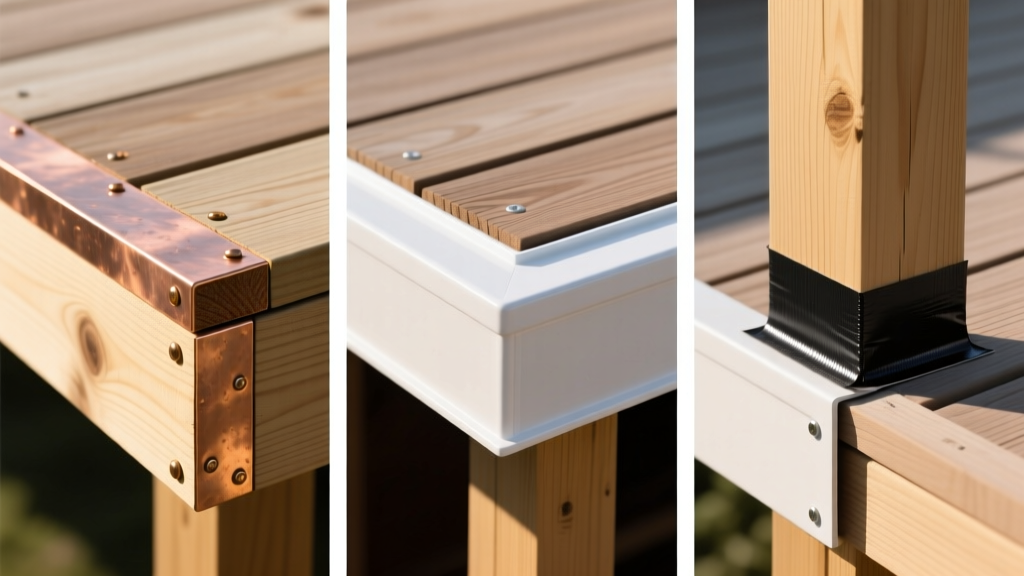
Deck flashing is a thin, waterproof material installed at critical points on a deck to prevent water infiltration. It is typically used around the perimeter, along the ledger board, and at any joints or seams where water could enter. The primary function of deck flashing is to direct water away from vulnerable areas, such as the interface between the deck and the house, and to protect the underlying structure from moisture damage.
Common Types of Deck Flashing Materials
The most common types of deck flashing materials include:
- Aluminum: Lightweight, durable, and easy to work with. Aluminum flashing is resistant to corrosion and can last up to 15 years. It is also cost-effective, with prices ranging from $0.50 to $1.50 per linear foot.
- Copper: Highly durable and aesthetically pleasing. Copper flashing can last over 50 years and develops a natural patina that enhances its appearance. However, it is more expensive, with prices ranging from $2.00 to $4.00 per linear foot.
- Galvanized Steel: Strong and affordable, galvanized steel flashing is treated with a zinc coating to resist rust and corrosion. It can last up to 20 years and costs between $0.75 and $1.25 per linear foot.
Installation Tips for Deck Flashing
Proper installation is key to the effectiveness of deck flashing. Here are some essential tips:
- Ensure the surface is clean and dry before installing the flashing.
- Use a high-quality sealant, such as silicone or polyurethane, to create a watertight seal.
- Overlap the flashing by at least 2 inches to prevent water from seeping through.
- Secure the flashing with screws or nails, making sure not to puncture the material.
Ledger Flashing: Protecting the Connection Point
What is Ledger Flashing?
Ledger flashing is a specific type of deck flashing installed behind the ledger board, which is the horizontal piece of wood that attaches the deck to the house. The purpose of ledger flashing is to prevent water from entering the gap between the ledger board and the house, which can cause structural damage and rot.
Importance of Ledger Flashing
Ledger flashing is crucial because the connection point between the deck and the house is one of the most vulnerable areas for water intrusion. Without proper flashing, water can seep into the wall, leading to mold, rot, and structural issues. According to the North American Deck and Railing Association (NADRA), proper ledger flashing can extend the life of your deck by up to 20 years.
Types of Ledger Flashing
The most common types of ledger flashing include:
- Z-Flashing: A Z-shaped piece of metal that is installed behind the ledger board. It directs water away from the house and down the face of the ledger.
- Continuous Membrane: A continuous sheet of waterproof material, such as rubber or EPDM, that is installed behind the ledger board to create a seamless barrier.
- Drip Cap: A small, L-shaped piece of metal installed at the top of the ledger board to direct water away from the joint.
Maintenance and Longevity
Regular Inspection
To ensure the effectiveness of your deck flashing, it is important to perform regular inspections. Check for signs of wear, such as cracks, holes, or loose fastenings. Replace any damaged sections immediately to prevent water from entering the deck structure.
Cleaning and Sealing
Keep the flashing clean and free from debris. Use a soft brush or cloth to remove dirt and leaves. Apply a new coat of sealant every 3 to 5 years to maintain a watertight seal.
Comparison of Deck Flashing Materials
| Material | Cost (per linear foot) | Lifespan | Pros | Cons |
|---|---|---|---|---|
| Aluminum | $0.50 - $1.50 | Up to 15 years | Lightweight, durable, easy to install | Can be dented or scratched |
| Copper | $2.00 - $4.00 | Over 50 years | Highly durable, aesthetically pleasing | Expensive, requires professional installation |
| Galvanized Steel | $0.75 - $1.25 | Up to 20 years | Strong, affordable, corrosion-resistant | Heavier, may require additional support |
Frequently Asked Questions (FAQs)
What is the best material for deck flashing?
The best material for deck flashing depends on your budget and aesthetic preferences. Aluminum is cost-effective and easy to install, while copper is highly durable and visually appealing. Galvanized steel is a strong and affordable option.
How often should I replace deck flashing?
Deck flashing should be replaced if it shows signs of wear, such as cracks, holes, or loose fastenings. Generally, aluminum and galvanized steel flashing can last up to 15-20 years, while copper can last over 50 years.
Is ledger flashing necessary for all decks?
Yes, ledger flashing is necessary for all decks attached to a house. It prevents water from entering the gap between the ledger board and the house, which can cause significant structural damage and rot.
Conclusion
Deck flashing material and ledger flashing are critical for protecting your deck from water damage and ensuring its longevity. By choosing the right materials, following proper installation techniques, and performing regular maintenance, you can extend the life of your deck by up to 20 years. For more detailed information and step-by-step guides, visit the North American Deck and Railing Association (NADRA).
Written by
Marcus ChenMarcus Chen is a licensed structural engineer (PE) and building materials analyst with over 12 years of experience across residential, commercial, and industrial construction. He holds a Master of Science in Civil Engineering from UC Berkeley and spent six years at Thornton Tomasetti before transitioning to independent consulting and technical writing. Marcus specializes in material selection for seismic-prone regions, concrete reinforcement strategies, and lifecycle cost analysis. His work has been cited by the American Concrete Institute (ACI) and the Structural Engineers Association of California (SEAOC). When he is not on a job site or at his desk, you will find him hiking the Sierra Nevada or restoring a 1920s craftsman bungalow in Oakland, CA.
More from Marcus Chen
View all
Construction Cost
How Much Did the Eiffel Tower Cost to Build?
How much did the Eiffel Tower cost to build in 1889? We adjust for inflation and compare its budget to modern skyscraper construction.
Aug 4, 2026

Fire Resistance
What Is a Fire Resistant Material? Testing & Certification Guide
Discover what is a fire resistant material through ASTM and UL testing. Learn how fire ratings, certifications, and assemblies work in construction.
Aug 4, 2026

Construction Cost
How Much Did the Burj Khalifa Cost to Build?
How much did the Burj Khalifa cost to build? We break down the $1.5B project and extract 5 money-saving strategies for your next build.
Jul 30, 2026