Best Deck Material Falmouth: Coastal Selection Framework
Evaluate the best deck material for Falmouth's coastal climate. Compare PVC, aluminum, and composite using our salt, wind, and code selection framework.
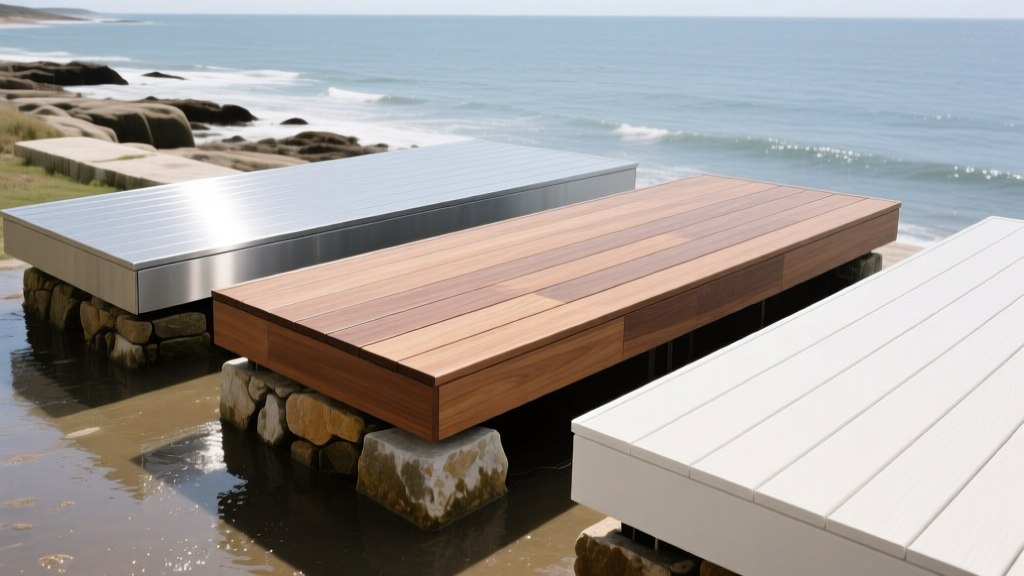
The Falmouth Microclimate Stress Profile
Selecting the right deck material in Falmouth requires moving beyond standard aesthetic preferences and confronting the aggressive realities of the coastal New England microclimate. Whether your property borders Vineyard Sound, Buzzards Bay, or one of the local estuaries, your outdoor structure will face a triad of environmental stressors that rapidly degrade inferior materials.
- Salt Aerosol Exposure: Constant marine layer deposits corrosive salt crystals on horizontal and vertical surfaces.
- Wind Load: Falmouth falls under Wind Zone III, requiring structures to withstand 130 mph ultimate design wind speeds (per 780 CMR MA State Building Code).
- Freeze-Thaw Cycles: Winter temperatures fluctuate across the freezing point, causing water trapped in porous materials to expand and fracture.
- UV Degradation: Unobstructed southern and western exposures over water amplify UV radiation, accelerating thermal expansion and color fading.
Standard pressure-treated pine and uncapped wood-plastic composites fail prematurely in this environment. Moisture intrusion leads to rot, while salt accelerates the corrosion of standard fasteners, compromising the structural integrity of the entire deck. To build a resilient outdoor space, you must apply a rigorous selection framework that prioritizes moisture impermeability, UV stability, and wind-uplift resistance.
Material Evaluation Matrix for Coastal Zones
The following matrix evaluates the top decking categories against the specific environmental and regulatory demands of Falmouth. Costs reflect 2026 material-only pricing per square foot.
| Material Category | Salt Tolerance | Wind Uplift Rating | Moisture Absorption | Est. Cost / Sq Ft |
|---|---|---|---|---|
| Capped Polymer (PVC) | Excellent | High (w/ hidden clips) | 0% (Impervious) | $12.00 - $16.00 |
| Marine Aluminum | Superior | Superior (interlocking) | 0% (Impervious) | $16.00 - $22.00 |
| Capped Composite | Very Good | Moderate | < 1% (Core exposure risk) | $9.00 - $13.00 |
| Tropical Hardwood (Ipe) | Good (requires sealing) | High (face screwed) | Low (but swells/shrinks) | $14.00 - $19.00 |
Top-Tier Decking Solutions for Falmouth
Capped Polymer (PVC) Decking: The Coastal Standard
For properties within 1,500 feet of the shoreline, capped polymer decking is the optimal balance of performance and aesthetics. Unlike composite, which contains wood flour in its core, high-end PVC boards like the Azek Landmark Series or Trex Transcend Lineage are manufactured from 100% synthetic materials. This means there is zero organic matter for mold, mildew, or moisture to attack.
Thermal Expansion Management: PVC expands and contracts more than wood. In Falmouth, where summer deck surface temperatures can reach 140°F and winter temps drop below 20°F, you must follow the manufacturer’s gapping specifications precisely. For 16-foot boards installed at 50°F, leave a 1/8-inch gap at the butt joints. Always use the manufacturer's proprietary hidden fastening system, which allows for longitudinal movement while securing the board against wind uplift.
Marine-Grade Aluminum: The Zero-Maintenance Fortress
If your budget allows, marine-grade extruded aluminum decking (such as Wahoo Decks or LockDry) provides unmatched resilience. Aluminum is entirely immune to salt corrosion, rot, and insect damage. Furthermore, interlocking aluminum deck boards create a watertight seal, making them ideal for second-story decks in Falmouth where protecting the lower-level patio or storage space from rain and snowmelt is required. The powder-coated finishes used on modern aluminum decking are rated for AAMA 2604 standards, ensuring they will not chalk or fade under intense coastal UV exposure.
The Hidden Vulnerability: Framing and Fasteners
The most common point of failure on coastal decks is not the decking board itself, but the substructure and hardware. The American Wood Council’s Prescriptive Residential Wood Deck Construction Guide (DCA-6) outlines strict requirements for hardware in corrosive environments.
Critical Fastener Specification: Standard hot-dipped galvanized (HDG) hardware will corrode rapidly in Falmouth's salt air. For any property located within 3,000 feet of saltwater, you must specify Type 316 Marine-Grade Stainless Steel for all structural fasteners, joist hangers, and post bases. Type 304 stainless steel is insufficient for direct salt spray zones.
Framing Material Selection: While ground-contact rated pressure-treated Southern Yellow Pine (UC4A or UC4B) is the baseline, the high water table and driving rain in Falmouth can lead to premature joist rot. To maximize the lifespan of your deck, apply a self-adhering butyl flashing tape (like Trex Protect or Grace Deck Protector) to the top of every joist and ledger board before laying the decking. This prevents water from pooling in the screw holes and rotting the wood from the inside out. For ultimate longevity, upgrade to light-gauge steel framing, such as Trex Elevate, which is impervious to moisture and offers superior wind-uplift resistance due to its rigid mechanical connections.
Navigating Falmouth Zoning and Wind Load Codes
Building a deck in Falmouth requires navigating both the Massachusetts State Building Code (780 CMR) and local conservation restrictions. Because Falmouth is situated on the coast, many properties fall within designated Flood Zones (AE or VE). If your property is in a VE zone (coastal high-hazard area with wave action), your deck must either be designed as a breakaway structure that yields to wave forces without compromising the main house, or it must be engineered to withstand the specific hydrodynamic loads calculated by a licensed structural engineer.
Furthermore, the FEMA Coastal Construction guidelines emphasize the importance of continuous load paths. In Falmouth’s 130 mph wind zone, your deck ledger board cannot rely solely on lag screws. You must use through-bolts with structural washers, and the joists must be tied to the ledger and rim joist using hurricane ties rated for the specific uplift calculations of your site. Always consult the Falmouth Building Department and the local Conservation Commission regarding setbacks from coastal banks, salt marshes, and vernal pools before finalizing your footprint.
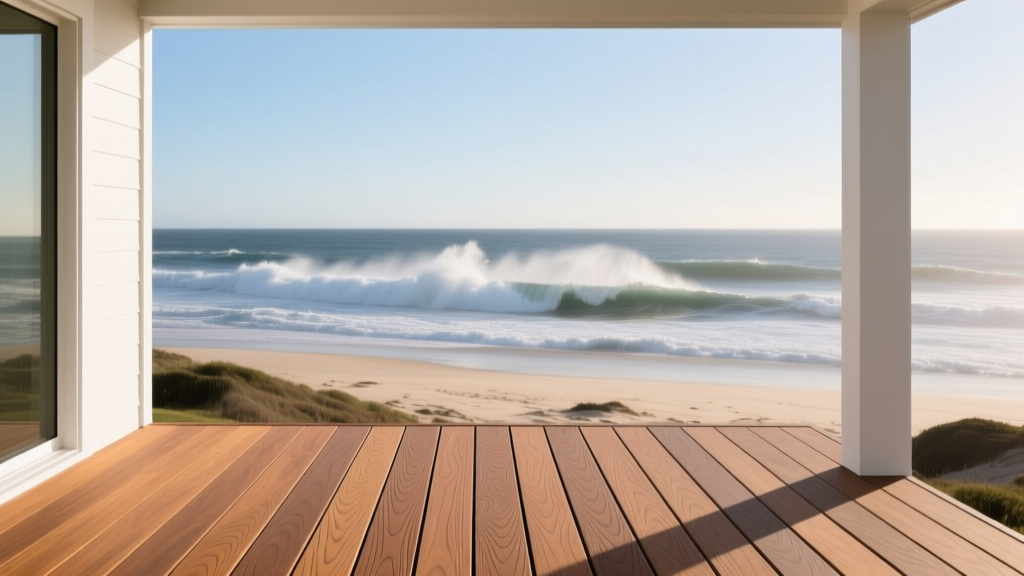
The Falmouth Deck Selection Decision Tree
Use this step-by-step framework to finalize your material and structural choices based on your specific property conditions:
- Assess Proximity to Saltwater:
- Under 1,000 feet: Mandate Type 316 Stainless Steel fasteners and PVC or Aluminum decking. Avoid exposed wood cores entirely.
- 1,000 to 3,000 feet: Type 304 Stainless or heavy HDG fasteners are acceptable. High-quality capped composite becomes a viable option.
- Determine Wind Exposure Category:
- Open waterfront (Exposure D): Reduce joist spacing from 16" on-center to 12" on-center to minimize decking deflection and increase wind-uplift resistance. Use hidden fasteners with secondary face-screwing at the perimeter.
- Evaluate Site Drainage and Elevation:
- Low-lying / poor drainage: Do not use wood framing. Upgrade to steel framing or heavily protected pressure-treated lumber with comprehensive joist taping to prevent ground-level moisture wicking.
- Define Maintenance Tolerance:
- Zero maintenance required: Select Capped PVC or Aluminum. Never choose Tropical Hardwoods, which require annual UV-inhibitor oil applications to prevent graying and checking in the coastal sun.
By aligning your material selections with the empirical data of Falmouth's coastal environment and adhering strictly to marine-grade hardware standards, you ensure your outdoor living space remains structurally sound and visually pristine for decades, rather than requiring premature reconstruction.
Written by
Sarah WhitfieldSarah Whitfield is a chartered quantity surveyor (MRICS) and construction cost analyst with 15 years of experience in material pricing, procurement strategy, and project budgeting. She earned her degree in Construction Management from the University of Reading (UK) and has worked on projects ranging from $2M custom homes to $180M mixed-use developments across North America and Europe. Sarah currently leads cost estimating for BuildMat Insight, maintaining a proprietary database of 4,000+ material price points updated quarterly. She is a frequent contributor to RSMeans cost data panels and has presented at the International Cost Engineering Council (ICEC) congress. Based in Denver, CO, Sarah is an avid trail runner and volunteer mentor for Women in Construction.
More from Sarah Whitfield
View all
Wood & Lumber
What Are the Different Types of Wood? A Builder's Guide
Compare structural softwoods, finish hardwoods, and engineered lumber. Analyze Janka ratings, MOE values, and 2026 pricing for construction.
Aug 4, 2026

Walls & Panels
Steel Framing vs Wood Framing: Corrosion and Moisture Defense
Compare steel framing vs wood framing for moisture resistance. Learn about galvanized coatings, condensation risks, and corrosion protection strategies.
Jul 21, 2026

Stone & Masonry
How to Cut Stone Veneer: Wet Saw vs Grinder Comparison
Compare the best tools for cutting stone veneer. We review wet saws, angle grinders, and chop saws to help you achieve clean, chip-free cuts.
Jul 21, 2026