How to Choose the Best Marine Decking Material for Dock Design
Plan your waterfront dock with our expert guide to marine decking material. Compare PVC, composite, aluminum, and modified wood for durability and safety.
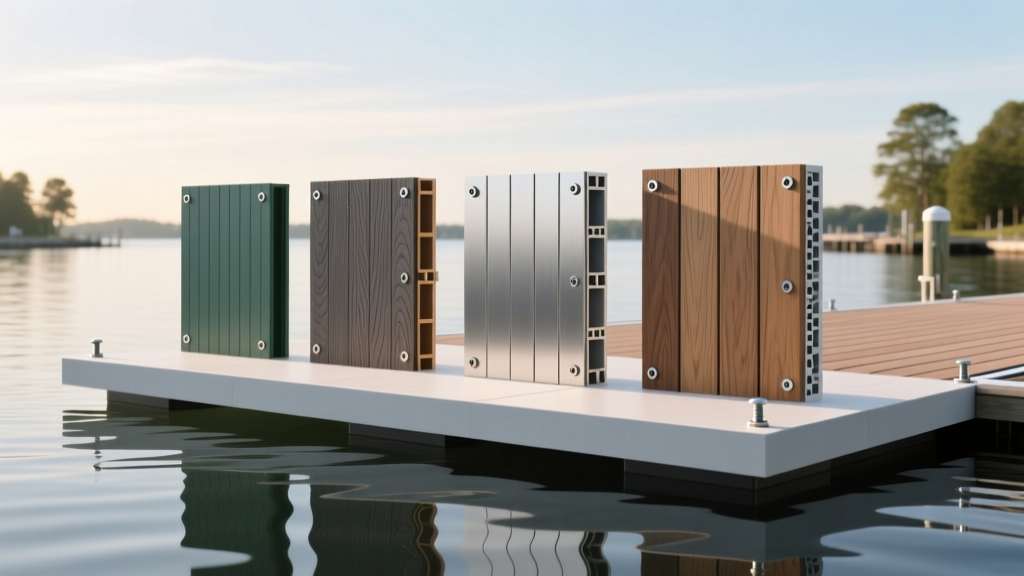
The Unique Engineering Demands of Waterfront Environments
Designing a dock or pier requires fundamentally different engineering parameters than a standard backyard deck. Waterfront structures face continuous hydrostatic pressure, salt spray, biological fouling (barnacles and algae), and dynamic wave loads. Furthermore, the 'albedo effect'—where water surfaces reflect up to 20% additional UV radiation onto the underside of the deck—accelerates material degradation and thermal expansion. Selecting the correct marine decking material is not merely an aesthetic choice; it is a structural necessity that dictates the lifespan and safety of the entire installation.
Dark-colored composite or wood decking over water can reach surface temperatures exceeding 160°F in direct summer sunlight due to reflected UV rays. This extreme heat accelerates thermal expansion, increases the risk of fastener back-out, and creates barefoot burn hazards. Always specify lighter colorways or high-reflectance materials for south-facing marine applications.
Marine Decking Material Comparison Matrix
The table below outlines the physical properties and 2026 market pricing for the four primary categories of marine-grade decking. Costs reflect material-only pricing per square foot and do not include specialized marine framing or labor.
| Material Type | Water Absorption | Thermal Expansion | Avg. Cost (2026) | Best Application |
|---|---|---|---|---|
| Capped Polymer (PVC/ASA) | 0.0% - 0.5% | High (Requires gapping) | $9.50 - $14.00 / sq ft | Saltwater docks, high-splash zones |
| Marine-Grade Aluminum | 0.0% | Low | $16.00 - $24.00 / sq ft | Commercial marinas, floating docks |
| Thermally Modified Wood | 2.0% - 4.0% | Moderate | $11.00 - $16.50 / sq ft | Freshwater lake docks, aesthetic focus |
| Capped Wood Composite | 1.0% - 3.0% | Moderate to High | $7.50 - $11.50 / sq ft | Covered boat slips, budget-conscious |
Deep Dive: Top Material Categories for Dock Projects
Capped Polymer (PVC/ASA): The Moisture Impermeable Choice
Capped polymer decking, such as TimberTech AZEK Landmark or Wolf Serenity, contains zero organic wood flour. This makes it entirely immune to rot, mold, and water absorption. In marine environments where the substructure is frequently submerged or subjected to heavy tidal splash, PVC is the premier choice. However, PVC has a high coefficient of thermal expansion. Installers must strictly adhere to manufacturer gapping charts, typically requiring a 1/8-inch expansion gap for every 10°F temperature change per 10-foot board length. Failure to account for this will result in severe board buckling during peak summer heat.
Marine-Grade Aluminum: Zero Absorption and High Strength
Extruded aluminum decking, like Wahoo Decks Ariddek, utilizes 6005-T5 marine-grade aluminum alloy. This material offers the highest strength-to-weight ratio and features an interlocking tongue-and-groove profile that creates a watertight seal, protecting the wooden substructure beneath from rot. Aluminum is naturally corrosion-resistant, but in saltwater environments, the powder-coated finish must be inspected for scratches. If the raw aluminum is exposed to salt spray, galvanic corrosion can occur if it comes into direct contact with dissimilar metals like standard steel joist hangers. Always use insulated fasteners and specialized aluminum-compatible joist tape.
Thermally Modified Wood: The Natural Aesthetic
For designers seeking the authentic look of wood without the rapid decay of pressure-treated lumber, thermally modified ash (e.g., Thermory Benchmark) is highly effective. The wood is heated to 410°F (210°C) in a low-oxygen environment, altering its cellular structure to reduce moisture absorption by up to 50% and increasing its natural decay resistance to Class 1 durability. Unlike traditional hardwoods like Ipe, which require annual oiling to prevent graying, thermally modified wood is designed to weather to a uniform silver patina. It must be face-screwed using specialized trim-head screws, as hidden clip systems can split the brittle end-grain of modified timber.
Critical Framing and Fastener Specifications
The best marine decking material will fail prematurely if the substructure and fasteners are improperly specified. Marine framing requires strict adherence to the following parameters:
- Joist Spacing: Standard residential decks utilize 16-inch on-center (OC) joist spacing. Marine docks must be framed at 12-inch OC for 5/4-inch decking. This tighter spacing prevents 'bounce' under dynamic loads (e.g., rolling heavy coolers or boat carts) and mitigates sagging caused by continuous moisture exposure.
- Fastener Metallurgy: Never use 304-grade stainless steel in a marine environment. 304 stainless is susceptible to crevice corrosion under the screw head when exposed to salt or the chemical preservatives in treated lumber. You must specify 316-grade (Marine Grade) stainless steel fasteners, such as those from Simpson Strong-Tie or DeckWise, which contain molybdenum to resist pitting.
- End-Grain Sealing: If using capped composite decking, every single cut end must be sealed with a polyurethane-based end-grain sealer. In a marine environment, capillary action will wick moisture into the exposed wood-flour core of an unsealed cut, leading to edge-swelling and eventual delamination of the polymer cap.
Slip Resistance and Accessibility Standards
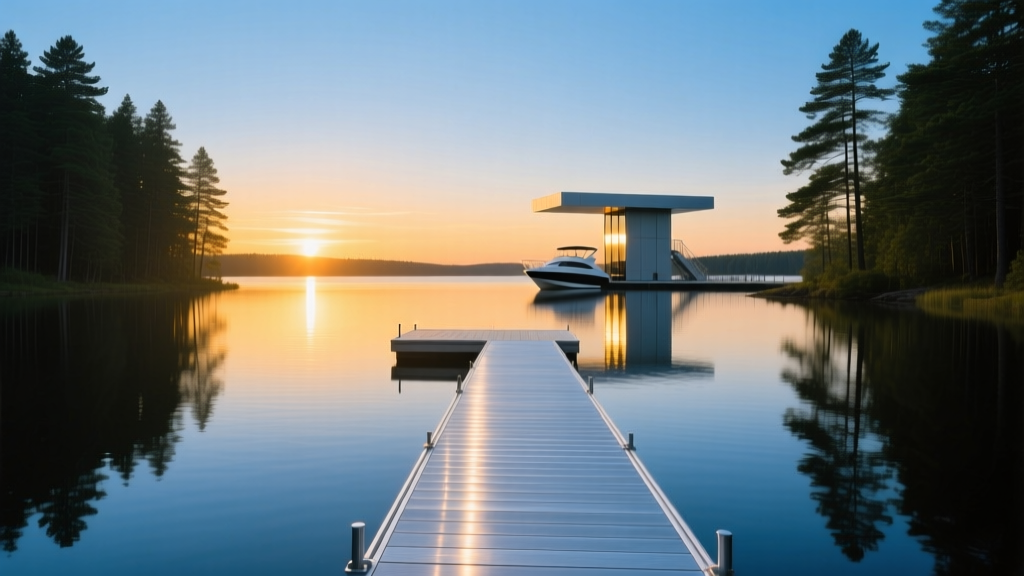
Docks are inherently high-risk slip zones due to algae growth, morning dew, and water runoff. When planning your marine decking material, you must evaluate the surface traction against established safety standards. The ADA Standards for Accessible Design mandate that accessible routes, which often include public marina boardwalks, feature stable, firm, and slip-resistant surfaces. While the ADA does not prescribe a specific numerical coefficient of friction (COF), industry best practices for marine environments require a minimum dynamic COF of 0.50 under wet conditions, tested per ANSI A326.3. Embossed wood-grain patterns on PVC and extruded grip-struts on aluminum decking typically perform best in wet traction testing.
Environmental Regulations and Permitting
Waterfront construction is heavily regulated to protect riparian ecosystems. Before finalizing your material selection, consult local coastal commissions and review federal guidelines. The FEMA P-499 Home Builder's Guide to Coastal Construction provides exhaustive parameters for material durability in high-velocity wave zones and salt-spray environments. Furthermore, avoid materials that leach heavy metals or chemical preservatives (like older CCA-treated wood) into the water column. The USDA Forest Products Laboratory Wood Handbook details the leaching rates of various treated woods, reinforcing the preference for inert materials like PVC, aluminum, or naturally modified timber in sensitive ecological zones. Always verify that your chosen marine decking material complies with local Department of Environmental Protection (DEP) regulations regarding over-water structures.
Written by
David NakamuraDavid Nakamura is a licensed architect (AIA) and construction technology writer focused on sustainable building methods, mass timber engineering, and high-performance building envelopes. He holds a Master of Architecture from the University of Washington and is a certified Passive House Consultant (CPHC). David spent eight years at the Seattle firm Mithun, where he led the design of three LEED Platinum projects, before founding his own practice specializing in net-zero residential design. He serves on the editorial advisory board of GreenBuilder Magazine and has authored peer-reviewed papers on cross-laminated timber (CLT) connections for the Journal of Structural Engineering. In his spare time, David teaches woodworking at Pratt Fine Arts Center and kayaks the Puget Sound.
More from David Nakamura
View all
Construction Cost
Labor Cost to Build a Deck Per Sq Ft: 2026 Installation Guide
Discover the exact labor cost to build a deck per sq ft in 2026. This installation guide breaks down contractor rates, complexity factors, and hidden fees.
Aug 4, 2026

Construction Cost
How Much Does It Cost to Build a 3 Bedroom House? Financing Guide
Learn exactly how much it costs to build a 3 bedroom house and explore 2026 financing options, construction loan types, and budget frameworks for your build.
Aug 4, 2026

Construction Cost
Cost to Build a Tennis Court: 2026 Guide
How much does it cost to build a tennis court in 2026? Breakdowns for asphalt, concrete, and synthetic surfaces plus fencing and lighting.
Jul 30, 2026