Maintenance Guide for All Types of Composite Decking Material
Learn the exact cleaning, sealing, and repair protocols for every type of composite decking material, from capped WPC to advanced PVC and MBC.
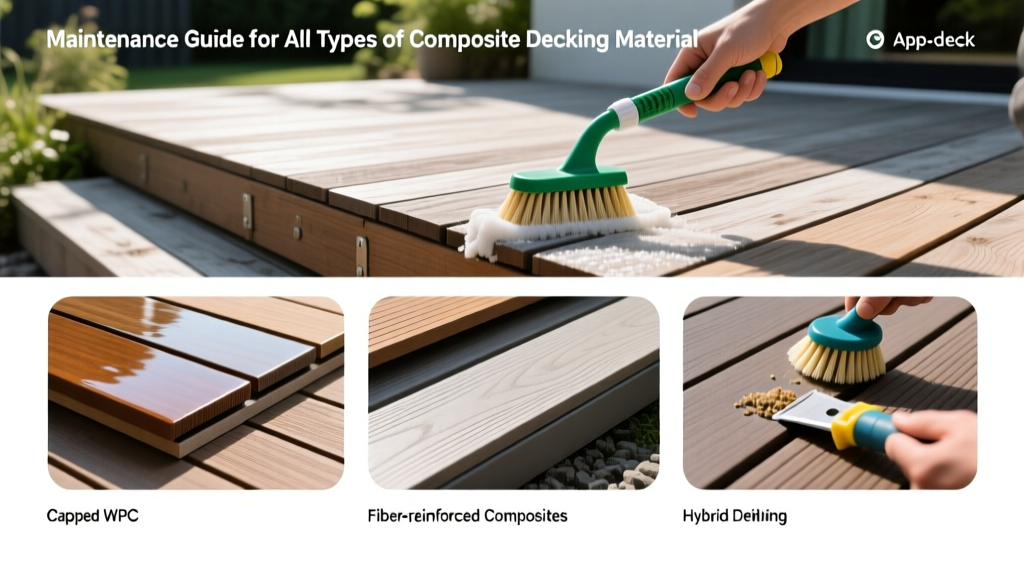
The Composite Decking Misconception: Why Material Type Dictates Care
The term 'composite' is frequently used as a catch-all, leading homeowners to apply uniform cleaning methods across vastly different chemical structures. In reality, the maintenance required to preserve your deck's warranty and aesthetic lifespan depends entirely on the specific types of composite decking material installed. Applying a harsh degreaser to an advanced polymer board can melt the cap, while using a mild soap on a first-generation uncapped board will fail to prevent black mold infiltration.
This guide breaks down the exact chemical compatibilities, mechanical cleaning limits, and seasonal protocols for the four primary categories of composite and synthetic decking available on the market today.
Breakdown of Composite Decking Types & Specific Maintenance Protocols
1. Capped Wood-Plastic Composite (WPC)
Capped WPC represents the majority of the modern market (e.g., Trex Transcend, TimberTech Edge). These boards feature a core of wood flour and recycled high-density polyethylene (HDPE) wrapped in a protective polymer shell.
- Routine Cleaning: Use a mixture of warm water and a mild, non-abrasive dish soap (like Dawn) or a dedicated composite deck wash. Apply with a soft-bristle brush, following the direction of the embossed wood grain to prevent dirt from packing into the texture.
- Mold and Mildew: The polymer cap prevents organic matter from penetrating, meaning mold grows on the surface, not in it. Use an oxygen-based bleach (sodium percarbonate) to kill spores without degrading the polymer shell.
- Strictly Avoid: Chlorine bleach (sodium hypochlorite) and acetone. Chlorine bleach can strip the UV inhibitors from the cap, leading to premature fading, while acetone will chemically melt the polyethylene shell.
2. Advanced PVC (Capped Polymer)
Advanced PVC boards (e.g., AZEK Landmark, TimberTech Advanced PVC) contain zero wood flour. They are constructed from cellular PVC wrapped in a high-performance polymer alloy cap.
- Stain Resistance: Because there is no organic wood fiber to absorb liquids, PVC is highly resistant to tannin bleed and grease stains. Most spills can be wiped away with standard household glass cleaner or isopropyl alcohol.
- Scratch Mitigation: PVC is softer than WPC. Avoid metal shovels and stiff wire brushes. If minor surface scuffs occur on a PVC board, a heat gun set to low (held 6 inches away) can gently melt and blend the scratched polymer back into the surrounding grain.
- Strictly Avoid: Paint thinners, nail polish remover, and concentrated degreasers. These solvents will permanently cloud the matte finish of the polymer cap.
3. Mineral-Based Composite (MBC)
MBC (e.g., Deckorators Voyage) replaces wood flour with ground minerals mixed with polypropylene. This results in a board with virtually zero water absorption and high dimensional stability.
- Ground Contact Advantage: MBC can be installed in direct ground or water contact without rotting. Maintenance here focuses purely on surface debris.
- Cleaning Protocol: Standard deck washes work perfectly. Because MBC does not expand and contract with moisture like WPC, dirt rarely gets trapped in micro-fissures. A simple rinse with a garden hose is often sufficient for weekly upkeep.
4. Uncapped WPC (First-Generation Legacy)
If your deck was built before 2012, it likely features uncapped WPC. The wood fibers are exposed to the elements, making these boards highly susceptible to moisture absorption, fading, and mold.
- Deep Cleaning: Requires a dedicated composite deck cleaner containing sodium percarbonate to lift embedded organic stains.
- Sealing Requirement: Unlike modern composites, uncapped boards benefit from a water-based composite sealer applied every 12 to 18 months to lock out moisture and UV rays. Look for sealers specifically formulated with synthetic resins, not traditional wood penetrating oils.
⚠️ The Power Washing Rule of Thumb
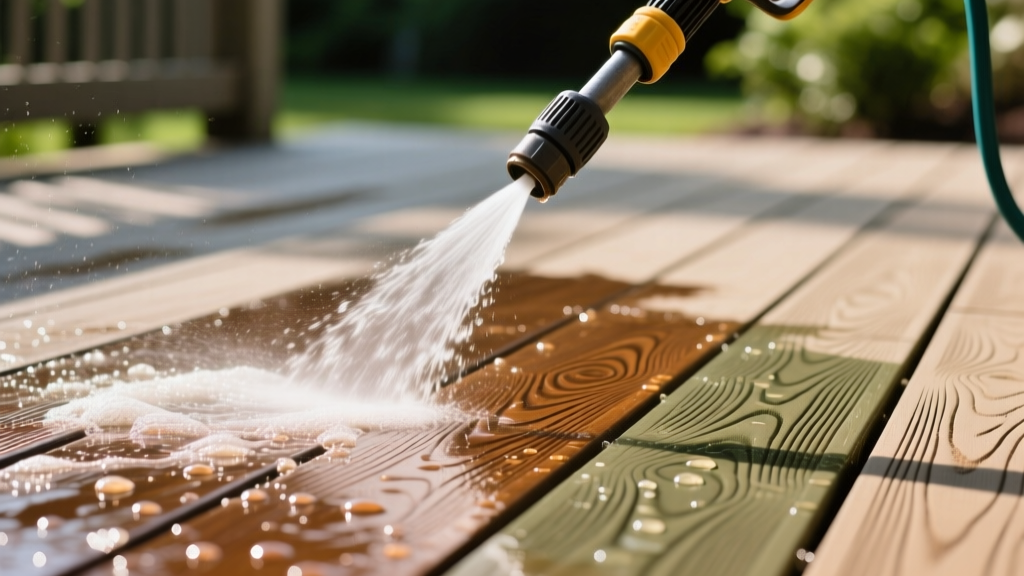
According to the North American Decking and Railing Association (NADRA), improper pressure washing is the leading cause of voided composite warranties. If you must use a pressure washer on any type of composite decking material, adhere to these strict parameters:
- Maximum PSI: 3,100 PSI
- Nozzle: 40-degree fan tip only (never a zero-degree pinpoint nozzle)
- Distance: Keep the wand at least 8 inches from the deck surface
- Direction: Always spray in the direction of the grain pattern to avoid 'felting' or tearing the polymer cap.
Chemical Compatibility Matrix: What to Use and What to Avoid
Selecting the wrong chemical agent can cause irreversible damage to the polymer shells and cellular structures of synthetic boards. Use this matrix to guide your purchasing decisions at the hardware store.
| Decking Type | Safe General Cleaners | Safe Stain / Mold Removers | Strictly Avoid (Will Void Warranty) |
|---|---|---|---|
| Capped WPC | Mild dish soap, Simple Green (diluted), Corte-Clean | Oxygen bleach, Oxalic acid (for tannins) | Chlorine bleach, Acetone, Toluene, Paint Thinner |
| Advanced PVC | Glass cleaner, Isopropyl alcohol, Mild soap | Mineral spirits (sparingly), Magic Eraser (gentle) | Acetone, MEK (Methyl Ethyl Ketone), Abrasive scouring pads |
| Mineral-Based (MBC) | Standard deck wash, Vinegar/water solution | Oxygen bleach, Rubbing alcohol | High-acid masonry cleaners, Undiluted bleach |
| Uncapped WPC | Dedicated composite deck wash, TSP (Trisodium Phosphate) | Sodium percarbonate, Commercial mold inhibitors | Solvents, Oil-based wood stains, Polyurethane sealers |
Seasonal Maintenance Checklist for Composite Boards
Composite materials react differently to thermal expansion and freeze-thaw cycles than natural lumber. Follow this seasonal cadence to maintain structural integrity and surface aesthetics.
Spring: The Deep Clean
Winter debris and spring pollen create a biofilm that feeds mold. Sweep the deck thoroughly, then apply an oxygen-based cleaner. Allow it to dwell for 15 minutes (keeping the surface wet) before agitating with a soft-bristle broom and rinsing. This is also the time to inspect hidden fasteners and ensure the 1/4-inch side-gapping remains clear of impacted dirt, which restricts thermal expansion.
Summer: Heat and Spill Management
Composite decking, especially darker hues, can reach surface temperatures of 150°F+ in direct summer sunlight. Avoid leaving rubber-backed mats or inflatable plastic pools on the deck, as the trapped heat can cause the polymer cap to blister or warp. Clean barbecue grease spills immediately; while capped boards resist staining, prolonged exposure to animal fats can degrade the surface sheen.
Autumn: Leaf and Tannin Control
Wet leaves left on composite decking will leach tannins, leaving stubborn brown or black silhouettes. Rake leaves weekly. If tannin stains do set in, treat them with a commercial deck brightener containing oxalic acid, which chemically neutralizes the tannin and lifts the stain without harming the polymer cap.
Winter: Snow Removal and De-Icing
Use a plastic-bladed snow shovel with a rounded edge. Metal blades will gouge the embossed texture. For ice melt, the Trex Care Guide explicitly recommends using calcium chloride or rock salt (sodium chloride). Avoid ice melts containing traction additives (like sand or gravel) or colorants, as these will scratch the surface and leave permanent dye stains. Always rinse the salt residue away once the ice melts to prevent surface hazing.
Troubleshooting Common Composite Decking Issues
Issue 1: Tannin Bleed and Water Spots on Capped WPC
The Cause: Wood fibers near the edge cuts of capped WPC boards are exposed where the board was sawed. Moisture draws tannins out of these cut ends, causing dark streaks.
The Fix: Seal all cut ends during installation with a clear, solvent-based end-grain sealer or a specialized composite end-cap wax. For existing streaks, apply an oxalic acid-based wood brightener, let it sit for 20 minutes, and rinse. Do not use chlorine bleach, which will set the tannin stain permanently.
Issue 2: Surface Scratches on Advanced PVC
The Cause: Dragging heavy resin wicker or metal furniture across cellular PVC boards.
The Fix: For light scuffs, use a melamine foam pad (Magic Eraser) dampened with water, rubbing strictly with the grain. For deeper gouges, use a composite repair wax kit matched to your board's color code. Melt the wax into the gouge with a plastic putty knife, let it cure for 24 hours, and buff flush. Never use automotive touch-up paint, as it lacks UV stabilizers and will fade at a different rate than the deck.
Issue 3: White Hazing or Chalking
The Cause: Mineral deposits from hard water or leftover calcium chloride ice melt reacting with the polymer surface.
The Fix: Mix a 50/50 solution of white vinegar and warm water. Apply to the hazy areas, let it sit for 5 minutes to dissolve the alkaline minerals, and scrub gently with a microfiber mop before rinsing thoroughly with fresh water.
Expert Insight: Always refer to the TimberTech Maintenance Documentation or your specific manufacturer's care guide before applying any aftermarket chemical. Warranties for composite materials are strictly tied to adherence to the manufacturer's approved cleaning agent list. Using an unapproved 'miracle' patio cleaner is the fastest way to void a 25-year fade and stain warranty.
Maximizing Your Deck's Lifespan
Understanding the specific types of composite decking material installed on your property transforms maintenance from a guessing game into a precise, chemical-aware science. By matching your cleaning agents to the board's polymer composition, respecting the mechanical limits of the embossed caps, and executing seasonal debris management, you ensure the structural integrity and aesthetic brilliance of your outdoor space for decades.
Written by
David NakamuraDavid Nakamura is a licensed architect (AIA) and construction technology writer focused on sustainable building methods, mass timber engineering, and high-performance building envelopes. He holds a Master of Architecture from the University of Washington and is a certified Passive House Consultant (CPHC). David spent eight years at the Seattle firm Mithun, where he led the design of three LEED Platinum projects, before founding his own practice specializing in net-zero residential design. He serves on the editorial advisory board of GreenBuilder Magazine and has authored peer-reviewed papers on cross-laminated timber (CLT) connections for the Journal of Structural Engineering. In his spare time, David teaches woodworking at Pratt Fine Arts Center and kayaks the Puget Sound.
More from David Nakamura
View all
Construction Cost
Labor Cost to Build a Deck Per Sq Ft: 2026 Installation Guide
Discover the exact labor cost to build a deck per sq ft in 2026. This installation guide breaks down contractor rates, complexity factors, and hidden fees.
Aug 4, 2026

Construction Cost
How Much Does It Cost to Build a 3 Bedroom House? Financing Guide
Learn exactly how much it costs to build a 3 bedroom house and explore 2026 financing options, construction loan types, and budget frameworks for your build.
Aug 4, 2026

Construction Cost
Cost to Build a Tennis Court: 2026 Guide
How much does it cost to build a tennis court in 2026? Breakdowns for asphalt, concrete, and synthetic surfaces plus fencing and lighting.
Jul 30, 2026