How to Maintain Any Material for Building a Deck: Expert Care Guide
Discover expert maintenance routines for every material for building a deck. Learn cleaning, sealing, and repair costs for wood, composite, and aluminum.

The Hidden Costs of Deck Neglect
When you select a specific material for building a deck, you are not just choosing an aesthetic profile; you are committing to a long-term maintenance contract. The longevity of your outdoor living space depends entirely on how well you manage the specific vulnerabilities of your chosen substrate. While a neglected pressure-treated pine deck might succumb to rot and splintering within seven to ten years, a properly maintained hardwood or composite deck can easily exceed 25 to 30 years of structural integrity.
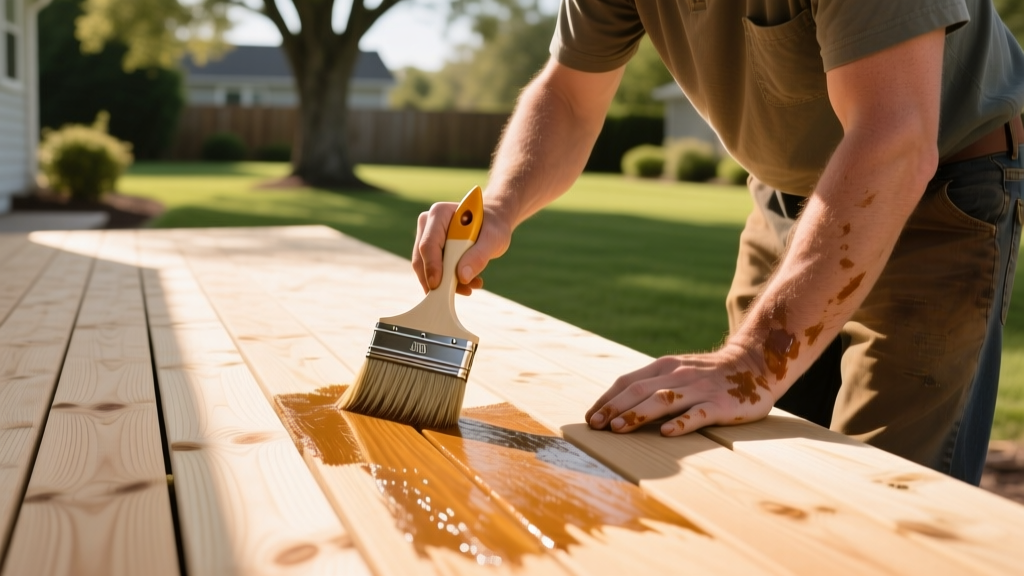
Pressure-Treated Pine & Cedar: The Moisture Battle
Softwoods remain the most common material for building a deck due to their low upfront cost. However, their cellular structure is highly porous, making them susceptible to moisture intrusion, UV degradation, and fungal decay. The primary goal of softwood maintenance is moisture management.
The Water Drop Test & Sealing Protocols
Never apply a sealer to a deck based on a calendar schedule alone; apply it based on substrate readiness. Perform the water drop test: sprinkle water across multiple boards. If the water beads up, your current sealant is intact. If it absorbs within 10 seconds, the wood is ready for a new coat.
- Moisture Meter Verification: Before applying any penetrating oil or film-forming sealer, use a pin-type moisture meter. The wood must read below 15% moisture content. Sealing wet wood traps moisture inside, accelerating internal rot.
- Surface Preparation: If the deck has grayed, the UV rays have degraded the surface lignin. You must remove this dead layer using an 80-grit sanding screen or a specialized deck brightener containing oxalic acid. Do not use chlorine bleach, which breaks down wood cellulose and weakens the structural fibers.
- Sealer Selection: Use a penetrating, oil-based sealer (such as Penofin or Ready Seal) rather than a film-forming polyurethane. Film-forming sealers peel and flake after 12 to 18 months, requiring aggressive chemical stripping to remove.
Tropical Hardwoods (Ipe, Cumaru, Tigerwood): Oil vs. Patina
Tropical hardwoods are incredibly dense (often exceeding 2,200 lbf on the Janka hardness scale) and naturally resistant to rot and insects. Because of this density, they do not require sealing for structural protection. The maintenance of hardwoods is purely aesthetic.
You have two distinct paths for hardwood maintenance:
- The Oiled Look (Rich Browns and Reds): To maintain the original color, you must apply a high-quality hardwood finish (like Messmer's UV Plus or Ipe Oil) every 12 to 18 months. These oils contain high levels of transoxide pigments that block UV rays from breaking down the surface lignin.
- The Patina Look (Silver-Gray): If you allow the wood to weather naturally, UV radiation will break down the surface lignin, turning the wood a silvery gray within 6 to 12 months. This gray layer is only millimeters deep and does not compromise the structural integrity of the dense heartwood beneath.
"Many homeowners mistakenly believe that graying Ipe means the wood is rotting. In reality, the silver patina is a natural UV shield that protects the dense interior of the board. If you choose the patina route, your only maintenance task is an annual wash with a mild detergent to prevent organic mold growth in the surface grain."
— American Wood Council Guidelines on Hardwood Weathering
Capped Composite & PVC: Stain and Scratch Defense
Modern capped composites (like Trex Transcend or TimberTech Advanced PVC) feature a hard polymer shell that resists moisture and fading. While often marketed as 'maintenance-free,' they actually require 'low-maintenance' care to prevent permanent staining and surface micro-gouging.
Never use a pressure washer with a 0-degree (red) or 15-degree (yellow) nozzle on composite decking. The high-pressure stream will slice through the protective polymer cap, creating micro-gouges that trap dirt and void your manufacturer warranty. Use a 40-degree (white) tip and keep the wand at least 8 inches from the surface, or rely on a stiff-bristle nylon brush instead.
Handling Tannin and Rust Stains
Composite boards can suffer from tannin bleed (from nearby trees or planters) and rust stains (from metal patio furniture). Do not use harsh degreasers or chlorine bleach, which can permanently discolor the polymer cap. Instead, use an oxygen-based bleach (like OxiClean) mixed with warm water. Apply the solution, let it dwell for 10 minutes to lift the stain from the embossed wood-grain texture, and scrub with a soft-bristle brush before rinsing.
Aluminum Decking: The Near-Zero Maintenance Option
Aluminum decking systems (such as Ariddek or Wahoo Decks) are powder-coated and impervious to rot, insects, and fire. Maintenance here shifts from surface protection to drainage management and galvanic corrosion prevention.
- Drainage Channel Clearing: Many aluminum systems feature integrated gutters between the interlocking boards to keep the space below dry. You must clear these channels of leaves, pine needles, and dirt every spring and fall to prevent water damming and overflow.
- Galvanic Corrosion Checks: Aluminum is highly susceptible to galvanic corrosion when it comes into continuous contact with dissimilar metals in the presence of an electrolyte (rainwater). Ensure that any metal furniture, planters, or grill mats placed on the deck have rubber or plastic isolation pads to prevent direct metal-to-metal contact.
Comparative Maintenance Cost Matrix (2026 Data)
Understanding the long-term financial commitment of your chosen material for building a deck requires looking beyond the initial installation invoice. The table below outlines the average annualized maintenance costs and expected service life based on current 2026 material pricing and labor rates.
| Deck Material | Annual Maintenance Cost (per sq ft) | Primary Maintenance Tasks | Expected Service Life |
|---|---|---|---|
| Pressure-Treated Pine | $0.65 - $0.95 | Annual cleaning, bi-annual sealing, board replacement | 15 - 20 Years |
| Cedar / Redwood | $0.75 - $1.10 | Annual cleaning, annual/bi-annual UV oil application | 20 - 25 Years |
| Tropical Hardwood (Ipe) | $0.40 - $0.85 | Annual wash, optional bi-annual UV oil (if not graying) | 30 - 40+ Years |
| Capped Composite | $0.15 - $0.30 | Bi-annual soap washing, spot stain treatment | 25 - 30 Years |
| PVC Decking | $0.10 - $0.25 | Bi-annual soap washing, static guard application | 30 - 40+ Years |
| Aluminum Decking | $0.05 - $0.15 | Seasonal drainage clearing, annual rinse | 50+ Years |
Seasonal Action Plan for Deck Longevity
To systematize your deck care, implement this seasonal checklist. Consistent execution prevents minor issues from compounding into catastrophic structural failures.
Spring: Inspection and Deep Cleaning
- Check all ledger board connections and joist hangers for rust or pulling.
- Inspect the flashing where the deck meets the house to ensure water is not infiltrating the building envelope.
- Perform a deep clean using the appropriate chemical agent for your specific material (oxygen bleach for composites, specialized deck wash for woods).
Summer: Protection and Repair
- Execute the water drop test on wood decks and apply penetrating sealers as needed.
- Pop up any raised nail heads or protruding screws caused by winter freeze-thaw cycles and replace them with coated structural deck screws.
- Trim back any landscaping that touches the deck surface to promote airflow and reduce shade-induced mold growth.
Autumn: Debris Management
- Clear all leaves and organic debris immediately. Wet leaves trap moisture against the deck surface and release tannins that cause severe staining.
- Ensure gaps between deck boards are cleared of packed dirt and seeds using a putty knife or specialized gap-cleaning tool to allow for proper water drainage and material expansion.
Winter: Snow and Ice Protocol
- Use a plastic snow shovel with a wide blade. Never use a metal shovel, which will gouge wood and scratch composite caps.
- Avoid using rock salt (sodium chloride) or calcium chloride on wood and composite decks, as these chemicals cause surface spalling and leave permanent white, chalky residues. Use sand or pet-safe, chloride-free ice melters instead.
For more detailed chemical safety guidelines regarding outdoor cleaning agents, refer to the EPA Safer Choice Program. Additionally, composite manufacturers like Trex provide specific care instructions that must be followed to keep your product warranty valid. Proper maintenance is not just about preserving beauty; it is about protecting a significant structural investment.
Written by
Priya KapoorPriya Kapoor is a real estate market analyst and construction economics researcher with expertise in housing affordability, development feasibility, and infrastructure investment. She holds a Master of Regional Planning from Cornell University and previously worked as a senior analyst at CBRE's Investment Properties group, where she modeled returns for $4B in mixed-use development pipelines. Priya now runs an independent research practice advising developers, municipalities, and REITs on construction cost forecasting and market timing. She publishes the quarterly "BuildMat Market Pulse" report tracking material price indices across 12 commodity categories. Based in Austin, TX, Priya serves on the board of Habitat for Humanity Austin and is a marathon runner.
More from Priya Kapoor
View all
Construction Cost
Cost to Build a 1600 Sq Ft Home in 2026: Full Breakdown
Accurate 2026 cost to build a 1600 sq ft home—material, labor, and regional pricing breakdowns included. Plan your budget with real-time estimates.
Aug 11, 2026

Wood & Lumber
Name the Types of Wood for Pressure Treatment and Preservation
Learn how to name the types of wood best suited for pressure treatment. Compare species treatability, chemical retention levels, and 2026 preservation costs.
Aug 4, 2026

Stone & Masonry
Stone Veneer Suppliers Lindenhurst: 2026 Cost Analysis
Analyze 2026 stone veneer costs in Lindenhurst, NY. Compare local supplier pricing, delivery fees, and Suffolk County installation labor rates.
Aug 4, 2026