Can You Paint Composite Decking Material? The Selection Framework
Discover if you can paint composite decking material. Our selection framework covers Gen 1 vs capped boards, exact primers, and costs.

The Short Answer: Generational Compatibility
The short answer to whether you can paint composite decking material is yes, but strictly limited to first-generation (uncapped) composite boards manufactured before 2009. Modern capped composite and PVC decking feature a non-porous polymer shell that actively rejects paint adhesion. Attempting to paint capped composite will result in catastrophic peeling within a single freeze-thaw cycle. This selection framework provides the exact diagnostic steps, chemical primers, and financial models required to successfully refinish older composite decks or determine when replacement is the only viable option.
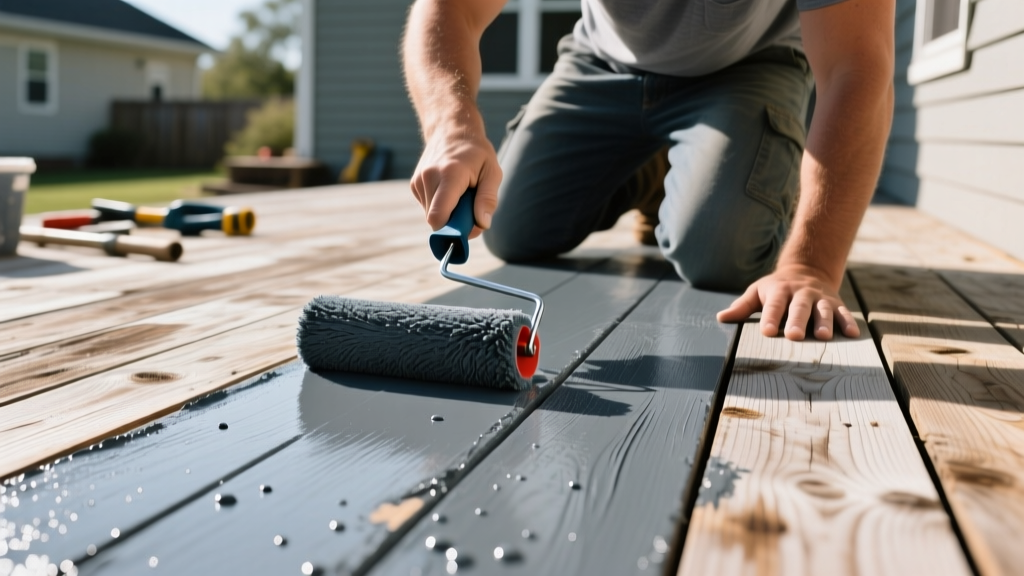
The Generational Divide: Why Most Modern Decks Reject Paint
Composite decking is not a single uniform material; it has evolved through distinct chemical generations. Understanding your deck's generation is the mandatory first step in the selection framework.
Generation 1: Uncapped Composite (Pre-2009)
Early composite boards, such as original Trex Origins or TimberTech Earthwood, are a homogenous mixture of high-density polyethylene (HDPE) plastic and wood flour. Because the wood flour is exposed at the surface, these boards are micro-porous. They absorb moisture, fade under UV exposure, and are susceptible to mildew. Crucially, this porosity allows exterior acrylic binders and primers to achieve a mechanical grip.
Generation 2 & 3: Capped Composite and PVC (2010-Present)
Modern boards feature a co-extruded cap made of Acrylonitrile Styrene Acrylate (ASA) or pure PVC. This shell is engineered to be entirely impervious to water, UV rays, and stains. Because the surface lacks microscopic pores, paint has nowhere to anchor. Furthermore, capped composites exhibit high thermal expansion rates; as the boards expand and contract in direct sunlight, rigid paint films crack and delaminate. According to the Trex Care and Cleaning Guidelines, painting or staining capped composite voids the manufacturer warranty and guarantees finish failure.
| Deck Generation | Surface Material | Porosity | Paint Adhesion | Recommended Action |
|---|---|---|---|---|
| Gen 1 (Uncapped) | HDPE + Wood Flour | High | Excellent (with primer) | Paint or Solid Stain |
| Gen 2 (Capped) | ASA Polymer Shell | None | Poor (Will Peel) | Clean or Replace |
| Gen 3 (PVC) | Cellular PVC | None | None | Clean or Replace |
Decision Framework: Paint, Stain, or Replace?
Use this diagnostic flowchart to determine the most structurally and financially sound path for your specific deck condition.
Step 2: Assess Structural Integrity (Gen 1 Only). Press firmly on the board surface. If it feels spongy, or if the wood flour has rotted from chronic moisture retention, the board is compromised. Paint will not fix structural rot.
Step 3: Select the Finish.
- Minor Fading/Chalking (Gen 1): Apply a high-quality exterior solid color stain. Stains penetrate deeper and flex better than paint.
- Severe Discoloration/Staining (Gen 1): Apply a bonding primer followed by 100% acrylic exterior paint.
- Capped Composite Fading: Capped boards rarely fade. If they look dull, they require a specialized composite deck cleaner and a UV-restoring polymer sealant, not paint.
Material Selection: Primers and Topcoats That Actually Adhere
Standard interior or exterior house paints will fail on composite materials due to the high resin content and thermal movement. You must select products engineered for high-resin, low-porosity substrates. The Painting Contractors Association (PCA) Technical Resources emphasize the necessity of urethane-acrylic bonding primers for difficult substrates.
The Primer Stage
- INSL-X Stix Waterborne Bonding Primer: The industry standard for adhering to slick, high-resin surfaces. It provides the necessary mechanical grip on HDPE composite.
- Zinsser Bulls Eye 1-2-3: A reliable alternative, but only use the water-based version. Oil-based primers can trap moisture inside the wood flour core of Gen 1 boards, leading to internal rot.
- Zinsser B-I-N (Shellac-Based): Use strictly as a spot-primer if your Gen 1 deck has severe tannin bleed or rust stains from old fasteners.
The Topcoat Stage
Avoid high-gloss finishes, which highlight surface imperfections and become dangerously slippery when wet. Opt for satin or low-lustre finishes with high elastomeric (flexible) properties.
- Sherwin-Williams SuperDeck Waterborne Solid Color Deck Stain: Despite the name 'stain,' this acts as a flexible, opaque coating that moves with the composite's thermal expansion.
- Benjamin Moore Aura Exterior (Satin): Features Color Lock technology that resists UV fading, crucial for darker colors applied to composite boards that naturally absorb heat.
2026 Cost Analysis: Refinishing vs. Replacing
When evaluating an aging Gen 1 deck, homeowners must weigh the cost of refinishing against the long-term ROI of upgrading to capped composite. Below is a regional cost breakdown for a standard 400-square-foot deck.
| Project Scope | Material Cost | Labor Cost | Total Estimated Cost | Lifespan Post-Project |
|---|---|---|---|---|
| DIY Paint/Stain (Gen 1) | $350 - $600 | $0 | $350 - $600 | 2 - 4 Years |
| Professional Refinish (Gen 1) | $400 - $700 | $800 - $1,200 | $1,200 - $1,900 | 3 - 5 Years |
| Resurface with Capped Composite | $3,200 - $4,800 | $2,000 - $3,500 | $5,200 - $8,300 | 25+ Years |
Execution Protocol for Uncapped Composite
Proper surface preparation accounts for 80% of a successful composite paint job. Follow these exact measurements and timelines to prevent adhesion failure.
- Chemical Stripping and Cleaning: Do not use chlorine bleach, which degrades the wood flour and weakens the board. Use an oxygen-based bleach cleaner (like OxiClean or a dedicated deck brightener). Apply generously, let dwell for 15 minutes, and agitate with a stiff-bristle nylon brush. Rinse with a pressure washer set to a maximum of 1,500 PSI, keeping the nozzle 12 inches from the surface to avoid gouging the soft composite.
- Moisture Equilibration: Allow the deck to dry completely. Because Gen 1 composite retains water deep in the core, wait a minimum of 72 hours of dry, sunny weather. Use a pinless moisture meter; the core moisture content must read below 12% before priming.
- Mechanical Abrasion: Lightly scuff-sand the entire surface using 80-grit aluminum oxide sandpaper. Do not use finer grits, as they will polish the plastic resin rather than scratch it. Remove all dust with a leaf blower, followed by a tack cloth wipe-down.
- Primer Application: Apply one coat of INSL-X Stix using a 3/8-inch nap roller for the flat surfaces and a nylon-polyester brush for the grooves and railings. Maintain a wet edge to prevent lap marks. Allow 4 hours of dry time at 70°F (21°C).
- Topcoat Application: Apply two thin coats of your selected acrylic topcoat. Thick coats will trap solvents and lead to thermal blistering. Allow 6 hours between coats. Keep foot traffic off the deck for 48 hours, and avoid placing heavy furniture for 7 days to allow full polymer cross-linking.
Common Failure Modes and Edge Cases
Even with perfect preparation, composite decking presents unique chemical challenges. Consult the Fine Homebuilding Deck Project Guides for advanced troubleshooting on these specific failure modes:
Tannin Bleed-Through
The wood flour in Gen 1 composite contains natural tannins. When exposed to moisture and painted over with standard latex, yellow-brown stains will bleed through the topcoat within weeks. The Fix: Spot-prime any visible tannin stains with a shellac-based sealer like Zinsser B-I-N before applying the primary waterborne bonding primer.
Thermal Blistering
Dark paint colors on composite decks can push surface temperatures past 140°F (60°C) in direct summer sunlight. This extreme heat softens the HDPE core and causes trapped moisture to vaporize, creating blisters under the paint film. The Fix: Always select light-to-medium tone paints (e.g., slate gray, desert sand) with high solar reflectance indices (SRI) to minimize thermal loading.
Mildew Ghosting
Painting over microscopic mildew spores trapped in the porous composite will result in the mildew feeding on the paint's organic binders, causing black 'ghost' shadows to reappear. The Fix: Pre-treat the bare deck with a commercial-grade quaternary ammonium mildewcide, not just household bleach, and allow it to neutralize spores deep in the substrate.
Expert FAQs on Composite Deck Finishes
Can I use a solid deck stain instead of paint on Gen 1 composite?
Yes, and it is often the superior choice. High-quality waterborne solid color stains (like Sherwin-Williams SuperDeck) contain fewer rigid film-forming resins than paint. They penetrate the wood flour slightly and flex more readily during the composite's thermal expansion cycles, significantly reducing the risk of peeling.
Will painting my composite deck void the warranty?
Almost universally, yes. Even for first-generation uncapped boards that are still within their 20- or 25-year warranty periods, applying any aftermarket paint, stain, or sealant immediately voids the manufacturer's warranty against fading, staining, and structural defects.
How often will I need to repaint an uncapped composite deck?
Unlike natural pressure-treated wood, which requires staining every 1-2 years, a properly primed and painted Gen 1 composite deck will typically hold its finish for 3 to 5 years. The lack of natural wood grain and knot holes provides a smoother, more uniform substrate that extends the life of the acrylic topcoat.
Written by
Priya KapoorPriya Kapoor is a real estate market analyst and construction economics researcher with expertise in housing affordability, development feasibility, and infrastructure investment. She holds a Master of Regional Planning from Cornell University and previously worked as a senior analyst at CBRE's Investment Properties group, where she modeled returns for $4B in mixed-use development pipelines. Priya now runs an independent research practice advising developers, municipalities, and REITs on construction cost forecasting and market timing. She publishes the quarterly "BuildMat Market Pulse" report tracking material price indices across 12 commodity categories. Based in Austin, TX, Priya serves on the board of Habitat for Humanity Austin and is a marathon runner.
More from Priya Kapoor
View all
Construction Cost
Cost to Build a 1600 Sq Ft Home in 2026: Full Breakdown
Accurate 2026 cost to build a 1600 sq ft home—material, labor, and regional pricing breakdowns included. Plan your budget with real-time estimates.
Aug 11, 2026

Wood & Lumber
Name the Types of Wood for Pressure Treatment and Preservation
Learn how to name the types of wood best suited for pressure treatment. Compare species treatability, chemical retention levels, and 2026 preservation costs.
Aug 4, 2026

Stone & Masonry
Stone Veneer Suppliers Lindenhurst: 2026 Cost Analysis
Analyze 2026 stone veneer costs in Lindenhurst, NY. Compare local supplier pricing, delivery fees, and Suffolk County installation labor rates.
Aug 4, 2026