Deck Flooring Materials Cost Analysis: 2026 Pricing & ROI Guide
Compare 2026 costs for top deck flooring materials. Analyze wood, composite, and PVC pricing, hidden installation fees, and long-term ROI.
The True Cost of Deck Flooring Materials in 2026
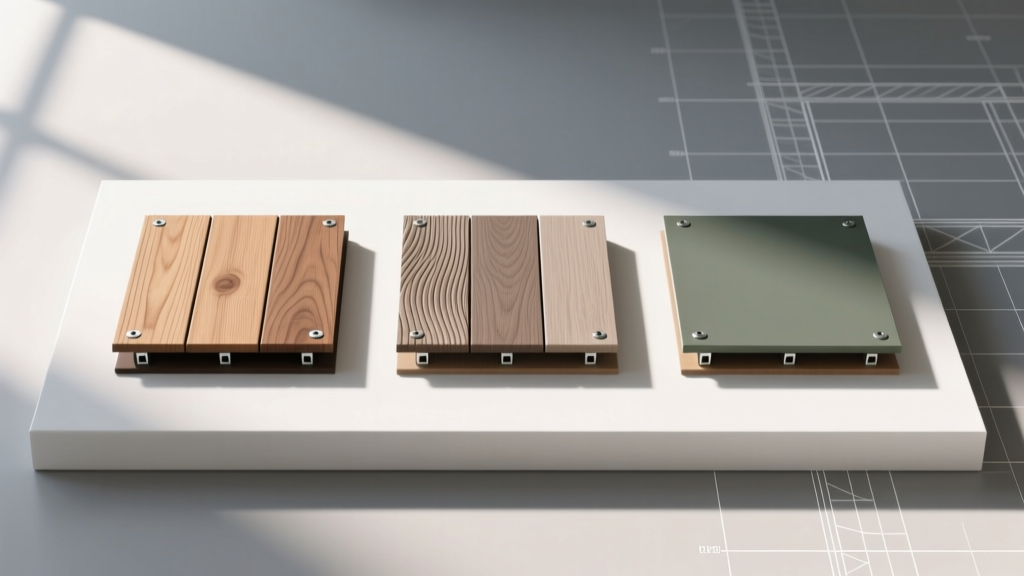
Evaluating deck flooring materials requires looking past the initial price tag per square foot. In 2026, the decking market has stabilized following the lumber volatility of the early 2020s, but manufacturing shifts in polymer composites and global supply chain adjustments for tropical hardwoods have redefined the cost hierarchy. A comprehensive cost analysis must account for material acquisition, substructure preparation, specialized fasteners, and the compounding maintenance expenses over a 10-to-20-year lifecycle.
According to industry data tracked by Professional Deck Builder, the gap between premium pressure-treated lumber and entry-level capped composites has narrowed by approximately 14% since 2023, fundamentally altering the break-even point for homeowners and commercial contractors alike. This guide dissects the exact material costs, hidden installation variables, and long-term return on investment (ROI) for the primary decking categories available today.
Material Cost Matrix: Upfront vs. Lifetime Expenses
The following matrix outlines the baseline material costs (excluding labor and substructure) and projects the 10-year cost of ownership, factoring in mandatory maintenance, sealing, and cleaning.
| Material Category | Material Cost (per sq. ft.) | Fastener Cost (per sq. ft.) | 10-Year Maintenance Cost | Total 10-Year Cost / sq. ft. |
|---|---|---|---|---|
| Pressure-Treated Pine (ACQ) | $2.80 - $4.20 | $0.40 (Screws) | $12.50 (Annual Sealing) | $131.20 |
| Tropical Hardwood (Ipe) | $11.00 - $15.50 | $1.80 (Hidden/SS) | $4.50 (Biennial Oiling) | $177.50 |
| Capped Composite (Mid-Tier) | $7.50 - $9.80 | $2.10 (Hidden Clips) | $1.20 (Annual Wash) | $109.20 |
| Advanced PVC (Premium) | $11.50 - $14.50 | $2.40 (Hidden/Color-Match) | $1.00 (Annual Wash) | $150.00 |
Breaking Down the Tiers
Budget Tier: Pressure-Treated Lumber
Pressure-treated (PT) southern yellow pine remains the baseline for deck flooring materials. For above-ground deck boards, ensure the lumber meets the American Wood Protection Association (AWPA) UC3B standard, which dictates the proper retention level of preservatives for exterior use without ground contact. While the upfront material cost is exceptionally low ($2.80 to $4.20 per square foot), PT lumber is highly susceptible to dimensional instability. It will warp, check, and twist as it dries, necessitating annual power washing and the application of penetrating oil or water-repellent sealants (averaging $125 per 500 sq. ft. annually).
Mid-Tier: Capped Wood-Plastic Composites
Capped composites, such as Trex Transcend Lineage or TimberTech Prime+, represent the current market sweet spot. These boards feature a wood-flour core encased in a high-density polyethylene (HDPE) or polypropylene shell. The capping prevents moisture intrusion, eliminating the rot and splintering associated with natural wood. At $7.50 to $9.80 per square foot, the initial investment is roughly double that of PT pine, but the 10-year cost of ownership is significantly lower due to the near-elimination of chemical sealants.
Premium Tier: Cellular PVC and Tropical Hardwoods
Advanced PVC decking (e.g., AZEK Landmark) contains no wood fibers, making it entirely impervious to moisture, mold, and insect damage. Priced between $11.50 and $14.50 per square foot, PVC offers superior stain resistance and lighter weight than composite. Alternatively, tropical hardwoods like Ipe offer unmatched structural density (Janka hardness rating of 3,680 lbf) and natural fire resistance, but sourcing sustainable, FSC-certified Ipe has pushed prices up to $15.50 per square foot in 2026, alongside increasing regulatory scrutiny on timber imports.
Unlike wood, polymer-based deck flooring materials expand and contract significantly with temperature fluctuations. A 20-foot run of PVC decking can expand up to 3/16 of an inch across a 60°F temperature delta. Installers must strictly follow manufacturer spacing guidelines (typically 1/8 inch at board ends and 3/16 inch at butt joints) and use specialized slotted hidden fasteners that allow for longitudinal movement. Failure to account for this will result in buckled boards and popped fasteners.
Hidden Installation Costs That Break the Budget
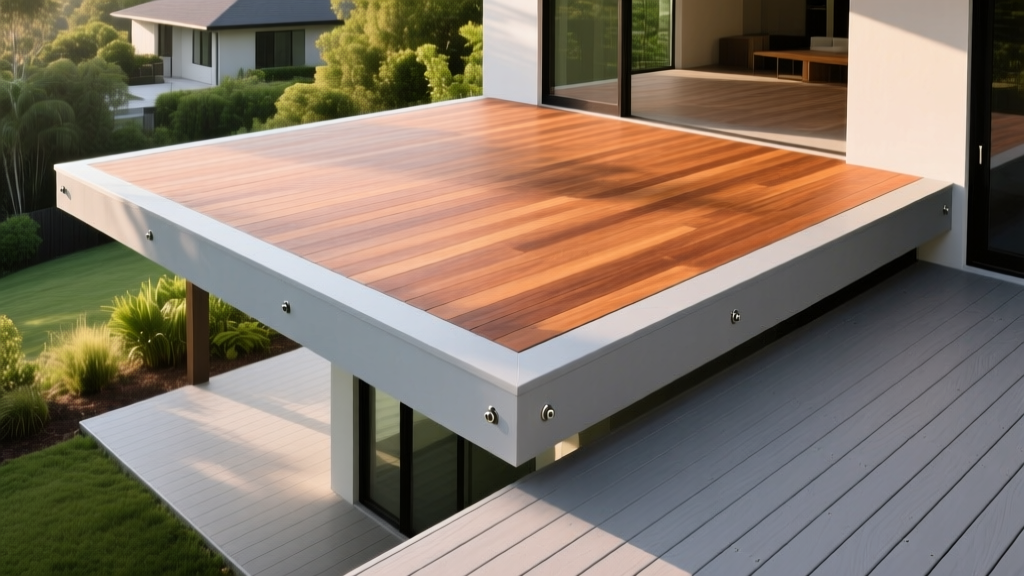
Contractors and DIYers frequently miscalculate the total project cost by focusing solely on the decking boards. The substructure and fastening systems introduce critical variables that can inflate the budget by 15% to 30%.
- Joist Spacing and Framing Upgrades: Standard PT lumber is rated for 16-inch on-center (OC) joist spacing. However, many composite and PVC boards require 12-inch OC spacing if installed diagonally (45-degree angle). Reducing joist spacing from 16" to 12" increases substructure lumber costs by approximately 33% and adds 10-15% to labor time.
- Substructure Flashing Tape: Applying butyl-based joist tape (such as Trex Protect or Grace Vycor) to the top of all floor joists and beams is no longer optional for premium builds. It prevents moisture from pooling on the joists, extending the life of the wooden substructure to match the 25-year lifespan of composite boards. Budget $0.65 to $0.95 per linear foot for joist tape.
- Hidden Fastening Systems: Exposed face-screwing composite boards voids many manufacturer warranties and creates moisture entry points. Hidden clip systems (e.g., TigerClaw or Trex Hideaway) cost between $1.80 and $2.50 per square foot. For premium PVC, color-matched top-down structural screws with plug systems (like Cortex) can push fastener costs to $3.50 per square foot.
- Fascia and Picture-Framing: Using composite or PVC fascia boards to cover the exposed rim joists adds $12 to $18 per linear foot. Furthermore, "picture-framing" the deck perimeter with a contrasting board color requires additional blocking, miter cuts, and material waste, adding roughly 8% to the total decking material order.
10-Year ROI and Maintenance Cost Forecast
Choosing the right deck flooring material depends heavily on the property holding period and the owner's willingness to perform maintenance. The following decision framework optimizes for financial efficiency:
- The Short-Term Hold (1 to 5 Years): If you plan to sell the property within five years, pressure-treated pine offers the highest immediate ROI. According to real estate remodeling data, wood deck additions consistently recoup 70% to 80% of their cost at resale. The buyer absorbs the future maintenance burden, making the premium for composite materials a sunk cost for the seller.
- The Medium-Term Hold (5 to 15 Years): Mid-tier capped composites hit the break-even point against pressure-treated wood around year seven. The cumulative cost of annual power washing, sanding, and sealing PT lumber overtakes the initial premium paid for composite. Choose a scalloped-bottom composite board to reduce material weight and cost without sacrificing surface durability.
- The Legacy Build (15+ Years): For forever homes or high-end commercial properties, advanced PVC or tropical hardwoods are mandatory. While the upfront cost is steep, PVC eliminates the risk of structural degradation from trapped moisture and offers superior fade resistance (often backed by 50-year limited warranties). Over two decades, PVC requires only bi-annual soap-and-water cleaning, yielding the lowest total cost of ownership of any synthetic material.
Sourcing Strategies to Reduce Material Costs
Procuring deck flooring materials at scale or for large residential footprints requires strategic purchasing to mitigate high retail markups.
"Never buy composite decking in standard retail bundles if your project exceeds 400 square feet. Most regional lumber yards and specialized decking distributors offer 'project packs' or direct-mill pricing that drops the per-board cost by 12% to 18% once you cross the pallet threshold."
— Regional Procurement Manager, Mid-Atlantic Building Supply
To further optimize costs, utilize grooved-edge boards for the main field of the deck to accommodate hidden fasteners, but switch to square-edge boards for the perimeter picture-frame and stair treads. Square-edge boards are often priced 5% to 10% lower than grooved equivalents and provide a cleaner, solid edge for exposed stair nosings and fascia transitions. Additionally, track manufacturer end-of-season color closeouts; decking lines are frequently refreshed every three to four years, and discontinued colors are liquidated at 30% to 40% below MSRP through authorized wholesale distributors.
Written by
David NakamuraDavid Nakamura is a licensed architect (AIA) and construction technology writer focused on sustainable building methods, mass timber engineering, and high-performance building envelopes. He holds a Master of Architecture from the University of Washington and is a certified Passive House Consultant (CPHC). David spent eight years at the Seattle firm Mithun, where he led the design of three LEED Platinum projects, before founding his own practice specializing in net-zero residential design. He serves on the editorial advisory board of GreenBuilder Magazine and has authored peer-reviewed papers on cross-laminated timber (CLT) connections for the Journal of Structural Engineering. In his spare time, David teaches woodworking at Pratt Fine Arts Center and kayaks the Puget Sound.
More from David Nakamura
View all
Construction Cost
Labor Cost to Build a Deck Per Sq Ft: 2026 Installation Guide
Discover the exact labor cost to build a deck per sq ft in 2026. This installation guide breaks down contractor rates, complexity factors, and hidden fees.
Aug 4, 2026

Construction Cost
How Much Does It Cost to Build a 3 Bedroom House? Financing Guide
Learn exactly how much it costs to build a 3 bedroom house and explore 2026 financing options, construction loan types, and budget frameworks for your build.
Aug 4, 2026

Construction Cost
Cost to Build a Tennis Court: 2026 Guide
How much does it cost to build a tennis court in 2026? Breakdowns for asphalt, concrete, and synthetic surfaces plus fencing and lighting.
Jul 30, 2026