Best Flooring Options for Pontoon Boats: Carpet vs. Vinyl vs. WPC
Compare the best flooring options for pontoon boats. We break down marine carpet, woven vinyl, and WPC composites by cost, weight, and durability.

Upgrading or replacing the deck on a pontoon boat requires balancing aesthetics, maintenance, and strict structural limits. Unlike fiberglass runabouts, pontoon decks consist of aluminum cross-members and plywood or aluminum substrates that dictate which materials can be safely installed. Choosing the wrong flooring can lead to trapped moisture, wood rot, or exceeded weight capacities that compromise the vessel's buoyancy. This guide provides a technical comparison of the three primary flooring options for pontoon boats: marine carpet, woven vinyl (PVC), and Wood Plastic Composite (WPC).
The Hidden Constraint: Weight and Buoyancy Limits
Before selecting a material, you must calculate the flooring weight against your pontoon’s maximum capacity. A standard 24-foot pontoon boat offers roughly 200 square feet of usable deck space. According to safety guidelines from the National Marine Manufacturers Association (NMMA), exceeding the gross weight capacity drastically reduces freeboard and increases the risk of swamping in rough wakes.
- Marine Carpet: Adds approximately 1.0 to 1.5 lbs per square foot (200–300 lbs total).
- Woven Vinyl: Adds approximately 1.5 to 2.0 lbs per square foot (300–400 lbs total).
- WPC Composite: Adds 3.0 to 4.5 lbs per square foot (600–900 lbs total).
If you are installing WPC on a smaller 18-foot or 20-foot pontoon, the added 500+ lbs of flooring alone may require you to upgrade to a triple-tube (tritoon) configuration or sacrifice passenger and gear capacity to maintain safe waterline clearance.
Marine Carpet: The Budget-Friendly Traditionalist
Marine carpet remains the most common OEM flooring for entry-level and mid-range pontoons. It is constructed from UV-stabilized polypropylene or polyester fibers designed to resist mold and mildew. For pontoon applications, you must select carpet with a rubber or marine-grade synthetic backing; standard felt-backed indoor carpet will act as a sponge, trapping water against the aluminum deck and accelerating galvanic corrosion and plywood rot.
Specifications and Pricing
Marine carpet is measured by weight per square yard. For a durable pontoon deck, look for a minimum of 20-ounce to 28-ounce polypropylene. The 28-ounce variants offer a plush feel and better sound deadening but cost significantly more. Expect to pay between $1.50 and $4.50 per square foot for the material, with professional installation adding $2.00 to $3.50 per square foot.
Pros and Cons
- Pros: Lowest upfront cost, excellent slip resistance when wet, comfortable barefoot, dampens deck vibration and noise.
- Pros: Hides subfloor imperfections and minor dents in the aluminum substrate.
- Cons: Requires frequent vacuuming and shampooing to prevent embedded dirt from degrading fibers.
- Cons: Prone to staining from fish blood, sunscreen, and spilled beverages if not treated immediately.
- Cons: Typical lifespan is 5 to 8 years before UV fading and backing delamination require replacement.
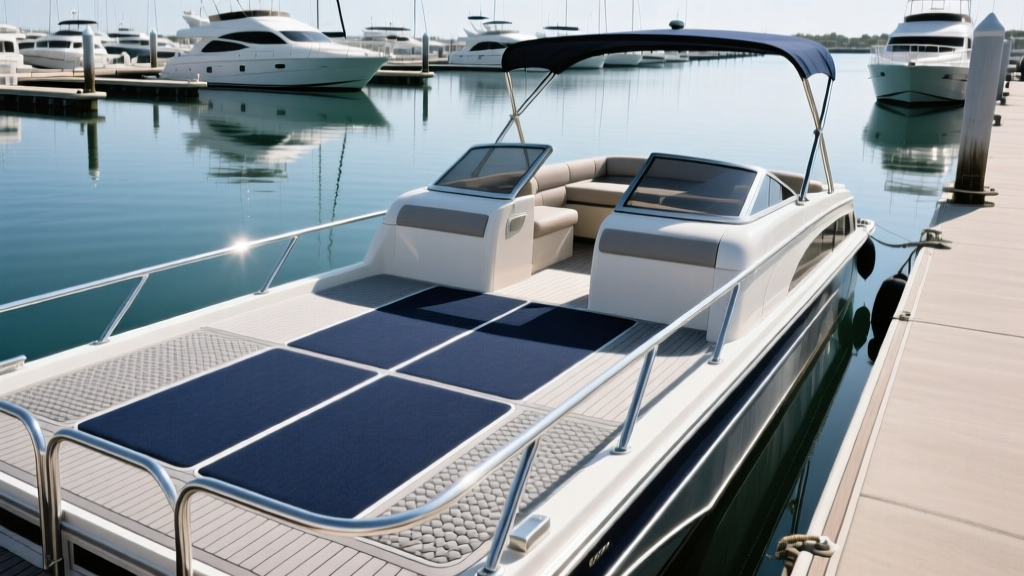
Woven Vinyl (PVC): The Premium Low-Maintenance Standard
Woven marine vinyl, often referred to by brand names like Infinity Luxury Woven Vinyl or Nautolex, has become the dominant choice for premium pontoon refits. It is manufactured by weaving PVC threads over a knitted polyester or fiberglass backing, creating a highly durable, non-porous surface. High-end variants include microban antimicrobial treatments to prevent mold growth in humid marina environments.
Thermal Expansion and Heat Retention
A critical installation factor for woven vinyl is thermal expansion. PVC expands and contracts significantly with temperature fluctuations. Installers must leave a 1/8-inch expansion gap at the perimeter and use flexible marine sealants rather than rigid trim. Furthermore, dark-colored vinyl absorbs immense heat under direct sun. Deck surface temperatures on dark gray or brown vinyl can exceed 140°F (60°C) in mid-summer, making it uncomfortable for bare feet. Always opt for light gray, sand, or silver tones for pontoons operating in southern latitudes.
Specifications and Pricing
Quality marine vinyl should be at least 80-mil to 100-mil thick to resist tearing from fishing hooks or docking poles. Material costs range from $6.00 to $12.00 per square foot. Because it requires precise cutting and specialized solvent welding for seams, professional installation is highly recommended, adding $3.00 to $5.00 per square foot.
WPC and Composite Decking: The Rigid Luxury Upgrade
Wood Plastic Composite (WPC) marine flooring, such as AquaDeck, represents the high-end luxury segment. It features a co-extruded polyethylene and wood-flour core encapsulated in a capped polymer shell. Unlike carpet or vinyl, WPC is a rigid, interlocking floating floor system that snaps together over the subfloor, often requiring no adhesive on the main deck field.
Structural Rigidity and Subfloor Requirements
Because WPC is rigid, it will not conform to an uneven subfloor. If your pontoon’s plywood deck has soft spots, warping, or raised screw heads, the WPC planks will telegraph these imperfections, resulting in a hollow sound and potential interlocking joint failure under foot traffic. The subfloor must be sanded perfectly flat or covered with a marine-grade leveling underlayment before installation. At $10.00 to $16.00 per square foot, WPC is the most expensive option, but it offers a lifespan of 15+ years and mimics the look of high-end teak or cedar without the annual oiling requirements.
Head-to-Head Material Comparison Matrix
| Feature | Marine Carpet (28oz) | Woven Vinyl (PVC) | WPC Composite |
|---|---|---|---|
| Material Cost (per sq. ft.) | $2.00 - $4.50 | $6.00 - $12.00 | $10.00 - $16.00 |
| Weight (per sq. ft.) | 1.2 lbs | 1.8 lbs | 3.5 lbs |
| Expected Lifespan | 5 - 8 Years | 10 - 15 Years | 15 - 20+ Years |
| Slip Resistance (Wet) | Excellent | Good (Textured only) | Moderate to Good |
| Maintenance Level | High (Shampooing) | Low (Soap & Water) | Very Low (Wipe down) |
| Heat Retention | Low | High (Color dependent) | Moderate |
Adhesive and Installation Gotchas for Aluminum Decks
The most common failure point in pontoon flooring is adhesive breakdown due to water intrusion and UV degradation. According to technical bulletins from 3M Marine and expert advice from BoatUS, selecting the correct marine adhesive is critical for the longevity of the installation.
The Correct Adhesive Strategy
- For Marine Carpet: Use a dedicated water-based or solvent-based marine carpet adhesive (e.g., Koffler Marine Adhesive or Roberts 6700). Apply using a 3/16-inch V-notch trowel to ensure even coverage without creating hard ridges that show through the carpet backing.
- For Woven Vinyl: Use a solvent-based vinyl adhesive or a marine-grade contact cement. Solvent-based adhesives bite into the PVC backing and the aluminum substrate, creating a flexible bond that withstands the thermal expansion of the vinyl. Ensure the aluminum deck is wiped down with acetone prior to gluing to remove manufacturing oils and oxidation.
- Perimeter Sealing: Regardless of the flooring type, seal all perimeter edges where the flooring meets the aluminum railing base or rub rail using 3M 4000 UV. This prevents water from wicking underneath the flooring material during heavy rain or when washing the deck.
Final Decision Framework
Choose Marine Carpet if you are operating on a strict budget, frequently anchor in shallow, rocky areas where kneeling is required, or have young children and pets that need a soft, slip-resistant surface. Choose Woven Vinyl if you prioritize easy cleanup after fishing trips, entertain frequently, and want a modern, upscale aesthetic without exceeding your pontoon’s weight limits. Choose WPC Composite only if you own a large tritoon with ample weight capacity, desire a rigid, high-end luxury finish, and are willing to invest the time and money into perfectly leveling the subfloor prior to installation.
Written by
Elena RodriguezElena Rodriguez is a civil engineer and technical writer specializing in concrete technology, masonry systems, and ASTM/ACI compliance. She earned her B.S. in Civil Engineering from Texas A&M University and spent a decade at a materials testing laboratory, performing over 2,000 concrete compressive strength tests and masonry prism evaluations. Elena is an ACI-certified Field Testing Technician (Grade I) and a member of ASTM Committee C12 on Natural Building Stone. She currently consults on forensic engineering cases involving concrete failures and moisture intrusion. Based in San Antonio, TX, Elena is a proud member of the Society of Women Engineers (SWE) and coaches her daughter's FIRST Robotics team.
More from Elena Rodriguez
View all
Walls & Panels
Cost Analysis: Light Gauge Steel Framing Advantages and Disadvantages
Evaluate light gauge steel framing advantages and disadvantages through a strict cost analysis lens, comparing material, labor, and lifecycle expenses.
Aug 4, 2026

Walls & Panels
Gypsum Board Types: Exact Specifications, Thickness & Dimensions
Compare standard, Type X, and moisture-resistant gypsum board types. Get exact specifications, thicknesses, dimensions, and ASTM standards for your project.
Aug 4, 2026

Fire Resistance
Best Fire-Resistant Outdoor Decking Materials: 2026 Buyer Guide
Discover the best fire-resistant outdoor decking materials for 2026. Compare Class A PVC, aluminum, and hardwood options for WUI compliance and safety.
Aug 4, 2026