Modern Flooring Options: 2026 Cost Analysis & ROI Guide
Compare the true costs of modern flooring options in 2026. Expert analysis on material pricing, installation, and long-term ROI for your home.
The 2026 Financial Landscape of Modern Flooring
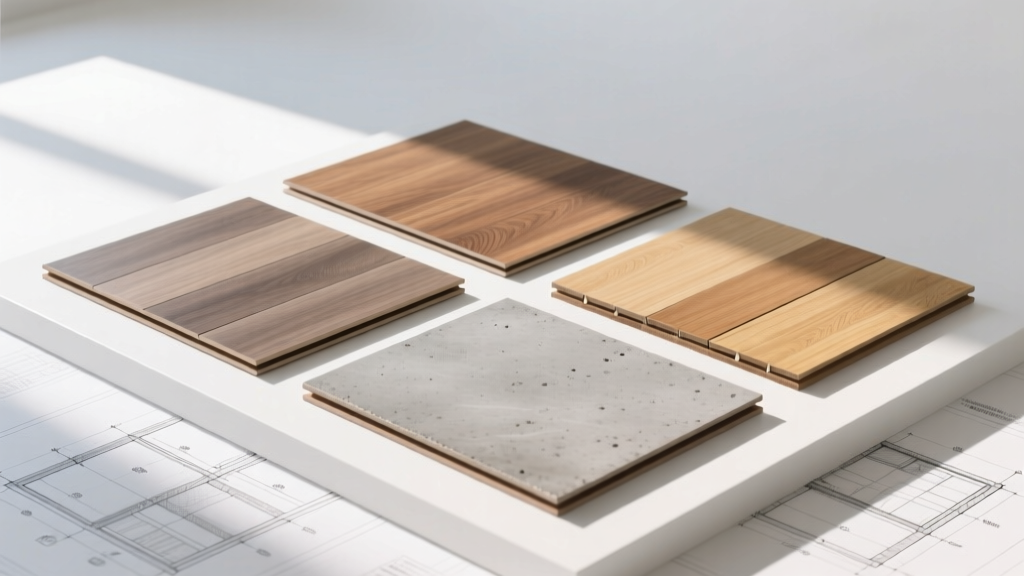
Evaluating modern flooring options requires moving beyond the sticker price of the material. In 2026, the true cost of a flooring project is dictated by a combination of specialized installation requirements, subfloor preparation, and long-term lifecycle maintenance. Homeowners and commercial developers alike are shifting away from traditional materials in favor of high-performance alternatives like Stone Plastic Composite (SPC) luxury vinyl, large-format rectified porcelain, wide-plank engineered hardwood, and mechanically polished concrete.
This cost analysis breaks down the exact financial commitments required for the most popular modern flooring options, providing a data-driven framework to maximize your return on investment (ROI) while avoiding catastrophic installation failures.
Comprehensive Cost Matrix: Material vs. Installation
The following matrix outlines the average national costs per square foot for premium modern flooring options in 2026. These figures assume a standard 500-square-foot residential installation and include mid-to-high-tier materials.
| Material Type | Material Cost (sq ft) | Installation Cost (sq ft) | Total Installed Cost | Expected Lifespan |
|---|---|---|---|---|
| SPC Rigid Core Vinyl (20-mil wear layer) | $4.50 - $7.00 | $2.50 - $4.00 | $7.00 - $11.00 | 15 - 20 Years |
| Large-Format Porcelain (24x48 rectified) | $5.50 - $12.00 | $7.00 - $11.00 | $12.50 - $23.00 | 50+ Years |
| Engineered European Oak (7.5" wide, 4mm veneer) | $8.50 - $14.50 | $4.50 - $7.50 | $13.00 - $22.00 | 30 - 50 Years |
| Mechanically Polished Concrete (Existing slab) | $1.00 - $2.00 (Chemicals) | $6.00 - $10.00 | $7.00 - $12.00 | Lifetime |
Material-Specific Cost Drivers
- SPC Vinyl: The cost variance is driven by the wear layer thickness and attached underlayment. A 20-mil wear layer with an attached IXPE acoustic pad commands a premium but eliminates the need for a separate underlayment purchase, saving $0.75 to $1.25 per square foot.
- Large-Format Porcelain: Installation costs spike for tiles exceeding 15 inches on any one side. Installers must use specialized large and heavy tile (LHT) polymer-modified mortars and mechanical lippage control systems to meet Tile Council of North America (TCNA) standards, which dictates strict flatness tolerances.
- Engineered Oak: Wide planks (7.5 inches and above) require a full-spread urethane adhesive installation rather than a simple floating or nail-down method to prevent seasonal gapping, adding roughly $1.50 per square foot in adhesive costs.
When installing large-format porcelain, never allow a contractor to skip lippage control clips and wedges. The TCNA explicitly warns that tiles with a length-to-thickness ratio greater than 8:1 are prone to warping during manufacturing. Without a mechanical leveling system, uneven edges (lippage) will ruin the modern, seamless aesthetic and create tripping hazards.
The Hidden Costs That Destroy Flooring Budgets
Material pricing is only the baseline. The most common budget overruns in modern flooring projects stem from ignored subfloor conditions and environmental factors.
Subfloor Flatness and Self-Leveling Underlayment (SLU)
Modern rigid core vinyl and large-format tile demand exceptionally flat subfloors. The industry standard requires no more than 3/16" of deviation in a 10-foot radius. If your subfloor fails this test, you must apply a self-leveling underlayment (SLU). Expect to pay between $1.50 and $3.00 per square foot for SLU prep. Skipping this step will cause SPC click-locks to snap under foot traffic and large tiles to crack or sound hollow.
Moisture Mitigation and Testing
Concrete slabs emit moisture vapor that can destroy modern adhesives and cause engineered wood to cup. Before installing any moisture-sensitive modern flooring over concrete, contractors must perform relative humidity (RH) probe testing per ASTM F2170 standards. If RH levels exceed 75% (or the specific manufacturer's threshold, often as low as 65%), a two-part epoxy moisture mitigation system is required. This adds $3.50 to $5.50 per square foot to the project but prevents catastrophic adhesive failure and mold growth.
When budgeting for adhesives and moisture barriers, prioritize low-VOC (Volatile Organic Compounds) products. According to the Environmental Protection Agency (EPA), VOCs can cause severe short- and long-term adverse health effects. Modern water-based urethane adhesives and Greenguard Gold-certified epoxies cost about 15% more than solvent-based alternatives but are essential for maintaining healthy indoor air quality.
Long-Term ROI and Lifecycle Cost Analysis
To determine the true value of modern flooring options, we must calculate the annualized cost of ownership, factoring in maintenance, refinishing, and replacement cycles.
Engineered Hardwood: The Refinishing Factor
Unlike solid hardwood, engineered wood can only be refinished a limited number of times. A premium engineered board with a 4mm sawn top veneer can be sanded and refinished twice during its lifespan. According to the National Wood Flooring Association (NWFA), professional refinishing costs between $4.00 and $6.00 per square foot. If you plan to stay in the home for 30 years, budgeting for one mid-lifecycle refinance is financially prudent, adding roughly $0.15 per square foot to the annualized cost.
SPC Vinyl vs. Porcelain: Replacement vs. Permanence
SPC vinyl offers a lower barrier to entry and excellent water resistance, making it highly cost-effective for basements and bathrooms. However, its 15-to-20-year lifespan means a homeowner will likely replace it once before a porcelain floor requires any major intervention. Porcelain's 50-year lifespan and near-zero maintenance (beyond grout sealing every 3-5 years at $1.50/sq ft) yield a superior long-term ROI, despite the higher initial capital expenditure.
Decision Framework: Matching Budget to Performance
Use this conditional framework to select the optimal modern flooring option based on your specific project constraints.
- If your budget is under $9.00/sq ft installed AND the space is below-grade (basement): Choose 20-mil SPC Rigid Core Vinyl. It handles hydrostatic pressure and minor subfloor imperfections better than any other modern option in this price tier.
- If you are targeting high-end resale value AND require a lifetime material: Choose Large-Format Rectified Porcelain. The seamless aesthetic and permanent durability appeal heavily to luxury buyers, and the ROI at resale often recoups 70-80% of the installation cost.
- If you want the warmth of wood BUT have radiant floor heating: Choose 5/8" Engineered European Oak. Ensure the core is multi-ply birch or high-density fiberboard (HDF), which conducts heat efficiently and resists the thermal expansion that plagues solid hardwood over radiant systems.
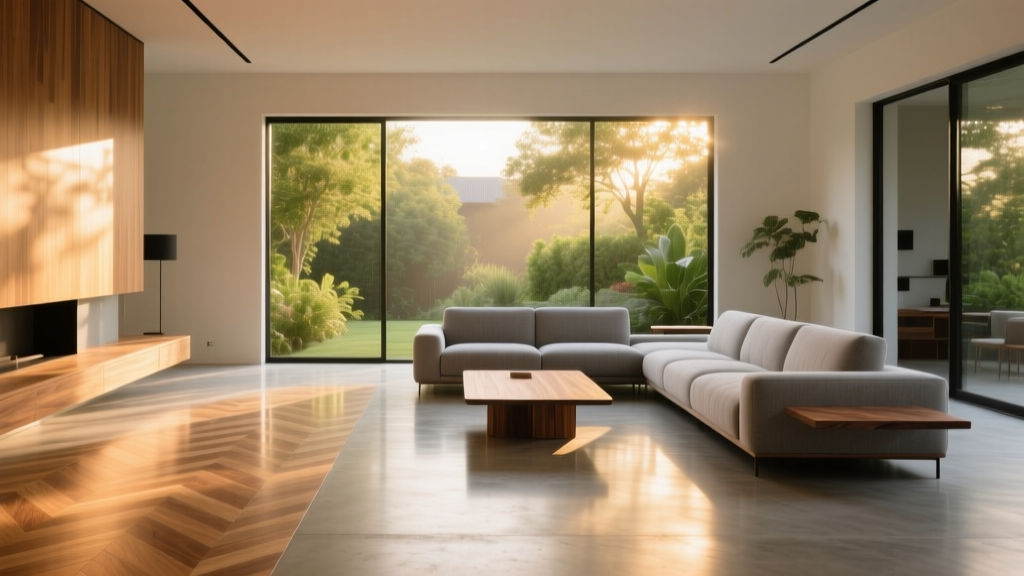
- If you are renovating an industrial loft or modern commercial space with an existing slab: Choose Mechanically Polished Concrete. By utilizing the existing substrate, you eliminate material transport and disposal costs, achieving a high-end architectural look for under $12.00/sq ft.
Frequently Asked Financial Questions
Does installing modern wide-plank engineered wood increase home appraisal value more than luxury vinyl?
Yes. While high-end SPC vinyl is highly functional and visually convincing, real estate appraisers and buyers still categorize engineered hardwood as a premium, permanent architectural finish. In competitive 2026 housing markets, engineered wood consistently yields a 2% to 4% higher appraisal premium over vinyl alternatives in main living areas.
Are acoustic underlayments worth the extra cost in multi-story modern homes?
Absolutely. If you are installing hard surface modern flooring on a second story or in a multi-family dwelling, investing $1.00 to $1.50 per square foot in a high-density cork or recycled rubber acoustic underlayment (achieving an IIC rating of 55 or higher) prevents impact noise complaints and is increasingly mandated by modern building codes and HOA regulations.
Written by
Sarah WhitfieldSarah Whitfield is a chartered quantity surveyor (MRICS) and construction cost analyst with 15 years of experience in material pricing, procurement strategy, and project budgeting. She earned her degree in Construction Management from the University of Reading (UK) and has worked on projects ranging from $2M custom homes to $180M mixed-use developments across North America and Europe. Sarah currently leads cost estimating for BuildMat Insight, maintaining a proprietary database of 4,000+ material price points updated quarterly. She is a frequent contributor to RSMeans cost data panels and has presented at the International Cost Engineering Council (ICEC) congress. Based in Denver, CO, Sarah is an avid trail runner and volunteer mentor for Women in Construction.
More from Sarah Whitfield
View all
Wood & Lumber
What Are the Different Types of Wood? A Builder's Guide
Compare structural softwoods, finish hardwoods, and engineered lumber. Analyze Janka ratings, MOE values, and 2026 pricing for construction.
Aug 4, 2026

Walls & Panels
Steel Framing vs Wood Framing: Corrosion and Moisture Defense
Compare steel framing vs wood framing for moisture resistance. Learn about galvanized coatings, condensation risks, and corrosion protection strategies.
Jul 21, 2026

Stone & Masonry
How to Cut Stone Veneer: Wet Saw vs Grinder Comparison
Compare the best tools for cutting stone veneer. We review wet saws, angle grinders, and chop saws to help you achieve clean, chip-free cuts.
Jul 21, 2026