Average Cost of Slab Foundation Repair: 2026 Price Breakdown
Discover the average cost of slab foundation repair in 2026. Compare pricing for mudjacking, piering, and epoxy, plus hidden cost factors.

The True Average Cost of Slab Foundation Repair in 2026
When evaluating structural stability, homeowners frequently search for the average cost of slab foundation repair to budget for unexpected settlement. In 2026, the national average for slab foundation repair ranges between $4,800 and $8,500, with a median project cost of $6,200. However, this aggregate figure masks the extreme variance in repair methodologies. A simple epoxy injection for a non-structural shrinkage crack may cost $450, while installing a perimeter network of steel push piers to arrest severe differential settlement can easily exceed $32,000.
2026 Foundation Repair Cost Snapshot
- National Minimum: $450 (Epoxy crack injection)
- National Average: $6,200 (Moderate slabjacking or partial piering)
- National Maximum: $32,000+ (Full-perimeter steel push piers)
- Primary Cost Driver: Soil plasticity index (PI) and depth of competent load-bearing strata.
Understanding where your specific structural issue falls on this spectrum requires breaking down the engineering methods used to stabilize post-tensioned and conventional rebar-reinforced concrete slabs.
Repair Method Cost Matrix: Engineering Solutions vs. Price
Contractors typically deploy one of four primary stabilization techniques for concrete slab-on-grade foundations. The choice depends on the slab's thickness, the weight of the superstructure, and the depth of stable bedrock or load-bearing soil.
| Repair Method | Best Application | 2026 Pricing Metric | Expected Lifespan |
|---|---|---|---|
| Polyurethane Foam Jacking | Light-to-medium void filling; lifting sunken interior slabs. | $12 – $28 per sq. ft. | 10 – 15 years |
| Cementitious Mudjacking | Exterior slab leveling (driveways, patios); heavy voids. | $6 – $14 per sq. ft. | 5 – 8 years |
| Steel Push Piers | Heavy structural loads; deep bedrock anchoring (friction/endl-bearing). | $1,600 – $2,600 per pier | 50+ years (Lifetime) |
| Helical Piers | Lighter structures; areas with high water tables where driving is difficult. | $1,900 – $3,200 per pier | 50+ years (Lifetime) |
Polyurethane foam (specifically high-density, closed-cell structural foam with a compressive strength of 40-60 PSI) has largely superseded traditional mudjacking for interior slab repairs. According to industry data tracked by Forbes Home Improvement, foam adds negligible weight to the underlying subgrade, whereas cementitious slurry can weigh over 100 lbs per cubic foot, potentially exacerbating settlement in weak, expansive clay soils.
Severity-Based Pricing: From Hairline Cracks to Structural Failure
Diagnosing the severity of your slab deflection dictates the repair protocol. Foundation engineers utilize the Performance Guidelines for the Evaluation and Repair of Residential Foundations to categorize damage.
Level 1: Non-Structural Shrinkage Cracks (Cost: $350 – $800)
Hairline cracks (less than 1/8-inch wide) that do not exhibit vertical displacement are typically the result of concrete curing shrinkage or minor thermal expansion. These are sealed using low-viscosity epoxy or polyurethane injections to prevent moisture intrusion and radon gas entry. This is purely a maintenance procedure, not a structural stabilization.
Level 2: Differential Settlement of 1 to 2 Inches (Cost: $2,500 – $9,000)
When one section of the slab drops relative to another, you will observe sticking doors, drywall cracks emanating from window corners, and gaps at the baseboards. If the underlying soil has simply compacted or washed out due to poor surface drainage, slabjacking (foam or mud) is the standard remedy. Contractors drill 5/8-inch ports through the slab and inject material to hydraulically lift the concrete back to tolerance.
Level 3: Severe Structural Deflection > 2 Inches (Cost: $15,000 – $35,000+)
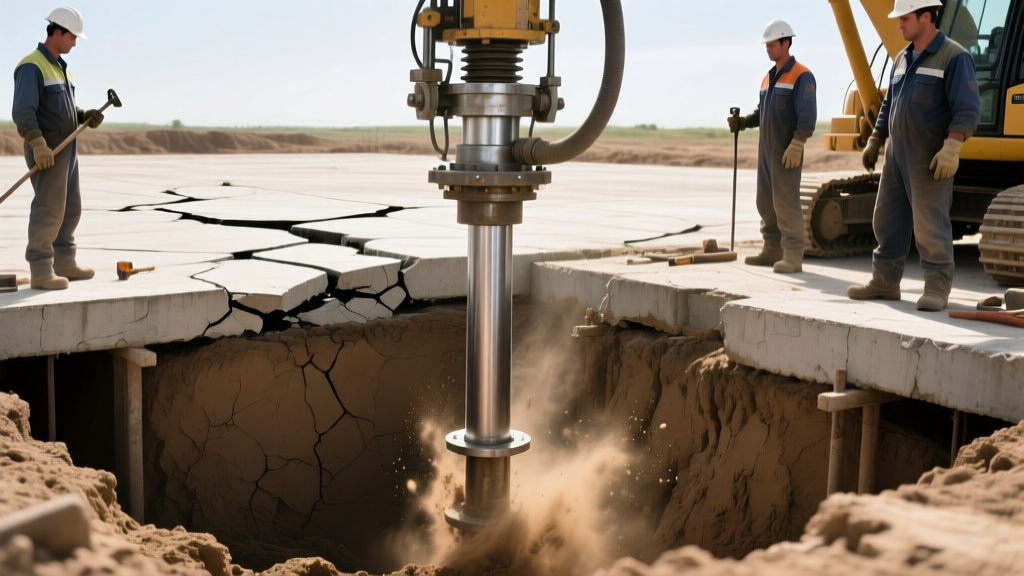
Deflection exceeding two inches, accompanied by stair-step cracking in exterior masonry veneer or severe floor slopes, indicates a failure of the load-bearing soil strata. Slabjacking is insufficient here. Engineers will specify underpinning using steel push piers driven hydraulically through the unstable soil until they refusal on bedrock or a highly compacted load-bearing stratum. A typical 2,000 sq. ft. home may require 15 to 25 piers along the affected perimeter.
Hidden Cost Variables That Inflate Your Final Bill
The initial estimate provided by a foundation repair contractor rarely accounts for the ancillary work required to access the slab or mitigate the root cause of the failure. Budget for these frequent edge cases:
- Under-Slab Plumbing Leaks ($2,500 – $6,000): If a sewer or water line leaks beneath the slab, it washes away the subgrade (a process called piping), creating voids. Before any foundation lifting can occur, a plumber must perform a hydrostatic pressure test, tunnel under the grade beam to repair the pipe, and backfill the void. Lifting a slab with an active leak will snap the plumbing lines.
- Concrete Cutting and Removal ($800 – $2,000): Installing interior piers requires jackhammering out 3x3 foot sections of the interior slab to access the soil, followed by pouring new concrete patches after the piers are capped.
- Exterior Obstruction Removal ($500 – $1,500): HVAC units, concrete AC pads, decks, and mature landscaping must be removed or protected before exterior excavation and pier installation can begin.
- Root Barrier Installation ($1,500 – $3,500): If large oak or willow trees are extracting moisture from the soil beneath the slab (causing soil desiccation and shrinkage), contractors will trench and install high-density polyethylene (HDPE) root barriers to a depth of 36 inches to sever the root network.
Why Expansive Soils Dictate Your Repair Method
The geotechnical reality of your property is the single largest variable in foundation repair pricing. Soils with a high Plasticity Index (PI > 25), such as the Beaumont and Blackland Prairie clays found in Texas, swell dramatically when wet and shrink when dry. This cyclical volume change exerts thousands of pounds of uplift pressure on concrete grade beams.
According to geotechnical guidelines referenced by Bankrate's real estate and home maintenance division, repairing a slab in highly expansive soil without implementing a moisture control program is a temporary fix. A comprehensive repair bid in these regions must include a root-zone watering system (soaker hoses or automated drip lines placed 18 inches from the grade beam) to maintain constant soil moisture content year-round. Failure to maintain this moisture equilibrium will cause the soil to pull away from the piers, rendering the $30,000 underpinning job ineffective within five years.
Financing and Insurance Coverage Realities
Insurance Warning: Standard HO-3 homeowners insurance policies explicitly exclude foundation damage caused by earth movement, soil settlement, or expansive soils. Coverage is generally only triggered if the foundation damage is the direct, proximate result of a covered peril—such as a sudden, accidental plumbing leak originating from within the home's pressurized water system.
Because insurance rarely covers the average cost of slab foundation repair, homeowners must rely on specialized financing. Many structural repair firms partner with lenders offering unsecured home improvement loans with terms ranging from 36 to 120 months. Alternatively, a Home Equity Line of Credit (HELOC) remains the most cost-effective financing vehicle, provided you have sufficient equity built into the property.
Actionable Next Steps for Homeowners
- Hire an Independent Structural Engineer: Never rely solely on a foundation repair contractor's free inspection. Pay $500 to $800 for an independent licensed Professional Engineer (P.E.) to conduct a manometer survey (measuring floor elevation variations to the tenth of an inch) and draft a geotechnical repair plan.
- Solicit Bids Based on the P.E. Plan: Send the engineer's exact specifications to three licensed foundation repair companies. This ensures you are comparing apples-to-apples pricing for the exact number and depth of piers required.
- Verify the Warranty: Demand a fully transferable, lifetime warranty backed by a third-party surety bond or insurance policy, not just the contractor's corporate promise. If the repair company goes out of business in 2029, a self-backed warranty is worthless.
Written by
David NakamuraDavid Nakamura is a licensed architect (AIA) and construction technology writer focused on sustainable building methods, mass timber engineering, and high-performance building envelopes. He holds a Master of Architecture from the University of Washington and is a certified Passive House Consultant (CPHC). David spent eight years at the Seattle firm Mithun, where he led the design of three LEED Platinum projects, before founding his own practice specializing in net-zero residential design. He serves on the editorial advisory board of GreenBuilder Magazine and has authored peer-reviewed papers on cross-laminated timber (CLT) connections for the Journal of Structural Engineering. In his spare time, David teaches woodworking at Pratt Fine Arts Center and kayaks the Puget Sound.
More from David Nakamura
View all
Construction Cost
Labor Cost to Build a Deck Per Sq Ft: 2026 Installation Guide
Discover the exact labor cost to build a deck per sq ft in 2026. This installation guide breaks down contractor rates, complexity factors, and hidden fees.
Aug 4, 2026

Construction Cost
How Much Does It Cost to Build a 3 Bedroom House? Financing Guide
Learn exactly how much it costs to build a 3 bedroom house and explore 2026 financing options, construction loan types, and budget frameworks for your build.
Aug 4, 2026

Construction Cost
Cost to Build a Tennis Court: 2026 Guide
How much does it cost to build a tennis court in 2026? Breakdowns for asphalt, concrete, and synthetic surfaces plus fencing and lighting.
Jul 30, 2026