2026 Crack in Foundation Repair Cost & Pricing Guide
Discover the 2026 crack in foundation repair cost breakdown. Compare epoxy, polyurethane, and piering prices with our expert diagnostic guide.

The True Economics of Foundation Crack Repair
Foundation cracks are an inevitable byproduct of concrete curing, soil settlement, and hydrostatic pressure. However, the financial impact of these fractures ranges from a minor $50 DIY sealant application to a $35,000 structural underpinning project. Understanding the exact crack in foundation repair cost requires moving beyond generic national averages and analyzing the specific geometry of the crack, the underlying soil mechanics, and the chemical properties of the repair materials. In 2026, material costs for structural epoxies and carbon fiber reinforcement have stabilized, but specialized labor and exterior excavation continue to drive regional price variations. According to guidelines published by the Foundation Performance Association, misdiagnosing a structural settlement crack as a benign shrinkage crack is the leading cause of premature repair failure, ultimately doubling the long-term cost for homeowners.
2026 Cost Matrix: Repair Methods and Pricing
The repair methodology is dictated by the crack's width, orientation, and structural impact. Below is a detailed breakdown of standard repair techniques, including material specifications and current market pricing.
| Repair Method | Best Application | Material Spec | Average Cost (2026) |
|---|---|---|---|
| Routing and Sealing | Non-structural hairline cracks (<1/16') | Polyurethane caulking (e.g., SikaFlex) | $150 - $350 per crack |
| Polyurethane Injection | Active leaking vertical cracks | Hydrophilic high-density foam | $300 - $650 per crack |
| Epoxy Injection | Structural vertical/diagonal cracks | ASTM C881 Type I structural epoxy | $500 - $1,100 per crack |
| Carbon Fiber Straps | Horizontal cracks, bowing walls | Kevlar-carbon weave (12' width) | $800 - $1,400 per strap |
| Wall Anchors | Severe inward deflection (>2 inches) | Galvanized steel earth anchors | $1,200 - $1,800 per anchor |
| Helical/Resistance Piers | Stair-step cracks, differential settlement | Heavy-duty steel shafting (2 7/8' OD) | $1,800 - $2,800 per pier |
Diagnostic Framework: Matching the Crack to the Cure
Accurately identifying the crack typology is the most critical step in controlling your repair costs. The American Concrete Institute (ACI) categorizes concrete cracking into distinct failure modes, each requiring a fundamentally different engineering response.
1. Vertical Shrinkage Cracks (Benign)
These cracks typically appear within the first 12 to 24 months after a foundation is poured. They are caused by the rapid loss of moisture during the concrete curing process. They are usually uniform in width (less than 1/8 inch) and do not indicate structural failure. While they do not compromise the load-bearing capacity of the wall, they act as direct conduits for water intrusion and soil gases like radon. The Fix: High-pressure polyurethane foam injection. The hydrophilic nature of the foam allows it to react with moisture inside the crack, expanding to fill microscopic voids and creating a permanent, flexible watertight seal.
2. Diagonal Settlement Cracks (Moderate to Severe)
Running at 30 to 75-degree angles, these cracks indicate that one section of the foundation footing has dropped relative to another. They are often wider at the top than at the bottom. If left untreated, the differential movement will transfer stress to the upper framing, causing drywall tears and sticking doors. The Fix: Structural epoxy injection. Unlike polyurethane, epoxy cures to a tensile strength exceeding 7,000 psi, effectively welding the concrete back together and restoring its original structural integrity. Note that epoxy requires a completely dry crack; if the crack is actively leaking, it must first be sealed with a fast-setting hydraulic cement or polyurethane before the epoxy can be applied.
If you observe a horizontal crack running along the mortar joint of a concrete masonry unit (CMU) block wall or a mid-wall horizontal fracture in poured concrete, this is an immediate structural emergency. This indicates that lateral hydrostatic pressure from saturated exterior soil is exceeding the wall's bending capacity. Do not attempt to seal this with epoxy or caulk. This requires immediate installation of carbon fiber reinforcement or steel wall anchors to prevent catastrophic wall collapse.
3. Stair-Step Cracks in Masonry (Severe)
Exclusive to brick, cinder block, and stone foundations, stair-step cracks follow the mortar joints in a zig-zag pattern. This is the classic signature of differential settlement, where the soil beneath the footing is failing unevenly. The Fix: Underpinning with helical piers or resistance push piers. The piers are driven through the unstable surface soils down to load-bearing bedrock or dense strata, and hydraulic jacks are used to lift and stabilize the foundation. This is the most expensive repair category but is non-negotiable for halting progressive settlement.
Hidden Cost Multipliers to Anticipate
Contractor estimates often focus strictly on the crack repair itself, leaving homeowners blindsided by ancillary restoration costs. When budgeting for a crack in foundation repair, factor in the following variables:
- Interior Finish Removal: If your basement is finished, contractors must remove drywall, insulation, and baseboards to access the foundation wall. Expect to pay $2.50 to $4.50 per square foot for demolition and disposal, plus the cost of reconstruction.
- Exterior Excavation: Some cracks require exterior waterproofing membranes and French drain installations to relieve hydrostatic pressure. Hand-excavating soil to the footing costs between $75 and $150 per linear foot, while machine excavation requires heavy equipment access and subsequent landscaping restoration.
- Engineering Reports: For any repair involving piers or wall anchors, your local building department will likely require a stamped engineering plan. Independent structural engineers charge $500 to $1,200 for a site visit and formal report. Always hire an independent engineer, not one employed by the repair contractor, to avoid conflicts of interest.
- Permitting and Inspections: Municipal permits for structural foundation repairs typically range from $150 to $600, depending on the jurisdiction and the scope of the underpinning work.
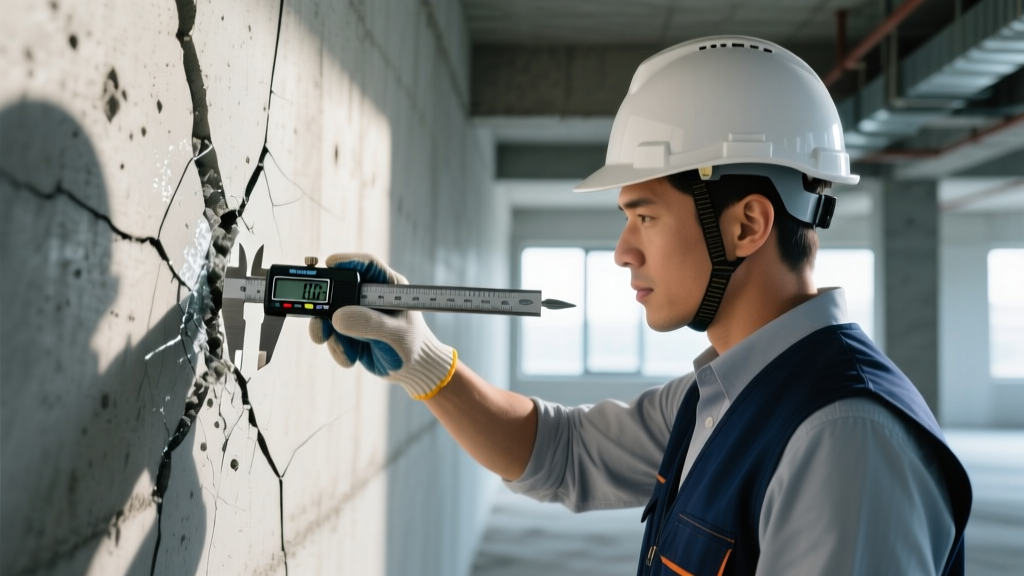
DIY Products vs. Professional Injection Systems
The home improvement market is saturated with DIY foundation crack repair kits, typically priced between $40 and $120. These kits usually consist of low-viscosity polyurethane or basic epoxy applied via a standard caulking gun or low-pressure syringe. While these are adequate for superficial, non-leaking hairline cracks in unfinished utility spaces, they lack the delivery mechanism required for structural repairs.
Professional contractors use high-pressure injection pumps (capable of generating 3,000 to 5,000 PSI) and mechanical packers drilled directly into the concrete at intersecting angles. This ensures the resin penetrates the entire depth of the wall (often 8 to 10 inches thick) and migrates into the surrounding soil to create an exterior bulb seal. A DIY surface application only seals the interior face of the crack, leaving the exterior vulnerable to freeze-thaw spalling and continued water migration. According to inspection standards outlined by the International Association of Certified Home Inspectors (InterNACHI), superficial patching of active foundation leaks is considered a temporary cosmetic fix, not a permanent structural repair.
Strategic Timing: When to Execute the Repair
Timing your repair can significantly impact the final invoice. Foundation repair companies experience peak demand during the spring thaw and late autumn freeze, when hydrostatic pressure and frost heave cause existing cracks to open and leak aggressively. Scheduling non-emergency epoxy injections or carbon fiber installations during the dry, stable months of late summer can sometimes yield a 10% to 15% discount on labor rates. Furthermore, addressing a vertical shrinkage crack the moment it stops weeping—rather than waiting for it to calcify and accumulate mineral deposits—ensures better chemical adhesion for the injection resin, reducing the likelihood of a costly callback warranty claim.
Written by
David NakamuraDavid Nakamura is a licensed architect (AIA) and construction technology writer focused on sustainable building methods, mass timber engineering, and high-performance building envelopes. He holds a Master of Architecture from the University of Washington and is a certified Passive House Consultant (CPHC). David spent eight years at the Seattle firm Mithun, where he led the design of three LEED Platinum projects, before founding his own practice specializing in net-zero residential design. He serves on the editorial advisory board of GreenBuilder Magazine and has authored peer-reviewed papers on cross-laminated timber (CLT) connections for the Journal of Structural Engineering. In his spare time, David teaches woodworking at Pratt Fine Arts Center and kayaks the Puget Sound.
More from David Nakamura
View all
Construction Cost
Labor Cost to Build a Deck Per Sq Ft: 2026 Installation Guide
Discover the exact labor cost to build a deck per sq ft in 2026. This installation guide breaks down contractor rates, complexity factors, and hidden fees.
Aug 4, 2026

Construction Cost
How Much Does It Cost to Build a 3 Bedroom House? Financing Guide
Learn exactly how much it costs to build a 3 bedroom house and explore 2026 financing options, construction loan types, and budget frameworks for your build.
Aug 4, 2026

Construction Cost
Cost to Build a Tennis Court: 2026 Guide
How much does it cost to build a tennis court in 2026? Breakdowns for asphalt, concrete, and synthetic surfaces plus fencing and lighting.
Jul 30, 2026