Foundation Cracks Repair Cost & Selection Framework (2026)
Navigate the 2026 foundation cracks repair cost landscape. Use our selection framework to choose between epoxy, polyurethane, and structural piering.

The Anatomy of Foundation Cracks: Diagnosing Before Pricing
Before evaluating the foundation cracks repair cost, you must accurately classify the fracture. Not all cracks are created equal, and applying the wrong chemical or mechanical repair to the wrong fracture type is the leading cause of callback failures in the industry. According to guidelines published by the American Concrete Institute (ACI), concrete shrinkage cracks typically appear within the first 30 to 90 days of a pour, while differential settlement cracks can manifest years later due to soil consolidation or hydrostatic pressure changes.
The Dime Test and Stair-Step Patterns
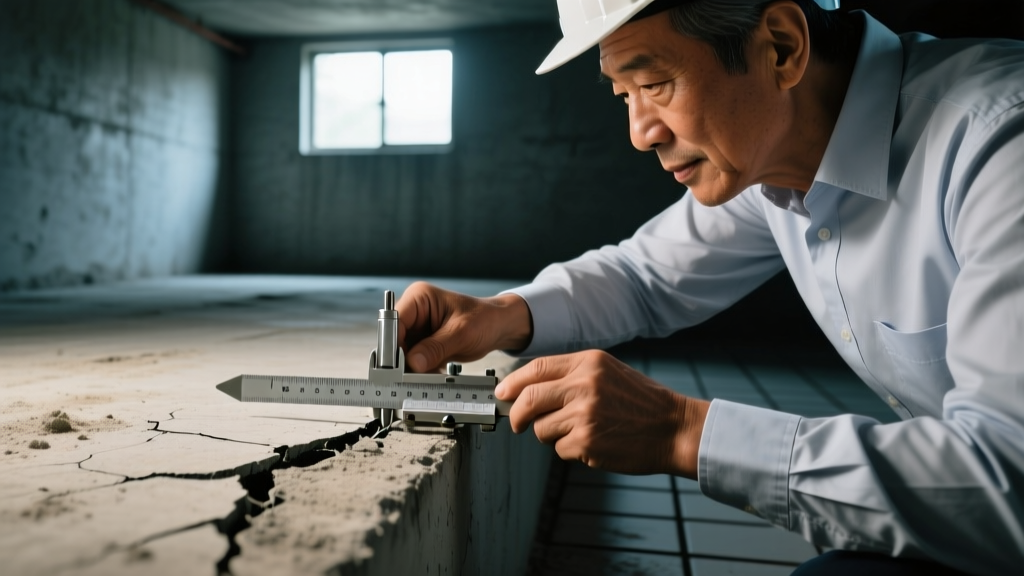
As a baseline field test, if a vertical shrinkage crack is narrower than a dime (approximately 1/16th of an inch) and shows no vertical displacement (shear), it is typically a cosmetic or minor water-intrusion issue. Conversely, stair-step cracks in CMU (Concrete Masonry Unit) block foundations or horizontal cracks with inward bowing indicate severe lateral soil pressure or foundation wall failure, requiring structural intervention rather than simple crack injection.
2026 Foundation Cracks Repair Cost Matrix
Pricing for foundation repair has stabilized in 2026 following the supply chain fluctuations of the early 2020s, though specialized geotechnical labor remains at a premium. The table below outlines current market rates for residential foundation crack remediation.
| Repair Method | Material Cost | Labor Cost | Total Range (2026) | Best Application |
|---|---|---|---|---|
| Polyurethane Injection | $4 - $8 / lin. ft. | $8 - $14 / lin. ft. | $12 - $22 / lin. ft. | Active leaks, non-structural water stops |
| Epoxy Injection | $6 - $12 / lin. ft. | $9 - $16 / lin. ft. | $15 - $28 / lin. ft. | Dormant structural cracks, restoring tensile strength |
| Carbon Fiber Straps | $300 - $500 / strap | $600 - $900 / strap | $900 - $1,400 / strap | Bowing walls, shear reinforcement, stair-step cracks |
| Helical Piers | $800 - $1,400 / pier | $1,000 - $1,800 / pier | $1,800 - $3,200 / pier | Differential settlement, underpinning failing footings |
| Exterior French Drain | $25 - $45 / lin. ft. | $40 - $65 / lin. ft. | $65 - $110 / lin. ft. | Mitigating hydrostatic pressure at the footing level |
Material Selection Framework: Matching Chemistry to the Crack
Choosing the right injection resin or mechanical reinforcement requires understanding the chemical properties and structural limitations of modern repair materials.
1. Low-Pressure Polyurethane Injection (Water-Stop)
For actively leaking cracks, hydrophilic polyurethane is the undisputed standard. Products like Sika Injection-202 CE or the RadonSeal Crack Repair Kit utilize a two-part resin that reacts with moisture. When injected at low pressures (under 50 PSI) via surface-mounted ports, the resin expands up to 20 times its original volume, forcing its way into the microscopic capillaries of the concrete matrix.
- Cure Time: 30 to 45 minutes in the presence of water.
- Flexibility: Remains elastomeric, accommodating minor seasonal thermal expansion and contraction without tearing.
- Limitation: Provides zero structural reinforcement. Do not use on load-bearing shear cracks.
2. High-Modulus Epoxy Injection (Structural Welding)
If the crack is completely dry and dormant, high-modulus epoxy effectively 'welds' the concrete back together. Formulations such as Emecole Metro 102 or SikaDur 35 Hi-Mod LV boast tensile strengths exceeding 7,000 PSI, which is actually stronger than the tensile strength of the original 3,000 PSI poured concrete wall.
- Preparation Requirement: The crack must be routed out and sealed with an epoxy paste cap coat to prevent the low-viscosity liquid from bleeding out during injection.
- Limitation: Rigid and unforgiving. If the foundation shifts even 1/16th of an inch post-repair, the concrete will crack again, usually right beside the epoxy bond line.
3. Carbon Fiber Reinforcement (Bowing and Shear)
When horizontal cracks are accompanied by inward wall deflection (bowing), injection alone is insufficient. Carbon fiber grids, such as Fortress Stabilization or Rhino Carbon Fiber systems, are bonded to the wall using structural epoxy. These straps offer a tensile strength up to 10 times greater than steel at a fraction of the weight, effectively locking the wall in place and transferring lateral loads back to the floor diaphragm and top plate.
The Diagnostic Decision Tree
Use this sequential framework on-site to determine the correct repair protocol and accurately estimate the final foundation cracks repair cost.
- Is water actively entering the crack?
- Yes: Stop the water first. Use hydrophilic polyurethane injection. Address exterior grading and gutter downspouts to prevent recurrence.
- No: Proceed to Step 2.
- Is there vertical displacement (shear) or horizontal bowing > 1/2 inch?
- Yes: The wall has structurally failed. Install carbon fiber straps (for minor deflection) or steel I-beam wall anchors (for severe deflection). Excavate exterior soil to relieve lateral pressure.
- No: Proceed to Step 3.
- Is the crack wider at the top than the bottom, or accompanied by sticking doors/windows on floors above?
- Yes: You have differential settlement. The footing is sinking. Crack injection is a temporary bandage. You must install helical piers or push piers to stabilize the footing.
- No: The crack is likely a dormant shrinkage fracture. Seal with high-modulus epoxy to restore structural integrity and prevent future moisture ingress.
Hidden Costs and Edge Cases in 2026
Homeowners and contractors frequently underbudget for foundation repair by ignoring the secondary systems required to keep the repair intact. The Foundation Performance Association (FPA) emphasizes that repairing a crack without addressing the geotechnical root cause is a liability.
Edge Case: Cold Joints vs. True Cracks
A common misdiagnosis involves treating a concrete cold joint as a structural crack. A cold joint occurs when a new batch of concrete is poured against a batch that has already begun to set (often seen between the footing and the first course of the foundation wall). Cold joints are highly susceptible to water intrusion but cannot be structurally 'welded' with epoxy. They must be sealed using hydrophobic polyurethane or exterior bentonite clay membranes. Budget an additional $8 to $15 per linear foot for cold joint routing and injection.
Permitting and Engineering Fees
In many municipalities, any structural foundation repair involving underpinning (piers) or load-bearing wall reinforcement (carbon fiber/steel beams) requires a stamped engineering drawing and a municipal building permit. Expect to pay $800 to $1,500 for a licensed structural engineer's site visit and stamped repair plan, plus $150 to $400 in local permit fees. Always factor these soft costs into your total project budget before signing a contractor's proposal.
Written by
James ThorntonJames Thornton is a construction industry veteran with 25 years of hands-on experience in wood framing, lumber grading, and residential building codes. He started as a framing carpenter in rural Oregon, earned his ICC Residential Building Inspector certification, and eventually became a senior plan reviewer for the City of Portland Bureau of Development Services. James holds a B.S. in Wood Science & Technology from Oregon State University and is a certified lumber grader through the West Coast Lumber Inspection Bureau (WCLIB). He has inspected over 3,000 residential construction sites and authored the city's internal guide on advanced framing techniques (2x6 at 24" O.C.). James lives in Bend, OR, where he builds custom timber-frame cabins and competes in lumberjack sports.
More from James Thornton
View all
Insulation
Best Home Insulation Materials: Complete 2026 Guide
Compare top home insulation materials for 2026. Find R-values, installed costs per square foot, and best uses for fiberglass, spray foam, and mineral wool.
Aug 4, 2026

Sustainable Building
Certify Your Green Building Material for LEED and WELL
Step-by-step guide to certifying a green building material for LEED v5 and WELL v2. Master EPDs, HPDs, and VOC limits for 2026 project specifications.
Aug 4, 2026

Stone & Masonry
Veneer Stacked Stone Panels: Interior Design & Style Showcase
Discover how veneer stacked stone panels transform interiors. Explore modern design profiles, material pairings, and technical installation specs.
Aug 4, 2026