Foundation Shifting Repair Cost: 2026 Method Comparison
Compare foundation shifting repair costs in 2026. Break down pricing for helical piers, push piers, polyurethane jacking, and wall anchors.

The True Economics of Foundation Shifting Repair
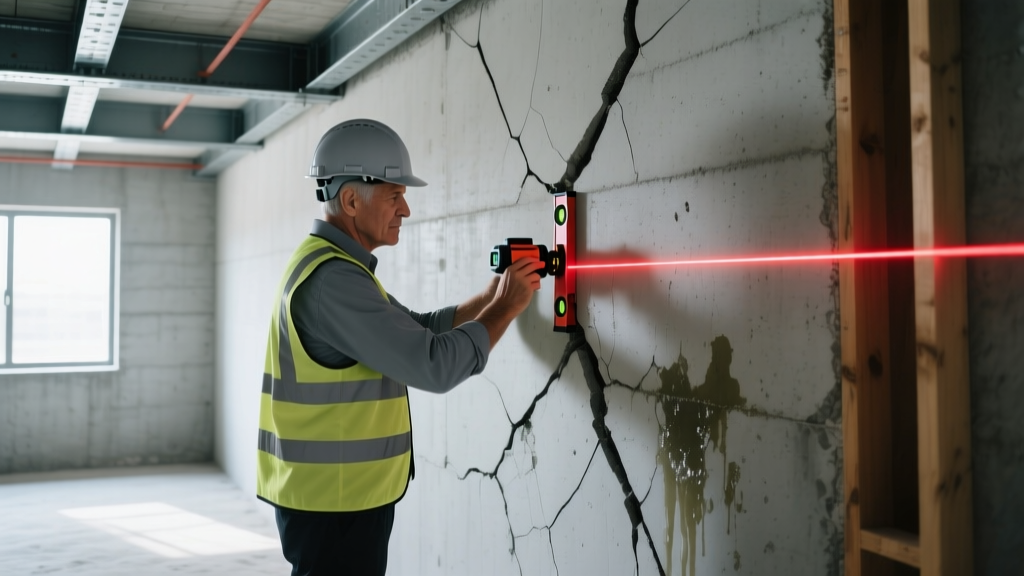
When a structure exhibits differential settlement, diagonal drywall cracking, or binding doors, the immediate concern is structural integrity. The secondary concern is almost always the foundation shifting repair cost. In 2026, this cost is not a single flat rate but a highly variable spectrum dictated by the specific failure mechanism: vertical settlement, slab voids, or lateral soil pressure. According to data from the Foundation Performance Association, misdiagnosing the root cause of the shift and applying the wrong remediation method can result in a 40% to 60% budget overrun due to secondary failures.
This guide bypasses generic estimates to provide a technical, method-by-method cost comparison for the primary foundation stabilization systems used by structural engineers today. We evaluate deep foundation piers, slab-lifting polymers, and lateral reinforcement systems based on current material costs, load capacities, and long-term viability.
Quick Cost Summary (2026 National Averages)
- Helical Piers: $1,800 – $2,500 per pier (Vertical Settlement)
- Push Piers: $1,500 – $2,200 per pier (Heavy Vertical Settlement)
- Polyurethane Foam Jacking: $12 – $18 per sq. ft. (Slab Voids/Sinking)
- Carbon Fiber Straps: $450 – $750 per strap (Lateral Bowing)
- Geotechnical Engineering Report: $600 – $1,400 (Required Pre-Repair)
Deep Foundation Systems: Helical vs. Push Piers
When a perimeter beam or continuous footing shifts due to unstable, expansive, or poorly compacted soil, the load must be transferred past the active soil zone into load-bearing strata or bedrock. This is achieved using deep foundation piers. The two dominant technologies are helical piers and push piers, and the foundation shifting repair cost varies significantly between them based on installation mechanics.
Helical Piers: The Versatile Standard
Helical piers feature steel shafts with helical bearing plates (resembling large screws) that are mechanically torqued into the ground. They are the premier choice for lighter structures or situations where the structure cannot provide the resistance needed to push a pier downward. Leading manufacturers like Hubbell Power Systems (Chance brand) engineer these piers to meet ASTM D3689 standards for deep foundations.
- Load Capacity: Typically 50,000 to 70,000 lbs per pier.
- Installation: Hydraulic rotary drive; minimal vibration; no curing time.
- Best Application: New construction pre-stabilization, lighter wood-frame structures, and areas with high water tables where excavation is difficult.
- Cost Factor: Higher material cost due to the forged helical plates, but faster installation in rocky or dense soils.
Push Piers: The Heavy-Duty Alternative
Push piers (or resistance piers) utilize the actual weight of the structure to hydraulically drive smooth steel pipe sections deep into the ground until they reach refusal (bedrock or dense load-bearing soil). Earth Contact Products (ECP) and similar brands dominate this space. Because they rely on the structure's weight, they are unsuitable for lightweight additions but excel under heavy masonry or multi-story commercial buildings.
- Load Capacity: 60,000 to 90,000+ lbs per pier.
- Installation: Requires significant structural weight; involves more exterior soil excavation to access the footing.
- Best Application: Severe settlement in heavy brick, stone, or multi-story concrete structures.
- Cost Factor: Lower material cost per linear foot, but higher labor and landscaping restoration costs due to the required excavation footprint.
| Feature | Helical Piers | Push Piers |
|---|---|---|
| Average Cost per Pier (2026) | $1,800 - $2,500 | $1,500 - $2,200 |
| Depth Limitation | Torque-limited (usually 20-40 ft) | Refusal-limited (can exceed 60 ft) |
| Excavation Required | Minimal (can be installed through small access pits) | Moderate to Heavy (requires exposing the footing) |
| Structural Weight Needed | None (mechanically screwed in) | High (uses building weight as resistance) |
Slab Lifting: Polyurethane Foam vs. Traditional Mudjacking
Not all foundation shifting involves perimeter footings. Concrete slab-on-grade foundations frequently experience localized sinking due to soil erosion, plumbing leaks, or poor initial compaction. The Texas A&M AgriLife Extension notes that expansive soils can cause severe slab deflection if moisture levels fluctuate wildly. When the slab itself drops, lifting is required.
Polyurethane Foam Jacking (Polyjacking)
This modern technique involves drilling 5/8-inch holes through the slab and injecting high-density, closed-cell polyurethane foam (such as Alchemy-Spetec AP Lift 430). The foam expands rapidly, filling voids and lifting the concrete with pinpoint precision.
- Cost: $12 to $18 per square foot.
- Material Weight: Extremely light (approx. 2.5 to 4 lbs per cubic foot), adding virtually no dead load to the underlying soil.
- Cure Time: 15 minutes. The slab can bear full structural loads immediately.
- Longevity: Impervious to water; will not wash out or degrade over time.
Traditional Mudjacking (Slabjacking)
The legacy method pumps a slurry of cement, topsoil, and water beneath the slab. While the material cost is lower, the foundation shifting repair cost over the lifecycle of the repair is often higher due to failure rates.
- Cost: $5 to $9 per square foot.
- Material Weight: Very heavy (100+ lbs per cubic foot), which can exacerbate settlement in weak, clay-heavy soils.
- Cure Time: 24 to 48 hours before heavy use.
- Longevity: Susceptible to erosion if water infiltrates the subgrade again; requires larger (1.5-inch) drill holes.
Expert Warning: Never use mudjacking to lift a structural grade beam or a foundation wall. The immense weight of the slurry can overload marginal soils, causing a secondary settlement event within 3 to 5 years. Reserve mudjacking strictly for non-structural flatwork like driveways or sidewalks.
Lateral Shift Solutions: Carbon Fiber vs. Wall Anchors
Basement foundations and crawl space stem walls often experience lateral shifting—bowing inward due to hydrostatic pressure and expansive soil pushing against the exterior. The repair cost here is measured linearly rather than by depth.
Carbon Fiber Straps
Carbon fiber reinforcement utilizes aerospace-grade epoxy to bond high-tensile carbon fiber straps (like those from Fortress Stabilization or StablWall) directly to the interior of bowing concrete block or poured walls. This halts further inward movement but cannot straighten an already severely bowed wall.
- Cost: $450 to $750 per strap (typically spaced 4 feet apart).
- Application Limit: Effective for walls bowing less than 2 inches inward.
- Advantage: Zero exterior excavation required; minimal loss of interior square footage.
Helical Tiebacks and Wall Anchors
For walls bowing more than 2 inches, or walls that have suffered severe shear cracking, tiebacks are required. These involve driving a helical anchor deep into the exterior soil and connecting it to an interior wall plate via a steel rod, allowing contractors to actively pull the wall back toward plumb over time.
- Cost: $700 to $1,100 per anchor.
- Application Limit: Requires exterior property line clearance to drive the anchors; cannot be used if the neighbor's property is immediately adjacent.
- Advantage: Actively corrects the bow, not just halts it.
Hidden Cost Variables That Derail Budgets
Contractor quotes for foundation shifting repair often exclude critical ancillary costs. When budgeting, you must account for the following variables identified in comprehensive HUD Residential Foundation Systems evaluations:
- Geotechnical Engineering Reports ($600 - $1,400): Never authorize a pier installation without an independent structural or geotechnical engineer specifying the exact number, depth, and placement of the piers. Contractor-designed layouts often result in over-engineering and inflated costs.
- Plumbing Rerouting and Testing ($800 - $2,500): Lifting a settled slab will snap rigid cast-iron or copper plumbing lines. A hydrostatic pressure test must be performed post-lift to ensure no leaks are introduced into the subgrade.
- Landscaping and Hardscape Restoration ($1,500 - $5,000+): Push pier installations require trenching along the perimeter. Concrete sidewalks, HVAC pads, and mature shrubbery in the work path will be destroyed and must be factored into the total project cost.
- Municipal Permits ($150 - $450): Most jurisdictions require permits and inspections for deep foundation underpinning. Unpermitted work can void your homeowner's insurance and halt future real estate transactions.
The Shifting Diagnosis Matrix: Matching Method to Failure
To optimize your foundation shifting repair cost, you must accurately map the symptom to the engineered solution. Use this decision framework before soliciting contractor bids:
Diagnostic Decision Tree
IF the exterior brick facade shows stair-step cracking AND interior floors slope toward the exterior walls...
THEN you have perimeter footing settlement. Solution: Helical or Push Piers.
IF the interior floor slopes toward the center of the house, but exterior walls remain plumb...
THEN you have interior slab settlement or a failing interior grade beam. Solution: Interior slab polyjacking or interior beam underpinning.
IF basement walls are bowing inward with horizontal cracking at the mortar joints...
THEN you have lateral hydrostatic pressure failure. Solution: Carbon fiber (if < 2" bow) or Helical Tiebacks (if > 2" bow).
IF the concrete driveway or patio has sunk 3 inches below the garage slab...
THEN you have non-structural flatwork settlement. Solution: Polyurethane foam jacking.
Expert Verdict: Prioritize Engineering Over Sales
The foundation shifting repair cost is ultimately an investment in structural longevity. The most expensive mistake a property owner can make is hiring a repair contractor who relies on proprietary, commission-based sales representatives rather than independent engineering data. Always mandate that the repair methodology be dictated by a licensed Professional Engineer (PE) who understands local soil mechanics, particularly the plasticity index of expansive clays. By matching the exact failure mode to the correct deep foundation or slab-lifting technology, you ensure the repair is both economically efficient and structurally permanent.
Written by
Sarah WhitfieldSarah Whitfield is a chartered quantity surveyor (MRICS) and construction cost analyst with 15 years of experience in material pricing, procurement strategy, and project budgeting. She earned her degree in Construction Management from the University of Reading (UK) and has worked on projects ranging from $2M custom homes to $180M mixed-use developments across North America and Europe. Sarah currently leads cost estimating for BuildMat Insight, maintaining a proprietary database of 4,000+ material price points updated quarterly. She is a frequent contributor to RSMeans cost data panels and has presented at the International Cost Engineering Council (ICEC) congress. Based in Denver, CO, Sarah is an avid trail runner and volunteer mentor for Women in Construction.
More from Sarah Whitfield
View all
Wood & Lumber
What Are the Different Types of Wood? A Builder's Guide
Compare structural softwoods, finish hardwoods, and engineered lumber. Analyze Janka ratings, MOE values, and 2026 pricing for construction.
Aug 4, 2026

Walls & Panels
Steel Framing vs Wood Framing: Corrosion and Moisture Defense
Compare steel framing vs wood framing for moisture resistance. Learn about galvanized coatings, condensation risks, and corrosion protection strategies.
Jul 21, 2026

Stone & Masonry
How to Cut Stone Veneer: Wet Saw vs Grinder Comparison
Compare the best tools for cutting stone veneer. We review wet saws, angle grinders, and chop saws to help you achieve clean, chip-free cuts.
Jul 21, 2026