Ruben Mendoza Foundation Building Materials: 2026 Cost Analysis
Analyze 2026 pricing for Ruben Mendoza foundation building materials. Compare concrete, rebar, and waterproofing costs against national averages.
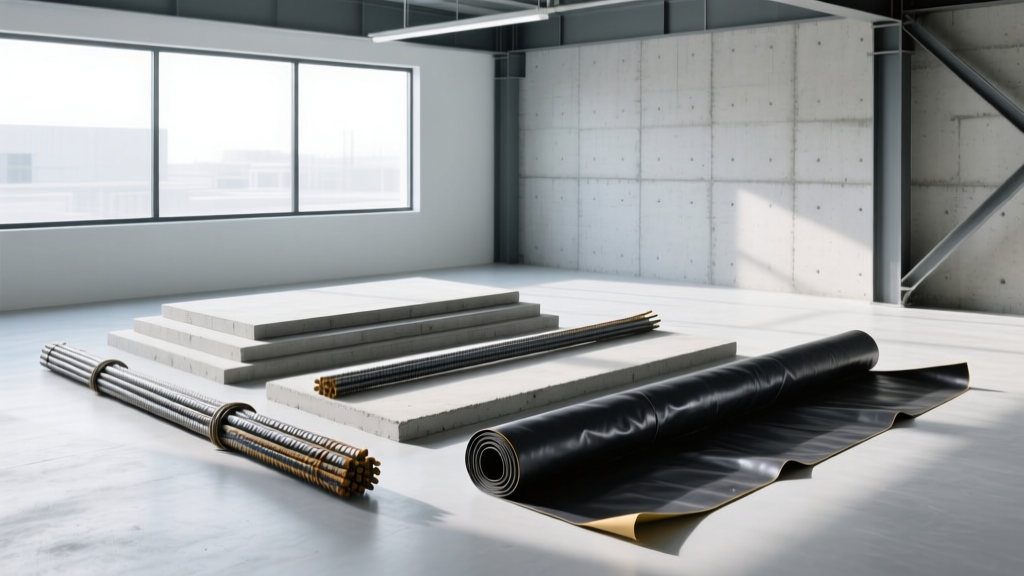
Sourcing Substructure Components: The Specialized Distributor Advantage
When engineering a slab-on-grade, crawlspace, or full basement foundation, the structural integrity of the build relies entirely on the quality of substructure materials. While general contractors often default to big-box home improvement centers for convenience, specialized regional suppliers like Ruben Mendoza Foundation Building Materials offer distinct advantages in material grade, bulk pricing, and technical compliance. In 2026, with continued volatility in global steel production and regional cement shortages, understanding the exact cost deltas between specialized foundation distributors and standard retail outlets is critical for accurate project estimating.
This cost analysis dissects the pricing structure, material specifications, and hidden logistical fees associated with sourcing from Ruben Mendoza Foundation Building Materials, benchmarking these costs against national averages and big-box retail pricing for a standard 2,500-square-foot residential foundation.
2026 Foundation Material Market Context
According to the Bureau of Labor Statistics Producer Price Index, construction material costs have stabilized in 2026 after the aggressive inflation spikes of previous years. However, specialized high-strength concrete mixes and epoxy-coated reinforcement steel remain subject to regional supply chain bottlenecks. Sourcing from dedicated foundation material yards locks in pricing through direct batch-plant contracts, bypassing the retail markup typical of general lumberyards.
Core Material Pricing: Ruben Mendoza vs. Big-Box vs. Wholesale
The following matrix breaks down the per-unit costs for essential foundation materials. Pricing reflects Q1 2026 regional averages for specialized distributors like Ruben Mendoza Foundation Building Materials compared to national big-box retailers and direct wholesale batch plants.
| Material Specification | Ruben Mendoza (Specialized) | Big-Box Retail | Direct Wholesale |
|---|---|---|---|
| 5000 PSI Concrete (per cubic yard, delivered) | $158 - $165 | $185 - $210 (bagged equiv.) | $140 - $150 |
| #5 Grade 60 Rebar (per 20ft stick, black) | $19.50 - $22.00 | $26.00 - $29.00 | $16.00 - $18.00 |
| 15-mil Poly Vapor Barrier (per 1,000 sq ft roll) | $185.00 | $240.00 - $265.00 | $160.00 |
| Self-Adhering Waterproofing Membrane (per sq ft) | $2.85 - $3.15 | $4.50 - $5.25 | $2.50 |
Deep Dive: Concrete Mix Designs and Reinforcement
The most significant cost variable in any foundation system is the concrete pour. Specialized suppliers do not merely sell concrete; they engineer the mix design for specific soil conditions and load requirements. When ordering through Ruben Mendoza Foundation Building Materials, contractors are typically sourcing a 5000 PSI mix utilizing ASTM C150 Type I/II Portland cement, optimized with a water-cement ratio of 0.45 to ensure low permeability and high early strength.
Fiber Mesh vs. Traditional Wire Mesh
For slab-on-grade foundations, secondary reinforcement is mandatory to control plastic shrinkage cracking. Big-box stores primarily sell 6x6 W1.4xW1.4 welded wire mesh, which costs approximately $0.85 per square foot and requires labor-intensive tying and chairing to keep it in the upper third of the slab during the pour.
Specialized distributors heavily push macro-synthetic fiber reinforcement. Added directly to the batch plant mixer at a dosage rate of 3 to 5 lbs per cubic yard, macro-fibers provide three-dimensional crack control. The cost premium for fiber-reinforced concrete is roughly $12 to $15 per cubic yard. For a 2,500 sq ft slab requiring 45 cubic yards, the material upcharge is $675, but it eliminates approximately $2,125 in wire mesh material and saves 12-16 hours of labor, resulting in a net savings of over $1,400.
Specification Checklist for Concrete Orders
- Compressive Strength: Minimum 4000 PSI for interior slabs; 5000 PSI for exterior or garage foundations.
- Slump: Specify a 4-inch to 5-inch slump. Reject loads arriving with a slump over 6 inches, as excess water destroys the water-cement ratio and compromises ultimate strength.
- Aggregate Size: 3/4-inch maximum aggregate for standard foundation walls; 1/2-inch for thin-walled ICF (Insulated Concrete Form) pours.
- Air Entrainment: Mandatory 5% to 7% air content for foundations exposed to freeze-thaw cycles.
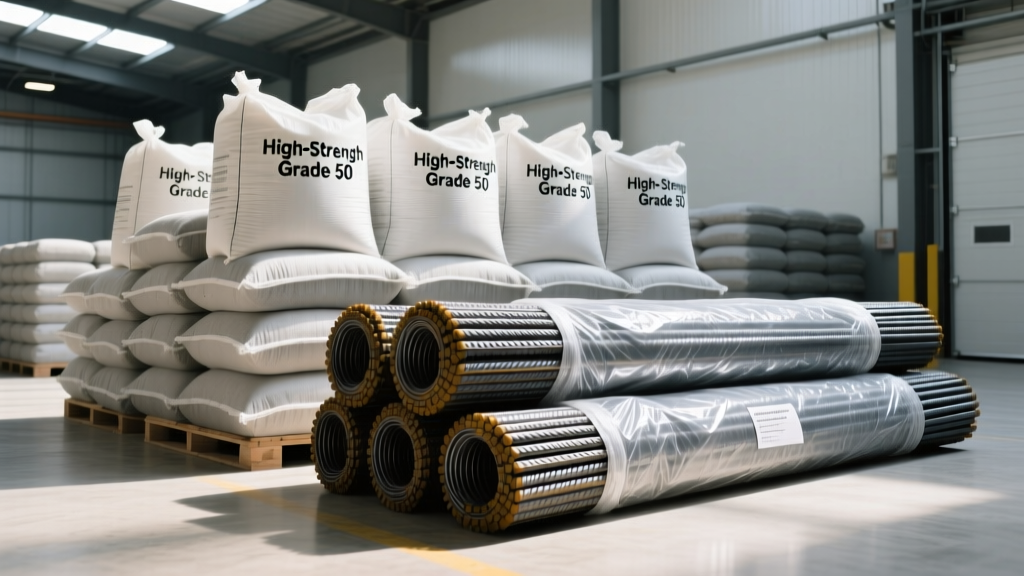
Waterproofing and Capillary Break Systems
Below-grade foundation walls require robust waterproofing to prevent hydrostatic pressure from driving moisture into the living space. The American Concrete Institute (ACI) provides stringent guidelines on below-grade moisture protection, yet many builders still rely on cheap, spray-on asphalt dampproofing. This is a critical failure point.
Ruben Mendoza Foundation Building Materials typically stocks and recommends 40-mil self-adhering modified bitumen membranes (such as Tremco or W.R. Meadows equivalents) for vertical foundation walls. Here is the cost breakdown for a standard 160-linear-foot foundation wall with an 8-foot exposed depth:
- Spray-on Asphalt Dampproofing (The Cheap Route): $0.65 per sq ft. Total for 1,280 sq ft = $832. (Fails to bridge structural cracks and degrades over time).
- Peel-and-Stick Modified Bitumen Membrane (The Specialized Route): $3.00 per sq ft (material) + $1.50 per sq ft (primer/labor). Total for 1,280 sq ft = $5,760.
- Drainage Board / Protection Course: Adding a dimpled high-density polyethylene (HDPE) drainage board over the membrane adds $1.85 per sq ft ($2,368), but it relieves hydrostatic pressure and protects the membrane during backfilling.
While the specialized waterproofing system costs nearly $7,000 more upfront than basic dampproofing, it prevents the catastrophic cost of interior French drain retrofits and mold remediation, which average $15,000 to $25,000 in 2026.
Logistics, Delivery, and Hidden Sourcing Fees
Material unit costs only tell half the story. The logistics of moving heavy, bulk foundation materials to the job site introduce hidden fees that can derail a budget. When analyzing the total cost of ownership, specialized suppliers structure their logistics differently than retail outlets.
Short-Load and Boom Pump Fees
Ready-mix concrete trucks typically hold 10 cubic yards. If a foundation footer requires only 4 cubic yards, batch plants levy a "short-load fee" ranging from $150 to $300. Specialized distributors like Ruben Mendoza often utilize volumetric mixer trucks for smaller foundation elements (like grade beams or isolated piers). Volumetric mixers mix the concrete on-site, meaning you only pay for the exact yardage poured, entirely eliminating short-load penalties and reducing material waste to near zero.
Furthermore, pumping concrete for deep foundation walls or inaccessible lots requires a boom pump. Expect to pay a base mobilization fee of $850 to $1,200, plus $125 per hour of pumping time. Factoring this into the initial material estimate is non-negotiable for complex site layouts.
Pros and Cons of Specialized Foundation Sourcing
Pros of Specialized Distributors
- Technical Expertise: Staff can review soil reports and recommend specific admixtures (e.g., calcium nitrite for corrosion inhibition in high-salinity soils).
- Volume Pricing: Direct relationships with cement plants and steel mills yield 15-25% savings on bulk orders compared to retail.
- Code Compliance: Materials are guaranteed to meet strict ASTM and ACI standards, ensuring smooth building inspections.
- Custom Fabrication: On-site rebar bending and tying services reduce field labor by up to 40%.
Cons & Considerations
- Minimum Order Quantities: Specialized yards often require minimum spend thresholds (e.g., $2,500+) for free delivery.
- Lead Times: Custom-ordered materials like epoxy-coated rebar or specialized ICF blocks may require 3- to 4-week lead times.
- Account Requirements: Many specialized distributors operate on B2B net-30 credit terms, which may require a formal credit application for new contractors.
Final Verdict: Maximizing Foundation ROI in 2026
When executing a comprehensive cost analysis, sourcing from Ruben Mendoza Foundation Building Materials—or equivalent specialized substructure distributors—provides a definitive financial and structural advantage over big-box retail sourcing. While the initial unit costs for premium waterproofing membranes and high-strength concrete mixes appear higher, the elimination of field labor (via fiber mesh and pre-tied rebar cages), the avoidance of short-load fees, and the drastic reduction in long-term moisture-related warranty claims result in a lower total lifecycle cost.
For general contractors and custom home builders operating in 2026, the precision of engineered mix designs and the reliability of ASTM-certified reinforcement materials are not merely code requirements; they are critical levers for protecting profit margins and ensuring the century-long durability of the built structure. Transitioning your supply chain to specialized foundation distributors is a high-ROI operational shift that pays dividends on the very first pour.
Written by
Marcus ChenMarcus Chen is a licensed structural engineer (PE) and building materials analyst with over 12 years of experience across residential, commercial, and industrial construction. He holds a Master of Science in Civil Engineering from UC Berkeley and spent six years at Thornton Tomasetti before transitioning to independent consulting and technical writing. Marcus specializes in material selection for seismic-prone regions, concrete reinforcement strategies, and lifecycle cost analysis. His work has been cited by the American Concrete Institute (ACI) and the Structural Engineers Association of California (SEAOC). When he is not on a job site or at his desk, you will find him hiking the Sierra Nevada or restoring a 1920s craftsman bungalow in Oakland, CA.
More from Marcus Chen
View all
Construction Cost
How Much Did the Eiffel Tower Cost to Build?
How much did the Eiffel Tower cost to build in 1889? We adjust for inflation and compare its budget to modern skyscraper construction.
Aug 4, 2026

Fire Resistance
What Is a Fire Resistant Material? Testing & Certification Guide
Discover what is a fire resistant material through ASTM and UL testing. Learn how fire ratings, certifications, and assemblies work in construction.
Aug 4, 2026

Construction Cost
How Much Did the Burj Khalifa Cost to Build?
How much did the Burj Khalifa cost to build? We break down the $1.5B project and extract 5 money-saving strategies for your next build.
Jul 30, 2026