How Much Should Foundation Repair Cost in 2026: Regional Guide
Discover how much foundation repair should cost in 2026. Compare regional pricing, soil impacts, and method-specific estimates from piering to mudjacking.

The 2026 National Baseline: What to Expect
As of 2026, the national average for foundation repair ranges from $4,500 to $12,000, but this figure is practically useless for accurate budgeting. Foundation failure is inherently localized. The cost to stabilize a settling slab in the expansive blackland prairies of Texas operates on an entirely different pricing model than repairing frost-heaved footings in upstate New York or retrofitting cripple walls in seismic zones of California.
Material costs—specifically the price of galvanized steel for piering systems and high-density polyurethane resins—have stabilized but remain elevated compared to pre-2022 baselines. Labor rates for specialized structural crews now average $125 to $225 per hour depending on the metropolitan area. To understand what you should actually pay, you must break costs down by regional soil mechanics and the specific engineered repair method required.
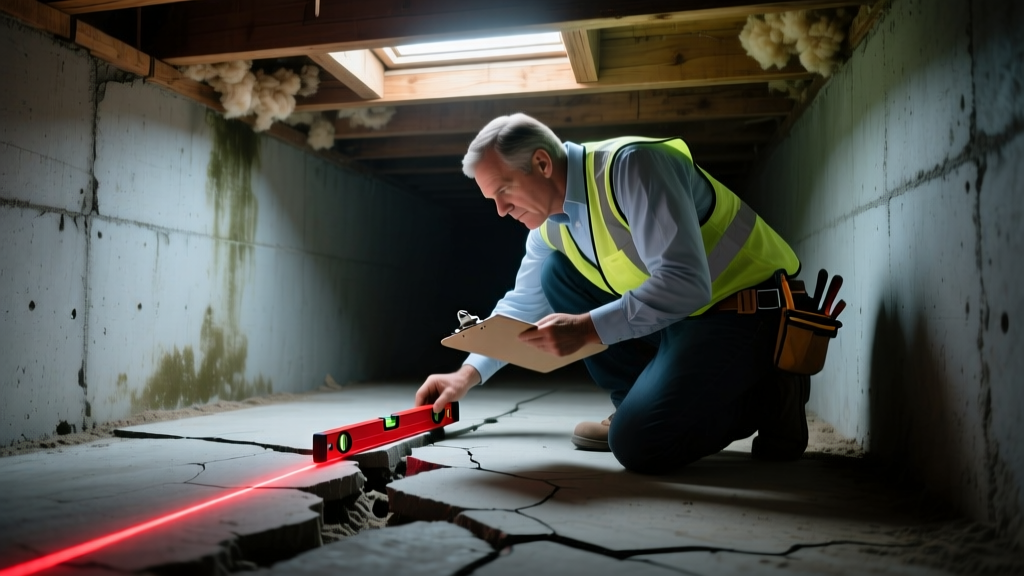
Regional Cost Matrix: Geography Dictates the Price Tag
The primary driver of foundation repair costs is the underlying soil profile and the local climate's interaction with it. Below is a regional breakdown of average repair costs and the dominant structural threats in each zone.
| Region | Primary Structural Threat | Dominant Soil Type | Average Repair Cost (2026) | Standard Repair Method |
|---|---|---|---|---|
| South / Southeast (TX, OK, LA) | Expansive Clay Shrink/Swell | Smectite / Montmorillonite Clay | $8,500 - $22,000+ | Steel Push Piers / Helical Piers |
| Midwest (IL, OH, MN) | Frost Heave & Hydrostatic Pressure | Silt Loam & Glacial Till | $4,000 - $11,000 | Carbon Fiber Straps / Interior Drainage |
| Northeast (NY, MA, PA) | Deep Frost Lines & Freeze-Thaw | Rocky Glacial Deposits / Clay | $6,500 - $15,000 | Helical Piers / Underpinning |
| West Coast (CA, WA, OR) | Seismic Activity & Landslides | Sandy Loam / Fill Soil | $5,000 - $18,000 | Cripple Wall Bracing / Epoxy Injection |
Method-Specific Unit Pricing (2026 Estimates)
Contractors do not charge a flat 'per house' rate; they charge by the linear foot, square foot, or individual pier. Use these 2026 unit costs to audit your contractor's estimate and ensure you are not being overcharged.
Deep Foundation Piering Systems
- Steel Push Piers: $1,800 to $3,200 per pier. Driven hydraulically through unstable soil to load-bearing bedrock. Required for heavy masonry or severe differential settlement.
- Helical Piers: $2,100 to $3,500 per pier. Screwed into the ground like a giant bolt. Ideal for lighter structures, new construction tie-downs, or areas where bedrock is too deep (over 60 feet) for push piers.
Slab Stabilization & Crack Repair
- Polyurethane Foam Jacking (Slabjacking): $15 to $25 per square foot. High-density structural foam is injected beneath sunken concrete slabs to lift and stabilize them. Replaces outdated mudjacking, which adds excessive water weight to expansive soils.
- Carbon Fiber Straps: $800 to $1,200 per strap. Used for bowing basement walls (inward deflection of less than 2 inches). Epoxied directly to the concrete to provide tensile strength exceeding steel.
- Epoxy / Polyurethane Crack Injection: $450 to $900 per linear foot. Used to seal active leaks and restore structural integrity to poured concrete walls.
⚠️ The 'Texas Problem': Expansive Clay and Deep Piering
If you are repairing a foundation in Central or North Texas, standard shallow repairs will fail. The USDA NRCS Web Soil Survey classifies much of this region as having highly expansive smectite clays. During droughts, the soil shrinks, causing the slab to drop; during heavy rains, it swells, pushing the slab up. To bypass this 'active zone,' contractors must drive steel piers 30 to 50 feet deep to reach stable strata or bedrock. A standard 2,500 sq. ft. home in the Dallas-Fort Worth metroplex may require 25 to 40 piers, pushing total costs to the $20,000+ range. Never accept a shallow concrete pressed-piling quote in this region without an independent structural engineer's review.
Hidden Variables That Inflate Your Final Invoice
The per-unit costs above cover the structural repair itself. However, site-specific logistics frequently add 15% to 30% to the final invoice. Factor these into your budget:
- Interior Flooring & HVAC Removal: If interior piers are required, contractors must cut through your slab. This requires removing flooring, baseboards, and potentially relocating HVAC ductwork or plumbing lines. Budget $1,500 to $4,000 for demolition and subsequent concrete patching.
- Landscaping and Hardscaping Destruction: Exterior piering requires excavating 3-foot trenches along the foundation. Expect to lose shrubs, irrigation lines, and adjacent concrete walkways. Replacing a destroyed stamped concrete patio can add $3,000+.
- Engineering Reports & Permitting: Most municipalities require a stamped letter from a licensed Structural Engineer (P.E.) before issuing a foundation repair permit. Independent engineering reports cost $500 to $1,200. Never rely solely on the contractor's in-house 'inspector' for the initial diagnosis.
- Plumbing Leaks: In slab-on-grade homes, foundation settlement often breaks cast-iron or PVC drain lines. A mandatory hydrostatic plumbing test post-repair costs $350 to $600. If leaks are found, tunneling under the slab to repair them will add $2,000 to $5,000.
West Coast Focus: Seismic Retrofitting vs. Settlement Repair
On the West Coast, the conversation shifts from soil settlement to lateral seismic forces. Homes built before 1980 often feature 'cripple walls'—short wood-framed walls between the foundation and the first floor that are prone to collapsing during earthquakes.
According to FEMA's Building Science guidelines on seismic retrofitting, strengthening these structures involves installing steel hold-downs, anchor bolts, and plywood shear panels. While this is technically a foundation-adjacent repair, it is critical for structural survival. A standard cripple wall retrofit for a 1,500 sq. ft. home costs between $5,000 and $12,000 in 2026, heavily subsidized in some California municipalities through the Earthquake Brace + Bolt (EBB) grant programs.
Decision Framework: Repair vs. Replace vs. Walk Away
Not all foundation damage warrants a massive financial intervention. Use this framework to determine your next steps:
Scenario A: Minor Differential Settlement (Under 1 Inch)
Symptoms: Hairline drywall cracks at door corners, minor sticking doors, slab cracks less than 1/8 inch wide.
Action: Monitor and maintain moisture. Install a soaker hose drip system on a timer to keep soil moisture constant around the perimeter. Cost: $150 for materials. Do not pay a contractor for piering.
Scenario B: Active, Progressive Movement (1 to 3 Inches)
Symptoms: Diagonal drywall cracks wider than 1/4 inch, doors that no longer latch, visible slope in floors (measured via laser level), separation of frieze boards.
Action: Hire an independent Structural Engineer ($600). If they recommend underpinning, get three bids from bonded, insured contractors using the unit pricing guide above. Proceed with repairs.
Scenario C: Catastrophic Failure or Severe Bowing (Over 3 Inches)
Symptoms: Basement walls bowed inward more than 3 inches, horizontal shear cracks in poured concrete, foundation crumbling (spalling concrete due to rebar rust).
Action: If you are a buyer, walk away unless the seller agrees to a 50%+ price reduction and places funds in escrow for a total foundation rebuild. If you are the owner, consult an engineer immediately; carbon fiber and standard piering will not suffice. Wall reconstruction or total slab replacement may be required, costing $30,000 to $80,000+.
💡 Pro-Tip: Auditing the 'Lifetime Warranty'
Almost every major foundation repair company offers a 'Lifetime Warranty.' Read the fine print. In 2026, standard industry contracts include a $300 to $500 transfer fee if you sell the home, and many warranties are prorated after the first 10 years. Furthermore, the warranty is instantly voided if you fail to maintain a specific soil moisture level, plant trees within 20 feet of the foundation, or alter the grading. Always demand a copy of the warranty document before signing the initial contract.
Frequently Asked Questions
Does homeowners insurance cover foundation repair?
Standard HO-3 policies explicitly exclude earth movement, soil expansion, and settling. Insurance will only cover foundation damage if it is the direct result of a covered peril, such as a sudden plumbing leak under the slab (requires a specific water damage endorsement) or a vehicle crashing into the structure.
How long does a typical piering repair take?
The physical installation of 15 to 25 steel piers typically takes 3 to 5 days for a professional crew. However, factoring in the independent engineering report, municipal permitting, and post-repair plumbing testing, expect the entire process to span 3 to 6 weeks from initial diagnosis to final sign-off.
Can I sell a house with an unrepaired foundation issue?
Legally, yes, but you must disclose the known defect in almost all US states. In practice, conventional mortgage lenders will not approve a loan if the appraiser notes 'structural deficiency' or 'active settlement.' You will be restricted to cash buyers or investors, who will typically discount their offer by 2 to 3 times the actual estimated repair cost to account for their risk and hassle.
Written by
Marcus ChenMarcus Chen is a licensed structural engineer (PE) and building materials analyst with over 12 years of experience across residential, commercial, and industrial construction. He holds a Master of Science in Civil Engineering from UC Berkeley and spent six years at Thornton Tomasetti before transitioning to independent consulting and technical writing. Marcus specializes in material selection for seismic-prone regions, concrete reinforcement strategies, and lifecycle cost analysis. His work has been cited by the American Concrete Institute (ACI) and the Structural Engineers Association of California (SEAOC). When he is not on a job site or at his desk, you will find him hiking the Sierra Nevada or restoring a 1920s craftsman bungalow in Oakland, CA.
More from Marcus Chen
View all
Construction Cost
How Much Did the Eiffel Tower Cost to Build?
How much did the Eiffel Tower cost to build in 1889? We adjust for inflation and compare its budget to modern skyscraper construction.
Aug 4, 2026

Fire Resistance
What Is a Fire Resistant Material? Testing & Certification Guide
Discover what is a fire resistant material through ASTM and UL testing. Learn how fire ratings, certifications, and assemblies work in construction.
Aug 4, 2026

Construction Cost
How Much Did the Burj Khalifa Cost to Build?
How much did the Burj Khalifa cost to build? We break down the $1.5B project and extract 5 money-saving strategies for your next build.
Jul 30, 2026