Average Cost of Foundation Repair in Houston: 2026 Guide
Discover the true average cost of foundation repair in Houston for 2026. Breakdowns by pier type, soil depth, and severity to budget accurately.

The Houston Soil Factor: Why Local Costs Defy National Averages
When researching the average cost of foundation repair in Houston, national averages are virtually useless. The Greater Houston area sits predominantly on the Beaumont Clay formation and Montgomery Loam, highly expansive soils that swell significantly when wet and shrink during droughts. According to geotechnical data referenced by the American Society of Civil Engineers, expansive soils cause more financial damage to structures annually than hurricanes and floods combined.
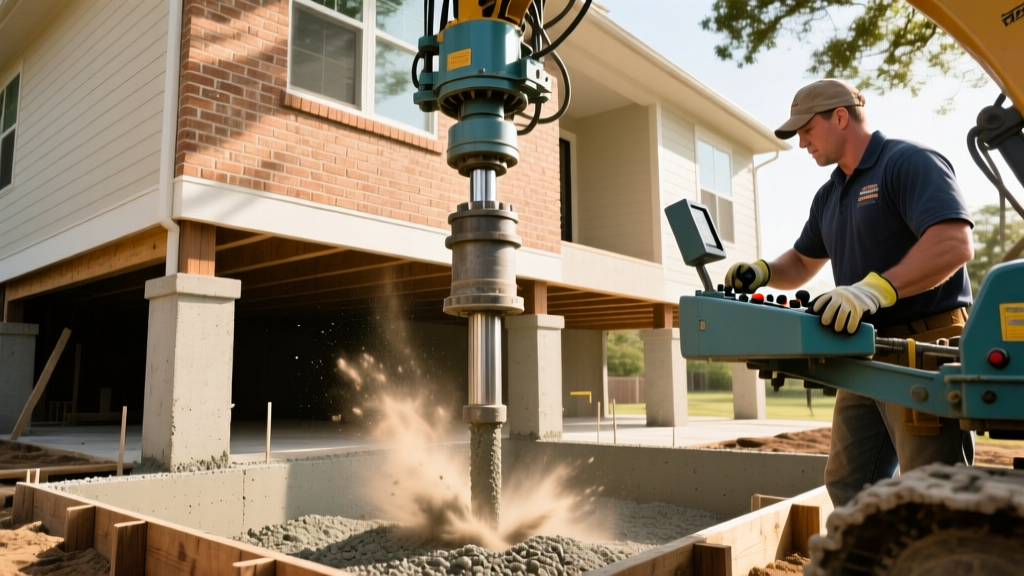
In Houston, the 'active zone'—the depth of soil that experiences moisture fluctuation—typically extends 8 to 11 feet below the surface. To permanently stabilize a foundation, repair piers must bypass this active zone and be driven into load-bearing strata, which in many Houston suburbs requires depths of 15 to 25 feet. This necessity for deeper piers directly increases material and labor costs compared to regions with shallower active zones or bedrock closer to the surface.
2026 Houston Foundation Repair Cost Breakdown by Method
The method your structural engineer recommends will dictate the baseline cost. Below is the current 2026 pricing matrix for the most common foundation repair techniques utilized in the Houston market.
| Repair Method | Cost Per Pier / Sq Ft | Best Application | Houston Soil Efficacy |
|---|---|---|---|
| Pressed Concrete Pilings | $160 - $260 per pier | Slab-on-grade foundations, perimeter lifting | Excellent; friction holds well in dense clay |
| Steel Push Piers | $400 - $650 per pier | Heavy structural loads, deep load-bearing strata | Superior for deep bypassing of Beaumont clay |
| Helical Piers | $450 - $750 per pier | Lightweight structures, new construction tie-backs | Good, but less friction in highly plastic clay |
| Bell-Bottom Piers (Poured) | $280 - $420 per pier | High-end residential, new builds, heavy loads | Excellent, requires 28-day cure time |
| Polyurethane Foam Injection | $6 - $14 per sq ft | Settling interior slabs, driveway mudjacking | Moderate; does not bypass the active clay zone |
Total Project Estimates: Budgeting by Damage Severity
The total invoice is rarely just the cost of piers. It includes mobilization, engineering reports, and site restoration. Here is what homeowners typically spend based on the severity of the deflection (measured in inches of foundation drop).
Minor Settlement (1 to 2 inches of drop)
- Average Pier Count: 8 to 14 piers
- Total Cost Range: $3,500 to $6,500
- Scope: Usually isolated to one corner or a single exterior wall. Often accompanied by minor drywall cracking at door frames.
Moderate Settlement (2 to 4 inches of drop)
- Average Pier Count: 15 to 25 piers
- Total Cost Range: $7,000 to $14,500
- Scope: Multiple exterior walls or a significant portion of the interior beam network. Doors will fail to latch, and diagonal drywall cracks will be prominent.
Severe Structural Failure (4+ inches of drop)
- Average Pier Count: 30 to 50+ piers
- Total Cost Range: $18,000 to $35,000+
- Scope: Whole-house lifting, interior and exterior piers required. Often involves plumbing leaks caused by severed cast-iron or PVC drain lines under the slab.
Hidden Cost Variables in the Greater Houston Area
When soliciting quotes, homeowners are frequently blindsided by secondary costs. The Houston market presents unique variables that can inflate your final bill by 15% to 30%.
Suburb Soil Depth Variations
Geography dictates depth. Homes in the Inner Loop (e.g., The Heights, Bellaire) often hit load-bearing clay at 12 to 15 feet. Conversely, newer developments in Katy, Cypress, and Fulshear sit on deeper, looser soil profiles. In these western suburbs, contractors may need to drive piers 25 to 35 feet deep to achieve refusal (the point where the pier can no longer be pushed). Each additional cylinder of concrete adds $40 to $80 to the per-pier cost.
Tree Root Mitigation
Houston's beloved Live Oaks and Willow Oaks are notorious foundation destroyers. A single mature oak can extract 150 gallons of water daily from the soil, causing severe localized subsidence. If a tree is within 15 feet of the foundation, contractors must install root barriers (typically high-density polyethylene trenching) during the repair. Budget an additional $800 to $1,500 per tree for root barrier installation.
Landscaping and Hardscape Destruction
To install exterior piers, crews must dig access holes roughly 2x3 feet wide and deep enough to clear the grade beam. This destroys adjacent flower beds, irrigation lines, and sometimes concrete walkways. While contractors will backfill the holes, they will not replace your landscaping. Allocate $1,000 to $3,000 for post-repair landscape and irrigation restoration.
Evaluating Quotes: Red Flags and Houston-Specific Scams
The foundation repair industry in Texas is highly lucrative and, unfortunately, attracts predatory operators. When reviewing proposals for the average cost of foundation repair in Houston, watch for these critical red flags:
- The 'Lifetime Warranty' Illusion: Many contractors offer a 'lifetime warranty' that is actually prorated or voided if you fail to maintain a specific soil moisture level around the house using soaker hoses. Always demand to see the exact warranty document before signing. A true warranty covers the structural integrity of the pier itself, not the soil conditions.
- Salesman vs. Engineer: If the person inspecting your home is a commissioned salesperson rather than a licensed Professional Engineer (P.E.), get a second opinion. The Texas Department of Licensing and Regulation strictly governs engineering practices. An independent structural engineer should provide the initial repair plan for a flat fee ($500-$800), which you then hand to contractors to bid on.
- Under-Piering the Interior: Some budget contractors will quote a low price by only placing piers on the exterior perimeter, ignoring interior grade beams that are actively sinking. True stabilization requires supporting both the perimeter and the interior load-bearing beams.
Permitting and Engineering Requirements in Houston
Foundation repair within Houston city limits requires strict adherence to local building codes. According to the Houston Planning and Development Department, any structural alteration to a foundation requires a permit.
Your contractor must submit an engineering packet, including a site plan, soil boring logs (if applicable), and stamped structural calculations. Permit fees in Houston typically range from $150 to $350 depending on the valuation of the work. If your contractor suggests pulling the work 'under the radar' to save you money, walk away. Unpermitted foundation work will immediately flag your property during a future real estate transaction, potentially derailing the sale or forcing you to pay for retroactive engineering certifications.
Final Decision Framework
To secure a fair price for your Houston foundation repair in 2026, follow this exact sequence: hire an independent structural engineer to write the repair plan, obtain three bids from established contractors (minimum 10 years in business) based strictly on that engineered plan, and verify their insurance and Better Business Bureau standing before authorizing the mobilization of equipment.
Written by
Elena RodriguezElena Rodriguez is a civil engineer and technical writer specializing in concrete technology, masonry systems, and ASTM/ACI compliance. She earned her B.S. in Civil Engineering from Texas A&M University and spent a decade at a materials testing laboratory, performing over 2,000 concrete compressive strength tests and masonry prism evaluations. Elena is an ACI-certified Field Testing Technician (Grade I) and a member of ASTM Committee C12 on Natural Building Stone. She currently consults on forensic engineering cases involving concrete failures and moisture intrusion. Based in San Antonio, TX, Elena is a proud member of the Society of Women Engineers (SWE) and coaches her daughter's FIRST Robotics team.
More from Elena Rodriguez
View all
Walls & Panels
Cost Analysis: Light Gauge Steel Framing Advantages and Disadvantages
Evaluate light gauge steel framing advantages and disadvantages through a strict cost analysis lens, comparing material, labor, and lifecycle expenses.
Aug 4, 2026

Walls & Panels
Gypsum Board Types: Exact Specifications, Thickness & Dimensions
Compare standard, Type X, and moisture-resistant gypsum board types. Get exact specifications, thicknesses, dimensions, and ASTM standards for your project.
Aug 4, 2026

Fire Resistance
Best Fire-Resistant Outdoor Decking Materials: 2026 Buyer Guide
Discover the best fire-resistant outdoor decking materials for 2026. Compare Class A PVC, aluminum, and hardwood options for WUI compliance and safety.
Aug 4, 2026