Complete DaVinci Roofing Material Guide: Costs and Durability
Explore the complete DaVinci roofing material guide. Compare synthetic slate and shake costs, installation nuances, and polymer durability for luxury homes.

The Material Science: Virgin Polymer Resin
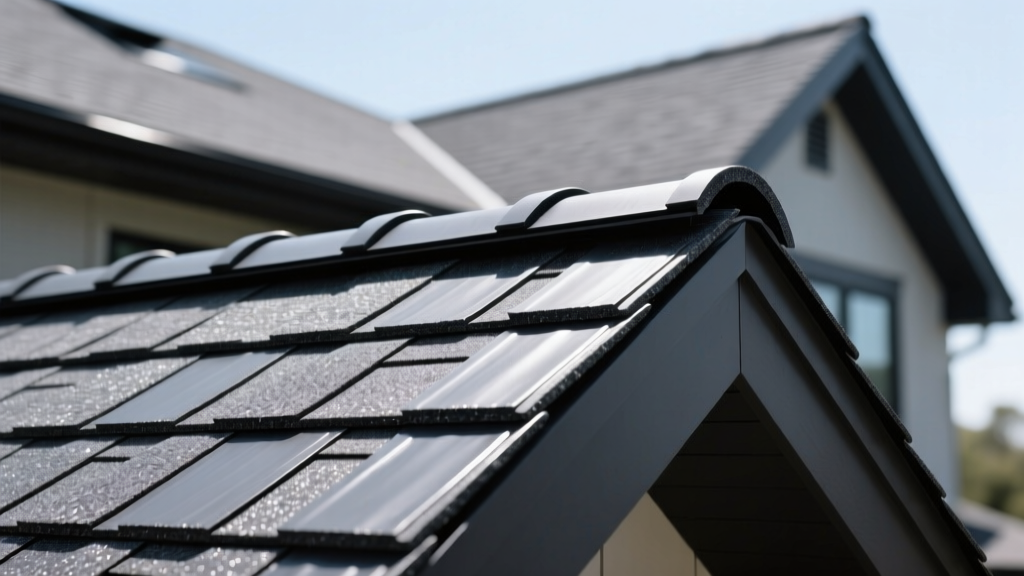
When evaluating high-end synthetic roofing, the distinction between recycled composites and virgin polymers dictates the lifespan of the system. DaVinci Roofscapes manufactures its synthetic slate and shake lines using 100% virgin polymer resin. Unlike compression-molded recycled rubber or plastic composites—which often suffer from inconsistent density and rely on surface-applied paints for color—DaVinci utilizes an injection-molding process where UV stabilizers and impact modifiers are engineered directly into the resin matrix.
This through-body color and chemical consistency means that scratches, hail impacts, or cut edges do not expose a different colored substrate. The material achieves a Class A fire rating and a Class 4 impact resistance rating (UL 2218), making it a premier choice for regions prone to severe convective storms. According to the IBHS FORTIFIED Home program, achieving a Class 4 impact rating is a baseline requirement for superior wind and hail resilience, a standard DaVinci meets across its entire product catalog.
Product Line Matrix: Slate vs. Shake Profiles
Selecting the correct DaVinci profile depends on architectural style, roof pitch, and budget. The brand segments its offerings into interlocking systems (Bellaforté) for speed and traditional multi-width systems for bespoke aesthetics.
| Product Line | Profile Style | Thickness | Width Variations | Weight per Square | Best Application |
|---|---|---|---|---|---|
| Bellaforté Slate | Interlocking Slate | 1/2 inch | 12-inch uniform | 185 lbs | Production luxury homes, budget-conscious slate look |
| Multi-Width Slate | Traditional Slate | 1/2 inch | 6, 7, 8, 9, 10 inches | 200 lbs | Custom estates, historic renovations, steep pitches |
| Fancy Shake | Rustic Cedar Shake | 5/8 to 3/4 inch | 4, 5, 6, 7, 8 inches | 235 lbs | Craftsman, Cape Cod, and heavy-shadow architectural styles |
| Bellaforté Shake | Interlocking Shake | 1/2 inch | 12-inch uniform | 190 lbs | Fast-track commercial or residential shake replacements |
True Cost Analysis: Material, Labor, and ROI
Premium synthetic roofing commands a significant upfront investment, but it eliminates the structural reinforcement costs associated with natural quarried slate or concrete tile. Below is a breakdown of current market pricing for DaVinci roofing materials, excluding tear-off and decking repairs.
Material Cost per Square (100 sq. ft.): $450 - $680
Labor Cost per Square: $600 - $950
Cost Variables to Anticipate
- Roof Complexity: Valleys, dormers, and turrets increase labor time by 20% to 40%. Multi-width installations require meticulous sorting and blending on-site, pushing labor costs to the higher end of the spectrum.
- Color Blends: Custom color blends (e.g., mixing Mountain, Autumn, and Taupe) may carry a 5% to 10% premium over standard single-color or pre-blended bundles.
- Waste Factor: Standard waste is 10%, but complex hips and valleys on Multi-Width Slate can push waste to 15%. DaVinci off-cuts can be reused for starter courses or ridge caps, mitigating some waste.
Critical Installation Nuances: Thermal Expansion
The most common failure mode in synthetic polymer roofing is buckling or warping caused by improper fastening. Polymers expand and contract with temperature fluctuations at a much higher rate than natural slate or asphalt shingles. Master installers follow strict protocols to accommodate this movement.
Never butt DaVinci tiles tightly against one another. Installers must maintain a minimum 1/8-inch gap at side laps and end laps to allow for thermal expansion. If installed tightly in 40°F winter weather, the tiles will buckle and warp when summer temperatures push the roof surface past 140°F.
Fastener Specifications and Placement
Using the wrong fasteners will void the wind warranty and lead to premature corrosion. Adhering to National Roofing Contractors Association (NRCA) guidelines for synthetic roofing is mandatory.
- Nail Type: Use only hot-dipped galvanized or stainless steel roofing nails. Electroplated nails will rust and stain the polymer.
- Nail Length: Minimum 1-1/4 inch for standard decking; 1-1/2 inch if installing over existing shingles or thicker synthetic underlayment.
- Shank Style: Ring-shank nails are required in high-wind velocity zones (HVHZ) to prevent withdrawal.
- Driving Depth: Do not overdrive the nails. The nail head should rest flush against the built-in spacer tab on the tile, not crush into the polymer surface. Overdriving restricts thermal movement and creates stress fractures.
Underlayment and Decking Requirements
Because DaVinci tiles are non-porous, they do not breathe like natural wood shakes. Moisture management beneath the tiles is critical to prevent decking rot.
- Primary Underlayment: A high-tensile synthetic underlayment is required for the main roof field. Avoid traditional asphalt-saturated felt, which can degrade under the heat retention of dark polymer tiles.
- Ice and Water Shield: Self-adhering bituminous membrane must be installed in all valleys, at eaves (minimum 24 inches past the interior warm wall), around all penetrations, and at roof-to-wall transitions.
- Decking Prep: Ensure the roof deck (OSB or plywood) is flat within a 1/4-inch variance over a 10-foot span. Polymer tiles do not conform to uneven decking; they will bridge gaps and create visible shadow lines or clicking sounds when walked upon.
Weather Resistance and FORTIFIED Standards
DaVinci roofing materials are heavily specified in coastal and alpine environments due to their wind uplift ratings. When installed with the prescribed 6-nail pattern (or 8-nail pattern for extreme zones), the interlocking Bellaforté lines achieve a 110 mph wind warranty, while Multi-Width systems can achieve similar ratings when paired with specialized copper or aluminum head-nailing techniques.
For homeowners seeking insurance premium discounts, specifying DaVinci materials makes achieving the IBHS FORTIFIED Roof designation significantly easier. The combination of Class 4 impact resistance and sealed roof deck protocols satisfies the most stringent resilience criteria in the industry, often resulting in 15% to 30% reductions in annual homeowners insurance premiums in storm-prone states like Texas, Florida, and Colorado.
Long-Term Maintenance and Edge Cases
While marketed as maintenance-free, synthetic polymer roofs require specific care to maintain their aesthetic and functional integrity over their 50-year limited warranty period.
- Organic Growth: In heavily shaded, humid environments, algae or moss can grow on the surface. Unlike natural slate, polymer does not support the root structures of moss, but surface algae can cause dark streaks. Clean annually with a low-pressure wash (under 1,500 PSI) and a 50/50 water-bleach solution. Never use pressure washers on high settings, which can scar the surface texture.
- Snow Guards: Polymer surfaces are highly hydrophobic and smooth. In snow-load regions, sudden snow slides (avalanching) are a severe hazard. Pad-style snow guards must be mechanically fastened through the tile and into the roof decking, not just adhered with glue, which will fail under sheer weight.
- Flashing Integration: Because the tiles are thick (up to 3/4 inch for Fancy Shake), standard step flashing must be oversized. Use 8x10 inch copper or painted aluminum step flashing to ensure adequate overlap and prevent capillary water draw underneath the thick butt edges.
Final Verdict: Is DaVinci Worth the Premium?
DaVinci roofing material represents the apex of synthetic roofing technology. It is not a budget alternative to asphalt; it is a lightweight, impact-proof alternative to natural slate and cedar. For custom residential builds, historic retrofits where structural load limits prohibit real stone, and luxury developments in hail-prone corridors, the ROI is justified by the elimination of structural reinforcement costs, zero maintenance, and superior insurance ratings. For standard production housing where budget is the primary constraint, architectural asphalt or stamped metal panels remain the more economically viable choice.
Written by
Elena RodriguezElena Rodriguez is a civil engineer and technical writer specializing in concrete technology, masonry systems, and ASTM/ACI compliance. She earned her B.S. in Civil Engineering from Texas A&M University and spent a decade at a materials testing laboratory, performing over 2,000 concrete compressive strength tests and masonry prism evaluations. Elena is an ACI-certified Field Testing Technician (Grade I) and a member of ASTM Committee C12 on Natural Building Stone. She currently consults on forensic engineering cases involving concrete failures and moisture intrusion. Based in San Antonio, TX, Elena is a proud member of the Society of Women Engineers (SWE) and coaches her daughter's FIRST Robotics team.
More from Elena Rodriguez
View all
Walls & Panels
Cost Analysis: Light Gauge Steel Framing Advantages and Disadvantages
Evaluate light gauge steel framing advantages and disadvantages through a strict cost analysis lens, comparing material, labor, and lifecycle expenses.
Aug 4, 2026

Walls & Panels
Gypsum Board Types: Exact Specifications, Thickness & Dimensions
Compare standard, Type X, and moisture-resistant gypsum board types. Get exact specifications, thicknesses, dimensions, and ASTM standards for your project.
Aug 4, 2026

Fire Resistance
Best Fire-Resistant Outdoor Decking Materials: 2026 Buyer Guide
Discover the best fire-resistant outdoor decking materials for 2026. Compare Class A PVC, aluminum, and hardwood options for WUI compliance and safety.
Aug 4, 2026