Foam Roofing Material Lifespan: Durability and Maintenance
Discover the true lifespan of foam roofing material. Learn how elastomeric coatings, UV protection, and maintenance maximize SPF roof durability.

The Core Misconception: Foam vs. Coating Degradation
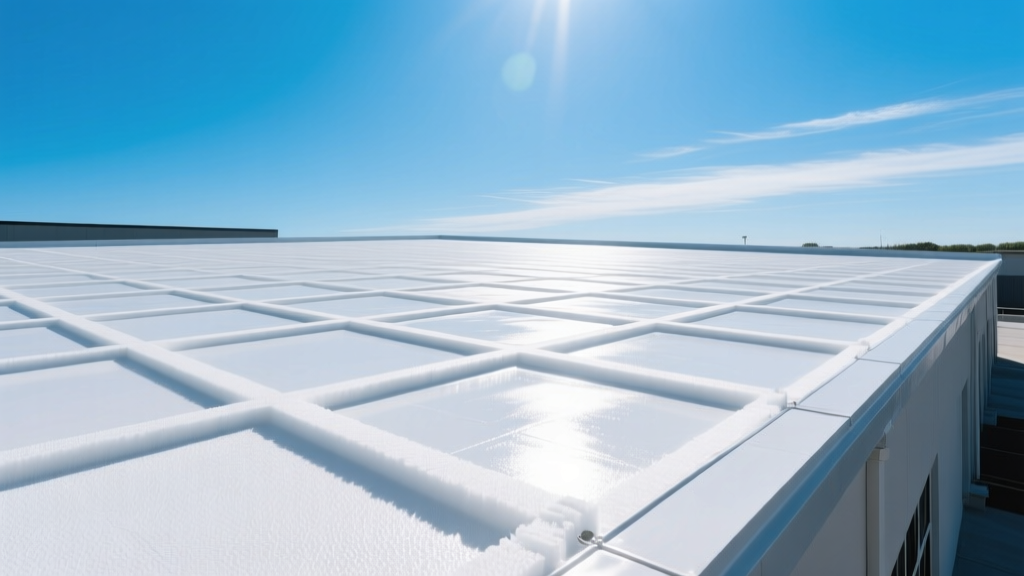
When building owners ask how long foam roofing material lasts, the answer requires a critical distinction between the structural foam layer and the protective elastomeric coating. Spray Polyurethane Foam (SPF) is a closed-cell, rigid plastic. In a controlled environment, polyurethane does not biologically degrade, rot, or lose its structural integrity over time. The foam itself has an indefinite lifespan.
The vulnerability of any SPF system lies entirely in its exposure to ultraviolet (UV) radiation and physical abrasion. Unprotected foam roofing material will undergo photodegradation within 72 hours of direct sunlight exposure, turning the surface into a brittle, powdery substance. Therefore, the 'lifespan' of a foam roof is actually the lifespan of its protective coating system, which typically ranges from 15 to 25 years before requiring a recoat. With a disciplined maintenance and recoating schedule, the overall roof assembly can easily exceed 50 years of continuous service.
System Lifespan Snapshot
- Base Foam Insulation Layer: 50+ years (indefinite if protected from UV)
- Acrylic Elastomeric Coating: 10 to 15 years
- Silicone Elastomeric Coating: 15 to 25 years
- Total System Longevity: 40 to 60+ years (with 20-year recoating cycles)
Material Specifications: Density and R-Value Retention
For commercial and residential flat roofs, the durability of foam roofing material is directly tied to its applied density. The industry standard, governed by National Roofing Contractors Association (NRCA) guidelines and ASTM C1029, mandates a minimum density of 2.5 to 3.0 pounds per cubic foot (pcf) for roofing applications.
While insulation contractors might use 1.5 to 2.0 pcf foam for interior wall cavities, applying that lower density to a roof deck results in a soft substrate that compresses underfoot, leading to cracked coatings and compromised waterproofing. A 2.7 pcf closed-cell foam delivers an initial R-value of roughly 6.5 per inch. Unlike polyisocyanurate (polyiso) boards, which can suffer from thermal drift as blowing agents escape over the first two years, SPF locks its blowing gases inside sealed cells, maintaining 90% to 95% of its original R-value for decades.
The Achilles Heel: UV Degradation and Coating Selection
Selecting the correct topcoat is the single most important decision for maximizing the lifespan of foam roofing material. As of 2026, high-solids silicone and advanced acrylic formulations dominate the market, but they perform vastly differently under stress.
| Coating Type | Ponding Water Tolerance | Expected Lifespan | Cost per Sq. Ft. (Installed) |
|---|---|---|---|
| High-Solids Silicone | Excellent (Immersion rated) | 15 - 25 Years | $2.50 - $4.00 |
| Acrylic Elastomeric | Poor (Re-emulsifies) | 10 - 15 Years | $1.50 - $2.50 |
| Polyurethane (Aliphatic) | Moderate | 15 - 20 Years | $3.50 - $5.50 |
For flat roofs prone to ponding water, silicone is the only viable option. Acrylic coatings are water-based; if water sits on an acrylic-coated foam roof for more than 48 hours, the coating will re-emulsify, peel, and expose the foam to UV destruction. According to the U.S. Department of Energy, highly reflective white silicone coatings not only protect the foam but also reduce peak cooling energy demand by up to 15%, accelerating the return on investment.
Physical Threats: Hail, Foot Traffic, and Blistering
Foam roofing material possesses a unique mechanical advantage regarding impact resistance. Unlike single-ply TPO or EPDM membranes that can puncture upon impact, SPF is a compressible, monolithic matrix. When struck by large hail, the foam compresses and rebounds. Even if the elastomeric coating cracks under a severe hail strike, the underlying closed-cell foam remains completely waterproof. Minor coating cracks can be spot-repaired with caulking-grade silicone without compromising the roof's integrity.
The most common cause of premature SPF failure is mechanical damage from HVAC technicians and solar installers. Dropping tools or repeatedly walking on the same path compresses the foam and fractures the coating. Always install heavy-duty, walkway-grade polyurethane mats or pavers along all routes leading to rooftop equipment.
Another critical failure mode is blistering. If foam roofing material is applied over a damp substrate, or if moisture becomes trapped between the foam and the coating during application, solar heat will vaporize the water, creating expanding blisters. These blisters eventually rupture, allowing water ingress. Proper surface preparation and strict adherence to dew-point application limits are non-negotiable for long-term durability.
The 20-Year Recoating Protocol
To achieve a 50-year lifespan, the roof must undergo a systematic recoating process around year 15 to 20. The Spray Polyurethane Foam Alliance (SPFA) emphasizes that recoating is significantly cheaper than a full tear-off, often costing just 30% to 40% of a new installation. A proper recoating sequence involves:
- High-Pressure Power Washing: Removing dirt, chalked coating, and biological growth using a minimum of 2,500 PSI. The roof must dry completely (usually 24-48 hours).
- Substrate Inspection & Repair: Cutting out any saturated foam (which feels spongy) and filling the divots with fresh two-part polyurethane roofing foam or compatible mastic.
- Primer Application (If Required): While high-solids silicone often adheres directly to weathered silicone, transitioning from acrylic to silicone requires a specialized bleed-through blocking primer.
- Base Coat Application: Spraying or rolling 15 to 20 dry mils of elastomeric coating.
- Top Coat & Granule Embedding: Applying the final 15 to 20 dry mils and immediately broadcasting ceramic roofing granules into the wet surface. The granules increase physical abrasion resistance and extend UV reflectivity by protecting the coating's resin from direct sun exposure.
Cost vs. Longevity: The Lifecycle Financial Model
When evaluating the financial viability of foam roofing material, building owners must look at the 40-year lifecycle cost rather than the initial installation price. A new 2-inch SPF system with a silicone coating typically costs between $6.50 and $9.50 per square foot installed in 2026.
Compare this to a mechanically fastened TPO single-ply system, which costs roughly $5.00 to $7.50 per square foot but has a hard lifespan of 20 to 25 years before requiring a complete, expensive tear-off and disposal. Because SPF can simply be recoated in year 20 for roughly $3.00 per square foot, and recoated again in year 40, the cumulative cost of ownership over half a century is substantially lower. Furthermore, the seamless, monolithic nature of SPF eliminates the taped and welded seams of single-ply systems, which are the primary failure points for leaks in traditional flat roofs.
Expert Verdict on Foam Roofing Durability
Foam roofing material is arguably the most durable and sustainable flat roofing system available, provided the owner respects its singular vulnerability: UV exposure. By specifying a 2.7 pcf closed-cell foam, protecting it with a high-solids silicone coating embedded with ceramic granules, and enforcing strict walkway protocols for rooftop maintenance staff, an SPF roof will reliably protect the building envelope for over half a century. The key to longevity is not in the initial installation alone, but in the proactive, scheduled maintenance of the elastomeric shield.
Written by
Sarah WhitfieldSarah Whitfield is a chartered quantity surveyor (MRICS) and construction cost analyst with 15 years of experience in material pricing, procurement strategy, and project budgeting. She earned her degree in Construction Management from the University of Reading (UK) and has worked on projects ranging from $2M custom homes to $180M mixed-use developments across North America and Europe. Sarah currently leads cost estimating for BuildMat Insight, maintaining a proprietary database of 4,000+ material price points updated quarterly. She is a frequent contributor to RSMeans cost data panels and has presented at the International Cost Engineering Council (ICEC) congress. Based in Denver, CO, Sarah is an avid trail runner and volunteer mentor for Women in Construction.
More from Sarah Whitfield
View all
Wood & Lumber
What Are the Different Types of Wood? A Builder's Guide
Compare structural softwoods, finish hardwoods, and engineered lumber. Analyze Janka ratings, MOE values, and 2026 pricing for construction.
Aug 4, 2026

Walls & Panels
Steel Framing vs Wood Framing: Corrosion and Moisture Defense
Compare steel framing vs wood framing for moisture resistance. Learn about galvanized coatings, condensation risks, and corrosion protection strategies.
Jul 21, 2026

Stone & Masonry
How to Cut Stone Veneer: Wet Saw vs Grinder Comparison
Compare the best tools for cutting stone veneer. We review wet saws, angle grinders, and chop saws to help you achieve clean, chip-free cuts.
Jul 21, 2026