Best Green Roofing Materials Compared: 2026 Guide
Compare the top green roofing materials for 2026. Analyze costs, lifespans, SRI ratings, and structural loads for metal, synthetic, tile, and living roofs.

The True Definition of 'Green' in Roofing
When architects and homeowners search for green roofing materials, they are typically navigating two distinct categories: eco-friendly manufactured systems (recycled content, high solar reflectance, and long lifespans) and vegetative living roofs (biological layers that manage stormwater and insulate). In 2026, the most sustainable choice depends heavily on your structural load capacity, local climate zone, and energy rebate incentives. Selecting the wrong system can lead to premature UV degradation, structural overloading, or voided warranties.
- Best for High Heat/Sun Belt: Cool Metal Roofing (Standing Seam with PVDF coating)
- Best for Hail/Impact Zones: Recycled Synthetic Slate (Class 4 Impact Rated)
- Best for Stormwater Management: Extensive Vegetative Roofs (Sedum-based)
- Best for Net-Zero Energy Goals: Building-Integrated Photovoltaics (BIPV)
Head-to-Head Material Comparison Matrix
The following matrix compares the five leading sustainable roofing systems based on 2026 national average installed costs, structural weights, and thermal performance metrics. Data aligns with standards from the EPA Heat Island Effect guidelines.
| Material Type | Installed Cost (per sq. ft.) | Weight (lbs/sq. ft.) | Solar Reflectance Index (SRI) | Expected Lifespan |
|---|---|---|---|---|
| Cool Metal (Standing Seam) | $14.00 - $22.00 | 1.5 - 2.0 | 50 - 75+ | 50+ Years |
| Recycled Synthetic Slate | $15.00 - $22.00 | 3.0 - 4.5 | 25 - 40 | 50 Years |
| Natural Clay Tile | $18.00 - $30.00 | 9.0 - 12.0 | 30 - 45 | 75+ Years |
| Extensive Vegetative Roof | $25.00 - $45.00 | 15.0 - 35.0 (Saturated) | N/A (Biological) | 40 Years (Membrane) |
| BIPV Solar Shingles | $22.00 - $35.00* | 3.5 - 5.0 | N/A (Absorbs) | 25 - 30 Years |
*BIPV costs shown before the 30% Federal Solar Tax Credit and local utility incentives.
Deep Dive: Top 5 Sustainable Roofing Systems
1. Cool Metal Roofing (Standing Seam)
Standing seam metal roofing remains the gold standard for lightweight, highly reflective sustainable roofing. For optimal thermal performance, specify 24-gauge Galvalume steel coated with a Kynar 500 (PVDF) resin finish. According to the Lawrence Berkeley National Laboratory, cool metal roofs with an initial SRI of 50 or higher can reduce peak cooling demand by up to 15%. The concealed fastener design eliminates the primary failure point of exposed-fastener corrugated metal (neoprene washer degradation), ensuring a 50-year weathertight seal.
2. Recycled Synthetic Slate and Shake
Products like EcoStar (recycled rubber) and DaVinci Roofscapes (engineered polymer) divert millions of pounds of waste from landfills. These materials mimic the profile of natural slate or cedar shake but weigh 70% less. When specifying synthetic materials, demand a UL 2218 Class 4 Impact Resistance rating and an ASTM E108 Class A Fire rating. The primary edge case to watch for is thermal expansion; installers must strictly follow manufacturer-specified nail placement (usually 1/8 inch above the nailing flange) to allow for lateral movement during temperature swings.
3. Natural Clay and Concrete Tile
Clay tiles offer unmatched longevity and natural thermal mass, which delays heat transfer into the building envelope. For sustainable building in freeze-thaw climates, you must specify Grade 1 tiles per ASTM C1167, which limits water absorption to less than 3%. Lower grades (Grade 2 or 3) will spall and crack after a few winter cycles. The major drawback is structural load; a standard concrete tile roof can exceed 1,000 lbs per square (10 lbs/sq. ft.), requiring engineered truss reinforcement on new builds.
4. Extensive Vegetative (Living) Roofs
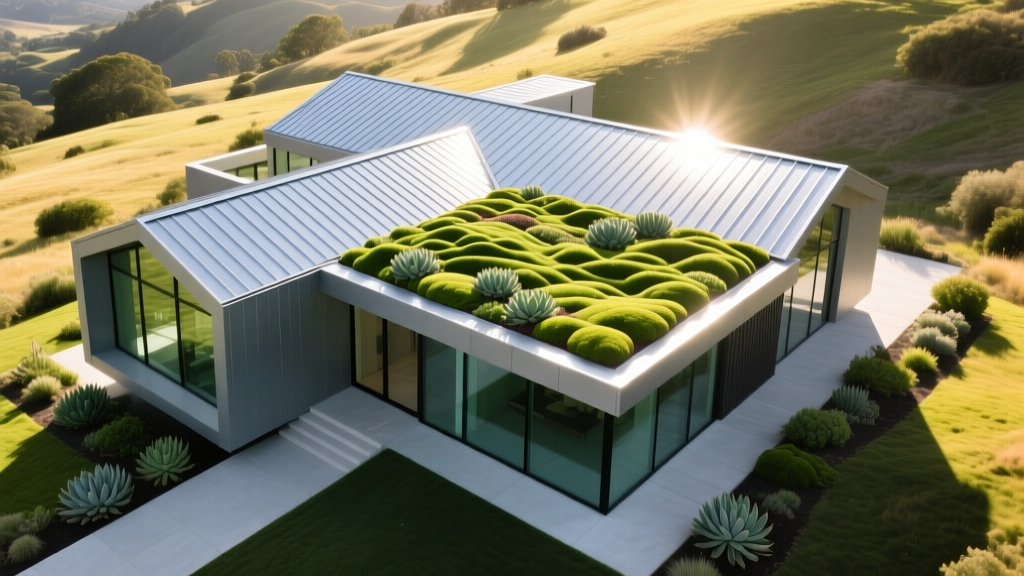
Extensive green roofs utilize shallow growing media (2 to 4 inches) planted with drought-resistant succulents like Sedum album. They reduce stormwater runoff by up to 70% and protect the underlying waterproofing membrane from UV radiation, effectively doubling the membrane's lifespan. Installation must strictly follow FLL (Forschungsgesellschaft Landschaftsentwicklung Landschaftsbau) guidelines. A critical failure mode is root penetration; always install a certified HDPE (High-Density Polyethylene) root barrier over the primary waterproofing layer, followed by a moisture retention mat and a drainage board.
5. Building-Integrated Photovoltaics (BIPV)
Instead of mounting racks over existing shingles, BIPV systems like the GAF Timberline Solar or Tesla Solar Roof replace the roofing material entirely with active solar cells. The U.S. Department of Energy notes that BIPV systems are ideal for new construction or full tear-offs. GAF's system integrates natively with standard asphalt nailing patterns, producing roughly 70 watts per shingle. However, BIPV requires specialized inverters and strict adherence to local fire setback codes (usually 3-foot clearances at ridges and hips for firefighter access).
Structural Load and Framing Requirements
Before selecting a green roofing material, a structural engineer must calculate the dead load (weight of the materials) and live load (snow, wind, and maintenance workers).
- Standard Asphalt Shingles: ~2.5 lbs/sq. ft. (Baseline)
- Cool Metal: ~1.5 lbs/sq. ft. (Often allows for wider truss spacing, saving lumber)
- Synthetic Slate: ~3.5 lbs/sq. ft. (Can usually be installed on standard 2x4 trusses without reinforcement)
- Clay Tile: ~10.0 lbs/sq. ft. (Requires 2x6 trusses at 24-inch on-center or closer)
- Vegetative Roof (Saturated): ~25.0 lbs/sq. ft. (Requires heavy timber or commercial steel decking; rarely suitable for standard residential stick-framing without structural retrofitting)
Common Failure Modes and Edge Cases
Even the most sustainable materials will fail if installed incorrectly. Here are the non-obvious gotchas for each system:
Oil canning (visible waviness in flat metal panels) is not a structural defect but an aesthetic one. It is caused by uneven tension during the roll-forming process or improper clip spacing. Mitigate this by specifying striated or ribbed panels, which hide minor deviations, and ensuring the roof deck is perfectly planar before installation.
Cheaper polymer blends will 'chalk' (develop a white, powdery residue) after 10-15 years of UV exposure. Only purchase synthetic slate/shake that includes integrated UV stabilizers and titanium dioxide pigments throughout the entire thickness of the shingle, not just as a surface coating.
The most common cause of living roof failure is the clogging of drainage mats by fine growing media particles. Always specify a filter fabric (geotextile) between the engineered soil and the drainage layer to prevent soil migration while allowing water to pass through freely.
Final Verdict: Matching Material to Climate
There is no single 'best' green roofing material; the optimal choice is dictated by your environmental stressors. If you are building in the Sun Belt (Zones 1-3), prioritize high-SRI Cool Metal Roofing to slash HVAC loads. For Hail Alley (Texas, Colorado, Midwest), invest in Class 4 impact-rated Recycled Synthetic Slate to avoid catastrophic insurance claims. If your goal is LEED certification or urban stormwater compliance, the high upfront cost of an Extensive Vegetative Roof pays dividends in municipal fee reductions and membrane longevity. Finally, for net-zero residential builds, BIPV solar shingles offer the most streamlined aesthetic, provided your roof pitch and azimuth maximize solar irradiance.
Written by
Priya KapoorPriya Kapoor is a real estate market analyst and construction economics researcher with expertise in housing affordability, development feasibility, and infrastructure investment. She holds a Master of Regional Planning from Cornell University and previously worked as a senior analyst at CBRE's Investment Properties group, where she modeled returns for $4B in mixed-use development pipelines. Priya now runs an independent research practice advising developers, municipalities, and REITs on construction cost forecasting and market timing. She publishes the quarterly "BuildMat Market Pulse" report tracking material price indices across 12 commodity categories. Based in Austin, TX, Priya serves on the board of Habitat for Humanity Austin and is a marathon runner.
More from Priya Kapoor
View all
Construction Cost
Cost to Build a 1600 Sq Ft Home in 2026: Full Breakdown
Accurate 2026 cost to build a 1600 sq ft home—material, labor, and regional pricing breakdowns included. Plan your budget with real-time estimates.
Aug 11, 2026

Wood & Lumber
Name the Types of Wood for Pressure Treatment and Preservation
Learn how to name the types of wood best suited for pressure treatment. Compare species treatability, chemical retention levels, and 2026 preservation costs.
Aug 4, 2026

Stone & Masonry
Stone Veneer Suppliers Lindenhurst: 2026 Cost Analysis
Analyze 2026 stone veneer costs in Lindenhurst, NY. Compare local supplier pricing, delivery fees, and Suffolk County installation labor rates.
Aug 4, 2026