Sourcing from Discount Roofing Materials Inc: Overstock vs Premium
Compare overstock and liquidated roofing materials from suppliers like Discount Roofing Materials Inc against premium first-run options.

The Anatomy of Discount Roofing Inventory
Procuring materials from liquidators and overstock suppliers like Discount Roofing Materials Inc presents a unique arbitrage opportunity for contractors and DIY builders. However, 'discount' in the roofing sector rarely means identical first-run products at a lower price. It typically indicates overstock from canceled commercial bids, discontinued color lines, factory 'seconds' with cosmetic blemishes, or freight-damaged packaging. Understanding the exact nature of these markdowns is critical before loading pallets onto your truck.
First-run roofing materials are manufactured under strict quality control protocols, ensuring uniform dye lots, precise sealant application, and intact packaging. Liquidated inventory bypasses these final checkpoints. While the core structural integrity of a discounted GAF Timberline HDZ shingle or a 26-gauge R-panel may remain intact, the peripheral characteristics—such as UV-protective granule adhesion or paint coating consistency—can vary wildly. According to the Asphalt Roofing Manufacturers Association (ARMA), improper long-term storage of overstock shingles can also compromise the thermal-activated sealant strips, leading to premature wind uplift failures.
First-Run vs. 'Seconds': What is the Actual Difference?
Factory seconds in metal roofing usually involve micro-blisters in the PVDF (Kynar 500) paint finish or slight edge-crimping from the roll-forming machine. In asphalt shingles, seconds often feature inconsistent granule distribution or off-spec fiberglass mat weights. While these defects rarely impact immediate water-shedding capabilities, they drastically reduce the material's long-term weathering resistance and aesthetic uniformity.
Material Comparison Matrix: Discount vs. Premium Stock
The following matrix breaks down the practical differences between first-run premium materials and the discounted inventory typically found at liquidation yards.
| Material Type | Premium First-Run (Retail) | Discount / Overstock (Liquidator) | Primary Risk Factor |
|---|---|---|---|
| Architectural Asphalt Shingles | $135 - $170 per square | $85 - $115 per square | Dye-lot mismatch; degraded sealant strips from warehouse heat. |
| 26-Gauge Metal R-Panels | $2.80 - $3.50 per linear ft | $1.60 - $2.20 per linear ft | Paint adhesion failure; inconsistent Galvalume substrate coating. |
| Synthetic Roof Underlayment | $180 - $220 per roll | $90 - $130 per roll | UV degradation from torn packaging; loss of slip-resistance coating. |
| EPDM Rubber Membrane (Flat) | $1.10 - $1.40 per sq ft | $0.65 - $0.85 per sq ft | Ozone cracking on folded edges; expired shelf-life for seam tapes. |
Deep Dive: Asphalt Shingle Overstock
When sourcing architectural shingles from Discount Roofing Materials Inc, you will frequently encounter discontinued color blends from major manufacturers like Owens Corning and CertainTeed. The physical dimensions and ASTM D7158 wind-resistance ratings of these shingles are identical to current production runs. The catch lies in the granule formulation and batch dyeing.
The Dye-Lot Dilemma
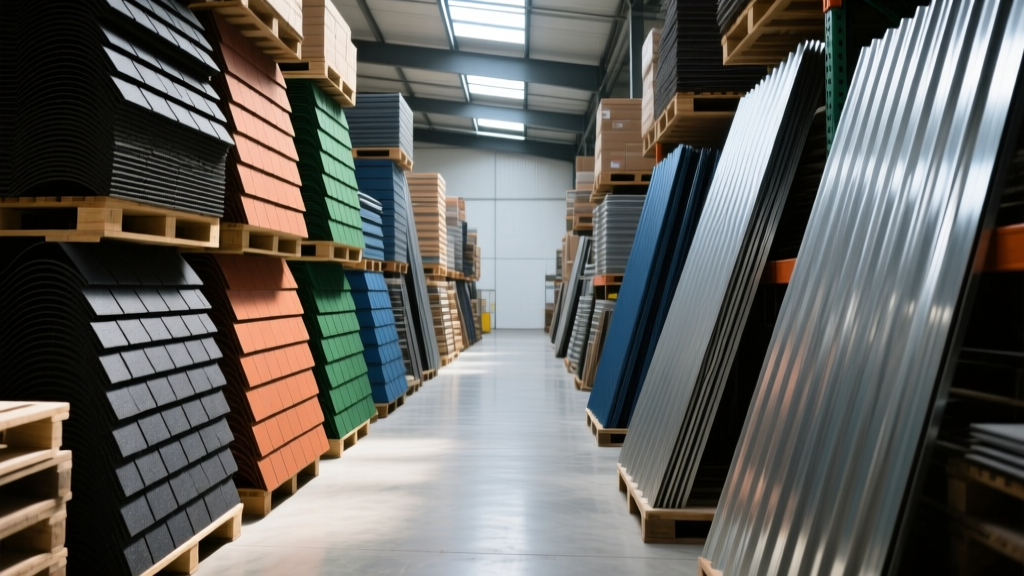
Roofing manufacturers use natural stone granules coated with ceramic pigments. Because natural stone varies, manufacturers rely on strict batch-matching. If you purchase 30 bundles of discontinued 'Desert Tan' overstock, you may find three distinct shade variations within the same pallet. For primary residences with high street visibility, this mottled effect is unacceptable. For agricultural buildings, detached garages, or flip properties, the cost savings easily outweigh the cosmetic inconsistency.
Deep Dive: Liquidated Metal Roofing Panels
Metal roofing liquidations offer some of the highest ROI opportunities in the discount market, provided you understand metallurgy and coating specifications. The Metal Construction Association (MCA) emphasizes that the longevity of a metal roof relies heavily on the metallic coating (Galvalume) and the topcoat paint system.
Gauge and Coating Discrepancies
Premium 26-gauge panels feature an AZ55 Galvalume coating (55% aluminum, 43.4% zinc, 1.6% silicon) and a 70% PVDF resin paint system (commonly branded as Kynar 500). Discount yards often liquidate 'prime painted' seconds or commercial overruns that utilize an inferior AZ50 coating and a Siliconized Polyester (SMP) paint system. While SMP panels are perfectly adequate for interior pole barns or temporary structures, they will chalk and fade significantly faster than PVDF panels when exposed to direct UV radiation. Always inspect the mill certificate or the ink-jet printing on the panel's underside to verify the coating spec before purchasing liquidated metal.
Underlayment and Accessories: The Hidden Risks
Contractors often focus on the primary roof covering and ignore the secondary water barrier. Synthetic underlayment (like Tyvek or TigerPaw) is highly susceptible to UV degradation. If discount suppliers have stored pallets of synthetic underlayment outdoors with compromised shrink-wrap, the polypropylene matrix can become brittle. A brittle underlayment will tear under the weight of roofers and fail to seal around nail penetrations. Always unroll a sample of discounted underlayment and perform a tear-test by hand before committing to a bulk purchase.
Decision Framework: When to Use Discount Materials
Use this framework to determine if sourcing from Discount Roofing Materials Inc aligns with your project parameters:
- Primary Residences (Owner-Occupied): Avoid overstock shingles and SMP metal panels. The risk of aesthetic failure and voided warranties outweighs the 30% material savings. Limit discount purchases to structurally hidden components like ice-and-water shield or synthetic underlayment (provided packaging is intact).
- Investment Flips and Rentals: Ideal for overstock architectural shingles. The structural performance remains intact, and the minor cosmetic variations are rarely noticed by buyers or tenants. Ensure you buy 15% extra to account for damaged bundles.
- Agricultural and Utility Buildings: The prime use case for factory-second metal panels and liquidated EPDM membranes. Cosmetic blemishes, edge-crimping, and SMP paint fading are irrelevant on a tractor shed or equipment storage unit.
- Historic Restorations: Never use discount materials. Historic preservation boards require exact material matching, and the structural unpredictability of liquidated slate or clay tile can compromise the entire restoration effort.
Pre-Purchase Inspection Checklist
When visiting a liquidation warehouse, execute this physical inspection protocol before loading your vehicle:
- Check Bundle Wrappers: Ensure asphalt shingle bundles are tightly wrapped. Loose wrappers indicate the bundles have been dropped, which fractures the internal fiberglass mat and compromises the shingle's tensile strength.
- Verify Sealant Integrity: Peel back one shingle tab and touch the sealant strip. It should feel tacky, not rock-hard or dusty. Hard sealant indicates prolonged exposure to warehouse heat, which will prevent proper thermal sealing on the roof.
- Inspect Metal Panel Edges: Run a gloved hand along the edges of discounted R-panels or standing seam profiles. Sharp, burr-heavy edges indicate dull roll-forming dies, which can lead to premature edge rusting.
- Read the Mill Tags: Locate the manufacturer's ink-jet stamp on the back of metal panels or the lot number on shingle wrappers. Cross-reference these with the supplier's inventory sheet to ensure you are not accidentally mixing 29-gauge and 26-gauge panels, or mixing shingle production years.
Sourcing from liquidators requires a shift in mindset from simple procurement to active quality assurance. By understanding the specific failure modes of overstock and second-tier materials, builders can safely capture massive margin improvements without sacrificing the structural weathertightness of the building envelope. For further guidance on proper material handling and storage limits, consult the National Roofing Contractors Association (NRCA) technical resources to ensure your discounted inventory performs as intended once installed.
Written by
Elena RodriguezElena Rodriguez is a civil engineer and technical writer specializing in concrete technology, masonry systems, and ASTM/ACI compliance. She earned her B.S. in Civil Engineering from Texas A&M University and spent a decade at a materials testing laboratory, performing over 2,000 concrete compressive strength tests and masonry prism evaluations. Elena is an ACI-certified Field Testing Technician (Grade I) and a member of ASTM Committee C12 on Natural Building Stone. She currently consults on forensic engineering cases involving concrete failures and moisture intrusion. Based in San Antonio, TX, Elena is a proud member of the Society of Women Engineers (SWE) and coaches her daughter's FIRST Robotics team.
More from Elena Rodriguez
View all
Walls & Panels
Cost Analysis: Light Gauge Steel Framing Advantages and Disadvantages
Evaluate light gauge steel framing advantages and disadvantages through a strict cost analysis lens, comparing material, labor, and lifecycle expenses.
Aug 4, 2026

Walls & Panels
Gypsum Board Types: Exact Specifications, Thickness & Dimensions
Compare standard, Type X, and moisture-resistant gypsum board types. Get exact specifications, thicknesses, dimensions, and ASTM standards for your project.
Aug 4, 2026

Fire Resistance
Best Fire-Resistant Outdoor Decking Materials: 2026 Buyer Guide
Discover the best fire-resistant outdoor decking materials for 2026. Compare Class A PVC, aluminum, and hardwood options for WUI compliance and safety.
Aug 4, 2026