Most Durable Roofing Material: Slate, Metal, and Clay Compared
Discover the most durable roofing material for your home. We compare slate, standing seam metal, and clay tile lifespans, failure modes, and structural needs.

When evaluating the most durable roofing material, longevity is only one metric. True durability encompasses impact resistance (UL 2218 Class 4), wind uplift tolerance (ASTM D7158 Class H), thermal shock survivability, and moisture management. While standard architectural asphalt shingles dominate the market with a 20-to-30-year functional lifespan, premium materials push the envelope to 75, 100, or even 150 years. However, extended lifespans introduce unique structural requirements, specific failure modes, and specialized maintenance protocols that homeowners and builders must anticipate.
The Hierarchy of Roofing Lifespans and Material Density
Before analyzing specific premium materials, it is necessary to contextualize their performance against standard options. The physical density and composition of a roofing material directly correlate with its resistance to environmental degradation.
- Architectural Asphalt: 25–30 years | 250–400 lbs
- Stone-Coated Steel: 40–50 years | 150–200 lbs
- Standing Seam Metal: 50–70 years | 50–150 lbs
- Clay/Concrete Tile: 50–100 years | 600–1,000 lbs
- Natural Slate: 75–150+ years | 800–1,500 lbs
Natural Slate: The Century-Lasting Benchmark
Natural slate is universally recognized as the most durable roofing material in terms of sheer chronological lifespan. Quarried stone is entirely impervious to UV degradation, rot, and insect damage. According to research from Penn State Extension, a properly installed slate roof will routinely outlast the building it protects, often exceeding 100 years with minimal intervention.
Grading and Failure Modes
Not all slate is equal. The ASTM C406 standard classifies slate into three grades based on water absorption and modulus of rupture. You must specify S1 Grade slate (water absorption <0.25%) for a 75+ year lifespan. S2 and S3 grades will delaminate and spall within 40 years due to freeze-thaw cycles.
The most common failure point on a slate roof is not the stone, but the fasteners. "Nail sickness" occurs when standard galvanized or electroplated nails corrode, causing the slate to slide off the deck. To prevent this, S1 slate must be secured using 16 oz copper nails or Type 304/316 stainless steel roofing nails. Furthermore, the flashing must match the lifespan of the slate; using aluminum or galvanized valley flashing on a 100-year slate roof guarantees premature leak failures. Only 20 oz cold-rolled copper or stainless steel flashing should be integrated.
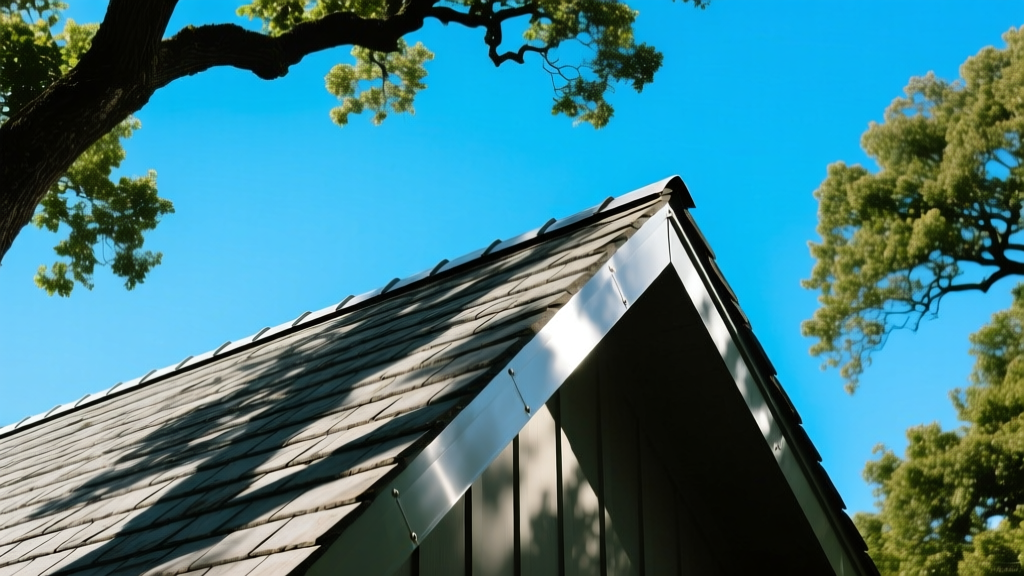
Standing Seam Metal: The Modern Durability Champion
While slate wins on pure age, standing seam metal roofing offers the highest durability-to-weight ratio and superior performance in extreme weather events, including hurricane-force winds and heavy hail. The Building America Solution Center highlights metal roofing's exceptional ability to shed snow and resist wind uplift when engineered with concealed clip systems.
Material Composition: Galvalume vs. Aluminum vs. Zinc
The longevity of a metal roof depends entirely on the alloy and the protective coating. Exposed fastener panels (like corrugated ag-panels) are not considered premium durable options because the neoprene washer seals degrade under UV exposure within 15 to 20 years, requiring periodic screw replacements.
| Metal Type | Expected Lifespan | Ideal Environment | Primary Vulnerability |
|---|---|---|---|
| 24-Ga Galvalume Steel | 50–70 Years | Inland, Temperate, Snow | Saltwater corrosion; scratching during install |
| .032 Aluminum | 50+ Years | Coastal, High Salt-Spray | Lower yield strength; dents from large hail |
| Zinc (0.7mm) | 80–100+ Years | Urban, Varied Climates | High initial cost; requires specialized soldering |
A critical engineering detail for standing seam metal is thermal expansion. Steel and aluminum expand and contract significantly with temperature fluctuations. If panels are pinned too tightly, the metal will buckle, a phenomenon known as "oil canning." Installers must use sliding concealed clips that allow the panel to move independently of the roof deck, and specify flat pans with stiffening striations to mask minor thermal rippling.
Clay and Concrete Tile: The Thermal Shock Survivors
Clay and concrete tiles excel in high-heat environments and offer exceptional fire resistance (Class A). Their thermal mass helps buffer interior temperatures, a trait recognized by the U.S. Department of Energy for reducing cooling loads in hot climates. However, their durability is highly dependent on the manufacturing process and the local climate's freeze-thaw dynamics.
The Freeze-Thaw Vulnerability
Concrete tiles are porous by nature. If water absorbs into the concrete matrix and subsequently freezes, the expansion will cause the tile to crack and spall. When specifying tile for climates that experience winter freezing, the material must meet ASTM C1167 Grade 1 standards, which certifies the tile has survived rigorous freeze-thaw cycling in a laboratory setting. Grade 2 and Grade 3 tiles are strictly for frost-free southern climates.
Additionally, tile roofs require a specialized underlayment system. Because the tiles themselves are not entirely watertight at the overlaps, the underlying membrane (often a self-adhering modified bitumen or a 90-lb organic felt) acts as the true secondary water barrier. This underlayment typically degrades after 30 to 40 years, requiring a costly "lift and relay" maintenance procedure where the tiles are removed, the underlayment is replaced, and the original tiles are reinstalled.
Decision Framework: Matching Material to Climate Zone
Selecting the most durable roofing material requires aligning the material's physical properties with the specific environmental stressors of your region.
| Climate Zone / Hazard | Optimal Durable Material | Materials to Avoid |
|---|---|---|
| Coastal / Hurricane | .032 Aluminum Standing Seam (Class H wind rating) | Galvalume steel (salt corrosion), Clay tile (projectile risk) |
| Heavy Hail / Tornado Alley | 22-Gauge Steel with Class 4 UL 2218 impact rating | Slate (shatters on high-velocity impact), Concrete tile |
| Wildfire Prone (WUI Zones) | Slate, Clay Tile, or Metal (All Class A fire rated) | Wood shakes, Standard asphalt (ember ignition risk) |
| Extreme Freeze-Thaw | S1 Grade Natural Slate, Zinc | Low-grade concrete tile, Porous synthetic composites |
The Hidden Economics of 50+ Year Roofs
When calculating the ROI of premium materials, factor in the specialized labor and ancillary component costs. A 100-year slate roof is only as durable as its weakest accessory. Standard aluminum box vents, plastic pipe boots, and basic caulking will fail in 15 years. For premium roofing systems, mandate the following upgrades in your construction documents:
- Pipe Flashings: Use cast-iron or copper pipe boots with lead sleeves that form to the PVC plumbing vent, rather than rubberized boots that dry-rot.
- Valleys: Specify open valleys with 20 oz copper and a raised center rib to prevent ice-dam water from crossing the valley seam.
- Gutters: Heavy snow slides off metal and slate roofs with immense kinetic energy. Install heavy-duty 6-inch seamless aluminum or copper gutters with snow guards (for slate) or continuous snow retention systems (for metal) to prevent structural tearing of the fascia.
Ultimately, the most durable roofing material is the one correctly engineered for its specific micro-climate and supported by a structural framing system capable of bearing its dead load. Prioritize fastener integrity, flashing metallurgy, and ASTM grading over superficial aesthetic warranties to achieve true multi-generational roof performance.
Written by
Sarah WhitfieldSarah Whitfield is a chartered quantity surveyor (MRICS) and construction cost analyst with 15 years of experience in material pricing, procurement strategy, and project budgeting. She earned her degree in Construction Management from the University of Reading (UK) and has worked on projects ranging from $2M custom homes to $180M mixed-use developments across North America and Europe. Sarah currently leads cost estimating for BuildMat Insight, maintaining a proprietary database of 4,000+ material price points updated quarterly. She is a frequent contributor to RSMeans cost data panels and has presented at the International Cost Engineering Council (ICEC) congress. Based in Denver, CO, Sarah is an avid trail runner and volunteer mentor for Women in Construction.
More from Sarah Whitfield
View all
Wood & Lumber
What Are the Different Types of Wood? A Builder's Guide
Compare structural softwoods, finish hardwoods, and engineered lumber. Analyze Janka ratings, MOE values, and 2026 pricing for construction.
Aug 4, 2026

Walls & Panels
Steel Framing vs Wood Framing: Corrosion and Moisture Defense
Compare steel framing vs wood framing for moisture resistance. Learn about galvanized coatings, condensation risks, and corrosion protection strategies.
Jul 21, 2026

Stone & Masonry
How to Cut Stone Veneer: Wet Saw vs Grinder Comparison
Compare the best tools for cutting stone veneer. We review wet saws, angle grinders, and chop saws to help you achieve clean, chip-free cuts.
Jul 21, 2026