Metal Roof Material Cost Breakdown & Pricing Guide 2026
Detailed 2026 cost breakdown for metal roof material. Compare steel, aluminum, copper, and zinc pricing, labor rates, and hidden installation fees.

The True Cost of Metal Roof Material in 2026
Calculating the exact cost of a metal roof requires moving beyond basic square-foot averages. In 2026, the pricing landscape for metal roof material is heavily influenced by global steel tariffs, aluminum supply chain fluctuations, and the premium placed on high-performance PVDF (Kynar 500) paint systems. While asphalt shingles remain the default for budget-conscious builds, metal roofing has captured over 18% of the residential re-roofing market due to its 50-year lifespan and superior wind resistance.
Homeowners and commercial builders must evaluate the total installed cost, which encompasses the raw panels, specialized trim, underlayment, and the highly skilled labor required for watertight detailing. This guide deconstructs the 2026 pricing tiers for the four primary metal roof materials, exposing the hidden cost drivers that frequently inflate final contractor invoices.
2026 Quick Cost Snapshot
- Average Total Installed Cost: $11.50 to $22.00 per square foot
- Material-Only Cost Range: $4.50 to $25.00 per square foot
- Most Popular Choice: 24-gauge Galvalume Standing Seam ($14.50/sq. ft. installed)
- Typical Roof Size (US): 1,700 sq. ft. (17 squares)
Material Cost Matrix: Steel vs. Aluminum vs. Copper vs. Zinc
The base metal dictates not only the upfront material cost but also the long-term maintenance requirements and environmental suitability. Below is the 2026 market pricing for the most specified residential and light-commercial metal roof materials.
| Material Type | Standard Gauge/Thickness | Material Cost (Per Sq. Ft.) | Expected Lifespan | Best Application |
|---|---|---|---|---|
| Galvalume Steel | 24-gauge (0.0239") | $4.50 - $7.00 | 40 - 60 years | Standard residential, agricultural |
| Aluminum | 0.032" - 0.040" sheet | $6.00 - $9.50 | 50+ years | Coastal regions (salt-air resistance) |
| Zinc | 0.7mm - 0.8mm | $15.00 - $22.00 | 80 - 100 years | High-end architectural, historic retrofits |
| Copper | 16 oz (0.021") | $18.00 - $28.00 | 100+ years | Accents, bays, premium estates |
Panel Profile Pricing: Exposed Fastener vs. Standing Seam
The profile of the metal roof material fundamentally alters both the material cost and the labor required for installation. The two dominant profiles in 2026 serve entirely different structural and aesthetic purposes.
Standing Seam (Concealed Fastener)
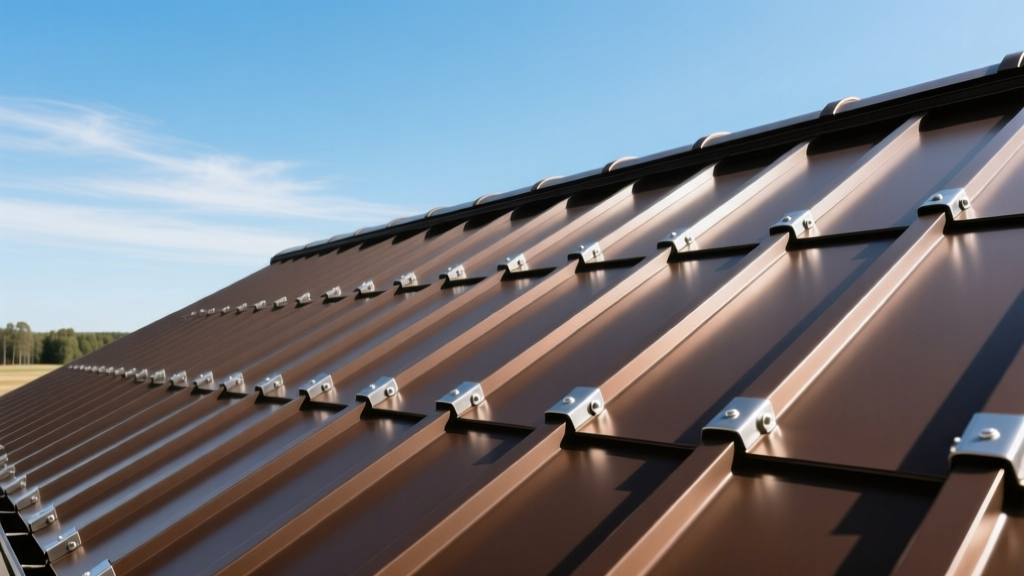
Standing seam systems, such as the Petersen PAC-CLAD or ATAS International lines, feature raised seams that interlock mechanically or snap together, hiding the fasteners beneath the panels. This design allows for thermal expansion and contraction without compromising the weather seal.
- Material Cost: $6.00 to $11.00 per square foot.
- Labor Cost: $8.00 to $14.00 per square foot.
- Crucial Detail: Requires specialized seaming tools and a higher skill level. Always specify a 24-gauge minimum; 26-gauge standing seam is prone to oil-canning (visible rippling) under direct sunlight.
Exposed Fastener (Corrugated / R-Panel)
Products like MBCI's PBR panel utilize screws with neoprene washers driven directly through the metal into the roof decking. While faster to install, the washers degrade under UV exposure and require maintenance every 15-20 years.
- Material Cost: $3.50 to $5.50 per square foot.
- Labor Cost: $4.00 to $7.00 per square foot.
- Crucial Detail: Never use exposed fasteners on roof pitches below 3:12, as capillary action will draw water under the laps during wind-driven rain.
Hidden Cost Drivers That Inflate Your Final Invoice
Contractor estimates often highlight the per-square-foot panel cost while burying the accessories and prep work in line-item allowances. Budget for these specific variables to avoid mid-project change orders.
If you choose a steel panel, you must use steel or aluminum-compatible flashing. Using copper flashing or untreated copper drip edges above a steel or aluminum roof will cause severe galvanic corrosion, voiding the manufacturer's warranty and destroying the panels within 5 years. Always budget for matching metal trim ($3.00 - $6.00 per linear foot).
- Tear-Off and Disposal: Removing an existing asphalt shingle roof costs $1.50 to $3.00 per square foot. If you are installing over an existing roof (only permissible in some jurisdictions and typically limited to one existing layer), you save on tear-off but risk trapping moisture against the decking.
- Decking Replacement: Metal roofs require a perfectly flat substrate. Expect to replace 15% to 20% of the existing plywood/OSB decking. In 2026, a 4x8 sheet of 5/8" CDX plywood costs roughly $75 to $110 installed.
- High-Temp Synthetic Underlayment: Standard felt paper will degrade under the heat of a metal roof. You must specify a high-temperature synthetic underlayment (e.g., Titanium UDL 50), adding $0.60 to $0.90 per square foot.
- Snow Retention Systems: In northern climates, snow guards are mandatory to prevent avalanches that destroy gutters and landscaping. Pad-style snow guards cost $15 to $30 each, and a standard roof requires 50 to 100 units.
Long-Term ROI and Energy Savings Calculation
The initial premium for metal roof material is offset by its lifecycle performance and energy efficiency. According to the Department of Energy, cool metal roofs featuring specialized reflective pigments can reduce peak cooling demand by 10% to 15%. Over a 40-year period, the energy savings alone can recoup 20% to 30% of the initial material investment.
"When evaluating roof economics, look at the cost per year of service, not just the installation day. A $25,000 asphalt roof replaced three times over 60 years costs $75,000, plus compounded disposal fees. A $38,000 standing seam metal roof installed once yields a significantly lower net present cost." — Industry Analysis via the Metal Construction Association
Actionable Purchasing Framework for Homeowners
Use this decision matrix to select the correct metal roof material based on your specific geographic and budgetary constraints.
- Assess Your Environment: If your property is within 1,500 feet of a saltwater body, eliminate Galvalume steel immediately; the salt spray will compromise the zinc-aluminum coating. Mandate 0.032" Aluminum.
- Determine Pitch and Profile: For roof pitches between 3:12 and 12:12, a mechanical-lock standing seam provides the best weathertight seal. For steep pitches (12:12 and above) or simple shed roofs, a snap-lock standing seam is sufficient and reduces labor costs by roughly 10%.
- Verify the Paint System: Never accept a standard polyester (PE) or silicone-modified polyester (SMP) paint for a primary residence. Demand a PVDF resin system (Kynar 500 or Hylar 5000). SMP paints will chalk and fade significantly within 10 to 12 years, whereas PVDF carries a 30-to-40-year non-prorated fade and chalk warranty.
- Vet the Contractor: Metal roofing is unforgiving of poor craftsmanship. Require proof of manufacturer-specific certification (e.g., ATAS Certified Installer or Petersen Dealer Network). Consult the National Roofing Contractors Association directory to verify the contractor's standing and adherence to current building codes.
Written by
David NakamuraDavid Nakamura is a licensed architect (AIA) and construction technology writer focused on sustainable building methods, mass timber engineering, and high-performance building envelopes. He holds a Master of Architecture from the University of Washington and is a certified Passive House Consultant (CPHC). David spent eight years at the Seattle firm Mithun, where he led the design of three LEED Platinum projects, before founding his own practice specializing in net-zero residential design. He serves on the editorial advisory board of GreenBuilder Magazine and has authored peer-reviewed papers on cross-laminated timber (CLT) connections for the Journal of Structural Engineering. In his spare time, David teaches woodworking at Pratt Fine Arts Center and kayaks the Puget Sound.
More from David Nakamura
View all
Construction Cost
Labor Cost to Build a Deck Per Sq Ft: 2026 Installation Guide
Discover the exact labor cost to build a deck per sq ft in 2026. This installation guide breaks down contractor rates, complexity factors, and hidden fees.
Aug 4, 2026

Construction Cost
How Much Does It Cost to Build a 3 Bedroom House? Financing Guide
Learn exactly how much it costs to build a 3 bedroom house and explore 2026 financing options, construction loan types, and budget frameworks for your build.
Aug 4, 2026

Construction Cost
Cost to Build a Tennis Court: 2026 Guide
How much does it cost to build a tennis court in 2026? Breakdowns for asphalt, concrete, and synthetic surfaces plus fencing and lighting.
Jul 30, 2026