The Most Common Roof Material: A Homeowner Selection Framework
Discover why architectural asphalt is the most common roof material and use our climate-driven selection framework to choose the best system for your home.
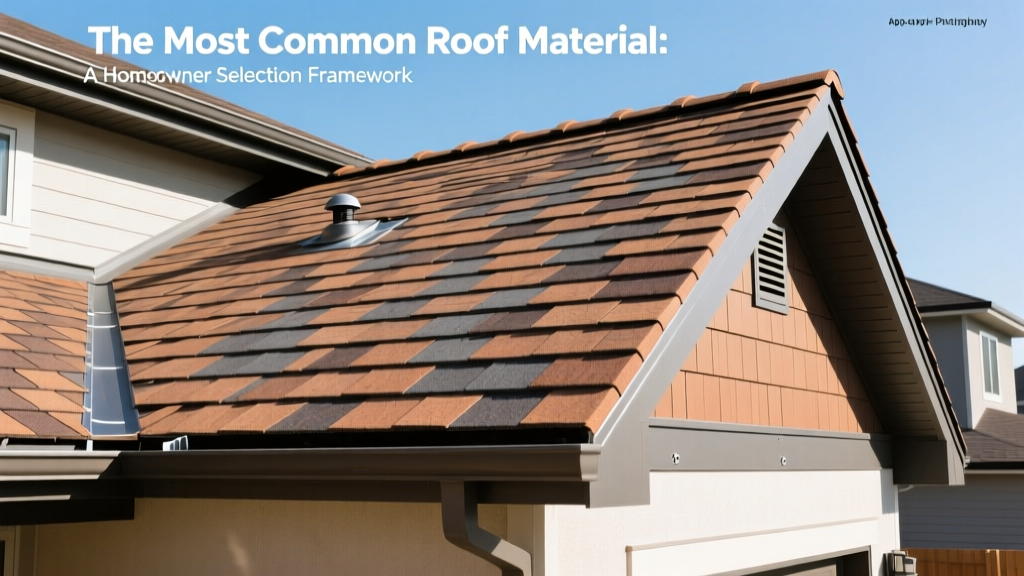
The Undisputed Baseline: Architectural Asphalt Shingles
When evaluating residential roofing in North America, architectural asphalt shingles are unequivocally the most common roof material, accounting for approximately 75% to 80% of all installations. However, "most common" is a reflection of supply chain efficiency, contractor familiarity, and baseline affordability—not necessarily an indicator of optimal performance for every microclimate. To make an informed decision, homeowners must look beyond market dominance and evaluate materials through a structural and environmental framework.
The industry has largely abandoned traditional 3-tab shingles in favor of architectural (or dimensional) shingles. Modern architectural shingles, such as the GAF Timberline HDZ or Owens Corning Duration lines, utilize a heavier fiberglass mat base and feature multiple asphalt layers to create a contoured, shadow-line aesthetic that mimics wood shakes or slate. Crucially, they are manufactured to meet ASTM D3462 standards, which dictate stringent requirements for tear strength, moisture absorption, and fire resistance.
In 2026, the installed cost for premium architectural asphalt ranges from $4.50 to $8.50 per square foot, depending on regional labor rates, roof pitch, and the complexity of valleys and dormers. While this makes them the most accessible option, their relatively short lifespan (20 to 30 years) and susceptibility to thermal shock necessitate a rigorous cost-to-lifecycle analysis before defaulting to the industry standard.
Material Selection Decision Matrix
Use the following matrix to compare the most common roof material against high-performance alternatives based on critical structural and environmental metrics.
| Material | Installed Cost (per sq. ft.) | Expected Lifespan | Weight per Square (100 sq. ft.) | Max Wind Rating (ASTM D7158) |
|---|---|---|---|---|
| Architectural Asphalt | $4.50 - $8.50 | 20 - 30 Years | 230 - 280 lbs | Class H (150 mph) |
| Standing Seam Metal | $12.00 - $18.00 | 40 - 60 Years | 100 - 150 lbs | Class F (110+ mph, uplift resistant) |
| Concrete Tile | $14.00 - $22.00 | 50+ Years | 900 - 1,100 lbs | Class F (110+ mph) |
| Synthetic Slate | $16.00 - $25.00 | 50+ Years | 300 - 400 lbs | Class H (150+ mph) |
Climate-Driven Failure Modes and Mitigation
Selecting a roof strictly by its baseline cost ignores the localized failure modes that dictate actual lifecycle expenses. The Insurance Institute for Business & Home Safety (IBHS) emphasizes that environmental stressors drastically alter material viability.
High-Wind and Hail Zones
In regions prone to severe convective storms (e.g., Tornado Alley, the Gulf Coast), the most common roof material often fails prematurely due to granule loss from hail impacts and creasing from wind uplift. If your property is in a high-hail zone, standard architectural shingles are insufficient. You must specify shingles with a UL 2218 Class 4 impact rating, such as the CertainTeed NorthGate or Malarkey Vista. Alternatively, 24-gauge standing seam metal with a PVDF (Kynar 500) finish offers superior hail deflection and eliminates the risk of wind-driven water infiltration beneath the laps.
Wildland-Urban Interface (WUI) Fire Zones
For homes in California, Colorado, or other WUI zones, the selection framework shifts entirely to fire resistance. While fiberglass-based asphalt shingles carry a Class A fire rating (meaning they resist severe fire exposure), they can still melt or allow embers to penetrate if the underlayment is compromised. In strict WUI jurisdictions, building codes often mandate non-combustible materials like concrete tile, metal, or slate, paired with a fire-rated underlayment like FireBlocker to prevent ember intrusion at the eaves.
High-Heat and Coastal Zones
In the Southwest, extreme UV degradation causes the asphalt binder in shingles to dry out, leading to premature curling and granule shedding. According to the U.S. Department of Energy, utilizing cool-roof technologies—such as highly reflective metal panels or specialized cool-color asphalt shingles—can reduce peak cooling demand by 10% to 15%. In coastal environments, salt spray accelerates galvanic corrosion on metal fasteners; therefore, aluminum standing seam or copper flashing is required, as standard galvanized steel will fail within a decade.
Hidden Cost Variables in Roofing Quotes
When budgeting for the most common roof material, homeowners frequently overlook the ancillary costs that inflate the final invoice. A transparent selection framework requires accounting for the following variables:
Most baseline quotes assume a single-layer tear-off and intact roof decking. If your home has two existing layers of shingles, disposal costs will increase by $1.00 to $1.50 per square foot. Furthermore, older homes often utilize spaced board decking or degraded OSB (Oriented Strand Board). Budget an additional $75 to $120 per sheet for CDX plywood replacement, as modern architectural shingles require a solid, continuous deck to maintain their wind warranties.
- Ice and Water Shield: Standard felt underlayment is inadequate for eaves, valleys, and penetrations in northern climates. Specify a self-adhering polymer-modified bitumen membrane (e.g., Grace Ice & Water Shield) for the first 3 to 6 feet of the eave. This adds $1.50 to $2.50 per linear foot but prevents catastrophic interior water damage from ice damming.
- Ventilation Upgrades: Asphalt shingle warranties are voided without proper intake and exhaust ventilation. Upgrading from standard box vents to a continuous ridge vent system (like Cobra SnowCountry) and ensuring unobstructed soffit intake is critical for regulating attic temperatures and preventing premature shingle blistering.
- Flashing and Penetrations: The National Roofing Contractors Association (NRCA) notes that 90% of roof leaks occur at penetrations. Ensure your quote includes the replacement of all pipe boots with heavy-duty aluminum or lead alternatives, rather than reusing existing rubber boots that degrade under UV exposure within 10 years.
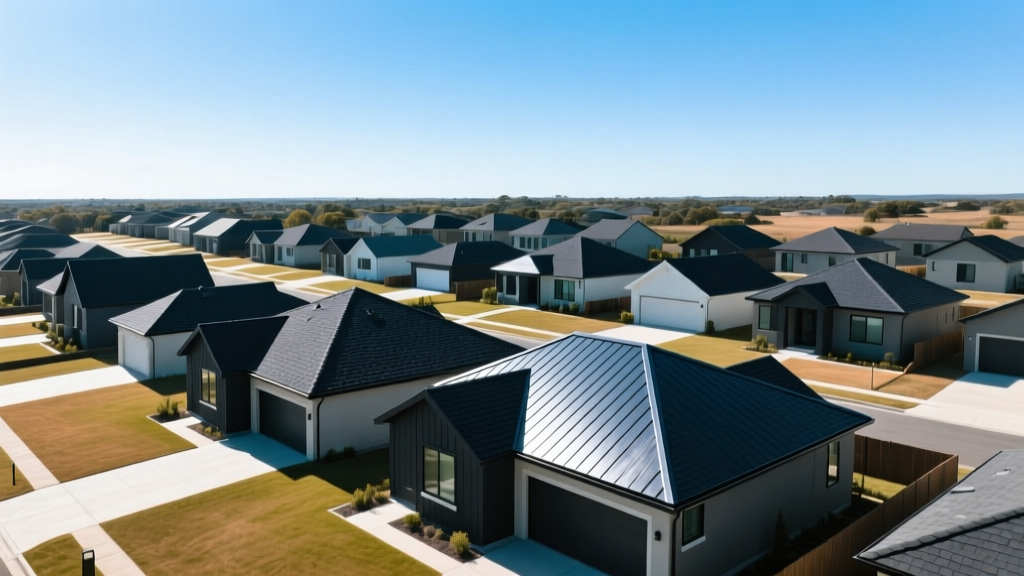
The Final Verification Protocol
Deciding on the most common roof material is only the first step; execution dictates longevity. Before signing a contract, verify that the installer is certified by the specific manufacturer (e.g., GAF Master Elite, Owens Corning Platinum). Manufacturer certifications are not merely marketing badges; they are the prerequisite for accessing enhanced, system-wide warranties that cover both materials and labor for 50 years. Request a detailed spec sheet that explicitly lists the exact shingle model, underlayment brand, ice shield dimensions, and ventilation calculations to ensure your roof system is engineered for your specific environmental demands.
Written by
Sarah WhitfieldSarah Whitfield is a chartered quantity surveyor (MRICS) and construction cost analyst with 15 years of experience in material pricing, procurement strategy, and project budgeting. She earned her degree in Construction Management from the University of Reading (UK) and has worked on projects ranging from $2M custom homes to $180M mixed-use developments across North America and Europe. Sarah currently leads cost estimating for BuildMat Insight, maintaining a proprietary database of 4,000+ material price points updated quarterly. She is a frequent contributor to RSMeans cost data panels and has presented at the International Cost Engineering Council (ICEC) congress. Based in Denver, CO, Sarah is an avid trail runner and volunteer mentor for Women in Construction.
More from Sarah Whitfield
View all
Wood & Lumber
What Are the Different Types of Wood? A Builder's Guide
Compare structural softwoods, finish hardwoods, and engineered lumber. Analyze Janka ratings, MOE values, and 2026 pricing for construction.
Aug 4, 2026

Walls & Panels
Steel Framing vs Wood Framing: Corrosion and Moisture Defense
Compare steel framing vs wood framing for moisture resistance. Learn about galvanized coatings, condensation risks, and corrosion protection strategies.
Jul 21, 2026

Stone & Masonry
How to Cut Stone Veneer: Wet Saw vs Grinder Comparison
Compare the best tools for cutting stone veneer. We review wet saws, angle grinders, and chop saws to help you achieve clean, chip-free cuts.
Jul 21, 2026