The Most Durable Roof Material for Your Specific Climate Zone
Discover the most durable roof material for your specific climate zone. Compare coastal, high-wind, snow, and heat-resistant roofing systems and costs.
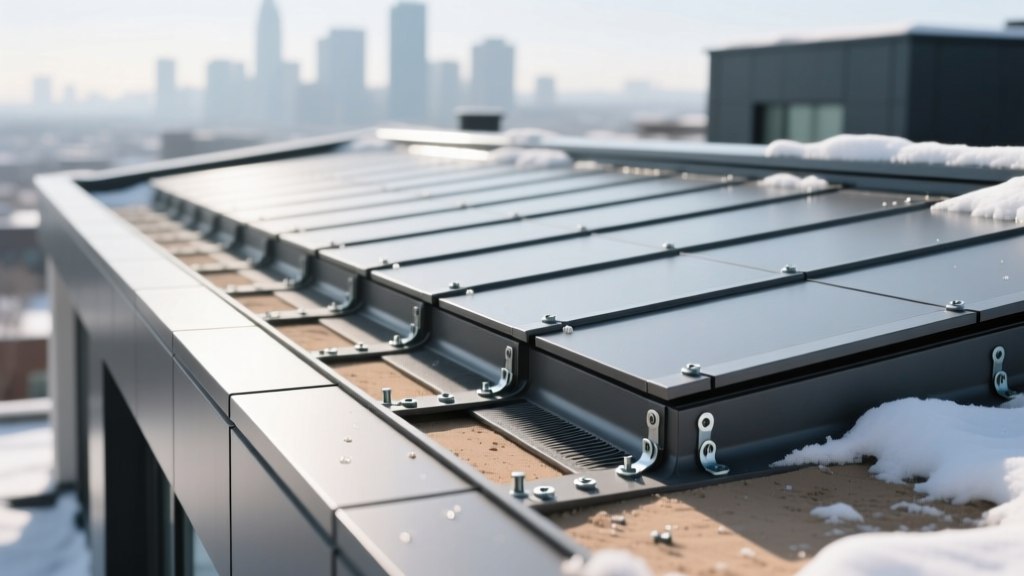
The Myth of a Universal 'Most Durable' Roof
Search for the most durable roof material and you will find conflicting answers: slate, metal, clay, or concrete. The truth is that durability is not an inherent property of a material; it is a measure of how well a material resists the specific environmental stressors of its location. A natural slate roof that lasts 150 years in a snowy alpine environment will shatter in a single season if subjected to the thermal shock of a desert climate. Similarly, a premium steel roof that survives a century inland will succumb to galvanic corrosion within 15 years if installed on a beachfront property.
To identify the most durable roof material for your home, you must match the material's physical properties to your local climate zone. This guide breaks down the exact material specifications, failure modes, and 2026 installation costs for the four primary climate stressors: salt air, extreme wind, heavy snow, and intense UV radiation.
Zone 1: Coastal and High-Salt Environments
The Failure Mode: Galvanic and Salt-Spray Corrosion
In coastal regions, airborne chlorides accelerate the oxidation of ferrous metals. Standard Galvalume or galvanized steel roofing, even with a Kynar 500 paint finish, will eventually suffer from cut-edge creep and fastener rust, leading to structural failure and leaks.
The Solution: Marine-Grade Aluminum and Copper
The most durable roof material for salt-air environments is 5052-H32 marine-grade aluminum or solid copper. Aluminum naturally forms a protective oxide layer when exposed to salt, halting further corrosion. Copper develops a stable patina that actively protects the underlying metal.
- Material Spec: 0.032-inch or 0.040-inch thick 5052-H32 aluminum standing seam panels.
- Fastener Requirement: Must use 316-grade stainless steel fasteners. Using standard steel fasteners with aluminum panels will cause galvanic corrosion, where the aluminum sacrifices itself to protect the steel.
- Estimated Cost (2026): $24 to $32 per square foot installed.
Zone 2: High-Wind and Hurricane-Prone Regions
The Failure Mode: Uplift and Peel-Back
High winds do not just push against a roof; they create negative pressure (uplift) that attempts to peel the roofing material off the decking. Exposed-fastener metal roofs and standard asphalt shingles frequently fail at wind speeds exceeding 110 mph due to fastener back-out and shingle tearing.
The Solution: Mechanically Locked Standing Seam and Concrete Tile
For wind resistance, the most durable roof material is a concealed-clip standing seam metal roof with a 2-inch mechanical lock. Because the fasteners are hidden beneath the interlocking seams, wind cannot catch the fastener heads. For non-metal options, barrel concrete tile secured with ring-shank nails and polyurethane adhesive provides exceptional wind resistance.
- Certification to Look For: Miami-Dade County Notice of Acceptance (NOA). Products with an active NOA have been tested to withstand large missile impact and cyclic wind pressures up to 160+ mph.
- Testing Standard: Ensure the system is tested per ASTM E1592 for structural uplift performance.
- Estimated Cost (2026): $18 to $26 per square foot for standing seam; $14 to $19 per square foot for hurricane-rated concrete tile.
For comprehensive wind mitigation guidelines and to ensure your roof meets the highest regional standards, consult the IBHS FORTIFIED Home program, which provides strict engineering requirements for roof deck attachment and edge detailing in hurricane zones.
Zone 3: Heavy Snow and Freeze-Thaw Cycles
The Failure Mode: Ice Damming and Micro-Fracturing
In northern climates, snow melts, runs down the roof, and refreezes at the eaves, creating ice dams. Water backs up under the roofing material. If the material is porous (like low-grade clay or standard concrete), the trapped water freezes, expands, and causes the material to spall or crack from the inside out.
The Solution: Grade S1 Natural Slate
Natural slate is the undisputed most durable roof material for freeze-thaw climates. Its extreme density and near-zero porosity prevent water infiltration. However, you must specify Grade S1 slate, which is certified under ASTM C406 to have a water absorption rate of less than 0.4%.
- Top Quarries: Buckingham Slate (Virginia) or Evergreen Slate (New York) offer S1-rated stone with expected lifespans exceeding 150 years.
- Structural Requirement: Slate weighs 800 to 1,000 pounds per square (100 sq. ft.). Your roof framing must be engineered to support a minimum dead load of 10-15 lbs per square foot, plus local snow loads.
- Estimated Cost (2026): $38 to $55 per square foot installed.
For historical and technical data on slate installation and grading, the Slate Roofing Contractors Association (SRCA) provides definitive guidelines on proper headlap and fastening techniques required to prevent ice-dam leaks.
Zone 4: Extreme Heat and High UV Index
The Failure Mode: Thermal Shock and UV Degradation
In desert and high-sun environments, roof surfaces can reach 160°F during the day and drop to 60°F at night. This extreme thermal cycling causes materials with high expansion coefficients to warp, crack, and lose their protective coatings. UV radiation also breaks down the chemical bonds in asphalt and synthetic polymers.
The Solution: Clay Tile and Cool-Roof Coated Metal
The most durable roof material for extreme heat is terracotta clay tile. Clay possesses high thermal mass, meaning it absorbs and transfers heat very slowly, protecting the underlying decking. Furthermore, the air gap created by the battens used to mount clay tiles allows for passive ventilation beneath the roof surface.
- Material Spec: Two-piece mission clay tile (e.g., Ludowici or MCA). Ensure the tiles are fired at high temperatures to prevent moisture absorption during rare desert monsoons.
- Alternative: If weight is an issue, a standing seam metal roof coated with a high-SRI (Solar Reflectance Index) 'cool roof' pigment reflects up to 70% of solar radiation.
- Estimated Cost (2026): $28 to $40 per square foot for premium clay tile.
When selecting reflective coatings or light-colored tiles for hot climates, refer to the U.S. Department of Energy's Cool Roofs guide, which details the specific Solar Reflectance Index (SRI) values required to maximize energy efficiency and reduce thermal shock degradation.
Climate-Specific Durability Matrix
Use the following matrix to cross-reference materials against your primary climate stressor. Never select a material based solely on lifespan; it must survive your specific local weather events.
| Material | Best Climate Zone | Worst Climate Zone | Expected Lifespan | Avg. Cost (2026) |
|---|---|---|---|---|
| 5052-H32 Aluminum | Coastal / Salt Air | Hail-Prone (Denting) | 60-80 Years | $24 - $32 / sq ft |
| Mechanical Lock Steel | High Wind / Hurricane | Coastal (Rust Risk) | 50-70 Years | $18 - $26 / sq ft |
| Grade S1 Natural Slate | Heavy Snow / Freeze-Thaw | Extreme Heat (Thermal Shock) | 100-150+ Years | $38 - $55 / sq ft |
| Terracotta Clay Tile | Extreme Heat / High UV | Freeze-Thaw (If unsealed) | 75-100 Years | $28 - $40 / sq ft |
| Concrete Tile (Hurricane Rated) | High Wind / Subtropical | Heavy Snow (Weight/Ice Dams) | 50-70 Years | $14 - $19 / sq ft |
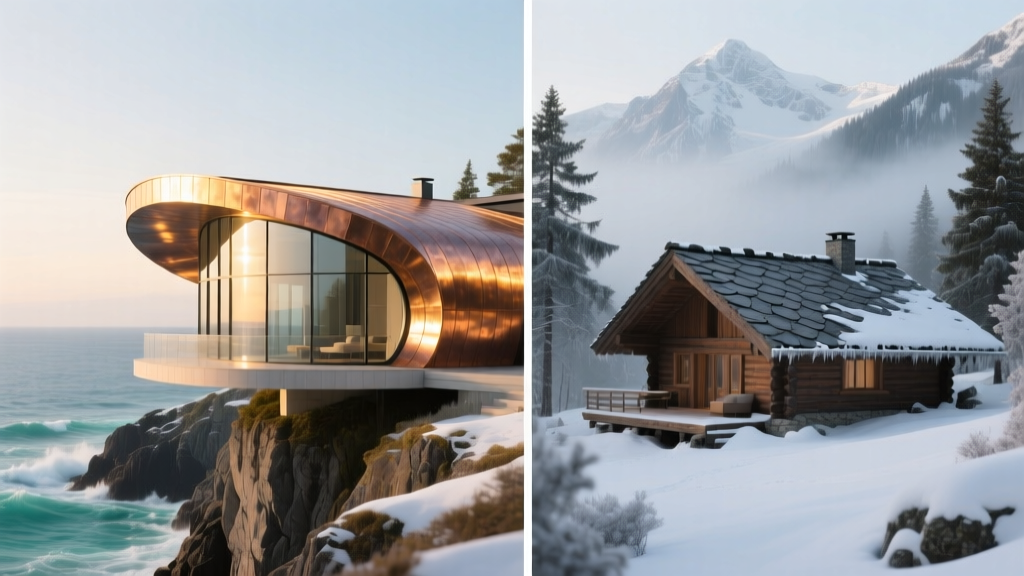
Hidden Cost Factors: When Durability Meets Structural Reality
The most durable roof material is irrelevant if your home cannot support it. Upgrading from an asphalt shingle roof (approx. 250 lbs per square) to natural slate (approx. 900 lbs per square) or clay tile (approx. 950 lbs per square) requires a structural engineering assessment.
In 2026, reinforcing roof trusses or load-bearing walls to handle the dead load of premium masonry roofs typically adds $8,000 to $18,000 to the total project cost. If structural reinforcement is cost-prohibitive, pivot to high-end synthetic alternatives. Synthetic slate (made from engineered polymers and recycled rubber) mimics the freeze-thaw durability of natural stone at 300 lbs per square, while synthetic metal composites offer the wind resistance of steel without the coastal corrosion risk.
Ultimately, durability is an equation: Material Chemistry + Structural Capacity + Climate Resistance. By aligning these three factors, you ensure your roof outlasts the mortgage and the elements.
Written by
James ThorntonJames Thornton is a construction industry veteran with 25 years of hands-on experience in wood framing, lumber grading, and residential building codes. He started as a framing carpenter in rural Oregon, earned his ICC Residential Building Inspector certification, and eventually became a senior plan reviewer for the City of Portland Bureau of Development Services. James holds a B.S. in Wood Science & Technology from Oregon State University and is a certified lumber grader through the West Coast Lumber Inspection Bureau (WCLIB). He has inspected over 3,000 residential construction sites and authored the city's internal guide on advanced framing techniques (2x6 at 24" O.C.). James lives in Bend, OR, where he builds custom timber-frame cabins and competes in lumberjack sports.
More from James Thornton
View all
Insulation
Best Home Insulation Materials: Complete 2026 Guide
Compare top home insulation materials for 2026. Find R-values, installed costs per square foot, and best uses for fiberglass, spray foam, and mineral wool.
Aug 4, 2026

Sustainable Building
Certify Your Green Building Material for LEED and WELL
Step-by-step guide to certifying a green building material for LEED v5 and WELL v2. Master EPDs, HPDs, and VOC limits for 2026 project specifications.
Aug 4, 2026

Stone & Masonry
Veneer Stacked Stone Panels: Interior Design & Style Showcase
Discover how veneer stacked stone panels transform interiors. Explore modern design profiles, material pairings, and technical installation specs.
Aug 4, 2026