Best Motorhome Roof Material by Climate Zone: 2026 Buyer's Guide
Discover the best motorhome roof material for your specific climate. Compare TPO, EPDM, fiberglass, and PVC for desert, cold, and coastal RVing.

The Climate-Material Matrix: Which RV Roof Wins Where?
Choosing the correct motorhome roof material is not a one-size-fits-all decision. A membrane that thrives in the humid, salt-heavy air of the Florida coast will rapidly degrade under the relentless UV index of the Arizona desert. According to the RV Industry Association (RVIA), roof leaks and membrane failures account for over 40% of all major RV warranty claims, with climate-induced thermal shock and UV degradation being the primary culprits.
To maximize your rig's lifespan and minimize interior water damage, you must match the roofing material to your primary camping and storage environment. Below is the definitive climate-to-material matrix for 2026.
| Material | Desert / High UV | Cold / Snow Load | Coastal / Salt Air | Hail / Impact |
|---|---|---|---|---|
| TPO (Thermoplastic Polyolefin) | Excellent | Good | Very Good | Moderate |
| EPDM (Rubber) | Poor (Uncoated) | Excellent | Good | Good |
| Fiberglass (Gel-Coated) | Good | Moderate | Excellent | Poor |
| PVC (Polyvinyl Chloride) | Very Good | Good | Excellent | Moderate |
| Aluminum | Poor (Heat Transfer) | Excellent | Poor (Corrosion) | Poor (Denting) |
Desert & High-UV Zones: Beating the Solar Bake
If you winter in the Sunbelt or frequently tour the Southwest (Arizona, Nevada, West Texas), UV radiation and extreme surface heat are your primary adversaries. Roof surface temperatures on a black or dark-colored RV can exceed 160°F (71°C) in direct July sunlight, accelerating the breakdown of chemical bonds in roofing polymers.
Why TPO is the Desert Champion
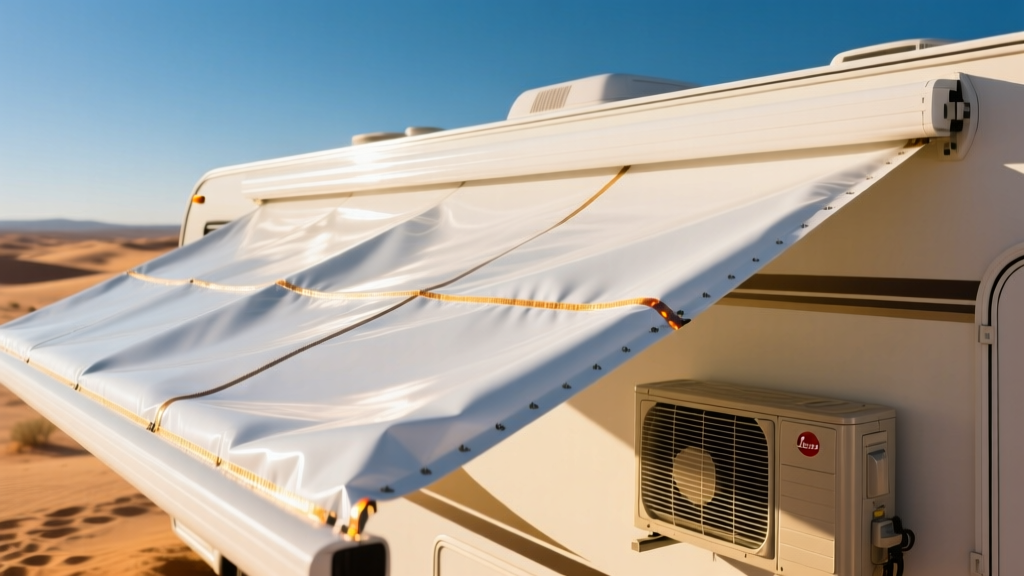
Thermoplastic Polyolefin (TPO), specifically brands like Alpha Systems 1021 or 1028, is the undisputed king of high-UV environments. TPO membranes are inherently white and highly reflective, boasting a Solar Reflectance Index (SRI) of 80 or higher. This reflectivity does more than protect the membrane; it reduces the load on your RV's air conditioning system by up to 15%, according to Family Motor Coach Association (FMCA) technical bulletins.
Unlike EPDM, TPO does not contain the petroleum-based oils that leach out over time (a process known as 'chalking' or 'blooming'). This means TPO will not streak down the sides of your motorhome, and it resists the micro-cracking associated with extreme daily temperature swings.
Freezing & Snow-Load Regions: Impact and Thermal Shock
For RVers navigating the Northern US, Canada, or high-altitude mountain passes, the enemies are thermal shock, heavy snow loads, and hail. Materials that become brittle at sub-zero temperatures will fracture when subjected to the physical stress of snow scraping or hail impact.
EPDM's Cold-Weather Flexibility
EPDM rubber remains the gold standard for extreme cold. High-quality EPDM membranes retain their flexibility down to -40°F (-40°C). When a tree branch drops onto an EPDM roof in freezing conditions, the rubber absorbs the kinetic energy and rebounds. Conversely, rigid materials like fiberglass are prone to micro-fracturing under similar impact when the ambient temperature drops below 20°F.
The Fiberglass Delamination Risk
Fiberglass roofs (often featuring a gel-coat finish) are highly susceptible to water intrusion at the seams. If moisture breaches the sealant and enters the underlying wood decking, the freeze-thaw cycle will cause the water to expand, leading to catastrophic roof delamination. If you store a fiberglass-roofed motorhome outdoors in a snowy climate, investing in a breathable, UV-treated RV cover or a specialized carport is non-negotiable.
Coastal & High-Humidity Environments: Salt and Mold Resistance
Coastal camping introduces two highly corrosive elements: salt spray and persistent high humidity. Aluminum roofs, while excellent for shedding snow, are highly vulnerable to galvanic corrosion and pitting when exposed to ocean air, even when painted or anodized.
PVC and Fiberglass for the Coast
Polyvinyl Chloride (PVC) membranes offer exceptional chemical resistance, making them virtually immune to salt degradation. PVC seams are typically solvent-welded, creating a monolithic, watertight bond that prevents salt-laden moisture from wicking under the membrane.
Fiberglass is also an excellent coastal choice, provided the gel coat is maintained with a marine-grade ceramic coating to prevent oxidation and salt etching. However, EPDM is notoriously porous at a microscopic level. In high-humidity, shaded coastal environments (like the Pacific Northwest or the Gulf Coast), EPDM is highly prone to black mold and mildew growth, requiring aggressive chemical cleaning that can prematurely age the rubber.
Sealant Compatibility: The Hidden Cause of Roof Failure
The most common mistake DIY RV owners make is using the wrong sealant for their specific motorhome roof material. A chemical mismatch will result in the sealant failing to adhere, or worse, chemically melting the roof membrane.
- For EPDM Roofs: Use Dicor 501LSW (Self-Leveling) for flat horizontal seams and 551LSW (Non-Leveling) for vertical joints. Never use silicone or petroleum-based sealants, as they will dissolve the EPDM rubber.
- For TPO Roofs: Use TPO-specific sealants (like Alpha Systems 1028 sealant) or high-quality butyl tape. Standard EPDM lap sealants will not chemically bond to TPO and will peel off within one season.
- For Fiberglass Roofs: Marine-grade polyurethane sealants (like 3M Marine Adhesive Sealant 5200) or specialized RV silicone formulations are required to bond to the slick gel-coat surface.
2026 Cost & Installation Breakdown
Budgeting for a roof replacement or major restoration requires looking beyond the initial material cost. Maintenance intervals and specialized installation requirements drastically alter the total cost of ownership.
| Material | Material Cost (per sq. ft.) | Pro Installation Cost | Expected Lifespan | Maintenance Requirement |
|---|---|---|---|---|
| EPDM (Rubber) | $4.50 - $6.00 | $80 - $110 / sq. ft. | 10 - 15 Years | High (Bi-annual cleaning, UV coating every 3 yrs) |
| TPO | $5.50 - $8.00 | $95 - $130 / sq. ft. | 15 - 20 Years | Low (Annual inspection, heat-welded seams) |
| Fiberglass | $9.00 - $14.00 | $120 - $160 / sq. ft. | 20+ Years | Moderate (Bi-annual waxing or ceramic coating) |
| Liquid Roof (Coating) | $2.50 - $4.00 | $40 - $60 / sq. ft. | 5 - 8 Years | High (Requires reapplication) |
Expert Troubleshooting: Detecting the 'Sponge' Effect
Before replacing any motorhome roof material, you must verify the structural integrity of the underlying OSB or luan decking. Press firmly on the roof around the air conditioning unit, vents, and skylights. If the roof feels spongy or yields to your weight, the decking has rotted from chronic water intrusion. Installing a brand-new TPO or EPDM membrane over compromised decking will void the manufacturer's warranty and result in immediate seam tearing as the roof flexes over the soft spots. Always budget an additional $15 to $25 per square foot for decking replacement if soft spots are detected.
Ultimately, aligning your motorhome roof material with your primary climate zone is the most effective way to protect your investment. TPO dominates the sun-scorched Southwest, EPDM conquers the freezing North, and PVC or Fiberglass secure the coastlines. Choose wisely, seal correctly, and your rig will remain watertight for decades.
Written by
Marcus ChenMarcus Chen is a licensed structural engineer (PE) and building materials analyst with over 12 years of experience across residential, commercial, and industrial construction. He holds a Master of Science in Civil Engineering from UC Berkeley and spent six years at Thornton Tomasetti before transitioning to independent consulting and technical writing. Marcus specializes in material selection for seismic-prone regions, concrete reinforcement strategies, and lifecycle cost analysis. His work has been cited by the American Concrete Institute (ACI) and the Structural Engineers Association of California (SEAOC). When he is not on a job site or at his desk, you will find him hiking the Sierra Nevada or restoring a 1920s craftsman bungalow in Oakland, CA.
More from Marcus Chen
View all
Construction Cost
How Much Did the Eiffel Tower Cost to Build?
How much did the Eiffel Tower cost to build in 1889? We adjust for inflation and compare its budget to modern skyscraper construction.
Aug 4, 2026

Fire Resistance
What Is a Fire Resistant Material? Testing & Certification Guide
Discover what is a fire resistant material through ASTM and UL testing. Learn how fire ratings, certifications, and assemblies work in construction.
Aug 4, 2026

Construction Cost
How Much Did the Burj Khalifa Cost to Build?
How much did the Burj Khalifa cost to build? We break down the $1.5B project and extract 5 money-saving strategies for your next build.
Jul 30, 2026