Selecting the Ideal Roof Coating Material for Your Climate Zone
Discover the best roof coating material for your specific climate zone. Compare acrylic, silicone, and polyurethane for hot, cold, and coastal regions.
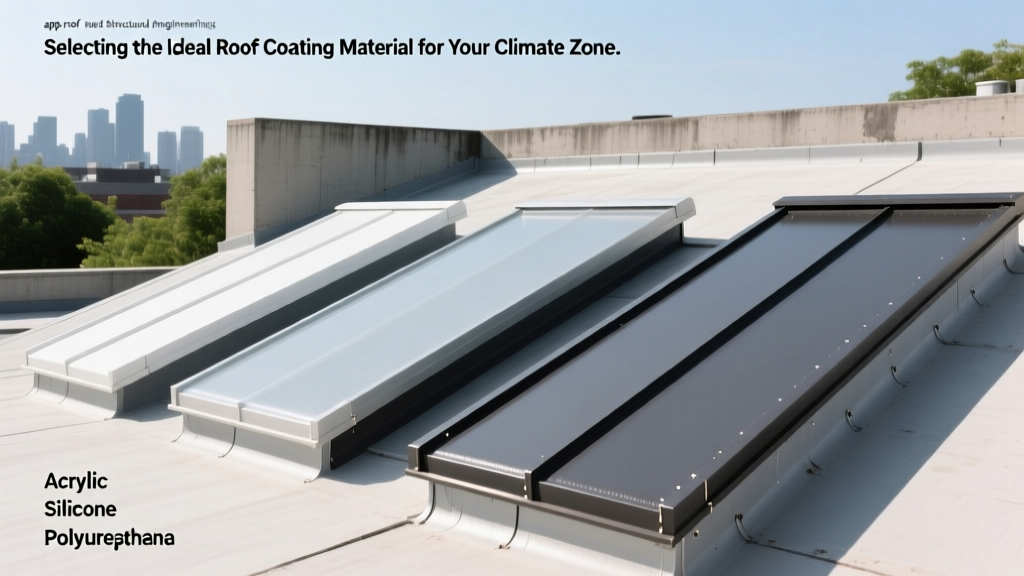
The Thermodynamics of Climate-Specific Roof Coatings
Selecting the correct roof coating material is not a one-size-fits-all decision. A coating that performs flawlessly in the arid heat of Arizona will rapidly fail in the freeze-thaw cycles of Minnesota. The core metric governing this performance is the Solar Reflectance Index (SRI), which measures a material's ability to reject solar heat, combined with its thermal emittance. According to the EPA's Heat Island Effect guidelines, high-albedo coatings can reduce peak cooling demand by 10-15%, but only if the chemical binder survives local environmental stressors.
Industry standards dictate rigorous testing for these materials. Elastomeric acrylics are tested under ASTM D6083, while silicones and polyurethanes fall under ASTM D6694. Understanding how these chemical structures react to ultraviolet (UV) radiation, standing water, and thermal shock is the first step in specifying a durable roof coating material for your specific geographic zone.
Hot and Arid Climates: Deflecting Extreme UV and Heat
In regions characterized by intense, prolonged solar exposure and low humidity—such as the American Southwest, Southern Europe, and the Middle East—UV degradation is the primary enemy. The chemical binders in inferior coatings will chalk, crack, and lose their elasticity within 24 months when subjected to continuous UV bombardment.
Top Material Choices: Elastomeric Acrylic and Silicone
For hot, dry climates with steep-slope or well-draining flat roofs, elastomeric acrylics are the industry standard. Products like Henry 287 Solar-Flex offer an initial SRI of 109 and cost significantly less than alternatives. Acrylics are water-based, making them easy to apply, and they excel at reflecting UV rays. However, they are water-soluble during application and can degrade if water ponds on the roof for more than 48 hours.
For flat roofs in arid climates that experience occasional monsoon downpours or poor drainage, 100% silicone (e.g., Gaco Western S2000) is the superior roof coating material. Silicone is inorganic, meaning UV rays cannot break down its chemical backbone. It maintains its flexibility and reflectivity even under severe desert sun.
Cold and Snowy Climates: Surviving Freeze-Thaw Cycles
Northern climates present a completely different set of physics. The primary threat is thermal shock—the rapid expansion and contraction caused by temperature swings from -20°F (-29°C) at night to 40°F (4°C) during sunny winter days. Furthermore, ice damming and snow load create prolonged moisture exposure and immense physical stress on the coating membrane.
Top Material Choices: Polyurethane and Rubberized Aluminum
Standard acrylics become brittle at sub-zero temperatures and will crack under the physical weight of shifting ice. Instead, aliphatic polyurethanes are the required roof coating material for these zones. Polyurethanes offer exceptional tensile strength (often exceeding 800 psi) and remain flexible down to -40°F. They are highly resistant to abrasion, making them ideal for roofs that require foot traffic for snow removal or HVAC maintenance.
For older built-up asphalt roofs (BUR) in cold climates, rubberized aluminum coatings (such as Karnak 99) provide a cost-effective solution. The aluminum flakes reflect UV rays while the rubberized asphalt binder remains pliable in freezing temperatures, bridging small cracks caused by thermal contraction.
| Coating Material | Tensile Strength (psi) | Elongation at Break | Cold Crack Resistance |
|---|---|---|---|
| Elastomeric Acrylic | 300 - 450 | 250% - 300% | Fails below 0°F |
| 100% Silicone | 250 - 350 | 200% - 250% | Excellent to -20°F |
| Aliphatic Polyurethane | 800 - 1,200 | 50% - 150% | Excellent to -40°F |
Coastal and High-Humidity Climates: Battling Moisture and Salt
Coastal environments introduce salt spray, high ambient humidity, and frequent, heavy rainfall. Flat roofs in these zones rarely dry out completely, leading to chronic ponding water. Additionally, salt acts as a catalyst for galvanic corrosion on metal roof decks and fasteners.
Top Material Choices: 100% Silicone with Epoxy Primers
Acrylic coatings will re-emulsify and wash away if subjected to constant ponding water, making them entirely unsuitable for humid, coastal flat roofs. 100% silicone is the only viable topcoat here. Because silicone is chemically inert and hydrophobic, it will not degrade, chalk, or wash away even if submerged in standing water for months.
However, the critical component in coastal applications is the primer. For metal substrates, a standard acrylic primer will fail to prevent salt-induced rust bleed. You must specify an epoxy primer (such as GacoFlex E53 or Tremco Dymonic FC base). As detailed in moisture management research by the Building Science Corporation, preventing substrate-level moisture intrusion and corrosion is just as vital as the topcoat's waterproofing capabilities.
Climate-to-Coating Decision Matrix
Use the following matrix to quickly identify the optimal roof coating material system based on your primary environmental stressors.
| Climate Zone | Primary Threat | Ideal Topcoat | Required Primer |
|---|---|---|---|
| Hot / Arid | UV Degradation, Thermal Expansion | Elastomeric Acrylic | Acrylic Emulsion |
| Cold / Snowy | Thermal Shock, Ice Damming | Aliphatic Polyurethane | Polyurethane Base |
| Coastal / Humid | Ponding Water, Salt Corrosion | 100% Silicone | Epoxy / Zinc-Rich |
| Mixed / Temperate | Seasonal Shifts, Algae | Silicone-Acrylic Hybrid | Multi-Purpose Acrylic |
2026 Pricing and Application Realities
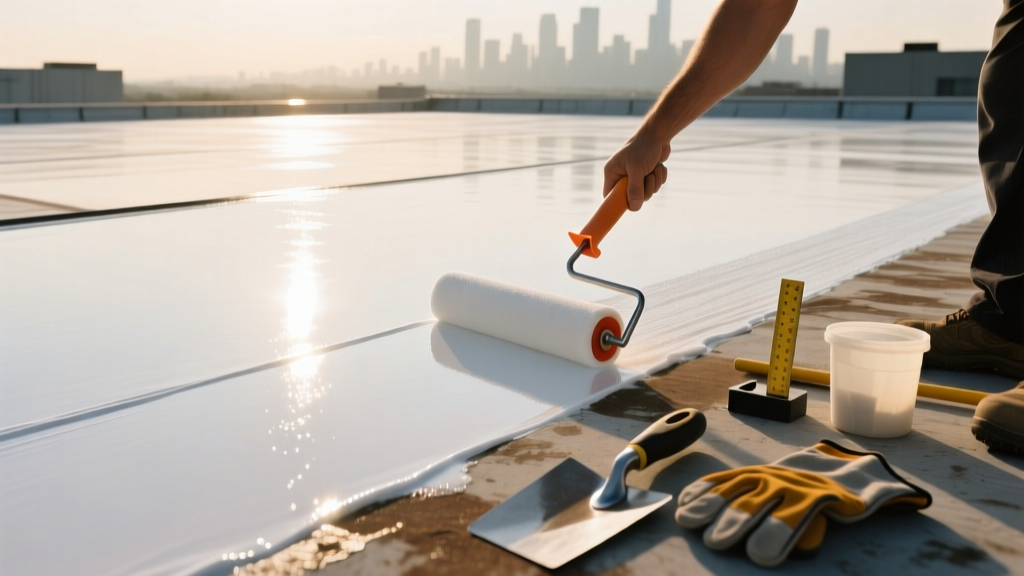
Budgeting for a commercial or residential roof restoration requires accurate, current data. According to the National Roofing Contractors Association (NRCA), material costs have stabilized, but specialized labor for specific chemical systems commands a premium. Here are the realistic installed costs per square foot for 2026, assuming a standard 20 to 30 dry-mil thickness application over a properly prepared substrate:
- Elastomeric Acrylic: $1.75 – $2.85 per sq. ft. (Most cost-effective, requires dry conditions for 48 hours post-application).
- 100% Silicone: $3.25 – $5.50 per sq. ft. (Higher material cost, but allows for application in high-humidity and damp conditions).
- Aliphatic Polyurethane: $4.50 – $7.00 per sq. ft. (Requires strict moisture control during application; isocyanates react violently with ambient water, causing foaming).
Always factor in substrate preparation. Power washing, treating biological growth with a 10% sodium hypochlorite solution, and mechanically abridding rusted metal fasteners typically add $0.50 to $1.25 per square foot to the total project cost.
Critical Application Failures to Avoid
Even the most expensive roof coating material will fail if applied incorrectly. Avoid these common field errors:
- Trapping Moisture: Applying a non-breathable coating (like silicone or polyurethane) over a wet substrate traps moisture. When the sun heats the roof, the trapped water turns to vapor, creating massive blisters that rupture the membrane. Always use a Tramex moisture meter to verify the deck is dry (below 5% moisture content) before application.
- Ignoring the Dew Point: In cold climates, applying coatings late in the afternoon when the substrate temperature drops below the dew point will cause microscopic condensation. This prevents chemical adhesion, leading to delamination within the first winter.
- Under-Applying Mil Thickness: Contractors often stretch material to save costs. A coating specified for 25 dry mils will only achieve 15 mils if applied too thinly, drastically reducing its UV resistance and elongation properties. Always use a wet mil gauge during application to verify thickness.
Written by
Priya KapoorPriya Kapoor is a real estate market analyst and construction economics researcher with expertise in housing affordability, development feasibility, and infrastructure investment. She holds a Master of Regional Planning from Cornell University and previously worked as a senior analyst at CBRE's Investment Properties group, where she modeled returns for $4B in mixed-use development pipelines. Priya now runs an independent research practice advising developers, municipalities, and REITs on construction cost forecasting and market timing. She publishes the quarterly "BuildMat Market Pulse" report tracking material price indices across 12 commodity categories. Based in Austin, TX, Priya serves on the board of Habitat for Humanity Austin and is a marathon runner.
More from Priya Kapoor
View all
Construction Cost
Cost to Build a 1600 Sq Ft Home in 2026: Full Breakdown
Accurate 2026 cost to build a 1600 sq ft home—material, labor, and regional pricing breakdowns included. Plan your budget with real-time estimates.
Aug 11, 2026

Wood & Lumber
Name the Types of Wood for Pressure Treatment and Preservation
Learn how to name the types of wood best suited for pressure treatment. Compare species treatability, chemical retention levels, and 2026 preservation costs.
Aug 4, 2026

Stone & Masonry
Stone Veneer Suppliers Lindenhurst: 2026 Cost Analysis
Analyze 2026 stone veneer costs in Lindenhurst, NY. Compare local supplier pricing, delivery fees, and Suffolk County installation labor rates.
Aug 4, 2026