How Long Does Aluminum Roofing Material Last? Lifespan & Durability Guide
Discover the true lifespan of aluminum roofing material. Learn how gauge, coatings, and coastal environments impact durability and long-term performance.
The Baseline: Expected Lifespan of Aluminum Roofing Material
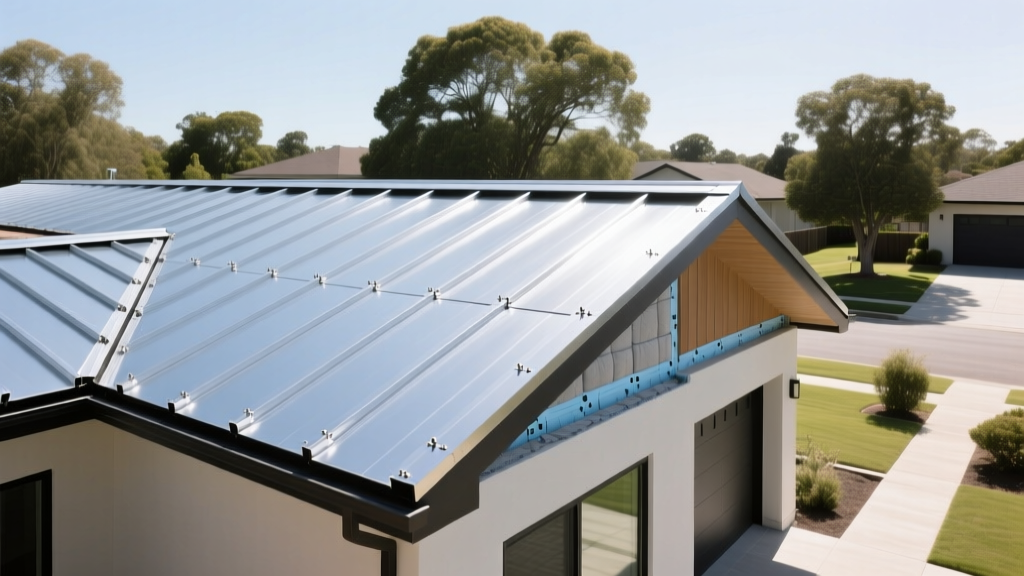
Aluminum roofing systems derive their exceptional longevity from a naturally occurring aluminum oxide layer that forms immediately upon exposure to oxygen. Unlike steel, which requires protective zinc or galvalume coatings to prevent structural rust, aluminum's self-healing oxide layer halts corrosion entirely. When installed correctly, standing seam aluminum roofing material routinely achieves a functional lifespan of 50 to 70 years, while exposed-fastener corrugated aluminum panels typically last 40 to 50 years before fastener holes elongate and require maintenance.
- Standing Seam (Concealed Fastener): 50–70+ years
- Corrugated / Exposed Fastener: 40–50 years
- Paint/Coating Warranties: 30–40 years (PVDF systems)
- Material Degradation Rate: Less than 0.001 inches per century in standard atmospheres
However, quoting a 60-year lifespan without contextualizing the installation parameters is misleading. The actual durability of your aluminum roof is dictated by alloy selection, gauge thickness, fastener metallurgy, and the specific paint system applied at the factory coil-coating stage.
Gauge Thickness and Structural Alloy Specifications
Aluminum roofing material is not measured in standard steel gauges (like 24-gauge or 26-gauge). Instead, it is specified by decimal thickness in inches. The two most common alloys used in architectural roofing are 3003 and 3105, typically supplied in H24 or H26 tempers to balance formability with structural rigidity.
| Decimal Thickness | Equivalent Steel Gauge | Primary Application | Wind Uplift Resistance |
|---|---|---|---|
| .032 inches | ~22 Gauge | Standard residential standing seam, low-slope porches | Moderate (Up to 110 mph with proper clips) |
| .040 inches | ~20 Gauge | Coastal homes, high-wind zones, commercial architectural | High (Up to 140+ mph, Miami-Dade NOA approved) |
| .050 inches | ~18 Gauge | Heavy commercial, flat roof retrofits, structural decking | Extreme (Hurricane impact resistant) |
For residential applications in 2026, .032-inch aluminum remains the industry standard, offering an optimal balance of weight (roughly 0.75 lbs per square foot) and durability. However, if your property is located within 1,500 feet of a saltwater coastline, upgrading to .040-inch aluminum is highly recommended to resist micro-denting from wind-blown debris and provide a stiffer panel profile against coastal squalls.
The Coastal Factor: Salt Spray and Galvanic Corrosion
Aluminum is widely considered the premier metal roofing material for coastal environments. Salt spray rapidly degrades the galvalume coatings on steel roofs, leading to edge creep and premature rusting. Aluminum, however, is virtually immune to salt-induced oxidation.
The Hidden Threat: Galvanic Corrosion
While salt won't destroy aluminum, dissimilar metals will. Galvanic corrosion occurs when aluminum comes into direct contact with a more noble metal (like copper or untreated steel) in the presence of an electrolyte (rainwater or humidity). According to technical bulletins published by the Metal Construction Association, this electrochemical reaction will rapidly eat away the aluminum surrounding the contact point, leading to catastrophic panel failure in as little as 3 to 5 years.
Actionable Fix: Mandate the use of Type 304 stainless steel fasteners for inland installations, and Type 316 marine-grade stainless steel for coastal projects. All flashings must be aluminum or stainless steel, and any penetrations must be sealed with compatible EPDM or TPE rubber boots, never lead.
Paint Systems: Kynar 500 vs. SMP Coatings
The metal itself may last 70 years, but the aesthetic lifespan of the roof is determined by its paint coating. Aluminum roofing material is coil-coated before fabrication, and the resin chemistry dictates how long the roof will resist fading and chalking under UV exposure.
- PVDF (Polyvinylidene Fluoride / Kynar 500® / Hylar 5000®): The undisputed standard for architectural aluminum. PVDF resins are highly resistant to UV degradation, retaining color integrity and chalk resistance for 30 to 40 years. This coating remains flexible, preventing micro-cracking during the aluminum's thermal expansion cycles.
- SMP (Silicone Modified Polyester): A lower-cost alternative that offers excellent hardness and scratch resistance during installation but lacks long-term UV stability. SMP coatings will typically begin to chalk and fade noticeably after 10 to 15 years, making them unsuitable for premium residential or high-visibility commercial projects.
When sourcing aluminum panels, verify the manufacturer's spec sheet explicitly states a PVDF/Kynar 500 coating system with a minimum 40-year fade and chalk warranty.
Thermal Movement and Fastener Fatigue
Aluminum has a coefficient of thermal expansion roughly twice that of steel. A 100-foot run of aluminum roofing material will expand and contract by approximately 1 inch for every 100°F change in temperature. If this thermal movement is restricted, the panels will buckle, oil-can, and eventually tear at the fastener points.
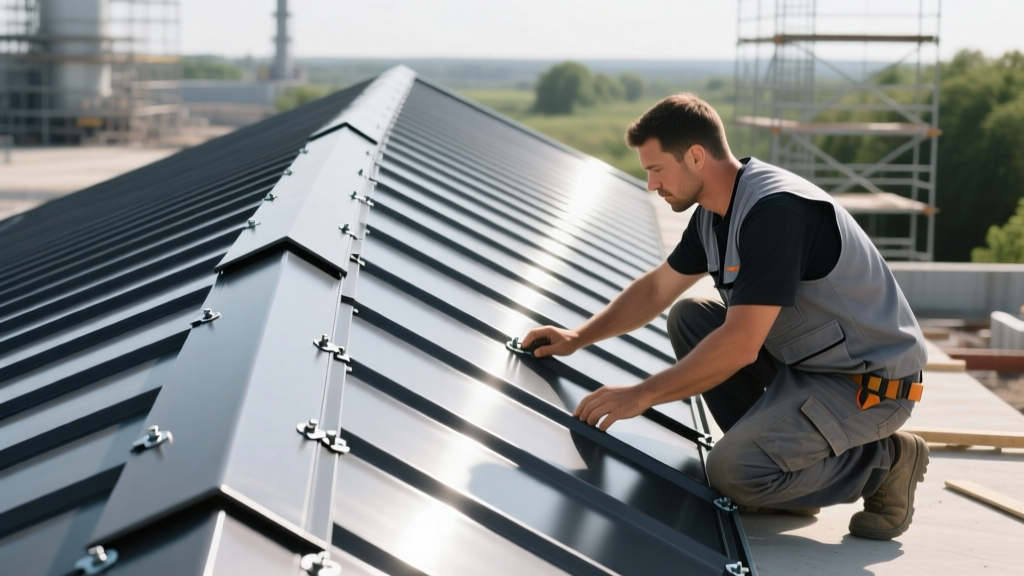
To accommodate this movement, standing seam aluminum roofs must utilize a floating clip system. The National Roofing Contractors Association emphasizes that panels must never be pinned rigidly to the deck. Instead, a two-piece sliding clip is fastened to the roof deck, allowing the panel seam to snap over the clip and slide freely back and forth as temperatures fluctuate. Using exposed-fastener panels on long, unbroken roof slopes (over 20 feet) without oversized, slotted fastener holes is a primary cause of premature aluminum roof failure due to metal fatigue.
Maintenance Checklist to Maximize Lifespan
Aluminum roofs are exceptionally low maintenance, but they are not zero-maintenance. To ensure the system reaches its 60+ year potential, implement the following bi-annual protocol:
- Clear Debris Traps: Remove pine needles, leaves, and branches from valleys and gutters. Trapped organic matter holds moisture and creates acidic compounds that can stain or degrade the paint coating over time.
- Inspect Dissimilar Metal Runoff: Check the roof surface below HVAC units, satellite mounts, or copper plumbing vents for signs of galvanic pitting or rust staining. Install sacrificial anodes or redirect runoff if necessary.
- Wash with Mild Detergent: Every 24 months, wash the roof using a soft-bristle brush and a solution of mild dish soap and water. Never use alkaline or highly acidic cleaners, and avoid pressure washers, which can force water past the seam seals and strip the factory-applied wax coatings.
- Check Sealant Beads: Inspect lap sealants at ridge caps, endwalls, and penetrations. While the metal outlasts the sealant, high-quality polyurethane or TPE sealants should be checked for adhesion failure every 10 years.
Cost vs. Lifespan ROI Analysis
As of 2026, the installed cost for a .032-inch standing seam aluminum roof ranges from $14.00 to $19.00 per square foot, depending on roof complexity and regional labor rates. While this represents a 20% to 30% premium over standard galvalume steel standing seam systems, the return on investment is realized in environments where steel would prematurely fail.
For inland properties, aluminum offers a lightweight alternative that reduces structural load requirements and provides excellent reflectivity. According to the U.S. Department of Energy, highly reflective metal roofs can reduce peak cooling energy demands by 10% to 15%. When factoring in the elimination of replacement cycles required by asphalt shingles (which typically require replacement every 20 years), the amortized annual cost of an aluminum roof over a 60-year lifecycle makes it one of the most economically sound roofing investments available in the modern market.
Written by
Marcus ChenMarcus Chen is a licensed structural engineer (PE) and building materials analyst with over 12 years of experience across residential, commercial, and industrial construction. He holds a Master of Science in Civil Engineering from UC Berkeley and spent six years at Thornton Tomasetti before transitioning to independent consulting and technical writing. Marcus specializes in material selection for seismic-prone regions, concrete reinforcement strategies, and lifecycle cost analysis. His work has been cited by the American Concrete Institute (ACI) and the Structural Engineers Association of California (SEAOC). When he is not on a job site or at his desk, you will find him hiking the Sierra Nevada or restoring a 1920s craftsman bungalow in Oakland, CA.
More from Marcus Chen
View all
Construction Cost
How Much Did the Eiffel Tower Cost to Build?
How much did the Eiffel Tower cost to build in 1889? We adjust for inflation and compare its budget to modern skyscraper construction.
Aug 4, 2026

Fire Resistance
What Is a Fire Resistant Material? Testing & Certification Guide
Discover what is a fire resistant material through ASTM and UL testing. Learn how fire ratings, certifications, and assemblies work in construction.
Aug 4, 2026

Construction Cost
How Much Did the Burj Khalifa Cost to Build?
How much did the Burj Khalifa cost to build? We break down the $1.5B project and extract 5 money-saving strategies for your next build.
Jul 30, 2026