Roofing Material Prices News 2026: Cost vs. Lifespan ROI Guide
Review 2026 roofing material prices news. Compare asphalt, metal, and synthetic lifespans to calculate true long-term ROI, durability, and annualized costs.

The 2026 Pricing Landscape: Volatility vs. Longevity
When tracking the latest roofing material prices news, contractors and property owners often fixate on the upfront cost per square (100 square feet). However, analyzing raw material costs without factoring in degradation mechanics and expected service life leads to severe capital misallocation. In early 2026, petroleum market stabilization has cooled the extreme volatility of asphalt shingle pricing, while ongoing aluminum tariffs and steel production shifts have pushed premium metal roofing costs up by 8% to 12% year-over-year.
True roofing economics require shifting the focus from initial procurement costs to the annualized cost of ownership. A roof that costs 40% more upfront but lasts three times as long fundamentally alters the long-term ROI, particularly when factoring in the rising labor costs for tear-offs and disposal fees in 2026.
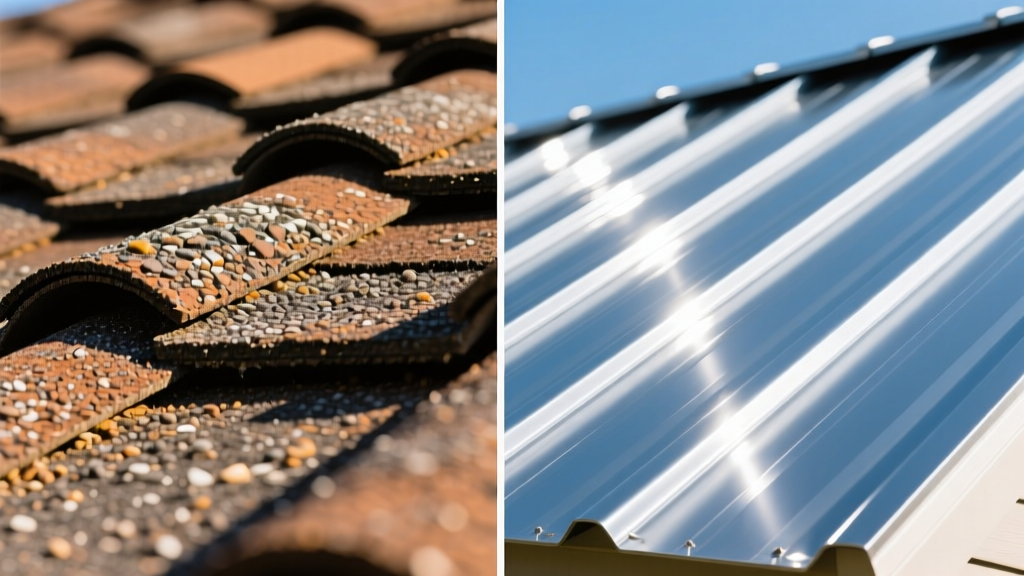
Material Lifespan Matrix: Cost vs. Durability
The table below synthesizes current Q1/Q2 2026 material-only pricing against realistic, field-tested lifespans. Note that "expected lifespan" assumes proper ventilation (minimum 1:150 net free vent area) and installation strictly adhering to manufacturer specifications.
| Material Type | 2026 Material Cost / Sq | Realistic Lifespan | Annualized Material Cost |
|---|---|---|---|
| 3-Tab Asphalt Shingle | $105 - $125 | 12 - 18 Years | $7.22 / year |
| Architectural Asphalt (HDZ) | $145 - $190 | 22 - 28 Years | $6.64 / year |
| Exposed Fastener Metal (26ga) | $160 - $240 | 15 - 25 Years | $10.00 / year |
| Standing Seam Metal (24ga) | $380 - $520 | 45 - 60+ Years | $8.51 / year |
| Synthetic Slate/Shake | $450 - $650 | 50+ Years | $10.00 / year |
Asphalt Shingles: The Baseline Benchmark
Architectural asphalt shingles remain the dominant residential roofing material, but their durability is heavily dependent on the specific product line and regional climate. Premium lines like GAF Timberline UHDZ or Owens Corning Duration utilize heavier fiberglass mats and higher asphalt content to meet the stringent ASTM D3462 standard for tear strength and fastener pull-through resistance.
Primary Failure Modes
- Thermal Blistering: In high-heat climates, trapped moisture in the asphalt binder expands, causing blisters that eventually rupture and shed protective ceramic granules.
- Biological Degradation: Gloeocapsa magma (blue-green algae) feeds on the limestone filler used in modern shingles. Specify shingles with copper-infused granules (e.g., StainGuard Plus) to prevent streaking and structural degradation.
- Wind Uplift: Standard architectural shingles are rated for 110-130 mph winds. In hurricane-prone zones, a 6-nail fastening pattern per shingle is mandatory to prevent tab lifting and subsequent water intrusion.
Metal Roofing: Fastener Mechanics and Coating Lifespans
The metal roofing sector is bifurcated into two distinct durability tiers: exposed fastener systems and concealed fastener (standing seam) systems. Understanding the mechanical differences is critical when digesting roofing material prices news that lumps all "metal roofs" into a single category.
The Exposed Fastener Vulnerability
Corrugated or R-panel metal roofs secured with exposed lap screws rely on neoprene or EPDM washers to seal the penetration. Because metal expands and contracts significantly during daily thermal cycling, these screws experience continuous shear stress. Over 15 to 20 years, the washers dry-rot from UV exposure, and the screws back out, leading to inevitable leaks. Maintenance requires re-screwing or applying sealant mid-lifecycle.
Standing Seam: The Durability Apex
A 24-gauge Galvalume (ASTM A792) standing seam roof utilizes concealed clips that allow the metal panels to float and expand laterally without stressing the fasteners. When coated with a Kynar 500 (PVDF) paint system, the finish resists UV chalking and fading for 40+ years. The Metal Construction Association (MCA) notes that properly detailed standing seam systems routinely outlast the underlying roof decking, making them a generational investment.
"Galvanic corrosion is the silent killer of metal roofs. Never allow dissimilar metals to interact. Using copper flashing against a steel or Galvalume panel without a separation membrane will result in rapid, catastrophic panel degradation at the contact points."
Synthetic Composites: The High-End ROI Play
Synthetic roofing, manufactured from engineered polymers and recycled rubber/plastics, has captured significant market share in the premium sector. Brands like DaVinci Roofscapes and EcoStar produce tiles that mimic the aesthetic of natural slate and cedar shake without the associated weight, porosity, or maintenance.
Impact Resistance and Hail Survival
The primary durability advantage of high-end synthetics is their UL 2218 Class 4 impact rating. The Insurance Institute for Business & Home Safety (IBHS) requires Class 4 impact resistance for their FORTIFIED Roof designation, which can yield substantial insurance premium discounts in hail-prone regions like Texas and Colorado. While natural slate will shatter upon impact from a 2-inch hailstone, engineered polymers absorb and deflect the kinetic energy, preventing structural fractures and subsequent water infiltration.
Calculating True Annualized Roofing Costs
To make an objective purchasing decision, abandon the "cost per square" metric. Instead, calculate the Total Annualized Cost (TAC) using the following framework:
- Sum Total Initial Capital: Add material costs, current labor rates (averaging $350-$550 per square in 2026), tear-off/disposal fees ($100-$150 per square), and decking repair contingencies (assume 10% of decking requires replacement).
- Determine Realistic Service Life: Use the conservative end of the lifespan spectrum based on your specific climate zone (e.g., use 22 years for architectural asphalt in high-UV/thermal-shock zones like Arizona, rather than the 30-year warranty claim).
- Apply the Formula: Divide the Total Initial Capital by the Realistic Service Life.
Architectural Asphalt: ($170 mat + $450 labor + $120 tear-off) x 20 squares = $14,800. Divided by 25 years = $592 / year.
24ga Standing Seam Metal: ($450 mat + $800 labor + $120 tear-off) x 20 squares = $27,400. Divided by 55 years = $498 / year.
By calculating the annualized cost, the standing seam metal roof proves to be the more economical choice over a 50-year horizon, despite costing nearly 85% more on day one. When evaluating the latest market data and pricing news, always run this calculation to ensure your capital is deployed toward genuine, long-term structural durability rather than short-term budget illusions.
Written by
Elena RodriguezElena Rodriguez is a civil engineer and technical writer specializing in concrete technology, masonry systems, and ASTM/ACI compliance. She earned her B.S. in Civil Engineering from Texas A&M University and spent a decade at a materials testing laboratory, performing over 2,000 concrete compressive strength tests and masonry prism evaluations. Elena is an ACI-certified Field Testing Technician (Grade I) and a member of ASTM Committee C12 on Natural Building Stone. She currently consults on forensic engineering cases involving concrete failures and moisture intrusion. Based in San Antonio, TX, Elena is a proud member of the Society of Women Engineers (SWE) and coaches her daughter's FIRST Robotics team.
More from Elena Rodriguez
View all
Walls & Panels
Cost Analysis: Light Gauge Steel Framing Advantages and Disadvantages
Evaluate light gauge steel framing advantages and disadvantages through a strict cost analysis lens, comparing material, labor, and lifecycle expenses.
Aug 4, 2026

Walls & Panels
Gypsum Board Types: Exact Specifications, Thickness & Dimensions
Compare standard, Type X, and moisture-resistant gypsum board types. Get exact specifications, thicknesses, dimensions, and ASTM standards for your project.
Aug 4, 2026

Fire Resistance
Best Fire-Resistant Outdoor Decking Materials: 2026 Buyer Guide
Discover the best fire-resistant outdoor decking materials for 2026. Compare Class A PVC, aluminum, and hardwood options for WUI compliance and safety.
Aug 4, 2026