List of Fire Resistant Materials: 2026 Cost Analysis & Pricing Guide
Explore our detailed list of fire resistant materials with a 2026 cost analysis. Compare pricing for gypsum, concrete, intumescent coatings, and more.
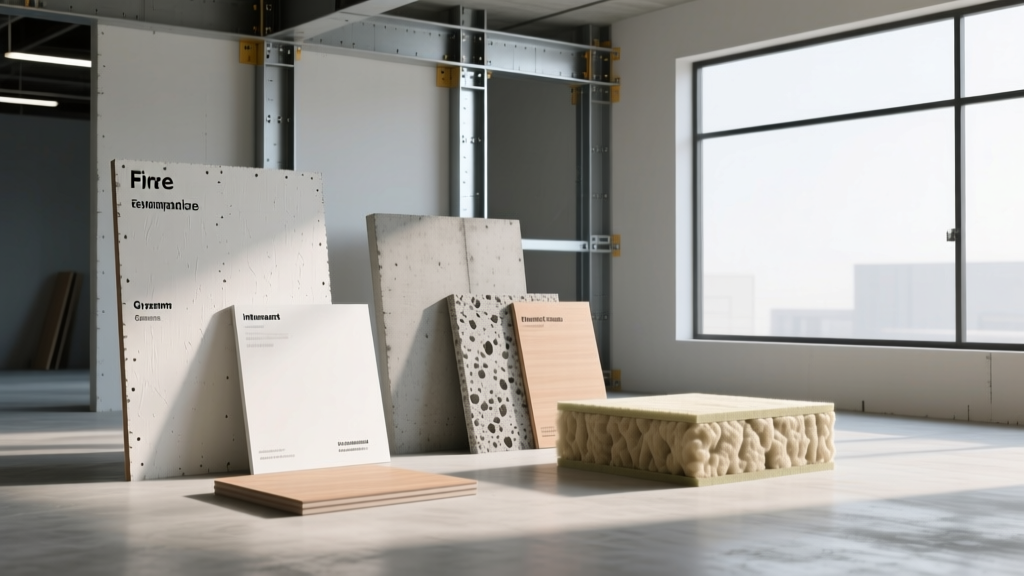
The Economics of Fire Resistance: Upfront vs. Lifetime Costs
Specifying fire-resistant materials requires balancing immediate budget constraints against long-term risk mitigation and code compliance. According to the Federal Emergency Management Agency (FEMA), integrating passive fire protection during initial construction costs significantly less than retrofitting an existing structure to meet updated International Building Code (IBC) standards. In 2026, supply chain stabilization has normalized the pricing of core commodities like Portland cement and steel, but specialized chemical coatings and fire-rated glazing continue to see price premiums due to complex manufacturing processes.
When evaluating a list of fire resistant materials, project managers must look beyond the base material cost per square foot. The true financial impact includes specialized labor, required fastening systems, firestopping at penetrations, and the ongoing maintenance of the fire-rated assembly. For instance, while poured concrete offers exceptional inherent fire resistance, its high forming and labor costs often make lightweight fire-rated gypsum assemblies more economically viable for interior non-load-bearing partitions.
Quick Cost Baseline (2026 Commercial Averages)
- Most Economical: 5/8-inch Type X Gypsum Board ($0.65 - $0.85 per sq. ft. material only)
- Highest Labor Multiplier: Intumescent Steel Coatings (Labor accounts for 60-75% of total installed cost)
- Highest Material Premium: Fire-Rated Ceramic Glazing ($250 - $650+ per sq. ft. depending on impact rating)
Comprehensive List of Fire Resistant Materials & 2026 Pricing
The following matrix breaks down the most common passive fire protection materials utilized in commercial and multi-family residential construction. All fire ratings reference standardized testing under ASTM E119 / UL 263 protocols, which measure the ability of an assembly to contain flames and restrict heat transfer. Pricing reflects Q1 2026 national averages for commercial-scale procurement.
| Material Category | Specific Product / Type | Typical Fire Rating | Material Cost (per sq. ft.) | Installed Cost (per sq. ft.) |
|---|---|---|---|---|
| Gypsum Board | 5/8" Type X (Standard) | 1-Hour (in standard wall assembly) | $0.65 - $0.85 | $2.10 - $2.80 |
| Gypsum Board | 5/8" Type C (Enhanced core) | 1 to 2-Hour (thinner assemblies) | $0.90 - $1.15 | $2.60 - $3.40 |
| Masonry | 8" Hollow CMU (Ungrouted) | 2-Hour | $2.50 - $3.20 | $12.00 - $16.50 |
| Concrete | Siliceous Poured (5" thick) | 2-Hour | $4.00 - $5.50 | $18.00 - $24.00 |
| Insulation | Mineral Wool Batts (High density) | Non-combustible (supports 1-3 hr assemblies) | $1.10 - $1.60 | $2.50 - $3.80 |
| Steel Coatings | Water-based Intumescent Paint | 1 to 2-Hour (depends on mil thickness) | $4.50 - $7.50 | $14.00 - $22.00 |
| Glazing | Ceramic Fire-Rated Glass (45 min) | 45-Minute (Fire & Hose Stream) | $180.00 - $250.00 | $240.00 - $320.00 |
| Glazing | Multi-laminated Intumescent Glass (2 hr) | 2-Hour (Fire, Hose Stream & Impact) | $450.00 - $650.00 | $550.00 - $780.00 |
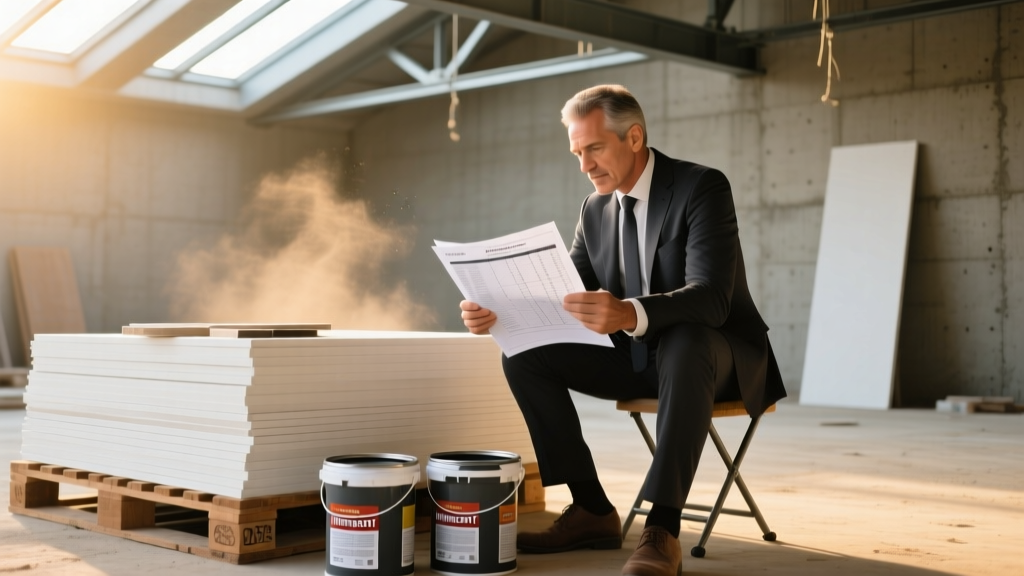
Deep Dive: Hidden Costs in Fire-Rated Assemblies
A common budgeting error is calculating material costs in a vacuum. Passive fire protection relies on continuous, uncompromised assemblies. The National Fire Protection Association (NFPA) frequently cites improper installation and unsealed penetrations as primary reasons fire-rated assemblies fail during actual blaze events. These vulnerabilities introduce hidden costs that must be factored into your initial estimate.
Intumescent Coatings: The Mil-Thickness Labor Trap
Intumescent paints expand when exposed to high heat, forming an insulating char that protects structural steel from reaching its critical failure temperature (typically 1,000°F to 1,200°F). The material cost is only a fraction of the expense. To achieve a 2-hour rating, a water-based intumescent coating may require a dry film thickness (DFT) of 30 to 45 mils. Because applicators cannot apply more than 15 to 20 wet mils per coat without risking runs, sags, or improper curing, achieving the required DFT demands multiple passes over several days.
Furthermore, each coat requires strict environmental controls (ambient temperature above 50°F, humidity below 85%). If your project schedule is tight, the labor cost for certified applicators and the rental of climate-control equipment can easily double the baseline installed price. Always specify a top-seal coat if the steel is exposed to the interior environment, as intumescent paint is highly susceptible to moisture degradation and physical abrasion.
Firestopping and Penetration Seals
When HVAC ducts, electrical conduits, or plumbing pipes penetrate a fire-rated wall or floor, the assembly's rating is voided unless properly sealed. Budgeting for firestopping requires calculating the linear footage of joints and the exact number of penetrations.
- Through-Penetrations: Using a high-quality elastomeric sealant (e.g., Hilti CP 606 or 3M Fire Barrier Sealant FD 150) costs between $15 and $35 per penetration, factoring in the intumescent wrap strips required for plastic PVC pipes that melt during a fire.
- Head-of-Wall Joints: Where a fire-rated wall meets the floor deck above, firestop spray or mineral wool compression systems cost $4.00 to $8.00 per linear foot. Deflection heads, which accommodate structural movement, require specialized firestop tracks that push this cost closer to $12.00 per linear foot.
Regional Price Variances & Supply Chain Factors
Material costs for fire-resistant products are not uniform across the United States. Regional labor rates, union requirements, and proximity to manufacturing hubs heavily influence the final installed price.
- West Coast & Pacific Northwest: Expect a 15% to 22% premium on installed labor for fire-rated assemblies. Strict seismic codes often require specialized flexible firestopping at joints, increasing material complexity.
- Northeast & Mid-Atlantic: High union density drives labor costs for intumescent coatings and masonry fire walls up by 20% to 30% compared to national averages. However, proximity to major gypsum and mineral wool manufacturing plants keeps base material freight costs low.
- Southeast & Sunbelt: Generally offers the lowest installed costs due to non-union labor markets. However, high ambient humidity in states like Florida and Louisiana can delay the curing times of solvent-based intumescent coatings, subtly increasing labor hours.
Decision Framework: Matching Materials to Code and Budget
Selecting the right material from the list of fire resistant materials requires aligning the architectural intent, the required IBC fire-resistance rating (Type I through Type V construction), and the project budget. Use the following framework to guide your specification process.
If / Then Specification Guide
IF you need a 1-hour or 2-hour interior shaft wall or corridor partition on a tight budget:
THEN specify 5/8-inch Type X gypsum board on metal studs. Cost-saving tip: Use Type C gypsum if you need to reduce the wall thickness to maximize leasable square footage, as Type C achieves the same rating with fewer layers or thinner profiles, offsetting its higher per-sheet cost with reduced framing and labor.
IF you are protecting exposed structural steel in an architectural lobby where the steel must remain visible:
THEN specify a thin-film water-based intumescent coating. Warning: Do not value-engineer the topcoat. Budget for a high-performance polyurethane top-seal to prevent yellowing and physical damage, preserving the architectural aesthetic.
IF you require a 90-minute fire rating in a high-traffic corridor requiring vision panels:
THEN specify multi-laminated intumescent fire-rated glazing rather than wired ceramic glass. While ceramic glass is cheaper upfront, it fails the CPSC Category II impact safety test required for hazardous locations (like doors and corridors) unless paired with an expensive secondary film. Intumescent glass passes both fire and impact tests natively, reducing overall assembly complexity.
IF you are building an exterior fire wall on a zero-lot-line commercial property:
THEN utilize 8-inch or 12-inch concrete masonry units (CMU). While the installed cost is high, CMU provides unmatched durability, weather resistance, and structural integrity that gypsum or steel-stud assemblies cannot achieve on an exposed exterior boundary.
Accurate budgeting for fire-resistant construction demands a holistic view of the assembly. By understanding the interplay between base material costs, specialized labor requirements, and the critical necessity of firestopping, estimators and architects can deliver code-compliant structures without facing devastating change orders during the final inspection phases.
Written by
Priya KapoorPriya Kapoor is a real estate market analyst and construction economics researcher with expertise in housing affordability, development feasibility, and infrastructure investment. She holds a Master of Regional Planning from Cornell University and previously worked as a senior analyst at CBRE's Investment Properties group, where she modeled returns for $4B in mixed-use development pipelines. Priya now runs an independent research practice advising developers, municipalities, and REITs on construction cost forecasting and market timing. She publishes the quarterly "BuildMat Market Pulse" report tracking material price indices across 12 commodity categories. Based in Austin, TX, Priya serves on the board of Habitat for Humanity Austin and is a marathon runner.
More from Priya Kapoor
View all
Construction Cost
Cost to Build a 1600 Sq Ft Home in 2026: Full Breakdown
Accurate 2026 cost to build a 1600 sq ft home—material, labor, and regional pricing breakdowns included. Plan your budget with real-time estimates.
Aug 11, 2026

Wood & Lumber
Name the Types of Wood for Pressure Treatment and Preservation
Learn how to name the types of wood best suited for pressure treatment. Compare species treatability, chemical retention levels, and 2026 preservation costs.
Aug 4, 2026

Stone & Masonry
Stone Veneer Suppliers Lindenhurst: 2026 Cost Analysis
Analyze 2026 stone veneer costs in Lindenhurst, NY. Compare local supplier pricing, delivery fees, and Suffolk County installation labor rates.
Aug 4, 2026