TPU vs PVC vs DCF: Choosing the Best Material for Waterproof Bag
Compare TPU, PVC, and DCF to find the best material for waterproof bag manufacturing. Analyze hydrostatic head, weight, abrasion resistance, and costs.
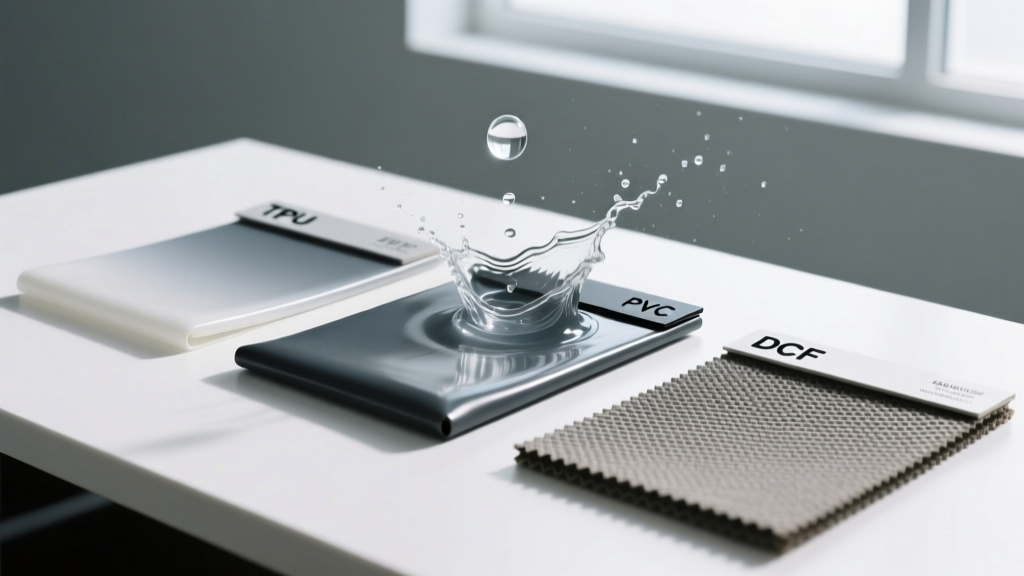
The Core Contenders: TPU, PVC, and DCF
Selecting the optimal material for waterproof bag manufacturing requires navigating a complex matrix of hydrostatic pressure ratings, flex-fatigue thresholds, and seaming methodologies. The modern outdoor, tactical, and marine industries rely primarily on three distinct waterproof textiles: Thermoplastic Polyurethane (TPU), Polyvinyl Chloride (PVC) tarpaulin, and Dyneema Composite Fabric (DCF). Each material dictates not only the end-product's performance but also the factory tooling required for assembly.
Thermoplastic Polyurethane (TPU) Laminates
TPU is a polymer film heat-laminated to a woven base cloth, typically 420D to 1050D nylon or polyester. The resulting fabric offers an exceptional strength-to-weight ratio and high elasticity. According to REI's expert guide on waterproof laminates, TPU membranes provide superior breathability and flexibility compared to traditional coated fabrics, though in heavy-duty bag applications, the focus is strictly on impermeability and abrasion resistance.
Critical Distinction: Polyether vs. Polyester TPU
- Polyether TPU: Highly resistant to hydrolysis (water-induced chemical breakdown) and microbial attack. This is the mandatory specification for marine dry bags, river rafting gear, and any application involving prolonged submersion or high-humidity storage.
- Polyester TPU: Offers superior resistance to oils, fuels, and solvents, but will degrade via hydrolysis if constantly exposed to wet environments. Best reserved for tactical, automotive, or industrial tool bags.
Polyvinyl Chloride (PVC) Tarpaulin
PVC tarpaulin consists of a high-tenacity polyester scrim (usually 500D to 1000D) encapsulated in or coated with PVC plastisol. It is the workhorse of the commercial dry bag industry. PVC boasts massive hydrostatic head ratings—often exceeding 20,000mm—simply due to the sheer thickness of the coating. However, it relies on chemical plasticizers to remain flexible. Over a 5-to-10-year lifecycle, plasticizer migration can cause the material to stiffen and eventually cold-crack. Modern 2026 formulations increasingly utilize phthalate-free plasticizers to comply with stringent environmental regulations like EU REACH and California Prop 65.
Dyneema Composite Fabric (DCF)
DCF is a non-wown, ultra-high-molecular-weight polyethylene (UHMWPE) fiber matrix sandwiched between thin polyester films. It is entirely waterproof without requiring a secondary coating, boasting a hydrostatic head >20,000mm with zero water absorption. As noted in Dimension-Polyant's technical fabric specifications for high-performance laminates, UHMWPE integration yields the highest tear strength on the market. DCF is the undisputed champion of ultralight backpacking and fast-packing dry bags, though it suffers from poor abrasion resistance and high material costs.
Head-to-Head Material Comparison Matrix
| Metric | 840D TPU Laminate | 1000D PVC Tarpaulin | 1.0 oz DCF (CT5K.18) |
|---|---|---|---|
| Base Fabric | Woven Nylon/Polyester | Polyester Scrim | Non-woven UHMWPE |
| Weight (oz/yd²) | 11.5 - 14.0 | 18.0 - 24.0 | 1.0 - 1.2 |
| Hydrostatic Head | 10,000mm - 15,000mm | >20,000mm | >20,000mm |
| Abrasion (Martindale) | >50,000 cycles | >80,000 cycles | <5,000 cycles |
| Cold Flex Temp | -40°C | -10°C (stiffens) | -60°C |
| Primary Seaming | RF / Hot Air Welding | RF / Hot Air Welding | Transfer Tape / Ultrasonic |
Manufacturing Realities: Seaming and Welding
The choice of material for waterproof bag production directly dictates factory floor tooling. A waterproof fabric is only as effective as its seams.
Thermal Welding (TPU & PVC)
Both TPU and PVC are thermoplastics, meaning they melt and fuse under heat. Manufacturers use Radio Frequency (RF) welding or hot-air wedge welding to create seams that are as strong as, and as waterproof as, the base material itself. TPU requires precise temperature control (typically 180°C–200°C at the weld head); excessive heat degrades the polymer, leading to brittle seams that peel under tension.
Adhesive and Ultrasonic Bonding (DCF)
DCF cannot be thermally welded using standard hot-air techniques because the UHMWPE core has a vastly different melting point than the outer polyester film. Instead, DCF bags are constructed using double-sided acrylic transfer tapes (such as 3M 9485PC or 3M 468MP) combined with ultrasonic welding. If structural reinforcement requires sewing, every needle puncture must be immediately sealed with adhesive tape, as UHMWPE fibers will not swell to seal the hole like natural or standard synthetic fibers.
Real-World Failure Modes and Edge Cases
Understanding how these materials fail in the field is critical for warranty management and product design.
- TPU Delamination via Hydrolysis: If a manufacturer mistakenly uses polyester-TPU for a kayaking dry bag, the ambient moisture and heat will trigger hydrolysis within 12 to 18 months. The TPU film will turn cloudy, become tacky, and eventually peel away from the woven base in large sheets. Always verify the chemical backbone of the TPU with the textile mill.
- PVC Plasticizer Bleed and Cold-Cracking: When PVC bags are stored in unheated warehouses or used in winter environments, the plasticizers retract into the polymer matrix. The bag becomes rigid, and rolling the top closure will cause micro-fractures in the PVC coating, resulting in catastrophic pinhole leaks. EPA Safer Choice ingredient standards and modern chemical engineering have improved cold-flex additives, but PVC remains inherently vulnerable to extreme cold compared to TPU.
- DCF Flex-Fatigue Pinholing: While DCF is immune to water absorption and UV degradation, the folded areas of a roll-top DCF dry bag are subject to flex-fatigue. Repeatedly rolling and unrolling the same 2-inch section will eventually cause the outer polyester film to micro-crack, compromising the waterproof barrier despite the intact UHMWPE core.
Cost Analysis and Manufacturing Yields
Material cost per yard is only one variable; manufacturing yield and tooling amortization drastically alter the final unit economics.
- PVC Tarpaulin: $5.00 – $9.00 per linear yard. High yield, low scrap cost. Tooling for RF welding is inexpensive. Ideal for high-volume, budget-tier dry bags and heavy-duty duffels.
- TPU Laminate: $16.00 – $28.00 per linear yard. Requires tighter quality control during welding. The premium material cost is offset by the ability to market a lighter, more eco-friendly, and cold-weather-rated product.
- DCF: $65.00 – $95.00 per linear yard. Extremely high scrap cost. Cutting layouts must be meticulously nested. Furthermore, the adhesive tapes and ultrasonic welding equipment add significant overhead. Reserved strictly for premium, ultralight niche markets where end-users accept $150+ price tags for a 20-liter dry bag.
Decision Framework: Which Material for Waterproof Bag Fits Your Use Case?
Use this diagnostic framework to finalize your material specification:
- Is the bag intended for ultralight backpacking or thru-hiking where every gram is monetized?
Selection: DCF (0.8 to 1.0 oz/yd²). Accept the low abrasion resistance and high cost as the necessary trade-off for weight savings. - Will the bag be used in marine, whitewater, or sub-tropical environments involving constant submersion?
Selection: Polyether-based TPU (840D or 1050D). It provides the necessary hydrolytic stability and remains flexible when wet, without the heavy penalty of PVC. - Is the product a heavy-duty, drag-and-drop commercial duffel, motorcycle luggage, or industrial tool bag?
Selection: 1000D PVC Tarpaulin. The extreme Martindale abrasion resistance and low material cost outweigh the heavy weight and cold-weather limitations. - Will the bag store automotive parts, oiled tools, or tactical gear exposed to solvents?
Selection: Polyester-based TPU. It offers superior chemical and oil resistance compared to polyether variants or standard PVC.
Written by
Sarah WhitfieldSarah Whitfield is a chartered quantity surveyor (MRICS) and construction cost analyst with 15 years of experience in material pricing, procurement strategy, and project budgeting. She earned her degree in Construction Management from the University of Reading (UK) and has worked on projects ranging from $2M custom homes to $180M mixed-use developments across North America and Europe. Sarah currently leads cost estimating for BuildMat Insight, maintaining a proprietary database of 4,000+ material price points updated quarterly. She is a frequent contributor to RSMeans cost data panels and has presented at the International Cost Engineering Council (ICEC) congress. Based in Denver, CO, Sarah is an avid trail runner and volunteer mentor for Women in Construction.
More from Sarah Whitfield
View all
Wood & Lumber
What Are the Different Types of Wood? A Builder's Guide
Compare structural softwoods, finish hardwoods, and engineered lumber. Analyze Janka ratings, MOE values, and 2026 pricing for construction.
Aug 4, 2026

Walls & Panels
Steel Framing vs Wood Framing: Corrosion and Moisture Defense
Compare steel framing vs wood framing for moisture resistance. Learn about galvanized coatings, condensation risks, and corrosion protection strategies.
Jul 21, 2026

Stone & Masonry
How to Cut Stone Veneer: Wet Saw vs Grinder Comparison
Compare the best tools for cutting stone veneer. We review wet saws, angle grinders, and chop saws to help you achieve clean, chip-free cuts.
Jul 21, 2026