Waterproof Awning Material Review: Top Fabrics Tested 2026
Compare the best waterproof awning materials for 2026. We review Sunbrella, Top Gun, and Polytex fabrics with pricing, durability, and installation specs.

The Engineering Reality of Waterproof Awning Fabrics
Selecting the correct waterproof awning material requires balancing hydrostatic resistance, UV stability, and breathability. A common failure point in residential and commercial awning installations is treating all water-resistant textiles as functionally identical. In reality, the chemical composition of the fabric’s substrate and its coating dictate its lifespan, which typically ranges from 3 to 12 years depending on environmental exposure. This review evaluates the three dominant waterproof awning material categories on the market in 2026: solution-dyed acrylics with polyurethane undercoatings, PVC-laminated polyesters, and solution-dyed polyesters.
Material Matrix: Acrylic vs. PVC vs. Polyester
Before examining specific brand models, it is critical to understand the baseline performance differences between the core textile architectures used in awning fabrication.
| Material Architecture | Waterproofing Mechanism | Breathability | Average Lifespan | Best Climate Application |
|---|---|---|---|---|
| Solution-Dyed Acrylic (PU Coated) | Fluorocarbon top finish + PU backer | High (Micro-porous) | 8–12 Years | High UV, High Humidity |
| Woven Polyester (PVC Coated) | Solid PVC top and bottom encapsulation | None (Zero Airflow) | 7–10 Years | High Rain, Coastal Salt |
| Solution-Dyed Polyester (PU Coated) | PU back coating + DWR top treatment | Moderate | 4–6 Years | Mild Climates, Low UV |
Product Review 1: Sunbrella SeaMark (Solution-Dyed Acrylic)
Sunbrella SeaMark represents the premium tier of breathable waterproof awning material. Unlike standard Sunbrella upholstery fabrics, SeaMark features a highly water-resistant polyurethane (PU) undercoating applied to the reverse side of the solution-dyed acrylic weave, while the face retains a fluorocarbon finish.
Technical Specifications
- Weight: 8.8 oz/sq yd
- Width: 60 inches
- Hydrostatic Head: 1,000mm+ (AATCC 127 compliant)
- Price Range: $38.00 – $44.00 per linear yard
Performance & Fabrication Insights
The primary advantage of SeaMark is its micro-porous breathability. When an awning is retracted while damp, non-breathable fabrics trap moisture, leading to mildew formation on the underside of the fabric and the aluminum roller tube. SeaMark allows trapped moisture vapor to escape. However, fabricators must note that the PU undercoating requires specific seam-sealing protocols. Standard polyester threads will wick water through the needle holes; fabricators must use PTFE (polytetrafluoroethylene) thread, such as SolarMax or Profilen, to maintain the waterproof integrity of the seams.
Product Review 2: Herculite Top Gun 1S (PVC-Coated Polyester)
Top Gun 1S by Herculite is a weft-insertion knitted polyester fabric encapsulated in a pigmented PVC (polyvinyl chloride) coating. It is widely considered the workhorse for commercial retractable awnings and fixed metal-frame canopies where absolute water impermeability is required.
Technical Specifications
- Weight: 11.5 oz/sq yd
- Width: 62 inches
- Hydrostatic Head: 1,500mm+
- Price Range: $26.00 – $32.00 per linear yard
Performance & Fabrication Insights
Top Gun 1S is entirely non-porous. Water beads and runs off the PVC surface immediately, making it highly resistant to ponding—a critical factor for fixed awnings with low pitches (less than 3:12). The weft-insertion knit provides exceptional tear strength, preventing small punctures from propagating.
Fabrication Warning: Because it is PVC-based, Top Gun cannot be sewn and left unsealed. The needle perforations will leak under sustained hydrostatic pressure. Fabricators must either high-frequency (RF) weld the seams or apply a liquid PVC seam sealer post-stitching. Furthermore, its lack of breathability mandates that fixed awning structures incorporate passive ventilation grommets to prevent condensation buildup on the building fascia.
Product Review 3: Polytex (Solution-Dyed Polyester)
Polytex offers a budget-friendly alternative to acrylics. It utilizes 100% solution-dyed polyester yarns with a PU back coating. While the raw material cost is lower, the long-term performance profile reveals specific limitations that buyers must factor into their total cost of ownership.
Technical Specifications
- Weight: 6.2 oz/sq yd
- Width: 63 inches
- Hydrostatic Head: 800mm (Initial)
- Price Range: $21.00 – $25.00 per linear yard
Performance & Fabrication Insights
Polytex is significantly lighter than acrylic or PVC options, reducing the mechanical strain on retractable awning arms and motors. The solution-dyed yarn ensures excellent colorfastness against UV degradation. However, the PU back coating is susceptible to hydrolysis—a chemical breakdown triggered by prolonged exposure to high humidity and heat. In subtropical climates (e.g., Florida, Gulf Coast), the PU coating on Polytex typically begins to delaminate and flake after 4 to 5 years, compromising its waterproof rating. It is best reserved for arid climates or temporary seasonal installations.
Cost Breakdown & Fabrication Yield Analysis
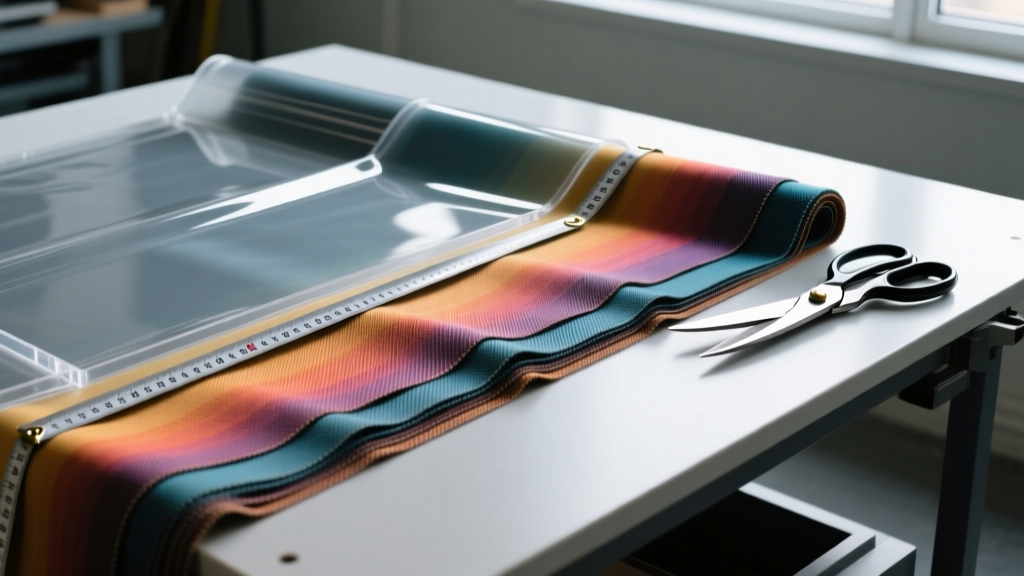
When budgeting for a waterproof awning material, the raw per-yard price is only one variable. Fabrication waste, seam allowances, and hem depth significantly impact the final material cost. Below is a yield analysis for a standard 10-foot by 10-foot retractable awning with a 14-inch valance.
| Material | Raw Price (per lin. yd) | Yards Required (incl. 15% waste) | Estimated Material Cost | Required Seam Sealing |
|---|---|---|---|---|
| Sunbrella SeaMark | $41.00 | 22 Yards | $902.00 | PTFE Thread + Fluorocarbon spray |
| Top Gun 1S | $29.00 | 21 Yards (wider roll) | $609.00 | Liquid PVC sealant or RF Welding |
| Polytex | $23.00 | 21 Yards (wider roll) | $483.00 | Standard PU seam tape |
Maintenance and Chemical Compatibility
The waterproofing integrity of these materials is heavily dependent on proper maintenance. The fluorocarbon DWR (Durable Water Repellent) finish on acrylics and polyesters degrades when exposed to harsh alkaline cleaners.
According to the Sunbrella Care and Cleaning Guidelines, awning owners must avoid chlorine bleach on the face of the fabric, as it strips the water-repellent finish and alters the surface tension of the fibers, leading to immediate water absorption. For PVC-coated materials like Top Gun, the Advanced Textiles Association recommends avoiding solvent-based degreasers, which can plasticize and soften the PVC coating, causing it to adhere to itself when rolled up in hot weather.
For routine maintenance, a solution of mild, non-detergent soap (such as Ivory Snow or Dreft) and lukewarm water applied with a soft-bristle brush is the only universally safe method across all three material types. Re-application of a aftermarket fluorocarbon spray (e.g., 303 Fabric Guard) is required every 24 to 36 months for acrylic and polyester fabrics to restore the hydrostatic beading effect on the face of the textile.
Final Procurement Directives
For high-end residential retractable awnings in humid or coastal environments, Sunbrella SeaMark is the definitive choice; the premium cost is offset by the elimination of mold-related warranty claims. For commercial fixed-frame canopies, storefront awnings, and applications where water ponding is a risk, Herculite Top Gun 1S provides superior hydrostatic resistance and structural tear strength at a lower price point. Reserve Polytex strictly for budget-conscious projects in arid, low-humidity regions where the PU coating will not be subjected to hydrolytic degradation.
Written by
Elena RodriguezElena Rodriguez is a civil engineer and technical writer specializing in concrete technology, masonry systems, and ASTM/ACI compliance. She earned her B.S. in Civil Engineering from Texas A&M University and spent a decade at a materials testing laboratory, performing over 2,000 concrete compressive strength tests and masonry prism evaluations. Elena is an ACI-certified Field Testing Technician (Grade I) and a member of ASTM Committee C12 on Natural Building Stone. She currently consults on forensic engineering cases involving concrete failures and moisture intrusion. Based in San Antonio, TX, Elena is a proud member of the Society of Women Engineers (SWE) and coaches her daughter's FIRST Robotics team.
More from Elena Rodriguez
View all
Walls & Panels
Cost Analysis: Light Gauge Steel Framing Advantages and Disadvantages
Evaluate light gauge steel framing advantages and disadvantages through a strict cost analysis lens, comparing material, labor, and lifecycle expenses.
Aug 4, 2026

Walls & Panels
Gypsum Board Types: Exact Specifications, Thickness & Dimensions
Compare standard, Type X, and moisture-resistant gypsum board types. Get exact specifications, thicknesses, dimensions, and ASTM standards for your project.
Aug 4, 2026

Fire Resistance
Best Fire-Resistant Outdoor Decking Materials: 2026 Buyer Guide
Discover the best fire-resistant outdoor decking materials for 2026. Compare Class A PVC, aluminum, and hardwood options for WUI compliance and safety.
Aug 4, 2026