Best Waterproof Material for Shower Walls: Pro Installer Guide
Discover the best waterproof material for shower walls, comparing foam boards, liquid membranes, and sheet fabrics with real costs and failure modes.

The best waterproof material for shower walls in 2026 is solid surface acrylic for a seamless, zero-grout finish, while high-density PVC panels offer the most reliable budget-friendly alternative. This guide is designed for homeowners, DIY renovators, and general contractors evaluating shower remodel options based on moisture resistance, maintenance, and lifecycle costs. Choosing the right surface prevents costly water damage and structural rot behind the enclosure.
Key Takeaways
- Best Overall: Solid surface acrylic provides a 100% waterproof, grout-free barrier.
- Best Budget: High-density PVC click-lock panels offer rapid installation and total moisture resistance.
- Best Traditional: Vitreous porcelain tile remains the premium choice when paired with a liquid waterproofing membrane.
Top Waterproof Shower Wall Materials Compared
Solid Surface Acrylic Panels
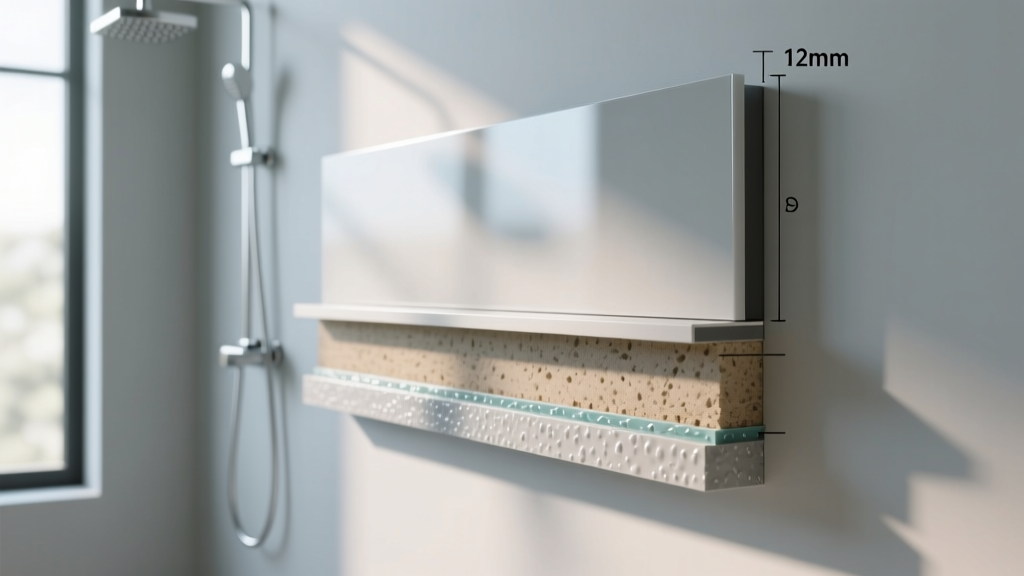
Solid surface materials, such as DuPont Corian, consist of non-porous acrylic polymers and natural minerals. These panels are manufactured in 12mm thicknesses and bond directly to moisture-resistant drywall using a specialized adhesive. The absence of grout lines eliminates the primary failure point for mold and mildew accumulation in wet environments.
Installation requires a 24-hour curing time for the adhesive to achieve maximum structural integrity. According to the National Association of Home Builders, solid surface showers typically endure 15 to 20 years before requiring replacement. Material costs range from $40 to $65 per square foot, positioning this option in the premium tier.
Vitreous Porcelain Tile
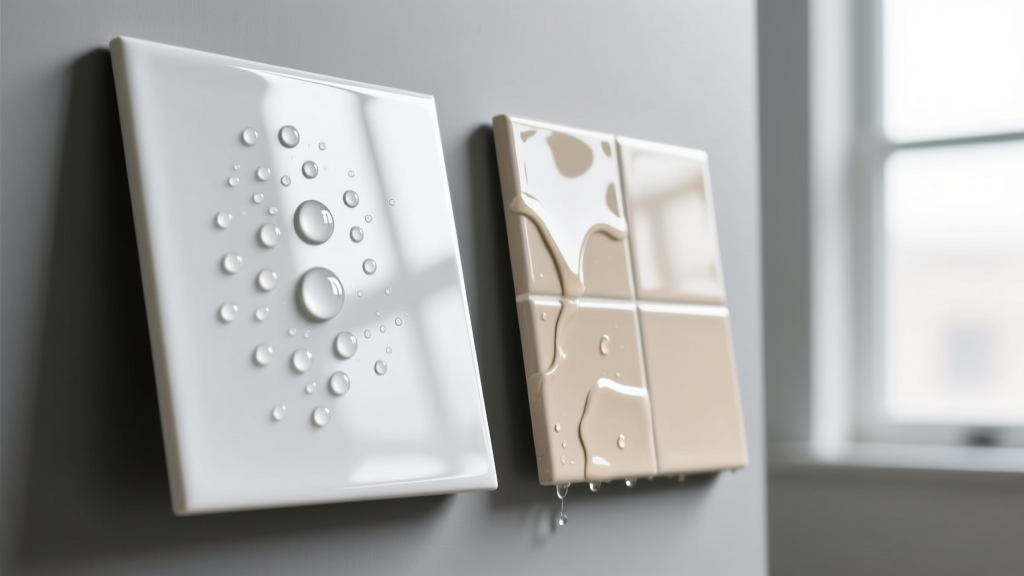
Porcelain tile is fired at extreme temperatures, resulting in a dense, highly durable surface. The Tile Council of North America mandates that true porcelain must exhibit a water absorption rate of 0.5% or less. This vitreous quality makes the tile itself virtually impervious to water penetration.
However, the grout lines between tiles remain porous and require annual sealing to maintain a waterproof envelope. Professional installation costs average $15 to $30 per square foot, including the mandatory application of a liquid waterproofing membrane behind the cement board. Properly maintained porcelain showers easily exceed a 25-year lifespan.
High-Density PVC Wall Panels
PVC shower panels utilize a hollow-core or foam-core extrusion process to create lightweight, entirely waterproof boards. Modern iterations feature 5mm to 8mm thicknesses with integrated click-lock edges that form a mechanical water seal. These panels install directly over existing tile or drywall, drastically reducing demolition time.
The material costs between $10 and $20 per square foot, making it the most economical fully waterproof solution. While highly resistant to impact and moisture, PVC panels can warp if exposed to direct heat sources exceeding 140 degrees Fahrenheit. Expected lifespans range from 10 to 15 years under normal residential use.
Shower Wall Material Decision Matrix
| Material | Waterproof Rating | Avg. Cost (per sq ft) | Installation Difficulty | Maintenance Level |
|---|---|---|---|---|
| Solid Surface Acrylic | 100% (Seamless) | $40 - $65 | High (Professional) | Low |
| Porcelain Tile | 95% (Grout dependent) | $15 - $30 | High (Professional) | High (Annual sealing) |
| PVC Panels | 100% (Click-lock) | $10 - $20 | Low (DIY friendly) | Low |
| Fiberglass Surround | 100% (Single piece) | $5 - $12 | Medium | Medium (Scratch prone) |
Key Terms and Definitions
Solid Surface Material
A non-porous, synthetic composite building material typically composed of acrylic or polyester resins mixed with natural mineral dust. It is manufactured in continuous sheets, allowing for thermoforming and seamless joining, which creates an entirely impermeable barrier ideal for wet-area applications like shower enclosures and laboratory countertops.
Vitreous Porcelain Tile
A specific classification of ceramic tile that has been fired at temperatures exceeding 2,200 degrees Fahrenheit to achieve a glass-like, non-absorbent core. Building codes define vitreous tile by its strict water absorption limit of 0.5% or less, ensuring the material will not degrade, crack, or harbor bacteria when subjected to continuous moisture.
Frequently Asked Questions
What is the easiest waterproof shower wall to install?
High-density PVC click-lock panels are the easiest waterproof shower wall to install for DIY renovators. They require no specialized wet saws, thin-set mortar, or grout. Installers simply measure, cut with a standard utility knife, and snap the panels together over a flat, plumb substrate.
Are PVC shower panels better than tiles for waterproofing?
PVC panels provide superior baseline waterproofing because they eliminate grout lines entirely. While porcelain tile is highly water-resistant, the cementitious grout between tiles is naturally porous and will eventually leak if the sealant degrades. PVC panels maintain a continuous mechanical water barrier without requiring annual chemical sealants.
How long do acrylic shower walls last?
High-quality solid surface acrylic shower walls last between 15 and 20 years in a standard residential environment. Unlike thin fiberglass surrounds that may crack or yellow after a decade, thick solid surface acrylic resists UV fading, impact damage, and chemical staining from harsh bathroom cleaners.
Conclusion and Next Steps
Selecting the best waterproof material for shower walls requires balancing your budget, aesthetic preferences, and willingness to perform routine maintenance. Solid surface acrylic delivers the ultimate seamless, zero-maintenance waterproof barrier, while PVC panels offer an accessible, highly effective alternative for rapid renovations. Both options effectively protect your home framing from moisture intrusion when installed to manufacturer specifications.
Your immediate next step is to measure the exact square footage of your shower alcove, including the ceiling if you plan to enclose it. Use these measurements to request itemized quotes from three licensed local contractors, specifying your chosen material to compare labor and lifecycle costs accurately. This preparation ensures you secure a watertight installation that aligns with your long-term remodeling goals.
Written by
James ThorntonJames Thornton is a construction industry veteran with 25 years of hands-on experience in wood framing, lumber grading, and residential building codes. He started as a framing carpenter in rural Oregon, earned his ICC Residential Building Inspector certification, and eventually became a senior plan reviewer for the City of Portland Bureau of Development Services. James holds a B.S. in Wood Science & Technology from Oregon State University and is a certified lumber grader through the West Coast Lumber Inspection Bureau (WCLIB). He has inspected over 3,000 residential construction sites and authored the city's internal guide on advanced framing techniques (2x6 at 24" O.C.). James lives in Bend, OR, where he builds custom timber-frame cabins and competes in lumberjack sports.
More from James Thornton
View all
Insulation
Best Home Insulation Materials: Complete 2026 Guide
Compare top home insulation materials for 2026. Find R-values, installed costs per square foot, and best uses for fiberglass, spray foam, and mineral wool.
Aug 4, 2026

Sustainable Building
Certify Your Green Building Material for LEED and WELL
Step-by-step guide to certifying a green building material for LEED v5 and WELL v2. Master EPDs, HPDs, and VOC limits for 2026 project specifications.
Aug 4, 2026

Stone & Masonry
Veneer Stacked Stone Panels: Interior Design & Style Showcase
Discover how veneer stacked stone panels transform interiors. Explore modern design profiles, material pairings, and technical installation specs.
Aug 4, 2026