How to Waterproof Material: Top Coatings & Sprays Reviewed
Discover how to waterproof material with our review of top roll-on elastomerics, penetrating wood sealers, and masonry coatings for lasting moisture protection.

The Reality of Substrate-Specific Moisture Mitigation
When contractors and DIYers search for how to waterproof material, they often encounter a fragmented market of aerosol sprays, bucket-grade elastomerics, and penetrating silanes. The fundamental error is treating waterproofing as a universal action. In reality, moisture mitigation is strictly substrate-dependent. A superhydrophobic nano-spray that beads water flawlessly on canvas will fail catastrophically on porous masonry, while a rigid hydraulic cement coating will crack and peel when applied to dimensionally unstable wood.
Waterproofing is not a single product category; it is a chemical matching exercise between a coating’s elongation properties and the substrate’s thermal expansion rate.
In this 2026 product evaluation, we dissect four dominant waterproofing systems across the market. We analyze their chemical bases, real-world coverage yields, and specific failure modes to help you select the exact right product for your project.
Product Evaluation Matrix: Top Systems Compared
| Product System | Chemistry Base | Ideal Substrate | Yield & Cost (2026) |
|---|---|---|---|
| Thompson’s Advanced Natural Wood Protector | Alkyd Resin / Penetrating | Wood, Timber, Decking | ~250 sq ft/gal | $22/gal |
| Rust-Oleum NeverWet Multi-Purpose | Superhydrophobic Nano-silica | Fabric, Canvas, Footwear | ~15 sq ft/can | $18/11oz |
| UGL Drylok Extreme Masonry | Hydraulic Cementitious | Interior Block, Poured Concrete | ~90 sq ft/gal | $45/gal |
| Liquid Rubber Foundation Sealant | Water-based Elastomeric | Exterior Foundation, Planters | ~150 sq ft/5gal | $139/5gal |
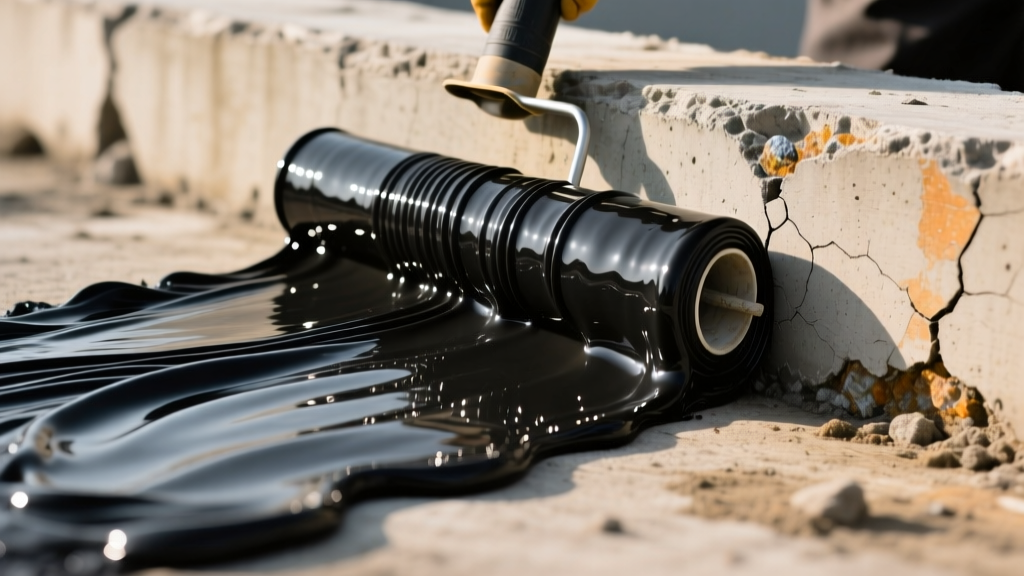
Deep Dive: Matching the Chemistry to the Material
1. Porous Organics (Wood & Canvas): Penetrating vs. Topical
Wood is a hygroscopic material; it absorbs and releases moisture based on ambient humidity. If you apply a topical film-forming sealer (like standard polyurethane) to exterior wood, UV degradation and thermal expansion will cause the film to micro-crack, trapping water inside the wood and accelerating rot.
The Solution: Thompson’s Advanced Natural Wood Protector. This product utilizes an alkyd resin base that penetrates up to 1/4" into the wood fibers rather than sitting on the surface. It replaces the natural oils lost to weathering and lowers the surface tension of the wood, causing water to bead. Trade-off: Because it does not form a physical barrier, it requires reapplication every 12 to 18 months in high-UV environments.
For non-wood organics like canvas tents or outdoor upholstery, Rust-Oleum NeverWet remains the benchmark for topical sprays. It creates a micro-textured silica layer that achieves a water contact angle greater than 150 degrees, causing water to literally bounce off the fabric.
2. Masonry & Concrete: Elastomeric vs. Cementitious
Concrete and CMU (Concrete Masonry Units) present a different challenge: hydrostatic pressure and efflorescence. According to FEMA’s building science floodproofing standards, below-grade masonry must withstand significant lateral water pressure without delaminating.
For Interior Block Walls: UGL Drylok Extreme. This is a hydraulic cement-based coating that chemically bonds with the masonry substrate. It is rated to withstand 15 PSI of hydrostatic pressure (equivalent to a 34-foot head of water). When applied correctly, it becomes part of the wall itself, expanding and contracting with the masonry.
For Exterior Foundations: Liquid Rubber Foundation Sealant. Exterior walls require a membrane that can bridge hairline cracks caused by soil settlement. Liquid Rubber cures to a 900% elongation rate, meaning it can stretch 9 times its original length without tearing. It bridges dynamic cracks up to 1/8" wide, a feat impossible for rigid cementitious coatings.
The 3-Step Application Protocol for Guaranteed Adhesion
Knowing how to waterproof material is only 20% of the battle; 80% of coating failures stem from inadequate surface preparation. The EPA’s guidelines on moisture control emphasize that moisture trapped behind a waterproofing barrier will cause mold proliferation and structural spalling. Follow this strict prep protocol before opening any product:
- Moisture Testing (ASTM D4263): Tape a 2x2 foot sheet of 4-mil polyethylene tightly to the concrete or masonry surface. Wait 72 hours. If condensation forms under the plastic or the concrete darkens, the substrate is emitting too much moisture vapor. You must install a vapor-permeable silane sealer instead of a film-forming coating.
- pH and Efflorescence Profiling: Cementitious coatings like Drylok will saponify (turn to soap) and lose adhesion if applied to highly alkaline surfaces. Test the surface pH; it must be below 10. Wire-brush away any white, powdery efflorescence and treat the wall with a muriatic acid etch or a commercial efflorescence remover before coating.
- Mechanical Profiling (CSP 3-4): Elastomerics and epoxies require a Concrete Surface Profile (CSP) of 3 or 4 for mechanical tooth. Smooth, troweled concrete must be diamond-ground or shot-blasted. If water beads on the existing concrete, the pores are sealed, and the new waterproofing material will peel within months.
Cost Analysis & Coverage Yield Realities
Manufacturer coverage rates are notoriously optimistic, assuming perfectly smooth, non-porous application surfaces. In real-world 2026 field conditions, you must adjust your material purchasing calculations:
- Highly Porous CMU (Cinderblock): Subtract 30% from the manufacturer’s stated coverage rate. The deep pores of split-face block will consume significantly more product on the first coat.
- Rough-Sawn Timber: Subtract 15% from penetrating sealer yields compared to planed/sanded lumber.
- Roller vs. Sprayer: Airless spraying of elastomerics yields a 10-15% material loss due to overspray, but reduces labor time by 60%. For DIYers using a 3/4" nap roller, material waste is negligible, but achieving uniform mil thickness requires meticulous cross-hatching (rolling vertically, then horizontally).
Final Verdict: Which System Fits Your Project?
There is no single answer to how to waterproof material because the material dictates the chemistry. If you are protecting exterior wood decking or outdoor furniture, bypass topical films and use a penetrating alkyd sealer to maintain dimensional stability. For interior basement walls experiencing active weeping, a hydraulic cementitious coating provides the rigid, high-PSI barrier required. Conversely, for exterior foundation walls subject to soil movement and freeze-thaw cycles, a high-build elastomeric membrane is the only system with the elongation properties to survive long-term structural shifting. Match the chemistry to the substrate, prep to the CSP standard, and measure your wet mils to guarantee a permanent moisture barrier.
Written by
James ThorntonJames Thornton is a construction industry veteran with 25 years of hands-on experience in wood framing, lumber grading, and residential building codes. He started as a framing carpenter in rural Oregon, earned his ICC Residential Building Inspector certification, and eventually became a senior plan reviewer for the City of Portland Bureau of Development Services. James holds a B.S. in Wood Science & Technology from Oregon State University and is a certified lumber grader through the West Coast Lumber Inspection Bureau (WCLIB). He has inspected over 3,000 residential construction sites and authored the city's internal guide on advanced framing techniques (2x6 at 24" O.C.). James lives in Bend, OR, where he builds custom timber-frame cabins and competes in lumberjack sports.
More from James Thornton
View all
Insulation
Best Home Insulation Materials: Complete 2026 Guide
Compare top home insulation materials for 2026. Find R-values, installed costs per square foot, and best uses for fiberglass, spray foam, and mineral wool.
Aug 4, 2026

Sustainable Building
Certify Your Green Building Material for LEED and WELL
Step-by-step guide to certifying a green building material for LEED v5 and WELL v2. Master EPDs, HPDs, and VOC limits for 2026 project specifications.
Aug 4, 2026

Stone & Masonry
Veneer Stacked Stone Panels: Interior Design & Style Showcase
Discover how veneer stacked stone panels transform interiors. Explore modern design profiles, material pairings, and technical installation specs.
Aug 4, 2026