Is Vinyl Material Waterproof? LVP, Sheet, and WPC Moisture Guide
Is vinyl material waterproof? We break down the moisture resistance of sheet vinyl, LVP, WPC, and SPC cores, including subfloor testing and failure modes.

The Short Answer: Material vs. System Waterproofing
At a molecular level, polyvinyl chloride (PVC) is a closed-cell synthetic polymer that is inherently impervious to liquid water. If you submerge a piece of pure vinyl in a tank of water for a decade, the material itself will not absorb moisture, swell, or rot. However, asking 'is vinyl material waterproof' requires distinguishing between the raw material and the installed flooring system. While the vinyl core is 100% waterproof, the seams, adhesives, underlayments, and subfloors beneath it are highly vulnerable to moisture intrusion. According to the Resilient Floor Covering Institute (RFCI), the vast majority of moisture-related flooring failures are not caused by the vinyl degrading, but by hydrostatic pressure, alkaline subfloor conditions, and trapped vapor destroying the installation system.
Vinyl Material Types and Moisture Performance
Not all vinyl flooring is manufactured equally. The core composition dictates how the plank reacts to temperature fluctuations and standing water. Below is a comparative breakdown of the four primary vinyl categories available in 2026.
| Vinyl Type | Core Composition | Waterproof Rating | Best Wet-Area Application | 2026 Avg. Cost (Material) |
|---|---|---|---|---|
| Sheet Vinyl | Solid PVC / Fiberglass | 100% Waterproof (Seamless) | Commercial kitchens, full bathrooms | $1.50 - $3.50 / sq ft |
| Flexible LVP | Homogeneous PVC | Waterproof core, seam vulnerable | Guest bathrooms, laundry rooms | $2.00 - $4.50 / sq ft |
| WPC (Rigid) | Wood-Plastic Composite (Aerated) | Waterproof, but vapor permeable | Above-grade living areas | $3.50 - $6.00 / sq ft |
| SPC (Rigid) | Stone-Plastic Composite (Limestone) | 100% Waterproof, high density | Basements, wet rooms, commercial | $3.00 - $7.00 / sq ft |
Why SPC Dominates Wet Environments
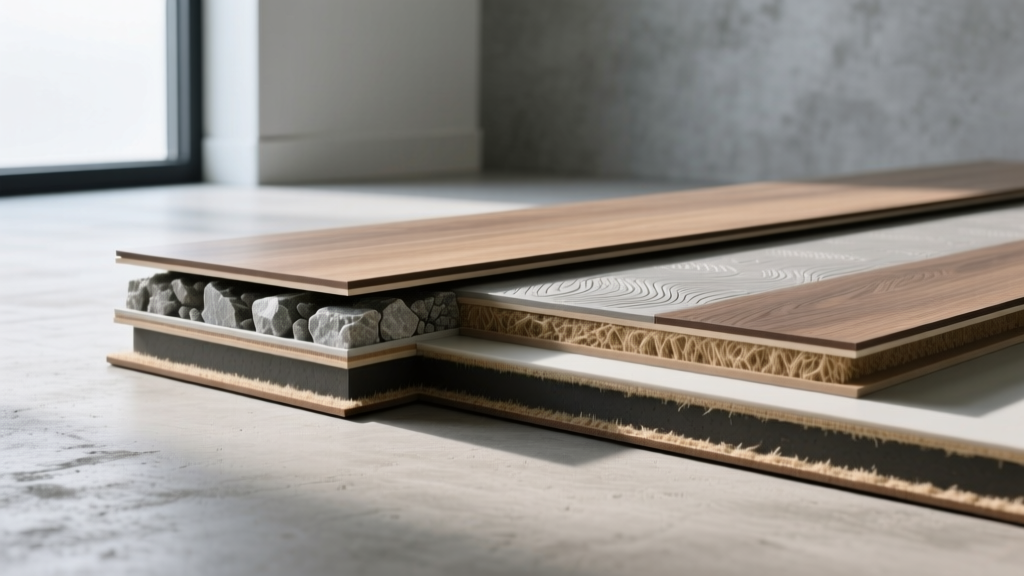
Stone Plastic Composite (SPC) utilizes a high-density limestone dust and PVC resin core. Unlike WPC, which uses foaming agents to create a lighter, softer plank, SPC is incredibly dense. This density prevents the plank from expanding or contracting when exposed to topical water, keeping the click-lock seams tightly engaged. If water pools on a WPC floor, the aerated core can trap vapor, leading to microscopic dimensional shifts that eventually compromise the mechanical lock.
Real-World Failure Modes: How Water Destroys Vinyl Installations
Understanding where vinyl systems fail is critical for contractors and homeowners. The Building Science Corporation emphasizes that managing liquid water and water vapor are two entirely different disciplines. Here are the three primary failure modes in vinyl installations:
1. Hydrostatic Pressure and Adhesive Emulsification
When moisture vapor from a concrete slab condenses beneath a glue-down vinyl floor, it creates hydrostatic pressure. If the concrete's alkalinity (pH level) exceeds 9.0, the moisture turns highly caustic. This alkaline water reacts with the acrylic or urethane adhesive in a chemical process called saponification—essentially turning the adhesive into liquid soap. The vinyl planks will release from the subfloor, often accompanied by a distinct chemical odor and black microbial growth.
2. Plasticizer Migration in Standing Water
Flexible LVP relies on chemical plasticizers to remain bendable. If subjected to prolonged standing water (such as a leaking dishwasher) combined with ambient heat, these plasticizers can migrate to the surface. This results in a cloudy, sticky residue on the wear layer and causes the vinyl to become brittle and crack over time.
3. The Floating Floor Mold Cavity
A floating SPC or WPC floor installed directly over a damp concrete basement slab without a vapor barrier creates a microclimate. While the Environmental Protection Agency (EPA) notes that mold requires organic material to grow, the dust, pet dander, and skin cells that settle into the expansion gaps of a floating floor provide ample food. When trapped moisture evaporates upward, it creates a 100% humidity pocket beneath the planks, leading to severe mold colonies on the subfloor, even if the vinyl itself remains untouched.
Mandatory Subfloor Testing: The ASTM F2170 Standard
Before installing any glue-down or floating vinyl, testing the subfloor is non-negotiable. The industry standard is ASTM F2170, which measures the Relative Humidity (RH) within the concrete slab using in-situ probes.
- Drill Holes: Drill holes into the concrete to a depth of 20% of the slab's total thickness (if drying from one side) or 40% (if drying from two sides).
- Insert Probes: Place calibrated RH probes into the sleeves and seal the top.
- Wait 72 Hours: Allow the microclimate inside the hole to equilibrate.
- Read and Record: Most vinyl manufacturers require an RH reading of 75% to 80% maximum. Readings above this threshold will void the warranty and guarantee adhesive failure.
Waterproofing the Perimeter: Installation Protocol for Wet Rooms
To make a vinyl plank installation truly waterproof in a bathroom or mudroom, you must seal the system's perimeter. Water will inevitably find the 1/4-inch expansion gap between the flooring and the drywall. Follow this protocol to create a continuous waterproof membrane:
- Step 1: Subfloor Sealing. Apply a penetrating silane-siloxane concrete sealer to the subfloor to block vapor transmission.
- Step 2: Perimeter Caulking. Before installing baseboards or shoe molding, fill the 1/4-inch expansion gap with 100% silicone caulk. Do not use acrylic or painter's caulk, as these will dissolve when exposed to standing water and mopping.
- Step 3: Flange Integration. In bathrooms, the vinyl should slide under the toilet flange, not around it. If cutting around the flange, seal the cut edge of the vinyl to the subfloor using a waterproof polyurethane seam sealer.
- Step 4: Transition Strips. Where the vinyl meets carpet or tile in a hallway, use a T-molding transition strip bedded in a continuous bead of silicone to prevent water from migrating laterally under the floor.
Cost Analysis for 2026 Waterproof Vinyl Projects
Budgeting for a truly waterproof vinyl installation goes beyond the per-square-foot cost of the planks. Proper moisture mitigation and perimeter sealing add to the initial labor and material costs but prevent catastrophic replacement expenses down the line.
| Project Component | Standard Install (Dry Area) | Waterproofed Install (Wet/Below-Grade) |
|---|---|---|
| SPC Vinyl Material | $3.50 - $5.00 / sq ft | $4.00 - $6.50 / sq ft (Premium wear layer) |
| Moisture Mitigation (Epoxy) | $0.00 (Not required) | $2.50 - $4.00 / sq ft |
| Vapor Barrier Underlayment | $0.50 / sq ft | $1.25 / sq ft (6-mil poly with taped seams) |
| Perimeter Silicone Sealing | Not included | $150 - $300 per room (Labor + Materials) |
| Total Estimated Cost | $5.50 - $7.50 / sq ft | $9.50 - $14.00 / sq ft |
Frequently Asked Questions
Can I use a steam mop on waterproof vinyl flooring?
No. While the vinyl material is waterproof, the extreme heat (up to 212°F) from a steam mop can soften the urethane wear layer and melt the hot-melt adhesives used in the click-lock joints. This allows water vapor to be forced directly into the seams, causing edge-curling and delamination. Use a damp microfiber mop with a pH-neutral cleaner instead.
Is peel-and-stick vinyl tile waterproof?
The PVC tile itself is waterproof, but the pressure-sensitive adhesive backing is highly susceptible to moisture. If installed over a damp concrete subfloor, the adhesive will quickly emulsify, causing the tiles to slide, pop up, or leave a sticky residue. Peel-and-stick vinyl should only be used over dry, sealed, above-grade plywood subfloors.
Does waterproof vinyl require an underlayment?
For floating SPC or WPC floors, an underlayment is required for acoustic dampening and minor subfloor imperfection smoothing. However, in wet areas, you must use a closed-cell foam or cork underlayment with a moisture rating that matches your subfloor. Never use open-cell, felt, or recycled fiber underlayments in wet areas, as they act like sponges and will harbor mold if water breaches the seams.
Written by
David NakamuraDavid Nakamura is a licensed architect (AIA) and construction technology writer focused on sustainable building methods, mass timber engineering, and high-performance building envelopes. He holds a Master of Architecture from the University of Washington and is a certified Passive House Consultant (CPHC). David spent eight years at the Seattle firm Mithun, where he led the design of three LEED Platinum projects, before founding his own practice specializing in net-zero residential design. He serves on the editorial advisory board of GreenBuilder Magazine and has authored peer-reviewed papers on cross-laminated timber (CLT) connections for the Journal of Structural Engineering. In his spare time, David teaches woodworking at Pratt Fine Arts Center and kayaks the Puget Sound.
More from David Nakamura
View all
Construction Cost
Labor Cost to Build a Deck Per Sq Ft: 2026 Installation Guide
Discover the exact labor cost to build a deck per sq ft in 2026. This installation guide breaks down contractor rates, complexity factors, and hidden fees.
Aug 4, 2026

Construction Cost
How Much Does It Cost to Build a 3 Bedroom House? Financing Guide
Learn exactly how much it costs to build a 3 bedroom house and explore 2026 financing options, construction loan types, and budget frameworks for your build.
Aug 4, 2026

Construction Cost
Cost to Build a Tennis Court: 2026 Guide
How much does it cost to build a tennis court in 2026? Breakdowns for asphalt, concrete, and synthetic surfaces plus fencing and lighting.
Jul 30, 2026