2026 Waterproof Material Bag Cost Breakdown: Compounds & Liners
2026 cost breakdown for bagged waterproofing compounds and waterproof material bags, covering bentonite, crystalline powders, and FIBC liner storage.

The True Cost of Bagged Waterproofing Compounds in 2026
When procuring dry waterproofing systems, contractors often focus strictly on the per-unit price of the chemical or mineral compound. However, the packaging and on-site storage logistics dictate the actual yield. Cementitious capillary crystalline powders, hydraulic cements, and sodium bentonite are highly hygroscopic. If stored in standard multi-wall paper sacks, ambient humidity triggers premature hydration, rendering the product useless before it ever reaches the foundation wall.
Understanding the cost breakdown of both the bagged compounds themselves and the specialized waterproof material bag systems used to transport and store them is critical for accurate project estimating. Below, we break down the 2026 pricing for primary bagged materials and the secondary waterproof storage solutions required to protect them.
Price Breakdown: Bagged Waterproofing Materials vs. Coverage
The baseline cost of waterproofing powders varies drastically based on the chemical complexity of the compound. While basic bentonite is relatively inexpensive per pound, its application requires significant thickness, driving up the cost per square foot. Conversely, advanced crystalline powders carry a high upfront bag cost but offer superior coverage and structural integration.
| Material Type | Standard Bag Size | 2026 Avg. Cost per Bag | Yield / Coverage | Cost per Sq. Ft. |
|---|---|---|---|---|
| Sodium Bentonite (Granular) | 50 lb PE-lined bag | $18.00 - $24.00 | ~100 sq. ft. at 1/4" | $0.18 - $0.24 |
| Crystalline Capillary Powder | 50 lb pail / foil bag | $145.00 - $185.00 | ~500 sq. ft. (2 coats) | $0.29 - $0.37 |
| Hydraulic Cement (Fast-Set) | 10 lb tub / bag | $22.00 - $28.00 | ~0.15 cu. ft. volume | N/A (Spot repair) |
| Dry-Shake Crystalline Hardener | 50 lb paper/PE bag | $65.00 - $85.00 | ~50 sq. ft. at 1.5 lb/sq ft | $1.30 - $1.70 |
Note: Pricing reflects Q1 2026 distributor averages for commercial accounts. Residential retail pricing at big-box stores typically carries a 20-30% markup.
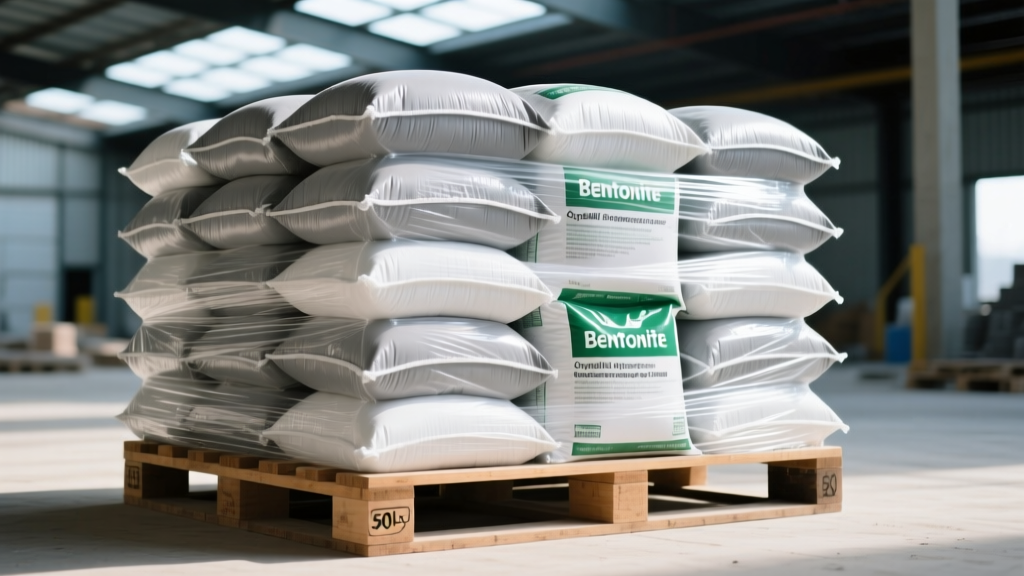
The Hidden Cost of Moisture Ingress: Secondary Waterproof Material Bags
According to the Portland Cement Association, cementitious materials begin to degrade in performance when exposed to relative humidity levels above 70% for prolonged periods. A standard 50lb multi-wall paper bag offers virtually zero protection against ambient moisture or accidental site puddling.
When a contractor sources a specialized waterproof material bag for secondary containment, they are typically looking at three distinct solutions, each with its own cost profile:
- Heavy-Duty Pallet Shrink Wrap (Gusseted): A 10-mil polyethylene pallet cover costs between $18 and $25 per pallet. It is the most cost-effective waterproof material bag alternative for short-term storage (under 14 days).
- PE-Lined FIBC (Flexible Intermediate Bulk Container): For large-scale commercial projects purchasing bentonite or cement in 2,000 lb bulk sacks, a standard woven FIBC will wick moisture. Upgrading to a Type B FIBC with an integrated 150-micron polyethylene liner (a true industrial waterproof material bag) adds $12 to $18 per unit to the packaging cost, bringing the total bag cost to $35-$45.
- Foil-Laminated Sacks: Used for highly sensitive crystalline powders, these multi-layer bags feature an aluminum foil barrier. They cost $3.50 to $5.00 more per bag than standard PE-lined paper, but guarantee a 24-month shelf life even in unconditioned site trailers.
Decision Matrix: Selecting the Right Packaging for Your Site
Choosing the correct waterproof material bag or storage method depends on the project timeline, the specific compound's hygroscopic nature, and the local climate. Use the framework below to determine your packaging budget.
| Site Condition / Timeline | Recommended Packaging | Estimated Add. Cost |
|---|---|---|
| Interior, Climate-Controlled, < 30 Days | Standard Multi-Wall Paper Bags | $0.00 (Baseline) |
| Covered Exterior, High Humidity, < 60 Days | PE-Lined Paper Bags + Pallet Wrap | +$1.50 / bag |
| Bulk Transport (2,000+ lbs), Marine Environment | FIBC with 250-micron PE Liner | +$18.00 / bulk bag |
| Long-Term Staging (6+ Months), Unconditioned | Foil-Laminated Sacks in Sealed Bins | +$4.50 / bag |
Real-World Scenario: 5,000 Sq. Ft. Basement Foundation
To contextualize these costs, consider a 5,000 square foot commercial basement foundation requiring blind-side waterproofing using sodium bentonite panels and crystalline capillary slurry at the cold joints.
- Material Requirement: The project requires 50 bags (50 lbs each) of sodium bentonite for panel backing and 10 pails (50 lbs each) of crystalline powder for the joints.
- Baseline Material Cost: 50 bags @ $21 = $1,050. 10 pails @ $160 = $1,600. Total material = $2,650.
- The Storage Risk: The site lacks a climate-controlled trailer. The materials will sit under a temporary tarp for 4 weeks during a rainy spring season. Standard paper bags for the bentonite will absorb ambient moisture, causing the granules to swell and bind together. Industry guidelines from the Flexible Intermediate Bulk Container Association (FIBCA) emphasize that improper storage of bulk powders leads to severe flowability issues and compromised chemical efficacy.
- The Waterproof Material Bag Solution: The estimator upgrades the bentonite order to PE-lined bags (+$1.50/bag = $75) and purchases two heavy-duty gusseted pallet covers ($40 total). Total added packaging cost: $115.
- ROI Analysis: The $115 investment in upgraded waterproof material bags and covers protects $2,650 worth of inventory. If just 10% of the bentonite clumps and is rejected by the site inspector, the replacement and expedited shipping cost would exceed $350, not including the labor cost of hauling ruined material to the dumpster.
Frequently Asked Questions
Can I reuse a waterproof material bag (FIBC) for different compounds?
No. Cross-contamination is a severe risk in waterproofing chemistry. An FIBC previously used to hold sodium bentonite will retain microscopic residue. If you subsequently use that same waterproof material bag to store a Portland cement-based crystalline powder, the residual bentonite can alter the water-to-cement ratio and inhibit the crystalline growth mechanism within the concrete matrix.
Do UV rays degrade PE-lined waterproof bags?
Yes. Standard polyethylene liners and exterior FIBC weaves degrade rapidly under direct ultraviolet exposure. Most manufacturers rate their standard waterproof material bags for a maximum of 200 hours of direct UV exposure. If your site requires exterior staging for longer than two weeks, you must specify UV-inhibited (carbon-black treated) packaging, which typically adds 8% to 12% to the unit cost.
What is the ASTM standard for testing bentonite swelling?
The swelling capacity of sodium bentonite is tested under ASTM D5890. If your bagged bentonite has been exposed to moisture due to a failure in the waterproof material bag packaging, it will fail this swell index test on-site, leading to immediate rejection by third-party geotechnical inspectors.
Written by
Marcus ChenMarcus Chen is a licensed structural engineer (PE) and building materials analyst with over 12 years of experience across residential, commercial, and industrial construction. He holds a Master of Science in Civil Engineering from UC Berkeley and spent six years at Thornton Tomasetti before transitioning to independent consulting and technical writing. Marcus specializes in material selection for seismic-prone regions, concrete reinforcement strategies, and lifecycle cost analysis. His work has been cited by the American Concrete Institute (ACI) and the Structural Engineers Association of California (SEAOC). When he is not on a job site or at his desk, you will find him hiking the Sierra Nevada or restoring a 1920s craftsman bungalow in Oakland, CA.
More from Marcus Chen
View all
Construction Cost
How Much Did the Eiffel Tower Cost to Build?
How much did the Eiffel Tower cost to build in 1889? We adjust for inflation and compare its budget to modern skyscraper construction.
Aug 4, 2026

Fire Resistance
What Is a Fire Resistant Material? Testing & Certification Guide
Discover what is a fire resistant material through ASTM and UL testing. Learn how fire ratings, certifications, and assemblies work in construction.
Aug 4, 2026

Construction Cost
How Much Did the Burj Khalifa Cost to Build?
How much did the Burj Khalifa cost to build? We break down the $1.5B project and extract 5 money-saving strategies for your next build.
Jul 30, 2026