Is Canvas Material Waterproof? Waxed vs PVC vs Acrylic Guide
Compare waterproof canvas material types including waxed cotton, PVC-coated polyester, and acrylic. Discover hydrostatic ratings, costs, and failure modes.
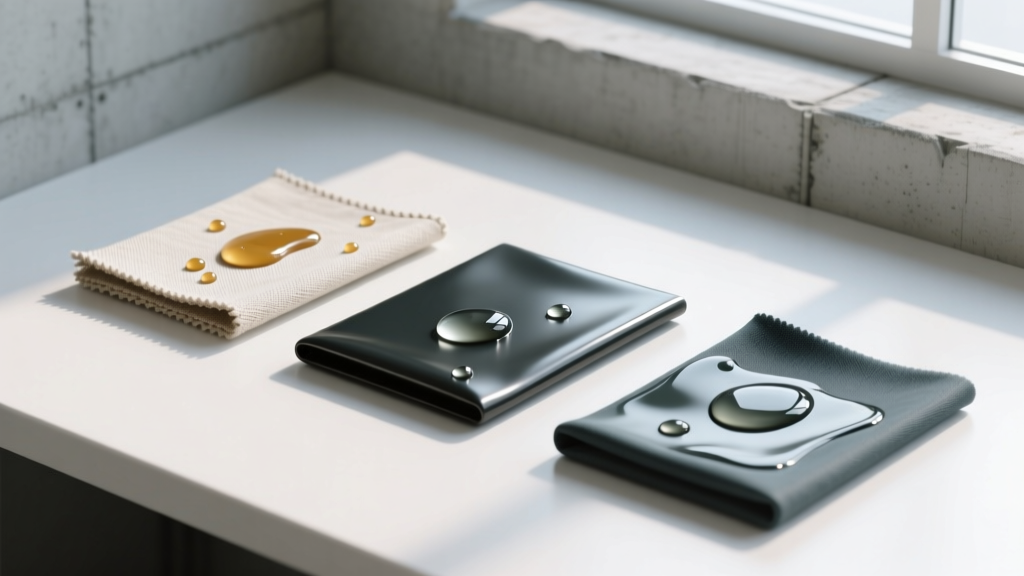
The Core Question: Is Canvas Material Waterproof?
Untreated, woven canvas—whether cotton or polyester—is inherently porous and highly absorbent. When evaluating canvas material waterproof capabilities for construction enclosures, architectural membranes, or heavy-duty tarps, the waterproofing is entirely dependent on the chemical treatment or polymer coating applied to the base weave. Selecting the wrong coated canvas for a specific moisture load leads to catastrophic hydrostatic failure, delamination, or structural mold.
This guide dissects the four primary waterproof canvas categories used in commercial and residential construction: Waxed Cotton, PVC-Coated Polyester, Polyurethane (PU) Coated Canvas, and Solution-Dyed Acrylic with waterproof backings. We evaluate hydrostatic head ratings, tear strength, UV degradation thresholds, and real-world failure modes to help you specify the correct membrane for your project.
Quick Selection Framework
- Continuous Hydrostatic Pressure (Ponding Water): PVC-Coated Polyester (18oz+)
- High-UV Architectural Awnings & Marine: Solution-Dyed Acrylic with PU Backing
- Breathable Temporary Enclosures & Heritage Restorations: Waxed Cotton Canvas
- Lightweight, Cold-Weather Flexibility: PU-Coated Polyester
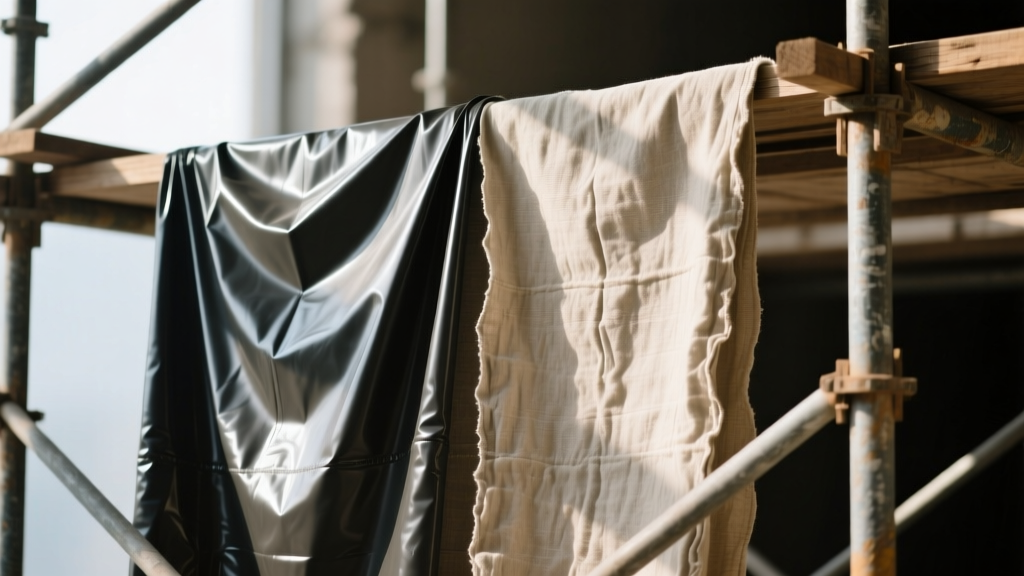
Waxed Cotton Canvas: The Traditional Standard
Waxed canvas utilizes a heavy base weave (typically 10 oz to 12 oz per square yard cotton duck) saturated with a paraffin and beeswax emulsion. The wax fills the interstitial gaps between the yarns, creating a hydrophobic barrier that causes water to bead and roll off.
Technical Specifications & Performance
- Hydrostatic Head Rating: 400mm – 800mm (Adequate for shedding rain, fails under standing water)
- Weight: 14 oz – 18 oz per sq/yd (post-waxing)
- Breathability: High (allows water vapor transmission, preventing interior condensation)
- Fire Resistance: Poor (highly flammable unless treated with secondary borate-based retardants)
Waxed canvas is specified primarily for heritage building restorations, breathable temporary scaffolding enclosures, and high-end architectural tents where interior condensation is a primary concern. However, it requires annual re-waxing to maintain its hydrophobic properties, as UV exposure and physical abrasion slowly strip the wax matrix.
PVC-Coated Polyester Canvas: The Heavy-Duty Workhorse
Polyvinyl Chloride (PVC) coated canvas represents the industry standard for heavy-duty construction tarps, tensioned membrane structures, and long-term weather enclosures. A high-tenacity polyester scrim is encapsulated in a liquid PVC plastisol, often reinforced with a polyester tie-coat to prevent delamination.
Technical Specifications & Performance
- Hydrostatic Head Rating: 3,000mm – 6,000mm+ (Impervious to standing water and heavy wind-driven rain)
- Weight: 14 oz – 22 oz per sq/yd
- Tear Strength (ASTM D5587): 80 lbs – 150 lbs (warp and weft)
- UV Stabilization: Formulated with Hindered Amine Light Stabilizers (HALS) for 5,000+ hours of direct UV exposure
According to the Advanced Textiles Association, PVC-coated architectural fabrics dominate the permanent tensile structure market due to their exceptional weldability and dirt-shedding topcoats (often PVDF or TiO2). For standard construction enclosures, an 18 oz PVC canvas with a matte finish provides the optimal balance of flexibility and puncture resistance.
Polyurethane (PU) Coated Canvas: The Lightweight Contender
PU-coated canvas applies a micro-porous or monolithic polyurethane film to the back of a lighter polyester or nylon weave (typically 400D to 1000D). Unlike PVC, which encapsulates the fabric, PU is usually applied as a single or double back-coating, leaving the face fabric exposed and textured.
Technical Specifications & Performance
- Hydrostatic Head Rating: 1,500mm – 3,000mm
- Weight: 6 oz – 10 oz per sq/yd
- Cold Weather Flexibility: Remains pliable down to -40°F (-40°C) without cracking
- Abrasion Resistance: Moderate (the exposed face fabric is vulnerable to mechanical wear)
PU canvas excels in applications requiring extreme cold-weather flexibility and lightweight handling, such as inflatable temporary shelters or winter construction wraps. The primary drawback is hydrolysis; in high-heat, high-humidity environments, the PU polymer chain breaks down over time, leading to a sticky, peeling coating.
Solution-Dyed Acrylic with Waterproof Backing
Often recognized by the brand name Sunbrella SeaMark, this material combines a solution-dyed acrylic face fabric with a waterproof polyurethane or PVC back-coating. The acrylic fibers are pigmented during the liquid extrusion phase, making the color impervious to UV fading and bleach cleaning.
Technical Specifications & Performance
- Hydrostatic Head Rating: 1,200mm – 2,000mm (driven by the back-coating)
- UV Resistance: 10,000+ hours (virtually no color degradation)
- Aesthetics: Woven, textile appearance on the exterior; smooth, waterproof interior
This material is strictly specified for high-visibility architectural applications: commercial awnings, marine enclosures, and exterior pergola canopies where the aesthetic of a traditional woven canvas is required, but absolute water impermeability is non-negotiable.
Head-to-Head Material Comparison Matrix
| Feature | Waxed Cotton | PVC-Coated Poly | PU-Coated Poly | Acrylic + PU Back |
|---|---|---|---|---|
| Hydrostatic Head | ~600mm | 3,000mm+ | 2,000mm | 1,500mm |
| Base Weight (oz/yd²) | 14 - 18 oz | 14 - 22 oz | 6 - 10 oz | 12 - 14 oz |
| Seam Construction | Sewn & taped | RF or Hot-Air Welded | Sewn & sealed | Sewn & sealed |
| Mildew Resistance | Low (requires treatment) | Excellent | Good | Excellent |
| Best Use Case | Breathable heritage wraps | Heavy-duty containment | Cold-climate inflatables | Architectural awnings |
Real-World Failure Modes and Edge Cases
Specifying the correct waterproof canvas material requires anticipating how the membrane will fail in edge-case scenarios. Field forensics reveal three dominant failure modes across these materials:
⚠️ Critical Warning: Fire Code Compliance in Temporary Enclosures
When utilizing PVC or PU-coated canvas for interior construction enclosures or public-facing temporary structures, standard materials will fail municipal fire inspections. You must specify materials that pass NFPA 701 Standard Methods of Fire Tests for Flame Propagation of Textiles and Films. Standard PVC canvas burns rapidly and produces toxic hydrogen chloride gas. Always demand a manufacturer's certificate of compliance for NFPA 701 or California Title 19 before procurement.
1. Plasticizer Migration in PVC Canvas
Cheaper PVC canvases use liquid plasticizers to maintain flexibility. In high-heat environments (e.g., roofing membranes exposed to direct summer sun), these plasticizers migrate to the surface and evaporate. The canvas becomes brittle, leading to micro-cracking at the fold lines. Specification Fix: Mandate polymeric plasticizers or high-molecular-weight PVC formulations (e.g., Elvaloy-modified PVC) for applications exceeding 140°F surface temperatures.
2. Hydrolytic Degradation of PU Coatings
Polyurethane coatings are susceptible to hydrolysis when exposed to continuous high humidity and heat (common in southern US coastal construction zones). The ester linkages in standard polyester-based PU break down, causing the coating to turn tacky and peel away from the base fabric in sheets. Specification Fix: Specify polyether-based PU coatings for tropical or high-humidity environments, as they are virtually immune to hydrolysis.
3. Capillary Wicking in Sewn Seams
Even if the canvas material is completely waterproof, the needle holes created during sewing act as capillary tubes, wicking water through the seams under hydrostatic pressure. While PVC can be thermally welded to eliminate this, waxed, PU, and acrylic canvases must be sewn. Specification Fix: Require double-lap felled seams sealed with a continuous bead of polyether seam sealer, or specify factory-applied thermoplastic seam tape over all stitch lines.
2026 Cost Analysis and Procurement
Pricing for waterproof canvas materials fluctuates based on petroleum derivatives and global shipping logistics. As of early 2026, supply chain stabilization has normalized costs for standard architectural and construction grades. The following estimates reflect 60-inch wide roll goods purchased in 50+ linear yard quantities:
- Waxed Cotton Canvas (12 oz base): $16.00 – $24.00 per linear yard. (High labor cost for re-waxing maintenance must be factored into lifecycle costs).
- Standard 14 oz PVC-Coated Polyester: $7.50 – $11.00 per linear yard. (The most cost-effective solution for high-volume, short-term construction enclosures).
- Heavy-Duty 18 oz PVC (PVDF Topcoat): $14.00 – $22.00 per linear yard. (Justified for 10+ year architectural tension structures).
- PU-Coated 600D Polyester: $9.00 – $14.00 per linear yard.
- Solution-Dyed Acrylic with PU Backing: $38.00 – $55.00 per linear yard. (Premium pricing driven by the complex solution-dyeing process and high UV warranties).
Procurement Tip: When ordering PVC-coated canvas for welded enclosures, always request 'selvage-free' rolls or factor in a 2-inch trim loss on both edges. Welding over the thickened, uncoated selvage edge results in structural weak points and inconsistent thermal bonds.
Final Selection Protocol
Do not default to the heaviest canvas available. Over-specifying PVC for a breathable heritage enclosure will trap condensation and rot the underlying timber framing. Conversely, specifying PU-coated canvas for a flat-roof temporary containment system will result in rapid hydrostatic failure and ponding water collapse. Map your specific hydrostatic load, UV exposure hours, and local fire codes to the material matrices above to ensure structural integrity and code compliance.
Written by
Sarah WhitfieldSarah Whitfield is a chartered quantity surveyor (MRICS) and construction cost analyst with 15 years of experience in material pricing, procurement strategy, and project budgeting. She earned her degree in Construction Management from the University of Reading (UK) and has worked on projects ranging from $2M custom homes to $180M mixed-use developments across North America and Europe. Sarah currently leads cost estimating for BuildMat Insight, maintaining a proprietary database of 4,000+ material price points updated quarterly. She is a frequent contributor to RSMeans cost data panels and has presented at the International Cost Engineering Council (ICEC) congress. Based in Denver, CO, Sarah is an avid trail runner and volunteer mentor for Women in Construction.
More from Sarah Whitfield
View all
Wood & Lumber
What Are the Different Types of Wood? A Builder's Guide
Compare structural softwoods, finish hardwoods, and engineered lumber. Analyze Janka ratings, MOE values, and 2026 pricing for construction.
Aug 4, 2026

Walls & Panels
Steel Framing vs Wood Framing: Corrosion and Moisture Defense
Compare steel framing vs wood framing for moisture resistance. Learn about galvanized coatings, condensation risks, and corrosion protection strategies.
Jul 21, 2026

Stone & Masonry
How to Cut Stone Veneer: Wet Saw vs Grinder Comparison
Compare the best tools for cutting stone veneer. We review wet saws, angle grinders, and chop saws to help you achieve clean, chip-free cuts.
Jul 21, 2026