Best Waterproof Decking Materials for 2026: Expert Selection Guide
Compare top waterproof decking materials for 2026. Expert analysis of PVC, aluminum, and composites, including exact costs, lifespans, and installation tips.

The Physics of Deck Failure: Water-Resistant vs. Waterproof
Specifying a deck surface requires a clear understanding of the distinction between 'water-resistant' and 'waterproof.' Water-resistant materials (like traditional capped composites) repel liquid on their exterior shell but contain organic wood flour in their core. If the protective cap is scratched, cut, or compromised, the core absorbs moisture, leading to swelling, freeze-thaw fracturing, and internal rot. True waterproof decking materials possess a 0% water absorption rate throughout their entire cross-section, making them immune to hydrostatic degradation, mold proliferation, and structural warping.
According to testing standards outlined by the American Society for Testing and Materials (ASTM D570), true waterproof synthetic and metallic decking materials exhibit less than 0.1% water absorption after prolonged submersion. This guide breaks down the top fully waterproof and highly water-resistant decking systems available in 2026, providing exact pricing, structural limitations, and installation parameters.
Material Decision Matrix: Specify by Project Requirement
Use this framework to match the material to your specific environmental and structural constraints:
- For Marine Environments & Salt Air: Specify Marine-Grade Aluminum (6061-T6 alloy). PVC becomes brittle under high UV/salt combinations over decades, while aluminum is impervious to salt corrosion.
- For Flat Roofs & Low-Slope Balconies: Specify Interlocking Aluminum Decking with integrated drainage channels. This creates a dry-under-deck system without requiring a secondary membrane.
- For High-Traffic Commercial Boardwalks: Specify Heavy-Duty Cellular PVC. It offers the best slip resistance when wet and withstands heavy point loads without denting.
- For Budget-Conscious Residential Builds: Specify Capped Wood-Plastic Composite (WPC). It is water-resistant on the surface but requires strict end-sealing protocols during installation.
Comprehensive Breakdown of Waterproof Decking Systems
1. Cellular PVC (Polyvinyl Chloride) Decking
Cellular PVC is the gold standard for synthetic waterproof decking. Unlike composite, it contains zero organic wood fibers. The manufacturing process creates a closed-cell foam core wrapped in a dense, high-density polymer shell. Premium lines, such as the AZEK Vintage collection, utilize advanced polymer capping that resists UV fading and surface scratching.
Cost Range: $10.50 – $15.00 per sq. ft. (materials only).
Lifespan: 30–50 years.
Best Application: Ground-level decks, pool surrounds, and areas with constant moisture exposure.
2. Interlocking Aluminum Decking
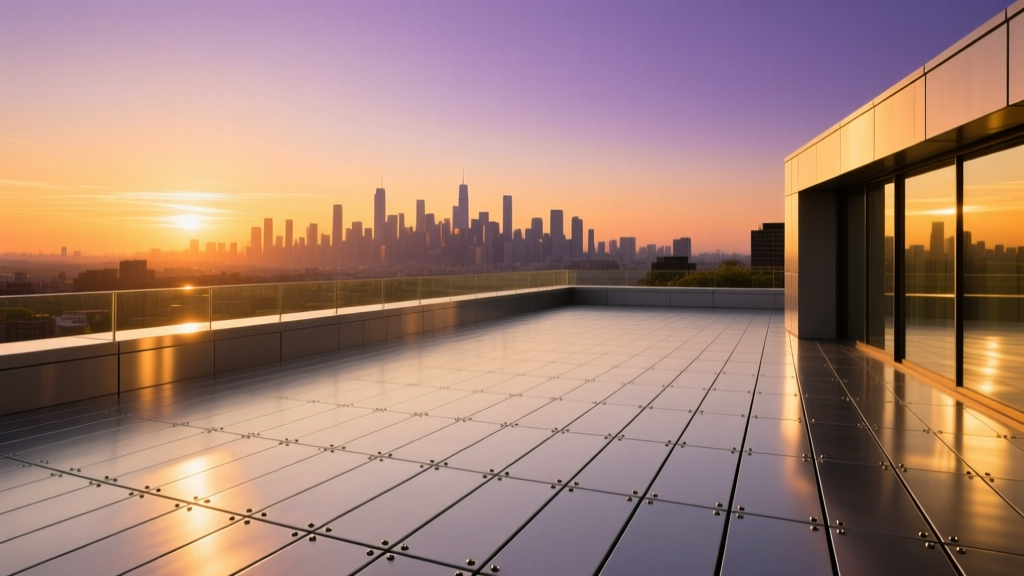
Aluminum decking systems, such as Wahoo Decks or LockDry, utilize extruded 6061-T6 marine-grade aluminum planks that interlock laterally. These systems are inherently 100% waterproof and often feature integrated gutters that route water away from the substructure, effectively creating a dry space below without the need for vinyl under-deck ceiling panels.
The planks are typically finished with an AAMA 2604 compliant powder coating, which prevents chalking and fading. While aluminum conducts heat, modern light-colored powder coats reflect solar radiation, keeping surface temperatures comparable to light wood composites. However, aluminum is susceptible to denting from heavy dropped objects (e.g., cast-iron BBQ grills) and can be slippery when wet if not specified with an integrated grit-strip or knurled surface texture.
Cost Range: $14.00 – $22.00 per sq. ft.
Lifespan: 50+ years (effectively permanent).
Best Application: Second-story balconies, rooftop decks, and dry-under-deck requirements.
3. Capped Wood-Plastic Composite (WPC)
Capped composites (like Trex Transcend or TimberTech Pro) dominate the residential market due to their realistic wood-grain embossing and lower price point. They feature a polyethylene shell encapsulating a wood-flour and recycled plastic core. While the cap is waterproof, the exposed ends and routed grooves are highly vulnerable to capillary action (wicking).
Cost Range: $7.50 – $12.00 per sq. ft.
Lifespan: 25–35 years.
Best Application: Elevated residential decks with adequate airflow and slope.
4. Acetylated & Thermally Modified Wood
For architects and homeowners demanding natural wood aesthetics without the rot, acetylated wood (e.g., Accoya) is a breakthrough material. The acetylation process modifies the wood's free hydroxyl groups into acetyl groups, drastically reducing its ability to absorb water. According to the USDA Forest Products Laboratory, modified woods exhibit swelling and shrinking rates reduced by up to 70% compared to untreated timber. Accoya carries a 50-year above-ground warranty against rot and fungal decay.
Cost Range: $9.00 – $14.00 per sq. ft.
Lifespan: 50 years above ground; 25 years in ground/freshwater contact.
Best Application: High-end architectural projects, docks, and boardwalks requiring natural timber.
2026 Cost & Performance Matrix
| Material Type | Avg. Material Cost (per sq. ft.) | Water Absorption Rate | Expected Lifespan | Substructure Impact |
|---|---|---|---|---|
| Cellular PVC | $10.50 - $15.00 | < 0.5% (ASTM D570) | 30 - 50 Years | Low (Requires proper joist taping) |
| Aluminum (Interlocking) | $14.00 - $22.00 | 0.0% (Impervious) | 50+ Years | None (Protects substructure) |
| Capped Composite | $7.50 - $12.00 | 1.0% - 5.0% (Core dependent) | 25 - 35 Years | Moderate (End-cuts require sealing) |
| Acetylated Wood | $9.00 - $14.00 | < 2.0% (Modified) | 50 Years | Low (Naturally rot-resistant) |
| Pressure-Treated Pine (Baseline) | $3.50 - $5.50 | 15% - 30% (Seasonal) | 10 - 15 Years | High (Accelerates joist rot) |
Installation Failures That Destroy Waterproof Integrity
Even a 100% waterproof decking board will fail if the substructure rots beneath it. The North American Decking and Railing Association (NADRA) frequently cites substructure failure as the primary cause of premature deck replacement. To maintain the waterproof integrity of your build, mandate the following protocols:
- Butyl Joist Tape is Non-Negotiable: Water will inevitably pass through the gaps between deck boards. If it sits on top of raw wooden joists, it causes rot and compromises the holding power of screws. Apply a high-grade butyl flashing tape (such as G-Tape or Trex Protect) to the top of every joist and ledger board before laying the first deck board.
- Maintain a 1/4-Inch per Foot Slope: Waterproof decking materials still require drainage. If water pools on the surface, it creates slip hazards and accelerates the degradation of surface coatings. Frame the substructure with a minimum 1/4-inch drop per 12 inches of run to ensure positive drainage away from the structure.
- Avoid Face-Screwing Aluminum and PVC: Driving top-down screws through PVC or aluminum creates entry points for water and compromises the structural skin of the board. Always utilize manufacturer-specified hidden fastener systems (cam clips or grooved-channel brackets) that allow for thermal expansion while keeping the top surface completely unbroken.
Final Specification Recommendations
If your primary objective is absolute zero-maintenance and total immunity to water damage, Interlocking Aluminum Decking is the superior engineering choice, particularly for elevated structures where protecting the substructure is critical. If budget constraints are tight but a waterproof surface is required, Cellular PVC offers the best balance of cost, slip-resistance, and moisture immunity, provided thermal expansion gaps are rigorously calculated during installation. Avoid using capped composites in applications where the boards will be in direct contact with soil, standing water, or flat, un-sloped surfaces.
Written by
Priya KapoorPriya Kapoor is a real estate market analyst and construction economics researcher with expertise in housing affordability, development feasibility, and infrastructure investment. She holds a Master of Regional Planning from Cornell University and previously worked as a senior analyst at CBRE's Investment Properties group, where she modeled returns for $4B in mixed-use development pipelines. Priya now runs an independent research practice advising developers, municipalities, and REITs on construction cost forecasting and market timing. She publishes the quarterly "BuildMat Market Pulse" report tracking material price indices across 12 commodity categories. Based in Austin, TX, Priya serves on the board of Habitat for Humanity Austin and is a marathon runner.
More from Priya Kapoor
View all
Construction Cost
Cost to Build a 1600 Sq Ft Home in 2026: Full Breakdown
Accurate 2026 cost to build a 1600 sq ft home—material, labor, and regional pricing breakdowns included. Plan your budget with real-time estimates.
Aug 11, 2026

Wood & Lumber
Name the Types of Wood for Pressure Treatment and Preservation
Learn how to name the types of wood best suited for pressure treatment. Compare species treatability, chemical retention levels, and 2026 preservation costs.
Aug 4, 2026

Stone & Masonry
Stone Veneer Suppliers Lindenhurst: 2026 Cost Analysis
Analyze 2026 stone veneer costs in Lindenhurst, NY. Compare local supplier pricing, delivery fees, and Suffolk County installation labor rates.
Aug 4, 2026