Waterproof Gasket Material Cost Breakdown: 2026 Pricing Guide
Detailed 2026 cost breakdown for waterproof gasket materials including EPDM, silicone, and Viton, plus tooling, certification, and fabrication pricing.

The 2026 Raw Material Cost Matrix
Procuring waterproof gasket materials requires looking beyond the base polymer price. In 2026, supply chain stabilization has normalized bulk rubber pricing, but specialty compounds and certified grades command significant premiums. The table below outlines the current market rates for the five most common elastomeric gasket materials, measured in both extruded linear foot pricing and calendered sheet square foot pricing.
| Material | Extruded Cost (Per Lin. Ft.) | Sheet Cost (Per Sq. Ft.) | Optimal Application | Primary Vulnerability |
|---|---|---|---|---|
| EPDM | $0.45 - $1.20 | $1.80 - $3.50 | Outdoor enclosures, HVAC, potable water | Petroleum and mineral oil exposure |
| Neoprene | $0.80 - $1.90 | $3.20 - $5.50 | General construction, moderate weather sealing | Long-term UV and ozone degradation |
| Silicone | $1.50 - $3.80 | $6.00 - $11.00 | High-temp environments, food-grade sealing | Low tear strength, poor abrasion resistance |
| Nitrile (NBR) | $0.65 - $1.40 | $2.50 - $4.80 | Fuel systems, hydraulic machinery | Ozone cracking, extreme cold brittleness |
| Viton (FKM) | $8.50 - $18.00 | $35.00 - $65.00 | Aggressive chemicals, extreme heat (400°F+) | High cost, poor performance in ketones |
According to the ASTM Committee D11 on Rubber and Rubber-like Materials, proper classification of these elastomers under the ASTM D2000 standard is critical for ensuring the material you pay for matches the physical properties delivered. Always require a certified material test report (CMTR) for bulk orders exceeding $5,000 to verify durometer and tensile strength.
Fabrication and Tooling: The Hidden Cost Multipliers
Raw material cost is only the baseline. The geometry of your gasket dictates the manufacturing method, which introduces tooling and setup costs that can eclipse the material expense in low-volume production runs.
1. Steel Rule Die-Cutting (For Flat Sheet Gaskets)
Best for 2D shapes cut from calendered sheets. Steel rule dies are relatively inexpensive to produce but wear out after approximately 10,000 to 15,000 impressions depending on the elastomer's durometer.
- Tooling Cost: $150 to $450 per die.
- Setup Fee: $75 to $125 per run.
- Lead Time: 3 to 5 days for tooling fabrication.
2. Extrusion Tooling (For Continuous Profiles and Cord)
Required when your waterproof gasket material needs a specific cross-sectional profile (e.g., bulb trims, ribbed seals, or P-clamps). The material is forced through a heated die to create continuous lengths.
- Tooling Cost: $800 to $2,500 per custom die.
- Setup/Purge Fee: $250 to $500 (extruders require significant material purging between compound changes).
- Minimum Order Quantity (MOQ): Typically 500 to 1,000 linear feet.
3. Waterjet and Laser Cutting (For Prototyping and Low Volume)
Eliminates hard tooling costs entirely. Ideal for complex, low-volume gaskets or when testing fitment before committing to a steel rule die. Laser cutting is limited to thinner, non-halogenated materials to avoid toxic off-gassing, making waterjet the preferred method for thick Neoprene or EPDM sheets.
- Tooling Cost: $0.
- Programming/Setup Fee: $100 to $200 per CAD file.
- Per-Part Premium: 20% to 40% higher per-part cost compared to die-cutting due to slower cycle times.
Certification Premiums: Compliance Costs in 2026
When waterproof gasket materials are deployed in regulated environments, the base polymer must be compounded with specific, approved fillers and curing agents. These specialized compounding processes add distinct premiums to the raw material cost.
- NSF-61 (Potable Water): Required for gaskets in municipal water systems and residential plumbing. The compounding process restricts the use of certain carbon blacks and accelerators. Cost Premium: 15% to 30% over commercial-grade EPDM. Verify supplier claims via the NSF International Drinking Water Components directory.
- FDA / USP Class VI (Food and Medical): Mandates peroxide curing instead of sulfur curing to prevent leaching. Silicone and EPDM are most common here. Cost Premium: 20% to 45% over industrial grades.
- UL94 V-0 (Flame Retardant): Essential for transit, aerospace, and electrical enclosures. Requires the addition of halogenated or mineral flame retardants, which can alter the compression set of the rubber. Cost Premium: 25% to 50% over standard Neoprene or Silicone.
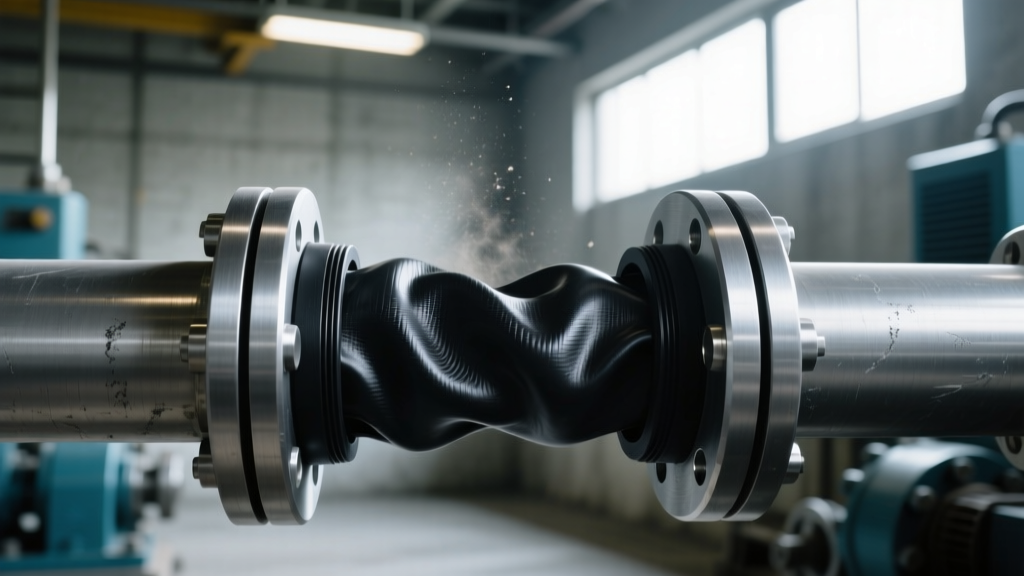
Durometer Selection and Pricing Impact
Durometer (measured on the Shore A scale) dictates the hardness of the gasket. While many buyers default to a standard 60A or 70A durometer, mismatching the hardness to the flange design is a leading cause of waterproofing failure. Adjusting durometer rarely impacts the raw material cost by more than 5%, but it drastically alters the installed performance.
| Shore A Hardness | Compression Force Required | Best Use Case | Risk of Misapplication |
|---|---|---|---|
| 30A - 40A (Soft) | Low | Uneven surfaces, fragile housings, low bolt-torque applications | Extrusion failure under high internal pressure |
| 50A - 60A (Medium) | Moderate | Standard electrical enclosures, automotive doors | May leak on heavily warped flanges |
| 70A - 80A (Hard) | High | High-pressure pipe flanges, heavy machinery vibration mounts | Requires high bolt torque; will leak if flange is uneven |
Failure Modes and the True Cost of Value Engineering
The Fluid Sealing Association Technical Resources consistently highlights that gasket failure is rarely due to the material simply 'wearing out.' Instead, failures stem from chemical incompatibility or environmental degradation that could have been avoided with proper material selection.
Case in Point: The Compression Set Trap.
A common value-engineering mistake is substituting high-quality, peroxide-cured EPDM with cheaper, sulfur-cured EPDM to save $0.15 per linear foot. While both pass initial waterproofing tests, sulfur-cured EPDM suffers from a high compression set. After 12 months of being compressed between flanges, the cheaper gasket loses its elastic memory. When the housing experiences thermal cycling and the flanges separate by even 0.05mm, the sulfur-cured gasket fails to rebound, resulting in catastrophic water ingress. The warranty claim and field-replacement labor will cost 50x the initial material savings.
Chemical Swelling vs. Shrinkage
When exposed to incompatible fluids, elastomers either swell or shrink. Nitrile (NBR) will shrink and harden when exposed to ozone and UV light, pulling away from the sealing surface. Conversely, EPDM will swell and turn to a gelatinous mass if exposed to petroleum-based hydraulic fluids, blowing out of the flange groove under pressure. Always cross-reference the specific chemical exposure against the polymer's compatibility chart before finalizing your bill of materials.
Procurement Decision Framework
Use this logic tree to finalize your waterproof gasket material specification:
- Is the application outdoors with continuous UV and ozone exposure?
- Yes: Select EPDM. Avoid Neoprene and Nitrile.
- No: Proceed to step 2.
- Will the gasket contact petroleum, oils, or fuels?
- Yes: Select Nitrile (NBR) for standard temps, or Viton (FKM) for high-heat fuel systems.
- No: Proceed to step 3.
- Does the operating environment exceed 300°F (149°C)?
- Yes: Select Silicone (up to 400°F) or Viton (up to 450°F).
- No: Proceed to step 4.
- Is cost the primary driver for a general-purpose indoor seal?
- Yes: Select commercial-grade Neoprene or SBR (Styrene Butadiene Rubber) if moisture exposure is minimal.
By mapping your environmental constraints to the correct elastomer first, and then optimizing the fabrication method based on your annual volume, you can accurately forecast your 2026 waterproof gasket costs without falling victim to hidden tooling fees or premature field failures.
Written by
David NakamuraDavid Nakamura is a licensed architect (AIA) and construction technology writer focused on sustainable building methods, mass timber engineering, and high-performance building envelopes. He holds a Master of Architecture from the University of Washington and is a certified Passive House Consultant (CPHC). David spent eight years at the Seattle firm Mithun, where he led the design of three LEED Platinum projects, before founding his own practice specializing in net-zero residential design. He serves on the editorial advisory board of GreenBuilder Magazine and has authored peer-reviewed papers on cross-laminated timber (CLT) connections for the Journal of Structural Engineering. In his spare time, David teaches woodworking at Pratt Fine Arts Center and kayaks the Puget Sound.
More from David Nakamura
View all
Construction Cost
Labor Cost to Build a Deck Per Sq Ft: 2026 Installation Guide
Discover the exact labor cost to build a deck per sq ft in 2026. This installation guide breaks down contractor rates, complexity factors, and hidden fees.
Aug 4, 2026

Construction Cost
How Much Does It Cost to Build a 3 Bedroom House? Financing Guide
Learn exactly how much it costs to build a 3 bedroom house and explore 2026 financing options, construction loan types, and budget frameworks for your build.
Aug 4, 2026

Construction Cost
Cost to Build a Tennis Court: 2026 Guide
How much does it cost to build a tennis court in 2026? Breakdowns for asphalt, concrete, and synthetic surfaces plus fencing and lighting.
Jul 30, 2026