Waterproof Shower Curtain Material Cost Breakdown (2026)
Analyze the 2026 cost breakdown of waterproof shower curtain materials. Compare PVC, PEVA, and TPU-backed polyester pricing, lifespan, and hidden costs.

The True Cost of Waterproof Shower Curtain Materials
When specifying moisture barriers for residential or commercial bathrooms, the shower curtain is often treated as an afterthought. Yet, selecting the correct waterproof shower curtain material directly impacts long-term maintenance budgets, indoor air quality, and replacement cycles. In 2026, the market has shifted significantly away from cheap, off-gassing plastics toward advanced polymer laminates and PFC-free (perfluorocarbon-free) water repellents. Understanding the cost breakdown requires looking beyond the initial retail price and evaluating the hydrostatic head rating, material degradation rate, and ancillary hardware costs.
The standard shower curtain dimension is 72 by 72 inches (approximately 36 square feet). The pricing and performance metrics detailed in this guide are based on this standard footprint, adjusted for current 2026 manufacturing and supply chain realities.
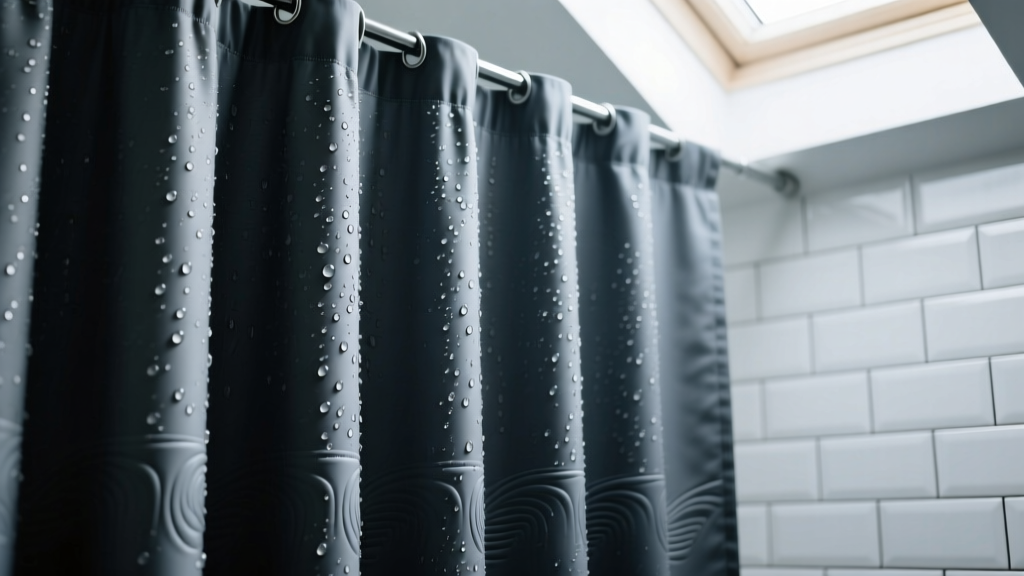
Material Cost Matrix: Upfront Pricing and Performance
Not all waterproofing membranes are created equal. The table below breaks down the four primary material categories used in shower enclosures, comparing their upfront costs against their technical waterproofing specifications.
| Material Composition | Upfront Cost (72x72) | Cost per Sq Ft | Hydrostatic Head Rating | Expected Lifespan | Machine Washable |
|---|---|---|---|---|---|
| PVC (Polyvinyl Chloride) | $4.00 - $8.00 | $0.11 - $0.22 | 1,000 mm | 6 - 9 Months | No |
| PEVA (Polyethylene Vinyl Acetate) | $10.00 - $18.00 | $0.27 - $0.50 | 1,500 mm | 12 - 18 Months | No (Wipe only) |
| Polyester with C0 DWR Finish | $18.00 - $30.00 | $0.50 - $0.83 | 2,000 mm | 2 - 3 Years | Yes |
| Polyester with TPU Laminate | $30.00 - $55.00 | $0.83 - $1.52 | 3,000+ mm | 4 - 5 Years | Yes |
Decoding the Hydrostatic Head Rating
The hydrostatic head rating measures how much water pressure a fabric can withstand before leaking. A standard PVC curtain sits around 1,000 mm, which is sufficient for direct shower spray but prone to weeping if water pools at the bottom hem. Premium Thermoplastic Polyurethane (TPU) laminates achieve 3,000 mm or higher, creating an absolute vapor and liquid barrier that mimics commercial-grade architectural waterproofing membranes.
Hidden Costs: Liners, Weights, and Hardware
The base material cost is only one variable in the procurement equation. Failing to account for complementary components often leads to premature failure of the primary waterproofing layer.
- Secondary Liners ($5.00 - $14.00): If you choose a decorative polyester curtain with a standard C0 DWR (Durable Water Repellent) finish, it is not fully waterproof on its own. It requires a secondary TPU or PEVA liner to prevent water migration. TPU liners cost roughly $12, while PEVA liners cost around $6.
- Weighted Bottom Hems ($2.00 - $5.00 premium): Curtains without weighted hems billow inward due to the Bernoulli principle (the pressure differential created by hot water and bathroom exhaust fans). Adding magnetic weights or a heavy chain hem prevents the curtain from clinging to the user and leaking water onto the bathroom floor, saving potential water damage remediation costs.
- Corrosion-Resistant Grommets and Rings ($8.00 - $22.00): Standard aluminum grommets oxidize and rust within 14 months in high-humidity environments, staining the curtain fabric and tearing the header. Upgrading to brass, stainless steel, or reinforced polymer grommets adds an upfront cost but extends the curtain's structural lifespan by years.
Lifecycle Cost Analysis: 5-Year Projection
Scenario A: Budget PVC Route
Initial Cost: $6.00. Replaced every 8 months due to mildew and plasticizer degradation. Over 5 years, you will purchase 7.5 curtains. Total 5-Year Cost: $45.00 (plus high environmental disposal costs).
Scenario B: Premium TPU-Backed Polyester Route
Initial Cost: $42.00. Requires machine washing every 3 months (approx. $2.00 per wash in utility costs). Lasts the full 5 years. Total 5-Year Cost: $62.00.
Takeaway: While the premium material costs 38% more over a half-decade, it eliminates the labor of constant re-hanging, prevents bathroom floor leaks, and drastically reduces plastic waste sent to landfills.
Environmental and Health Cost Considerations
When evaluating building materials, indoor air quality (IAQ) is a critical metric. Traditional PVC shower curtains are manufactured using phthalates and volatile organic compounds (VOCs) to maintain flexibility. When exposed to hot water, these materials off-gas significantly.
According to the U.S. Environmental Protection Agency (EPA), VOC concentrations indoors can be up to ten times higher than outdoors, with household products like plasticizers and synthetic coatings acting as primary contributors to poor indoor air quality and respiratory irritation.
PEVA and TPU materials are non-chlorinated alternatives that do not off-gas harmful phthalates. For commercial hospitality projects or healthcare facilities, specifying curtains with UL GREENGUARD Certification ensures the material meets strict chemical emissions limits, mitigating long-term health liabilities and ensuring compliance with modern green building codes like LEED v4.1.
The Mildew Factor and Maintenance Costs
Mildew degradation is the primary cause of shower curtain failure. The EPA's guidelines on moisture control emphasize that porous materials trapped in high-humidity environments will inevitably harbor microbial growth if not properly treated or cleaned.
PVC and PEVA are non-porous but develop surface biofilm that is difficult to scrub without tearing the material. Conversely, high-density polyester with a TPU backing can be laundered in hot water (140°F / 60°C) with oxygen bleach, effectively killing mold spores and restoring the fabric's structural integrity. Antimicrobial silver-ion treatments, which add roughly $4.00 to $8.00 to the unit cost, can further inhibit bacterial growth between wash cycles.
Procurement Framework: How to Choose Based on Budget
Use this decision matrix to specify the correct waterproof shower curtain material for your specific project parameters.
- For High-Turnover Short-Term Rentals (Airbnb/VRBO): Specify heavy-duty PEVA (10-gauge or thicker). At $14 per unit, it is inexpensive enough to replace bi-annually, wipes clean easily with bleach solutions, and avoids the VOC complaints associated with cheap PVC.
- For Primary Residential Bathrooms: Specify Polyester with a TPU Laminate. The $35-$50 investment provides a fabric-like aesthetic that matches interior design schemes, while the TPU backing guarantees a hydrostatic head rating high enough to prevent floor leaks without needing an ugly secondary plastic liner.
- For Commercial Hospitality (Hotels/Motels): Specify Commercial-Grade Nylon with C0 DWR and a separate TPU liner. Nylon dries 40% faster than polyester, which is critical for housekeeping turnaround times. The separate liner allows staff to replace just the waterproof barrier if it tears, saving the cost of replacing the decorative outer curtain.
Frequently Asked Questions
Is a fabric shower curtain waterproof without a liner?
Generally, no. Standard woven polyester or cotton canvas treated with a DWR (Durable Water Repellent) finish is highly water-resistant, causing water to bead up and roll off. However, under sustained direct pressure or if the fabric folds and pools water, it will eventually weep. Only fabrics with a fully bonded TPU or PVC backing are truly waterproof without a secondary liner.
Why do expensive shower curtains still get moldy at the bottom?
Mold growth at the bottom hem is rarely a failure of the waterproofing material itself; it is a failure of bathroom ventilation and curtain maintenance. Soap scum and body oils accumulate on the lower 12 inches of the curtain, providing a food source for airborne mold spores. To prevent this, ensure the curtain is fully extended to dry after use, and wash fabric curtains monthly.
What is the most eco-friendly waterproof material available in 2026?
Hemp canvas treated with natural beeswax or plant-based waxes offers a biodegradable, highly water-resistant option. However, it requires frequent re-waxing and costs between $60 and $90. For a balance of eco-friendliness and practicality, 100% recycled PET (rPET) polyester with a PFC-free C0 water-repellent finish is currently the industry standard for sustainable waterproofing.
Written by
Sarah WhitfieldSarah Whitfield is a chartered quantity surveyor (MRICS) and construction cost analyst with 15 years of experience in material pricing, procurement strategy, and project budgeting. She earned her degree in Construction Management from the University of Reading (UK) and has worked on projects ranging from $2M custom homes to $180M mixed-use developments across North America and Europe. Sarah currently leads cost estimating for BuildMat Insight, maintaining a proprietary database of 4,000+ material price points updated quarterly. She is a frequent contributor to RSMeans cost data panels and has presented at the International Cost Engineering Council (ICEC) congress. Based in Denver, CO, Sarah is an avid trail runner and volunteer mentor for Women in Construction.
More from Sarah Whitfield
View all
Wood & Lumber
What Are the Different Types of Wood? A Builder's Guide
Compare structural softwoods, finish hardwoods, and engineered lumber. Analyze Janka ratings, MOE values, and 2026 pricing for construction.
Aug 4, 2026

Walls & Panels
Steel Framing vs Wood Framing: Corrosion and Moisture Defense
Compare steel framing vs wood framing for moisture resistance. Learn about galvanized coatings, condensation risks, and corrosion protection strategies.
Jul 21, 2026

Stone & Masonry
How to Cut Stone Veneer: Wet Saw vs Grinder Comparison
Compare the best tools for cutting stone veneer. We review wet saws, angle grinders, and chop saws to help you achieve clean, chip-free cuts.
Jul 21, 2026