25th Street Building Materials: Reclaimed Wood & Salvage Guide
Discover how to select high-quality reclaimed lumber, architectural salvage, and specialty masonry from 25th street building materials suppliers.

The Strategic Value of Urban Salvage Yards
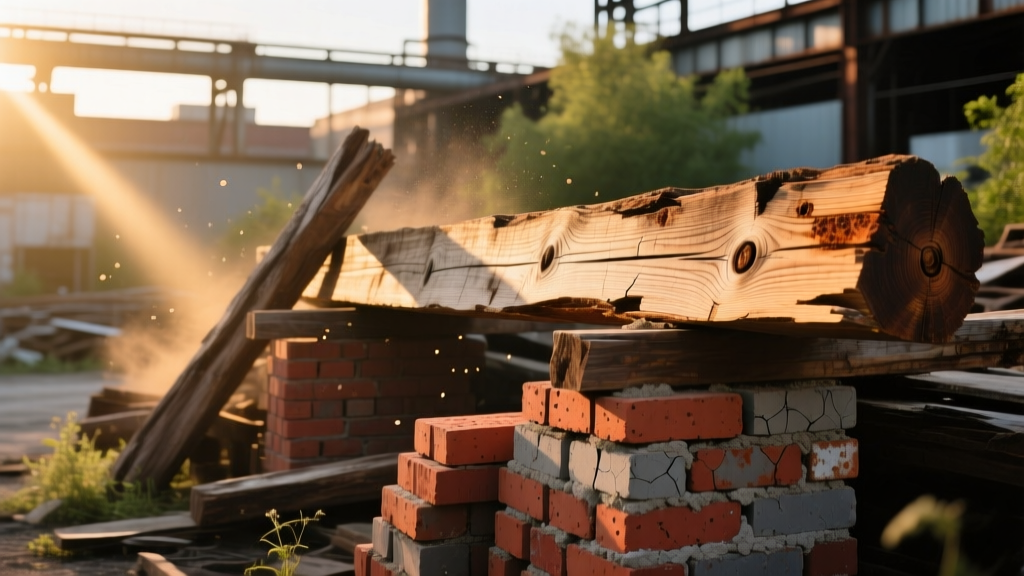
Urban architectural salvage yards, particularly those clustered in historic industrial corridors known for 25th street building materials, offer unparalleled access to old-growth timber, vintage masonry, and period-accurate architectural hardware. In 2026, as new old-growth harvesting remains strictly regulated and global supply chains for premium hardwoods face continuous tariffs and logistical delays, sourcing reclaimed stock is both an environmental imperative and a distinct design advantage. However, navigating the unorganized bins and weathered stacks of a salvage yard requires a highly technical approach to material evaluation. Unlike big-box retailers where materials arrive graded, stamped, and kiln-dried to uniform standards, 25th street building materials suppliers deal in raw, historic stock that demands rigorous on-site inspection.
Reclaimed Lumber: Technical Selection Criteria
When evaluating reclaimed timber—particularly highly sought-after species like Longleaf Heart Pine and Old-Growth Douglas Fir—visual appeal is secondary to structural and moisture integrity. Salvaged wood often carries the hidden scars of its previous life, including embedded fasteners, internal checking, and biological threats.
Moisture Content and Acclimation Protocols
Never purchase reclaimed lumber for interior millwork without verifying its moisture content (MC). Wood stored in open-air urban yards will equilibrate to the local ambient humidity, often reaching an MC of 12% to 16%. For interior applications, the target MC is 6% to 8%. Use a pinless moisture meter, such as the Wagner Meters MMC220, to scan the boards without marring the historic patina. If the yard offers kiln-drying services, ensure they utilize a low-temperature schedule (typically 130°F to 140°F for 72 to 96 hours). This specific thermal threshold is critical not only for moisture reduction but also for sterilization, effectively eliminating powderpost beetle larvae (Lyctidae) and dry-wood termites that frequently inhabit salvaged stacks.
Fastener Extraction and Metal Detection
Embedded iron nails and broken square-cut spikes will instantly destroy planer blades and router bits. Before committing to a large purchase of flooring or beam stock from 25th street building materials inventories, run a handheld metal detector wand (like the Lumber Wizard 5) over the sample bundle. Pay special attention to the joist pockets and beam ends, where heavy structural lag bolts and drift pins are typically concentrated. Factor the cost of professional metal detection and extraction—usually priced at $0.15 to $0.25 per board foot—into your overall budget.
Field Identification of Mixed Salvage Lumber
Salvage yards frequently mix species in their discount bins. Distinguishing between premium Longleaf Southern Yellow Pine (SYP) and cheaper, faster-grown Loblolly Pine requires end-grain analysis. Carry a 30x magnification jeweler's loupe. Examine the latewood (the darker, denser portion of the growth ring): Longleaf Pine will exhibit a gradual transition from earlywood to latewood with a high density of resin canals, whereas Loblolly shows an abrupt transition and fewer resin canals. Furthermore, test the Janka hardness on a sample edge using a pocket durometer; true old-growth Heart Pine will resist indentation significantly more than second-growth variants, ensuring it will withstand modern foot traffic when milled into flooring.
Vintage Masonry: Sourcing and Structural Integrity
Salvaged brick, particularly the iconic Chicago Common Brick found in many 25th street building materials yards, provides an irreplicable color variation and soft, textured face. However, vintage masonry must be evaluated for compressive strength and efflorescence before being integrated into load-bearing or exterior veneer applications.
Mortar Compatibility for Historic Brick
The most common failure mode when installing salvaged brick is using modern, high-Portland cement mortar (Type S or Type M). Historic bricks are soft and porous; they are designed to wick moisture and allow it to evaporate. If bound in rigid, impermeable modern mortar, the moisture becomes trapped, and during freeze-thaw cycles, the face of the brick will spall and crumble. According to the Brick Industry Association Technical Notes, you must specify a Type O mortar (1 part Portland cement, 2 parts lime, 9 parts sand) or a pure Natural Hydraulic Lime (NHL 3.5) mortar for tuckpointing and laying salvaged masonry. This ensures the mortar remains softer than the brick, sacrificing itself to thermal movement rather than destroying the historic unit.
Cost Comparison: Salvage vs. New Production (2026 Market Rates)
Pricing at 25th street building materials suppliers fluctuates based on demolition yields and regional demand. The table below outlines current 2026 average market rates, demonstrating the premium attached to authentic reclaimed stock versus new, simulated alternatives.
| Material Category | Salvage / Reclaimed Cost | New / Simulated Cost | Lead Time (Salvage) |
|---|---|---|---|
| Old-Growth Heart Pine (Flooring) | $14.00 - $19.50 / sq ft | $8.50 - $11.00 / sq ft (New SYP) | 2 - 4 Weeks (Milling) |
| Chicago Common Brick (Pallet) | $1.10 - $1.45 / brick | $0.65 - $0.85 / brick (Tumbled) | Immediate (Palletized) |
| Hand-Hewn Timber Beams (8x8) | $28.00 - $36.00 / linear ft | $18.00 - $22.00 / linear ft (Faux) | 1 - 2 Weeks |
| Cast Iron Radiators (Per Column) | $120.00 - $180.00 / section | $250.00+ (New Cast Reproduction) | Immediate |
Architectural Hardware and Fixture Selection Matrix
Beyond wood and masonry, 25th street building materials yards are treasure troves for solid brass, bronze, and cast-iron hardware. When selecting antique mortise locksets, hinges, and push plates, evaluate them based on restorability rather than surface tarnish.
- Solid Brass vs. Brass-Plated: Always carry a small magnet. If the magnet sticks to the hinge or lockset, it is brass-plated steel or iron, which will eventually peel and rust. True solid brass is non-magnetic and can be chemically stripped and re-lacquered indefinitely.
- Mortise Lockset Backsets: Modern standard backsets are typically 2-3/8" or 2-3/4". Historic mortise locks often feature 5" or 6" backsets. Measure the door stile width in your project before purchasing antique locksets to ensure the knob will not interfere with the door casing trim.
- Thread Compatibility: Vintage set screws and hinge pins often utilize Whitworth or non-standard imperial threads. Do not attempt to force modern metric or standard SAE screws into antique hardware; you will strip the internal threads. Source replacement hardware from specialized architectural reproduction suppliers.
Environmental Compliance and Lead Paint Mitigation
Any painted architectural salvage—particularly window sashes, doors, and exterior trim sourced from pre-1978 demolitions—must be treated as containing lead-based paint. The EPA's Renovation, Repair and Painting (RRP) Rule strictly mandates that any disturbance of lead paint must be handled by certified professionals. If you are purchasing painted salvaged wood for interior use, do not attempt to sand or strip it yourself. Instead, utilize chemical strippers in a controlled, ventilated environment, or hire a certified dip-stripping service that can neutralize the lead residue safely. Alternatively, encapsulate the existing paint layers with a high-build, lead-encapsulating primer (such as INSL-X Lead Block) before applying your topcoat.
Logistics: Navigating Urban Loading Zones
Extracting heavy materials from dense urban corridors requires precise logistical planning. Many 25th street building materials suppliers operate in retrofitted industrial warehouses with narrow alleys and strict municipal loading zone time limits.
- Palletizing: Always pay the yard's fee to have heavy masonry and dense timber professionally banded to standard 48x40 GMA pallets. Loose-loaded brick in the back of a pickup truck will shift and fracture during transit.
- Moisture Protection: Salvage yards often store materials under open-air pole barns. If your transport is delayed or you are storing the materials on an exterior job site, wrap the pallets in 6-mil poly sheeting. Reclaimed wood that absorbs a sudden rainstorm can take weeks to return to its acclimated moisture state, delaying your millwork schedule.
- Equipment Access: Confirm with the supplier whether they have a functional forklift capable of loading a flatbed or heavy-duty trailer. Many urban yards rely on manual pallet jacks, meaning you will need to bring a truck equipped with a hydraulic liftgate or arrange for a third-party boom crane truck for loading heavy timber bundles.
Sourcing from 25th street building materials suppliers bridges the gap between historic preservation and modern construction. By applying rigorous technical evaluation to moisture content, masonry compatibility, and hardware restorability, contractors and designers can secure materials that offer unmatched character, structural longevity, and sustainable value.
Written by
David NakamuraDavid Nakamura is a licensed architect (AIA) and construction technology writer focused on sustainable building methods, mass timber engineering, and high-performance building envelopes. He holds a Master of Architecture from the University of Washington and is a certified Passive House Consultant (CPHC). David spent eight years at the Seattle firm Mithun, where he led the design of three LEED Platinum projects, before founding his own practice specializing in net-zero residential design. He serves on the editorial advisory board of GreenBuilder Magazine and has authored peer-reviewed papers on cross-laminated timber (CLT) connections for the Journal of Structural Engineering. In his spare time, David teaches woodworking at Pratt Fine Arts Center and kayaks the Puget Sound.
More from David Nakamura
View all
Construction Cost
Labor Cost to Build a Deck Per Sq Ft: 2026 Installation Guide
Discover the exact labor cost to build a deck per sq ft in 2026. This installation guide breaks down contractor rates, complexity factors, and hidden fees.
Aug 4, 2026

Construction Cost
How Much Does It Cost to Build a 3 Bedroom House? Financing Guide
Learn exactly how much it costs to build a 3 bedroom house and explore 2026 financing options, construction loan types, and budget frameworks for your build.
Aug 4, 2026

Construction Cost
Cost to Build a Tennis Court: 2026 Guide
How much does it cost to build a tennis court in 2026? Breakdowns for asphalt, concrete, and synthetic surfaces plus fencing and lighting.
Jul 30, 2026