ASTM E84 Surface Burning Characteristics: Class A, B, and C Compared
Compare ASTM E84 surface burning characteristics of building materials across Class A, B, and C. Expert analysis of FSI, SDI, and code compliance.

Decoding the Steiner Tunnel Test Methodology
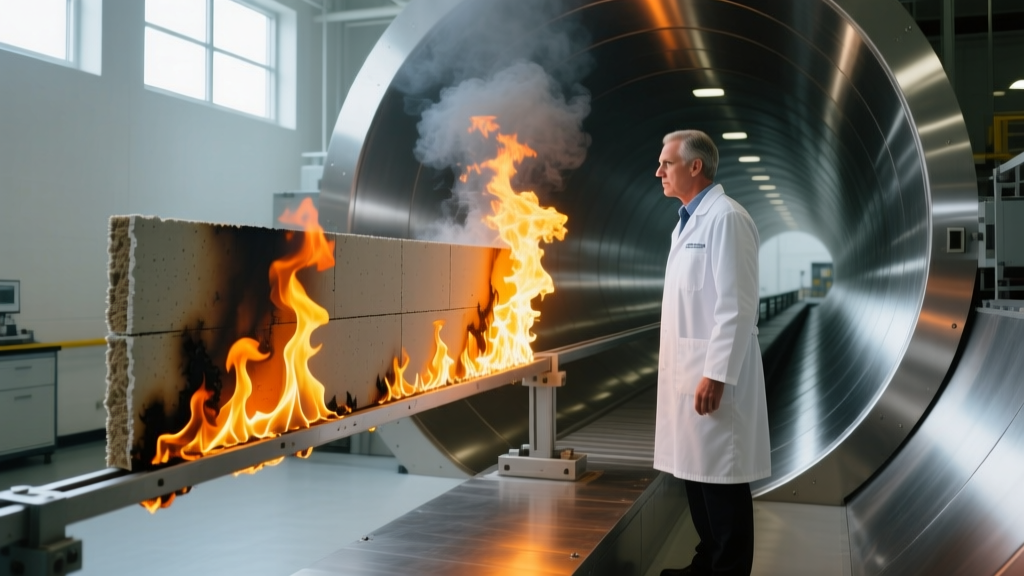
The International Building Code (IBC) mandates strict interior finish requirements based on occupancy types and egress paths. At the core of this compliance framework is the ASTM E84 surface burning characteristics of building materials test, commonly referred to as the Steiner Tunnel test. This standard evaluates how quickly flames propagate across the surface of a material and the volume of smoke it generates during combustion.
During the test, a 24-foot-long enclosed furnace chamber simulates a corridor fire. A 89 kW gas burner ignites the sample at one end, and optical sensors track the flame front progression and smoke obscuration over a strict 10-minute window. The test yields two critical metrics:
- Flame Spread Index (FSI): A dimensionless number calibrated against select-grade red oak flooring (FSI = 100) and asbestos-cement board (FSI = 0).
- Smoke Developed Index (SDI): A measure of optical obscuration, also calibrated against the red oak baseline (SDI = 100).
According to the ASTM E84-22 standard guidelines, building materials are subsequently categorized into three distinct classes. Understanding these classes is not merely an academic exercise; it directly dictates material procurement, project budgets, and architectural specifications for commercial and multi-family residential builds.
Material Classification Matrix: Class A vs. Class B vs. Class C
The IBC (Section 803) and NFPA 255 utilize the FSI and SDI metrics to assign interior finish classes. Below is a comparative matrix of how standard building materials map to these regulatory thresholds.
| Classification | FSI Range | Max SDI Limit | Common Material Examples | Typical Code Application |
|---|---|---|---|---|
| Class A | 0 – 25 | 450 | Type X Gypsum, Fiber Cement, Concrete, Masonry | Vertical exit enclosures, stairwells, hospital corridors |
| Class B | 26 – 75 | 450 | Fire-Retardant-Treated (FRT) Wood, Heavy Timber | Commercial lobbies, institutional hallways |
| Class C | 76 – 200 | 450 | Untreated Plywood, Standard MDF, Some PVC Panels | Private offices, individual dwelling units, storage rooms |
Head-to-Head Material Performance Reviews
Gypsum Board: Standard vs. Type X (The E84 vs. E119 Misconception)
A pervasive error in material specification is assuming that 5/8-inch Type X gypsum board achieves a better ASTM E84 rating than standard 1/2-inch regular gypsum board. In reality, both products easily achieve a Class A rating (FSI 10-15, SDI 0). The core difference between regular and Type X gypsum lies in ASTM E119 (fire endurance and structural integrity over time), not ASTM E84 (surface flame spread). If your architectural schedule specifies Type X solely to meet an ASTM E84 Class A requirement for a non-rated partition, you are overpaying for material and labor without gaining any E84 advantage.
Wood Products: FRT Plywood vs. Mass Timber
Untreated Douglas Fir plywood typically yields an FSI of 150 (Class C). To achieve Class A, specifiers turn to Fire-Retardant-Treated (FRT) plywood, which uses pressure-impregnated salts to char and dilute combustible gases, dropping the FSI to roughly 25. However, FRT wood carries a hidden cost: a $1.40 to $1.90 per square foot premium over untreated panels, and a 10-15% reduction in structural load capacity due to the chemical treatment process.
Conversely, Mass Timber (Cross-Laminated Timber or Glulam) behaves differently. Because of its massive cross-section, it chars predictably at 1.5 inches per hour. While the surface burning characteristics of the initial char layer might test as Class B or C, modern code provisions (IBC Section 2304.11) allow mass timber to be left exposed in specific building types by calculating the char layer as part of the structural fire resistance, bypassing the need for Class A surface coverings in certain aesthetic applications.
Spray Polyurethane Foam (SPF): The Smoke Developed Index Trap
Closed-cell spray foam insulation is highly efficient but presents a severe ASTM E84 compliance trap. While some closed-cell foams achieve a Class A or B Flame Spread Index (FSI 20-60), their Smoke Developed Index (SDI) frequently exceeds 450, sometimes reaching 600 or higher due to the release of hydrogen cyanide and dense carbon particulates during incomplete combustion. Consequently, IBC Section 2603.4 mandates that exposed SPF must be covered by a 15-minute thermal barrier (typically 1/2-inch gypsum board) regardless of its FSI rating, negating the aesthetic or spatial benefits of leaving the insulation exposed in commercial lofts or retail spaces.
Procurement Framework: When to Pay the Class A Premium
Upgrading materials to meet stricter ASTM E84 surface burning characteristics impacts the bottom line. Use this decision framework during the value-engineering phase to determine if the Class A premium is justified or if a Class C alternative is code-compliant.
- Scenario 1: Egress Corridors in Group R-2 (Multi-Family). Code strictly requires Class A or B. Action: Do not value-engineer. Use fiber-cement panels or Class A rated acoustic wall coverings. Attempting to use intumescent paints over standard drywall to achieve Class A in high-traffic corridors often fails due to scuffing and improper mil-thickness application in the field.
- Scenario 2: Interior Tenant Build-Outs (Group B). Individual offices and conference rooms generally permit Class C finishes. Action: Specify standard untreated MDF millwork and wood-veneer acoustic panels. Upgrading to FRT wood or Class A composite panels here adds $12,000–$18,000 to a 10,000 sq ft fit-out with zero life-safety benefit.
- Scenario 3: Exposed Structural Steel. Steel is non-combustible (FSI 0), but the intumescent coatings applied for fireproofing must be evaluated. Ensure the coating manufacturer provides an independent UL-certified test report confirming the cured coating maintains an SDI below 450, as some solvent-based intumescents generate massive smoke volumes during the curing phase if a fire occurs prematurely.
Critical Limitations: What ASTM E84 Does Not Measure
Specifiers must recognize the boundaries of the Steiner Tunnel test. ASTM E84 evaluates surface burning characteristics over a 10-minute window. It does not measure:
- Structural Fire Resistance: A material with an FSI of 0 (like thin sheet metal) can still fail structurally in 3 minutes under intense heat, transferring thermal energy to the unexposed side.
- Toxicity of Off-Gassing: The SDI measures optical smoke density, not chemical toxicity. A material can have an SDI of 50 but emit lethal concentrations of carbon monoxide or hydrogen chloride.
- Exterior Wall Assembly Performance: ASTM E84 is strictly for interior finishes. Exterior wall assemblies containing combustible components must be tested under NFPA 285 to evaluate vertical and lateral flame propagation across the building envelope.
By aligning material procurement strictly with the empirical data provided by ASTM E84 testing—rather than relying on generic 'fireproof' marketing claims—project managers can optimize budgets, ensure seamless inspections, and maintain rigorous life-safety standards across complex building geometries.
Written by
Priya KapoorPriya Kapoor is a real estate market analyst and construction economics researcher with expertise in housing affordability, development feasibility, and infrastructure investment. She holds a Master of Regional Planning from Cornell University and previously worked as a senior analyst at CBRE's Investment Properties group, where she modeled returns for $4B in mixed-use development pipelines. Priya now runs an independent research practice advising developers, municipalities, and REITs on construction cost forecasting and market timing. She publishes the quarterly "BuildMat Market Pulse" report tracking material price indices across 12 commodity categories. Based in Austin, TX, Priya serves on the board of Habitat for Humanity Austin and is a marathon runner.
More from Priya Kapoor
View all
Construction Cost
Cost to Build a 1600 Sq Ft Home in 2026: Full Breakdown
Accurate 2026 cost to build a 1600 sq ft home—material, labor, and regional pricing breakdowns included. Plan your budget with real-time estimates.
Aug 11, 2026

Wood & Lumber
Name the Types of Wood for Pressure Treatment and Preservation
Learn how to name the types of wood best suited for pressure treatment. Compare species treatability, chemical retention levels, and 2026 preservation costs.
Aug 4, 2026

Stone & Masonry
Stone Veneer Suppliers Lindenhurst: 2026 Cost Analysis
Analyze 2026 stone veneer costs in Lindenhurst, NY. Compare local supplier pricing, delivery fees, and Suffolk County installation labor rates.
Aug 4, 2026