Comprehensive Guide to Building Material Disposal & Recycling
Master building material disposal with our comprehensive guide. Learn C&D recycling costs, sorting matrices, hazardous waste rules, and dumpster logistics.

The Scale of Construction and Demolition Debris
The United States generates over 600 million tons of construction and demolition (C&D) debris annually, according to the Environmental Protection Agency (EPA). This figure is more than double the volume of municipal solid waste. For general contractors, renovation specialists, and DIY builders, building material disposal is not just a logistical hurdle; it is a heavily regulated line item that directly impacts project margins. Improper disposal risks severe municipal fines, while strategic recycling can yield LEED credits and reduce overall tipping fees.
Regulatory Landscape and Landfill Bans
Before scheduling a dumpster drop, you must understand local landfill bans. Many states and municipalities have outlawed the landfilling of specific, highly recyclable building materials. For example, Massachusetts bans asphalt, brick, concrete, wood, and metal from its landfills. California mandates that at least 65% of C&D waste be diverted from landfills for most commercial projects. Always check your local Department of Environmental Quality (DEQ) or solid waste management district for current diversion mandates.
The Material Sorting Matrix: Recycle, Reuse, or Landfill?
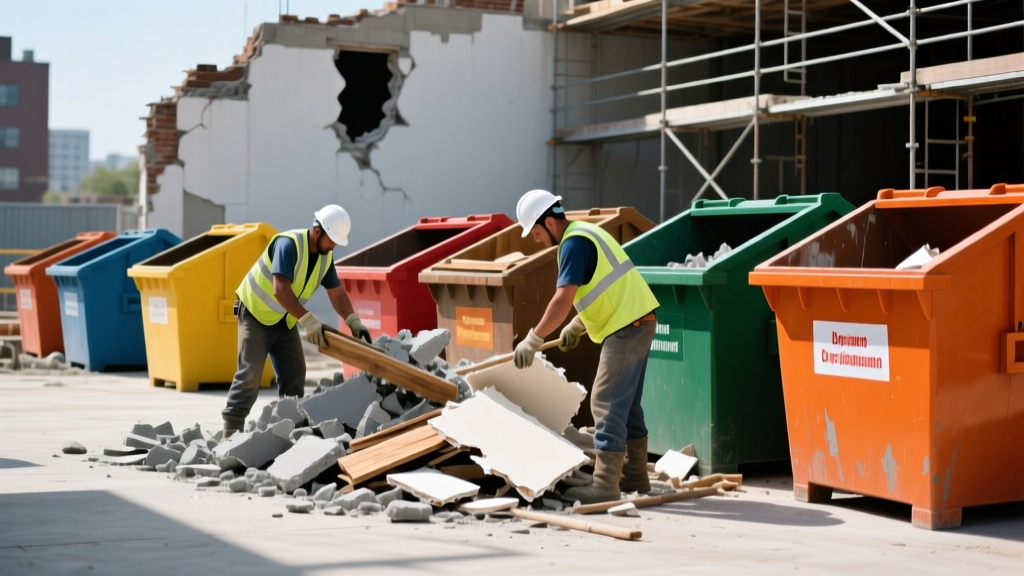
Source separation on the job site is the most effective way to lower disposal costs. Mixed-load dumpsters incur premium tipping fees because the facility must pay labor to sort the debris. Use the matrix below to route your materials correctly.
| Material Type | Optimal Route | Est. Tipping Fee | Site Preparation Required |
|---|---|---|---|
| Clean Concrete & Masonry | Recycle (Crush for aggregate) | $15 - $30 / ton | Remove rebar, wire mesh, and soil. |
| Untreated Dimensional Lumber | Recycle (Mulch/Biomass) | $20 - $40 / ton | Pull nails, brackets, and paint. |
| Gypsum Drywall | Recycle (New drywall/Ag) | $30 - $50 / ton | Must be kept completely dry; no joint compound. |
| Asphalt Shingles | Recycle (Road base) | $20 - $45 / ton | Separate from wood felt and roofing nails. |
| Pressure-Treated Wood | Landfill (Special Waste) | $75 - $110 / ton | Segregate strictly; never burn or mulch. |
| Mixed C&D (Unsorted) | Mixed C&D Facility | $80 - $130 / ton | None, but highest processing cost. |
Dumpster Logistics and Weight Limitations
Selecting the correct roll-off dumpster size is critical to avoiding overload penalties. Haulers enforce strict weight limits based on Department of Transportation (DOT) road regulations. Exceeding these limits results in refused pickups or surcharges exceeding $150 per ton over the limit.
- 10-Yard Roll-Off (2-3 Ton Limit): Mandatory for heavy, dense materials like concrete, brick, dirt, and roofing shingles. Holds roughly 3 pickup truck loads.
- 20-Yard Roll-Off (3-4 Ton Limit): The industry standard for general remodeling. Ideal for mixed drywall, lumber, flooring, and light demolition. Holds roughly 6 pickup truck loads.
- 30-Yard Roll-Off (4-5 Ton Limit): Best for large-scale interior gut jobs or new construction framing debris where the materials are highly voluminous but relatively lightweight.
Handling Hazardous Building Materials
Older structures (built before 1980) frequently contain hazardous materials that require specialized abatement and disposal. Standard C&D landfills will reject these loads immediately upon inspection.
Asbestos Containing Materials (ACM)
Asbestos is commonly found in floor tiles, pipe insulation, and acoustic ceiling textures. Under the National Emission Standards for Hazardous Air Pollutants (NESHAP), ACM must be handled by licensed abatement professionals.
- Seal the work area with 6-mil polyethylene sheeting and establish negative air pressure.
- Wet the materials continuously during removal to prevent fiber release.
- Double-bag the debris in 6-mil thick, leak-tight plastic bags labeled with OSHA-mandated asbestos warnings.
- Transport to a landfill specifically permitted to accept hazardous asbestos waste.
Lead-Based Paint
Wood trim, doors, and siding painted before 1978 likely contain lead. The EPA’s Renovation, Repair, and Painting (RRP) Rule requires contractors to use HEPA-filtered vacuums and contain all dust. Lead-painted wood can often be disposed of in standard C&D landfills, but it cannot be chipped, mulched, or burned. Always test with an EPA-recognized lead test kit (e.g., 3M LeadCheck) before demolition.
Deconstruction vs. Demolition: The Financial Case
While traditional demolition uses heavy machinery to rapidly level a structure, deconstruction involves the careful, manual dismantling of a building to salvage reusable materials. According to the Building Materials Reuse Association (BMRA), deconstruction can divert up to 90% of a building's materials from landfills.
Though deconstruction requires higher upfront labor costs, it offers significant financial offsets:
- Tax Deductions: Donating salvaged materials (like antique hardwood flooring, copper piping, and architectural millwork) to a 501(c)(3) reuse center like Habitat for Humanity ReStore allows the property owner to claim a fair-market-value tax deduction.
- LEED Certification: Under LEED v4.1, the Construction and Demolition Waste Management credit awards points for diverting 50% to 75% of C&D waste. Deconstruction easily satisfies the highest tier of this credit, which is crucial for commercial developers seeking green building incentives.
- Scrap Revenue: Separating non-ferrous metals (copper, brass, aluminum) can yield $2.00 to $4.00 per pound at local scrap yards, turning a disposal cost into a profit center.
Frequently Asked Questions
Can I bury clean concrete and brick on my own property?
In many rural jurisdictions, burying clean, unpainted concrete and brick (often called "clean fill") is permitted for grading or leveling land. However, you must verify this with your local zoning office. Burying drywall, treated wood, or any material containing adhesives or paint is universally illegal and can contaminate local groundwater.
How do I dispose of expanding foam insulation and aerosol cans?
Uncured aerosol cans and chemical sealants are classified as household hazardous waste (HHW) or industrial hazardous waste, depending on your business status. They cannot go in a standard dumpster. You must take them to a designated municipal hazardous waste drop-off facility. Cured, dried foam insulation attached to drywall can typically go into a mixed C&D load.
What happens if my dumpster is rejected at the landfill?
If a landfill inspector spots a banned item (like a car battery, propane tank, or asbestos bag) in your roll-off, the entire truckload will be rejected. The hauler will charge you a "rejected load" fee (typically $250-$500), return the dumpster to your site, and require you to sort out the offending item before they will attempt a second pickup.
Written by
Elena RodriguezElena Rodriguez is a civil engineer and technical writer specializing in concrete technology, masonry systems, and ASTM/ACI compliance. She earned her B.S. in Civil Engineering from Texas A&M University and spent a decade at a materials testing laboratory, performing over 2,000 concrete compressive strength tests and masonry prism evaluations. Elena is an ACI-certified Field Testing Technician (Grade I) and a member of ASTM Committee C12 on Natural Building Stone. She currently consults on forensic engineering cases involving concrete failures and moisture intrusion. Based in San Antonio, TX, Elena is a proud member of the Society of Women Engineers (SWE) and coaches her daughter's FIRST Robotics team.
More from Elena Rodriguez
View all
Walls & Panels
Cost Analysis: Light Gauge Steel Framing Advantages and Disadvantages
Evaluate light gauge steel framing advantages and disadvantages through a strict cost analysis lens, comparing material, labor, and lifecycle expenses.
Aug 4, 2026

Walls & Panels
Gypsum Board Types: Exact Specifications, Thickness & Dimensions
Compare standard, Type X, and moisture-resistant gypsum board types. Get exact specifications, thicknesses, dimensions, and ASTM standards for your project.
Aug 4, 2026

Fire Resistance
Best Fire-Resistant Outdoor Decking Materials: 2026 Buyer Guide
Discover the best fire-resistant outdoor decking materials for 2026. Compare Class A PVC, aluminum, and hardwood options for WUI compliance and safety.
Aug 4, 2026