Comparing Building Material Packaging Solutions for Site Logistics
Compare top building material packaging solutions including FIBCs, shrink wrap, and reusable crates. Find the best logistics protection for your job site.

The True Cost of Inadequate Transit Protection
Material degradation during transit and on-site storage silently erodes construction profit margins. Industry data indicates that between 2% and 5% of all building materials are damaged, lost, or degraded before installation, primarily due to improper unitization and environmental exposure. Selecting the right building material packaging solutions is not merely a logistical afterthought; it is a critical cost-control measure. Modern construction logistics demand packaging that withstands forklift punctures, UV radiation, moisture ingress, and combustible dust hazards. This comparison review evaluates the primary packaging systems used in commercial and residential supply chains, detailing exact specifications, failure modes, and unit economics.
Comprehensive Packaging Comparison Matrix
The following matrix contrasts the five dominant packaging formats used for general building materials, highlighting their optimal use cases and current market pricing.
| Packaging Type | Ideal Materials | Avg Cost per Unit | Max Load Capacity | Reusability |
|---|---|---|---|---|
| Type D FIBC Bulk Bags | Cement, silica sand, dry mortar | $14.00 - $22.00 | 2,000 kg (4,400 lbs) | Single-use (SF 5:1) |
| 150-Gauge Shrink Hoods | Lumber, drywall, masonry blocks | $0.08 - $0.15 / sq ft | N/A (Pallet dependent) | Single-use |
| ISPM-15 Wood Pallets | Universal base for heavy loads | $11.00 - $18.00 | 2,800 lbs (Edge racked) | 3-5 trips |
| Honeycomb Edge Protectors | Steel coils, glass, extrusions | $1.50 - $3.50 / piece | 1,500 lbs crush resistance | Single-use |
| Reusable Poly Crates | Plumbing fixtures, tiles, hardware | $45.00 - $85.00 | 1,500 lbs | 100+ trips |
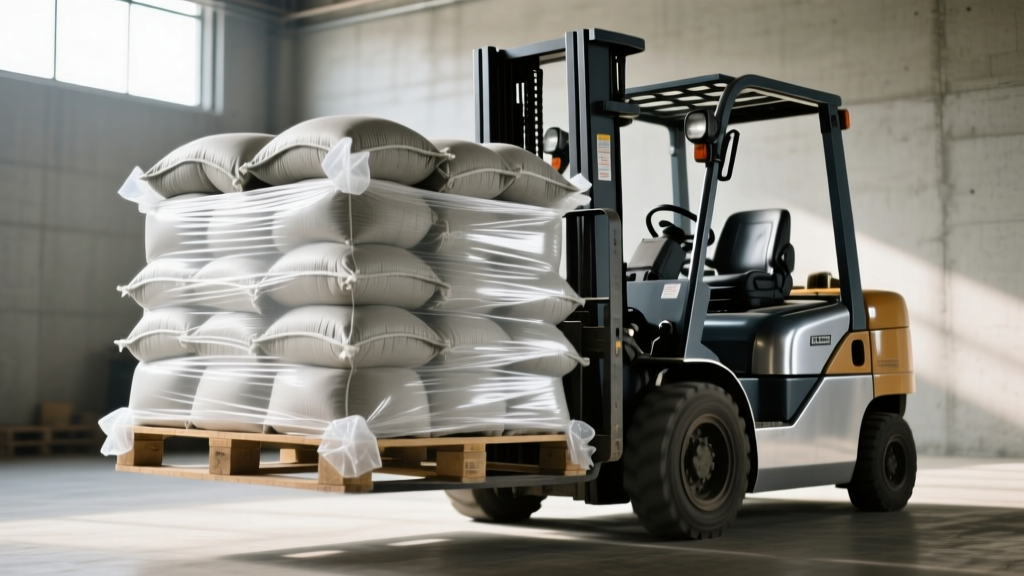
Flexible Intermediate Bulk Containers (FIBCs) for Powders and Aggregates
For bulk powders like Portland cement, fly ash, and silica sand, traditional 50lb paper bags are rapidly being replaced by Flexible Intermediate Bulk Containers (FIBCs) on large commercial sites. However, specifying the wrong FIBC type introduces severe safety and quality risks.
Understanding FIBC Classifications
- Type A: Standard woven polypropylene. No electrostatic protection. Never use for combustible powders.
- Type B: Low breakdown voltage fabric. Prevents propagating brush discharges but does not dissipate static.
- Type C: Conductive fabrics with interconnected carbon threads. Requires strict physical grounding during filling and discharge. Grounding failure causes spark hazards.
- Type D: Utilizes Crohmiq or similar static-dissipative fabrics. Safely dissipates static into the atmosphere without requiring a physical ground connection. This is the mandatory standard for combustible construction dusts.
When procuring Type D FIBCs, verify the Safety Factor (SF). An SF of 5:1 means a bag rated for a Safe Working Load (SWL) of 1,000 kg can withstand 5,000 kg of force before structural failure. For repeated lifting on chaotic job sites, specify a 6:1 SF, which increases the unit cost by approximately $3.00 but drastically reduces strap-snap failures. For comprehensive handling protocols, contractors should consult the Flexible Intermediate Bulk Container Association (FIBCA) guidelines on loop-lifting mechanics to prevent asymmetric load tearing.
Shrink Hoods vs. Stretch Film for Palletized Unit Loads
Palletized building materials—particularly dimensional lumber, gypsum board, and clay masonry—require weatherproofing for outdoor staging. The choice between stretch wrapping and shrink hooding dictates the survival rate of the load during prolonged weather exposure.
Stretch Film: The Economy Option
Standard 80-gauge machine stretch film provides excellent load containment (holding the boxes or bags to the pallet) but offers poor environmental sealing. Moisture wicks through the microscopic gaps between film layers via capillary action. If using stretch film for outdoor drywall storage, you must upgrade to 150-gauge puncture-resistant film and apply a minimum of three bottom wraps to seal the pallet base.
Shrink Hoods: The Heavy-Duty Standard
Shrink hoods are extruded polyethylene tubes, typically 10 to 15 mils thick, dropped over the entire pallet and passed through a heat tunnel. The heat causes the hood to shrink tightly, creating a monolithic, waterproof membrane that completely encapsulates the load. For steel framing and rebar, specify VCI (Volatile Corrosion Inhibitor) shrink hoods. VCI molecules vaporize inside the sealed hood and bond to the steel surface, preventing oxidation even in high-humidity coastal staging areas. According to OSHA 1926.250 material storage standards, unit loads must be secured against sliding and collapse; 15-mil shrink hoods provide superior lateral stability compared to standard stretch wrap, effectively binding the load into a single rigid mass.
Rigid Edge Protection and ISPM-15 Pallet Compliance
Strapping tension is the enemy of fragile building materials. When steel banding or heavy-duty poly strapping is applied to unit loads of ceramic tile, architectural glass, or aluminum extrusions, the strap pressure can crush the edges of the outermost cartons.
Honeycomb and Laminated Edge Protectors
Honeycomb cardboard edge protectors distribute strap tension across a wider surface area. For high-density loads like porcelain tile, specify laminated edge protectors with a minimum thickness of 0.25 inches and a vertical crush resistance rating of 1,500 lbs. These protectors also lock the load geometry, preventing the palletized boxes from bowing outward during transit.
ISPM-15 Pallet Requirements for Imported Materials
If your supply chain involves imported building materials (e.g., Italian marble, European fixtures), the wooden pallets must bear the ISPM-15 stamp, indicating they have been heat-treated to prevent the spread of invasive pests. Pallets lacking the wheat stamp will be rejected at customs, causing weeks of project delays. For domestic, closed-loop logistics, transitioning to heavy-duty structural foam plastic pallets eliminates the risk of wooden splinters damaging finished surfaces like acrylic bathtub surrounds and eliminates nail-puncture hazards for workers.
Troubleshooting: Job Site Packaging Failures
- Symptom: Condensation pooling inside shrink-wrapped lumber (Container Rain).
Fix: The lumber was packaged with a moisture content above 19% before sealing. Require suppliers to kiln-dry to <15% and include 500g calcium chloride desiccant hanging packs inside the hood before sealing. - Symptom: UV degradation causing FIBC straps to snap during unloading.
Fix: Standard polypropylene degrades after 200 hours of direct UV exposure. Specify UV-stabilized FIBCs (minimum 2% UV inhibitor additive) if outdoor staging exceeds 14 days. - Symptom: Edge protectors slipping off during forklift transport.
Fix: Use notched edge protectors that interlock with the poly strapping, or apply a 2-inch strip of hot-melt adhesive to the protector before tensioning the strap.
Material-Specific Selection Framework
Procurement managers and site superintendents should apply the following decision framework to align packaging solutions with specific material vulnerabilities. The goal is to minimize the total landed cost, which includes the packaging expense plus the cost of damaged goods and site cleanup. Proper waste management is also a regulatory necessity; the EPA's guidelines on sustainable management of construction and demolition materials emphasize reducing single-use packaging waste where feasible.
- High-Density / Low-Volume (Tiles, Stone, Fixtures): Utilize reusable poly crates with custom-molded EPS (expanded polystyrene) inserts. The high upfront cost ($65+) is amortized over 100+ trips, and the rigid shell prevents forklift tine impacts.
- Hygroscopic Powders (Cement, Grout, Plaster): Type D FIBCs with polyethylene inner liners. The liner prevents moisture vapor transmission, while the Type D fabric prevents static ignition.
- Dimensional & Sheet Goods (Lumber, Drywall, OSB): 15-mil Shrink Hoods with UV inhibitors. This provides the necessary weatherproofing for multi-month outdoor staging while maintaining high lateral load stability.
- Corrosion-Prone Metals (Rebar, Steel Studs, Fasteners): VCI polyethylene tubing or shrink wrap. Avoid direct contact with bare wood pallets, as wood tannins and moisture accelerate galvanic corrosion; always use a plastic slip sheet between the wood and the metal.
By matching the precise physical and chemical vulnerabilities of the building material to the engineered specifications of the packaging, contractors can eliminate transit damage, reduce site waste, and maintain strict compliance with safety and environmental regulations.
Written by
Sarah WhitfieldSarah Whitfield is a chartered quantity surveyor (MRICS) and construction cost analyst with 15 years of experience in material pricing, procurement strategy, and project budgeting. She earned her degree in Construction Management from the University of Reading (UK) and has worked on projects ranging from $2M custom homes to $180M mixed-use developments across North America and Europe. Sarah currently leads cost estimating for BuildMat Insight, maintaining a proprietary database of 4,000+ material price points updated quarterly. She is a frequent contributor to RSMeans cost data panels and has presented at the International Cost Engineering Council (ICEC) congress. Based in Denver, CO, Sarah is an avid trail runner and volunteer mentor for Women in Construction.
More from Sarah Whitfield
View all
Wood & Lumber
What Are the Different Types of Wood? A Builder's Guide
Compare structural softwoods, finish hardwoods, and engineered lumber. Analyze Janka ratings, MOE values, and 2026 pricing for construction.
Aug 4, 2026

Walls & Panels
Steel Framing vs Wood Framing: Corrosion and Moisture Defense
Compare steel framing vs wood framing for moisture resistance. Learn about galvanized coatings, condensation risks, and corrosion protection strategies.
Jul 21, 2026

Stone & Masonry
How to Cut Stone Veneer: Wet Saw vs Grinder Comparison
Compare the best tools for cutting stone veneer. We review wet saws, angle grinders, and chop saws to help you achieve clean, chip-free cuts.
Jul 21, 2026