Sourcing from Sepulveda Building Materials in Gardena: A Pro Guide
Explore the core masonry, hardscape, and stone veneer inventory at Sepulveda Building Materials in Gardena, including pro pricing and delivery logistics.

The South Bay's Masonry and Hardscape Hub
For general contractors, masons, and landscape architects operating in Los Angeles' South Bay and Harbor regions, sourcing heavy bulk materials requires a strategic approach. Big box retailers lack the specialized inventory, heavy-duty cutting services, and commercial logistics required for mid-to-large scale projects. This is where specialized regional suppliers become critical. Sepulveda Building Materials in Gardena has established itself as a primary node for bulk masonry, hardscape, and architectural stone, serving everything from residential retaining walls in the Palos Verdes Peninsula to commercial CMU (Concrete Masonry Unit) builds in Torrance and Carson.
This overview breaks down the specific product lines, technical specifications, 2026 pricing frameworks, and local delivery logistics you need to know when procuring materials from this Gardena-based supply yard.
Core Inventory Breakdown: Masonry, Hardscape, and Veneer
Unlike generalist lumber yards, this facility focuses heavily on cementitious products, natural stone, and clay. Understanding their core catalog allows project managers to spec materials that are readily available in local stock, reducing lead times.
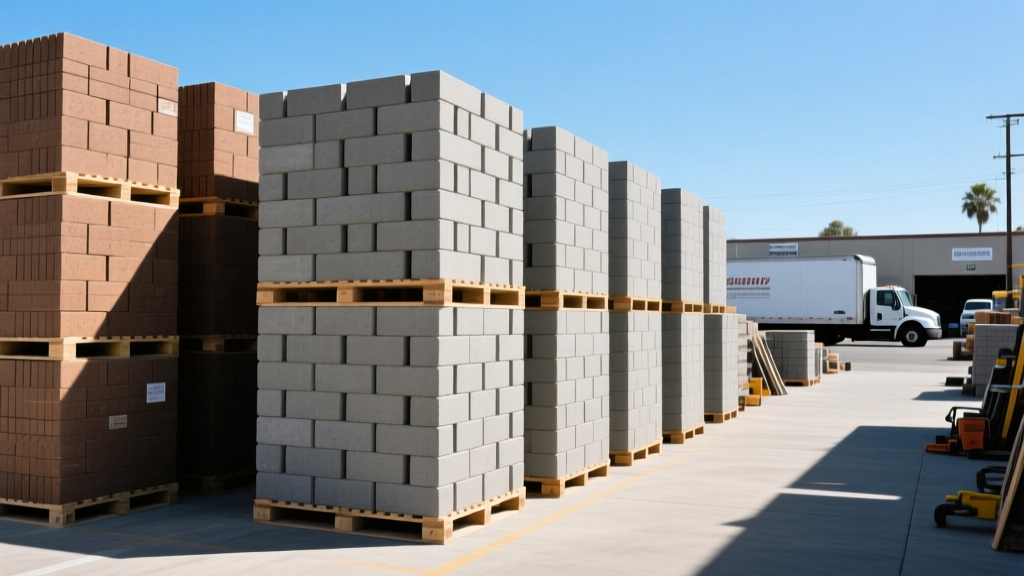
Concrete Masonry Units (CMU) and Block
The yard is a major distributor for Angelus Block, the dominant CMU manufacturer in Southern California. When ordering, contractors must specify weight class and structural requirements:
- Standard Gray Block (8x8x16): Available in both lightweight (approx. 28 lbs) and normal weight (approx. 38 lbs). Lightweight is preferred in the LA basin for seismic load reduction and easier handling, while normal weight is spec'd for high-impact retaining applications.
- Architectural Block: Ground-face and split-face blocks are stocked in standard colors (Desert Tan, Sierra Gray). Custom colors require a minimum order of 2,000+ units and a 4-to-6-week lead time from the manufacturing plant.
- Pricing (2026): Standard 8x8x16 lightweight CMU currently ranges from $2.45 to $2.85 per block for commercial accounts, fluctuating with Portland cement indices.
For structural walls, ensure your CMU meets ASTM C90 standards for loadbearing units, which mandates a minimum compressive strength of 1,900 psi and specific absorption limits to prevent efflorescence.
Interlocking Concrete Pavers and Retaining Walls
Hardscape inventory leans heavily on regional manufacturers like Acker-Stone and Orco Block & Hardscape. With Los Angeles County enforcing strict Low Impact Development (LID) stormwater regulations, the yard stocks a robust selection of permeable pavers.
- Permeable Systems: Products like the Eco-Permeable series allow stormwater infiltration rates exceeding 100 inches per hour. Installation requires a specific open-graded base aggregate (typically 3/4-inch clean crushed rock, no fines) and ASTM No. 8 or No. 9 jointing stone.
- Retaining Wall Units (SRW): For structural walls over 4 feet, the yard supplies pin-and-lip systems and hollow-core blocks designed for geogrid integration. Always pair these with a structural engineer's stamp when building in the seismic zones of the South Bay.
Architectural Stone Veneer
For exterior facades and interior feature walls, the yard carries Coronado Stone Products and various natural stone thin-veneers. Manufactured stone veneer (MSV) weighs roughly 10-12 lbs per square foot, making it a lightweight alternative to full-thickness natural stone.
Pricing Matrix: Dedicated Yard vs. Big Box Retail
Procurement strategy dictates project margins. Below is a comparative framework illustrating the cost and service differences between sourcing from a specialized local yard versus a national home improvement center in 2026.
| Material Category | Sepulveda (Pro Yard) | Big Box Retailer | Key Advantage |
|---|---|---|---|
| Standard CMU (Per Block) | $2.45 - $2.85 | $3.10 - $3.65 | Volume pricing & pallet integrity |
| Pavers (Per Sq. Ft.) | $3.80 - $6.50 | $4.50 - $8.00 | Access to commercial color runs |
| Masonry Sand (Per Ton) | $45.00 - $60.00 | N/A (Bagged only) | Bulk delivery capability |
| Block Cutting Services | Available (Wet Saws) | Not Available | Precision cuts for bond beams |
| Pallet Core Charges | $25 - $40 (Refundable) | Often absorbed/lost | Incentivizes site cleanup |
Navigating South Bay Delivery Logistics
Gardena's proximity to the 405 and 91 freeways, as well as the Ports of LA and Long Beach, makes it a strategic logistics hub. However, delivering heavy masonry products to final job sites in the surrounding municipalities requires careful planning.
Truck Types and Access Restrictions
- Flatbed with Moffett (Forklift): Ideal for commercial sites with dirt grading or paved staging areas. The forklift can unload pallets of block and pavers directly to the installation zone.
- Boom/Crane Trucks: Required for residential remodels in dense areas like Manhattan Beach, Hermosa Beach, or Redondo Beach, where narrow streets and overhead wires prevent flatbed access. The crane can lift pallets over single-story structures into backyards.
- CARB Compliance: All delivery fleets operating in the South Bay must comply with the California Air Resources Board (CARB) Clean Truck Rule. Specialized yards maintain compliant fleets, preventing job-site delays caused by DOT impounds of non-compliant vehicles.
Freight and Surcharges
Expect local delivery fees (within a 15-mile radius of Gardena) to range from $175 to $275 per flatbed load in 2026. Boom truck deliveries incur an additional hourly surcharge, typically starting at $350 for the first two hours. Always verify that your site can accommodate a 40-foot turning radius for the truck; if a truck gets stuck or requires a secondary tow, the contractor absorbs the recovery cost.
Technical Specifications and Code Compliance
Sourcing the right material is only half the battle; ensuring it meets local building codes is critical for passing inspections. The Masonry Institute of America, headquartered locally, provides extensive guidelines that South Bay inspectors strictly enforce.
Seismic Reinforcement in CMU
In Los Angeles County, unreinforced masonry is virtually non-existent in new commercial construction. When ordering block from the yard, you must simultaneously order:
- Vertical Rebar: Typically #4 or #5 Grade 60 steel, placed in the grout cells.
- Horizontal Joint Reinforcement: Truss-style or ladder-style galvanized wire placed in the mortar beds every 16 to 24 inches on center.
- Grout: For pumpable grout applications, specify a high-slump mix (8 to 11 inches) with a pea-gravel aggregate to ensure it flows completely around the rebar without leaving voids (honeycombing) inside the block cells.
Hardscape Base Preparation
According to guidelines supported by the Interlocking Concrete Pavement Institute (ICPI), the longevity of a paver installation relies entirely on the base. Do not use native soil or decomposed granite (DG) as a base for vehicular pavers. You must order 3/4-inch minus crushed aggregate (Class II road base) and compact it in 2-inch lifts to achieve a minimum 95% Proctor density before laying the 1-inch sand setting bed.
Setting Up a Commercial Account
Walk-in retail pricing at any specialized yard will erode your project margins. To access the true tier-1 pricing structures, contractors must establish a commercial account. This process generally requires:
- A valid California Contractor's State License Board (CSLB) number.
- A reseller's permit for tax-exempt purchasing of materials that will be incorporated into a client's property.
- Trade references to establish Net-30 billing terms for large-scale commercial draws.
Once established, utilize the yard's will-call staging. By calling in your material lists 24 hours in advance, the yard's forklift operators will stage your pallets in the will-call lane, allowing your crew to load your own flatbed trailers in under 15 minutes, bypassing the morning rush hour queue that plagues South Bay supply yards between 6:30 AM and 8:00 AM.
Written by
Sarah WhitfieldSarah Whitfield is a chartered quantity surveyor (MRICS) and construction cost analyst with 15 years of experience in material pricing, procurement strategy, and project budgeting. She earned her degree in Construction Management from the University of Reading (UK) and has worked on projects ranging from $2M custom homes to $180M mixed-use developments across North America and Europe. Sarah currently leads cost estimating for BuildMat Insight, maintaining a proprietary database of 4,000+ material price points updated quarterly. She is a frequent contributor to RSMeans cost data panels and has presented at the International Cost Engineering Council (ICEC) congress. Based in Denver, CO, Sarah is an avid trail runner and volunteer mentor for Women in Construction.
More from Sarah Whitfield
View all
Wood & Lumber
What Are the Different Types of Wood? A Builder's Guide
Compare structural softwoods, finish hardwoods, and engineered lumber. Analyze Janka ratings, MOE values, and 2026 pricing for construction.
Aug 4, 2026

Walls & Panels
Steel Framing vs Wood Framing: Corrosion and Moisture Defense
Compare steel framing vs wood framing for moisture resistance. Learn about galvanized coatings, condensation risks, and corrosion protection strategies.
Jul 21, 2026

Stone & Masonry
How to Cut Stone Veneer: Wet Saw vs Grinder Comparison
Compare the best tools for cutting stone veneer. We review wet saws, angle grinders, and chop saws to help you achieve clean, chip-free cuts.
Jul 21, 2026