Building Materials China vs Domestic Sourcing: 2026 Cost Review
Compare building materials China sourcing against domestic suppliers. Analyze 2026 landed costs, tariffs, ASTM compliance, and lead times.
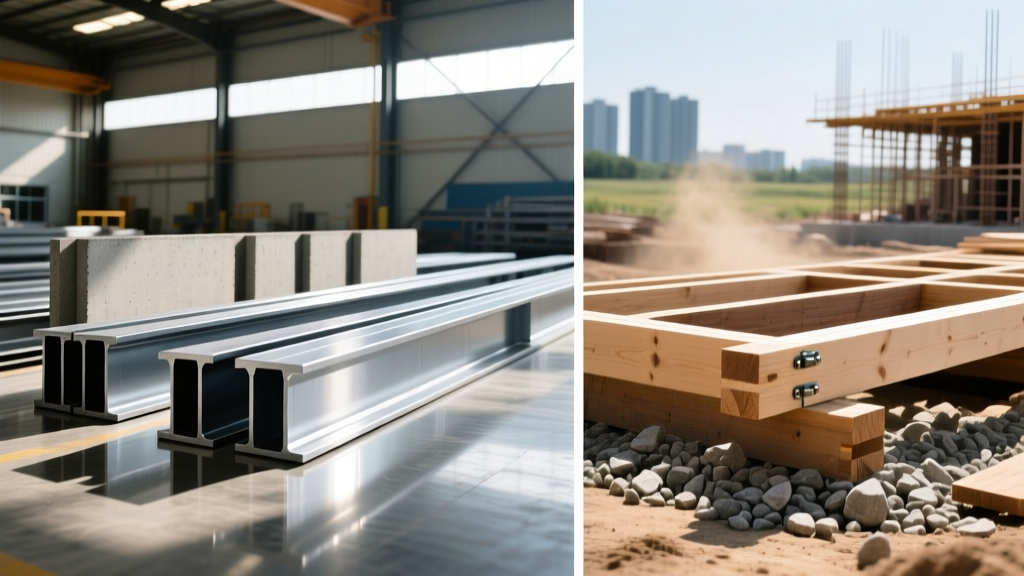
The True Landed Cost: China vs. North American Domestic
Procuring construction materials from overseas manufacturers requires calculating landed costs against domestic premiums. In 2026, the base factory-gate price for Chinese building materials remains 30% to 45% lower than North American equivalents. However, base pricing is a deceptive metric. The actual financial viability hinges on Delivered Duty Paid (DDP) calculations, which must account for ocean freight volatility, port drayage, Section 301 tariffs, and Anti-Dumping/Countervailing Duties (AD/CVD).
According to the U.S. Customs and Border Protection, importers are strictly liable for accurate tariff classifications. Misclassifying structural steel or aluminum extrusions to avoid AD/CVD penalties routinely results in seized shipments and retroactive duty bills that bankrupt mid-sized contractors.
| Cost Component (Per Metric Ton) | Domestic (US/Canada) | China Sourcing (DDP Landed) |
|---|---|---|
| Base Material (FOB Mill) | $950 - $1,150 | $580 - $720 |
| Ocean Freight & Drayage | N/A (Regional Trucking: $40-$80) | $90 - $140 |
| Section 301 Tariffs (2026) | 0% | 25% |
| AD/CVD Duties (Steel/Aluminum) | 0% | 15% - 120%+ (Varies by Mill) |
| Final Landed Cost | $990 - $1,230 | $920 - $1,350+ |
For non-tariff-heavy materials like interior porcelain tiles or PVC piping, the DDP landed cost from Foshan or Zhejiang consistently undercuts domestic manufacturing by 18% to 22%, making offshore sourcing highly profitable for high-volume finish packages.
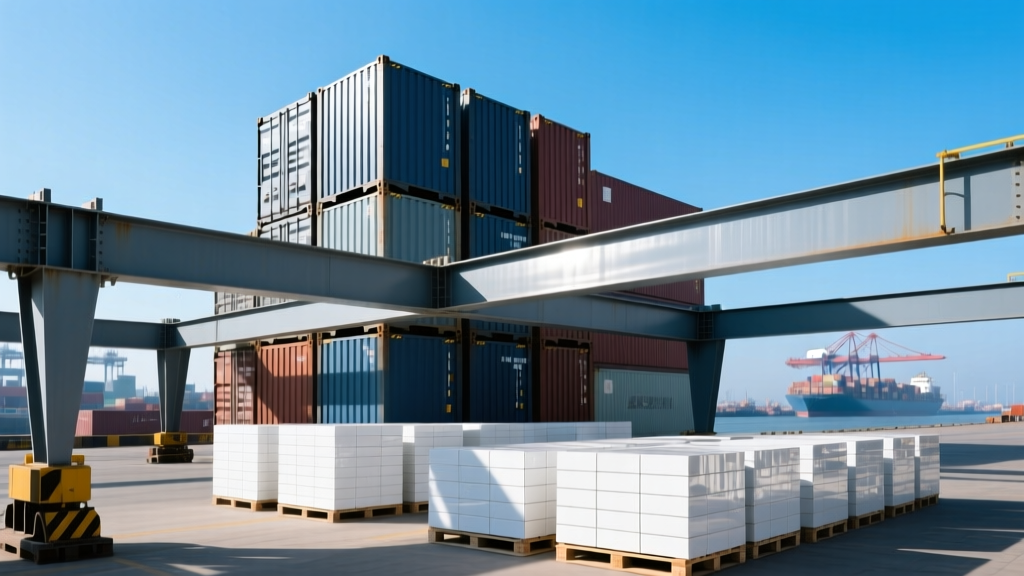
Material-Specific Comparison Matrix
Structural Steel: Q355B vs. ASTM A992
Chinese mills predominantly produce structural steel to the GB/T 1591 standard, with Q355B being the most common grade. North American engineers specify ASTM A992. While Q355B boasts a slightly higher minimum yield strength (355 MPa vs. 345 MPa for A992), the chemical composition differs. Q355B often has a higher carbon equivalent, which affects weldability and requires specific pre-heating protocols that domestic fabricators may not anticipate. Furthermore, US building codes require ASTM certification; importing Q355B necessitates hiring third-party metallurgical testing labs at the Chinese port of origin to verify dual-certification, adding $1,500 to $3,000 per heat number in testing fees.
Architectural Ceramics: Foshan Porcelain vs. Domestic
Foshan remains the global epicenter for ceramic and porcelain manufacturing. When sourcing 24x48 inch rectified porcelain tiles, Chinese manufacturers offer a water absorption rate of <0.5% (meeting ANSI A137.1 standards) at $3.50 to $5.00 per square meter FOB. Domestic equivalents typically range from $7.00 to $11.00. The critical differentiator in 2026 is the PEI (Porcelain Enamel Institute) wear rating and the consistency of the rectified edge. Top-tier Chinese exporters utilize continuous roller kilns that yield a caliber variance of ±0.2mm, identical to premium Italian or domestic lines. However, buyers must explicitly specify "rectified, PEI IV, through-body" in the purchase order, as default factory specs often downgrade to PEI III with cushioned edges to cut costs.
Aluminum Window Extrusions: 6063-T5 vs. 6060-T66
Thermally broken aluminum curtain wall systems are heavily commoditized. Chinese suppliers utilize 6063-T5 alloy, while European and high-end North American systems often use 6060-T66 for higher tensile strength. For standard commercial punch windows, 6063-T5 is structurally adequate and significantly cheaper ($3,200 per MT vs $4,800 per MT). The primary risk with Chinese aluminum is the thermal break polyamide strip (PA66 GF25). Substandard suppliers will substitute PVC strips, which fail under UV degradation and thermal cycling. Contracts must mandate PA66 GF25 with SGS laboratory certificates verified prior to shipment.
If imported structural steel or life-safety cladding fails, the US-based General Contractor or Engineer of Record assumes total liability. Never import structural or seismic-critical building materials from China unless you have a domestic structural engineer reviewing the mill test reports (MTRs) and a third-party inspector verifying the heat numbers on-site before the containers are sealed.
Quality Assurance and Inspection Protocols
Relying on factory-provided quality control reports is a critical failure point in international construction procurement. Effective sourcing mandates an independent, three-stage inspection protocol governed by ANSI/ASQ Z1.4 sampling standards.
- Initial Production Inspection (IPI): Conducted when 10% of the order is complete. Verifies raw material certificates, tooling calibration, and early-run dimensions. Cost: ~$350 per man-day.
- During Production Inspection (DUPRO): Conducted at 50% completion. Identifies assembly line deviations before the entire batch is ruined. Crucial for custom millwork and specialized cladding.
- Pre-Shipment Inspection (PSI): Conducted when 100% of the order is packed. Inspectors pull random cartons, check packaging integrity (essential for preventing moisture damage during 35-day ocean transits), and verify container loading plans to prevent weight distribution fines at US ports.
Budgeting $1,500 to $2,500 for comprehensive third-party inspections via firms like Bureau Veritas or SGS is non-negotiable. This expense represents less than 1% of a standard $250,000 material package but prevents catastrophic delays caused by rejected shipments at customs or on the job site.
The 2026 Sourcing Decision Framework
Use this deterministic framework to decide whether to route your procurement through domestic distributors or directly to Chinese manufacturers.
Route to Domestic Suppliers IF:
- Timeline is < 14 Weeks: Ocean freight from Shanghai to Los Angeles takes 21-28 days, plus 7-14 days for customs clearance and cross-country rail drayage. Domestic lead times for stock materials are 2-4 weeks.
- The Material is Structural/Seismic: The liability and MTR verification costs erase any margin gained on base pricing.
- Volume is < 3 FEUs (Forty-foot Equivalent Units): The fixed costs of customs brokers, third-party inspections, and port fees destroy the per-unit savings on small orders.
Route to China Direct Sourcing IF:
- Timeline is > 20 Weeks: You have sufficient buffer to absorb port strikes, customs holds, or factory rework.
- The Material is High-Volume Finishes: Items like luxury vinyl plank (LVP), interior doors, porcelain tiles, and lighting fixtures offer massive DDP savings with zero structural liability.
- Custom Millwork and Architectural Metalwork: Chinese factories excel at complex, labor-intensive CNC routing and custom laser-cut aluminum screens that would require prohibitively expensive domestic custom fabrication.
Mitigating Supply Chain Volatility
According to data tracked by the International Trade Administration, construction supply chains remain susceptible to geopolitical friction and raw material export controls. To insulate your project, negotiate contracts using FOB (Free on Board) terms rather than EXW (Ex Works). FOB forces the Chinese supplier to handle domestic Chinese trucking, export customs clearance, and port origin charges, transferring the risk of local Chinese logistics bottlenecks away from your freight forwarder. Always require a 150% performance bond on custom-fabricated materials exceeding $100,000, and structure payment terms as 30% deposit, 40% upon passing DUPRO inspection, and 30% net-30 days after Bill of Lading issuance.
Written by
James ThorntonJames Thornton is a construction industry veteran with 25 years of hands-on experience in wood framing, lumber grading, and residential building codes. He started as a framing carpenter in rural Oregon, earned his ICC Residential Building Inspector certification, and eventually became a senior plan reviewer for the City of Portland Bureau of Development Services. James holds a B.S. in Wood Science & Technology from Oregon State University and is a certified lumber grader through the West Coast Lumber Inspection Bureau (WCLIB). He has inspected over 3,000 residential construction sites and authored the city's internal guide on advanced framing techniques (2x6 at 24" O.C.). James lives in Bend, OR, where he builds custom timber-frame cabins and competes in lumberjack sports.
More from James Thornton
View all
Insulation
Best Home Insulation Materials: Complete 2026 Guide
Compare top home insulation materials for 2026. Find R-values, installed costs per square foot, and best uses for fiberglass, spray foam, and mineral wool.
Aug 4, 2026

Sustainable Building
Certify Your Green Building Material for LEED and WELL
Step-by-step guide to certifying a green building material for LEED v5 and WELL v2. Master EPDs, HPDs, and VOC limits for 2026 project specifications.
Aug 4, 2026

Stone & Masonry
Veneer Stacked Stone Panels: Interior Design & Style Showcase
Discover how veneer stacked stone panels transform interiors. Explore modern design profiles, material pairings, and technical installation specs.
Aug 4, 2026