Evaluating Used Building Materials in Boise, Idaho: Tech Specs
Technical specifications, grading standards, and code compliance for sourcing and engineering used building materials in Boise, Idaho.
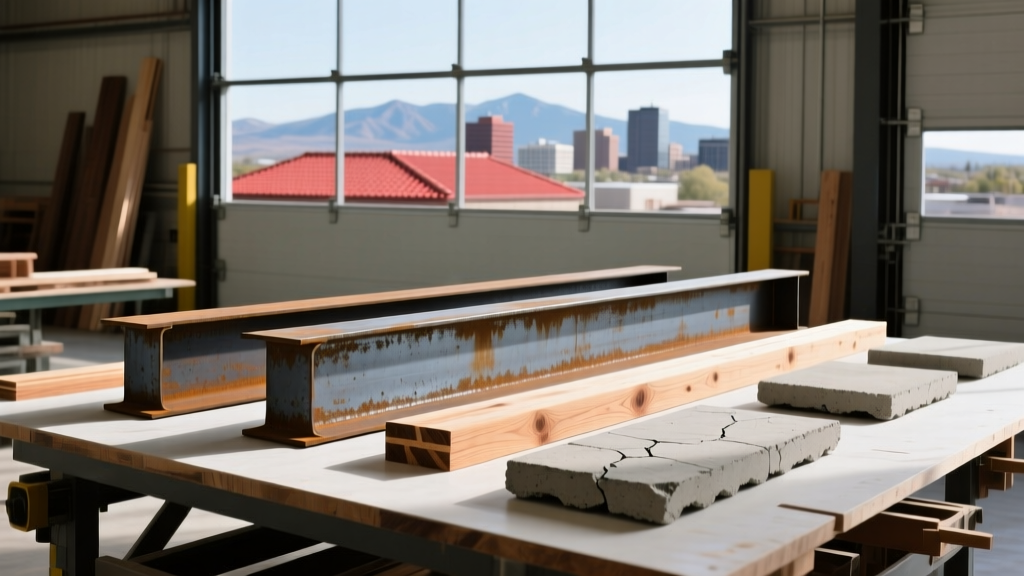
Engineering Reclaimed Materials for Boise's Unique Environmental Loads
The integration of circular economy principles into commercial and residential construction requires rigorous technical validation. In Boise, Idaho, sourcing used building materials is not merely an exercise in sustainability; it is a complex engineering challenge dictated by local environmental loads. Boise's specific combination of high seismic risk, expansive bentonite clay soils, and distinct freeze-thaw cycles demands that salvaged materials meet exact technical thresholds. This guide details the structural specifications, testing protocols, and code compliance matrices required for deploying used building materials in the Treasure Valley under the 2024 International Building Code (IBC), currently enforced by the City of Boise Building Division.
Reclaimed Lumber: Grading and Moisture Equilibrium
The Inland Empire and Western Wood Products Association (WWPA) grading rules govern the reuse of dimensional lumber and heavy timber in Idaho. When salvaging Douglas Fir-Larch or Southern Pine from deconstructed Boise agricultural or mid-century commercial buildings, engineers must account for cross-sectional checking, fastener holes, and biological degradation.
Allowable Stress Design (ASD) Adjustments
Under American Wood Council (AWC) guidelines, reclaimed lumber that cannot be definitively re-graded by a certified inspector must be downgraded by one stress level. For example, salvaged lumber originally graded as Select Structural must be engineered using #1 Grade allowable stresses, and #1 Grade must be engineered using #2 Grade values.
| Material Condition | Design Grade Applied | Bending (Fb) | Shear (Fv) | Modulus of Elasticity (E) |
|---|---|---|---|---|
| New Lumber | #1 Grade | 1,000 psi | 180 psi | 1,700,000 psi |
| Reclaimed (Verified #1) | #2 Grade (Downgraded) | 875 psi | 180 psi | 1,600,000 psi |
| Reclaimed (Unknown Grade) | Stud Grade / Utility | 675 psi | 180 psi | 1,400,000 psi |
Equilibrium Moisture Content (EMC) in the Treasure Valley
Boise's semi-arid climate yields an exterior EMC of approximately 8% to 10%, while interior winter heating can drop indoor EMC to 4% to 6%. Reclaimed timber must be kiln-dried to a maximum of 15% moisture content prior to installation to prevent severe shrinkage and fastener withdrawal. Salvaged heavy timbers (e.g., 6x6 or larger) often harbor a moisture gradient; core moisture must be tested using a resistance-type moisture meter with insulated probes driven at least 2 inches into the member.
Salvaged Structural Steel and Seismic Compliance
Boise is located in a region with significant seismic hazard, generally classified as Seismic Design Category (SDC) D under the 2024 IBC. This classification severely restricts the use of salvaged structural steel in lateral force-resisting systems unless rigorous material verification is completed per AISC 360-22.
Coupon Testing and Yield Strength Verification
When the original mill test report (MTR) for salvaged W-shapes or HSS tubing is unavailable, engineers must assume a conservative minimum yield stress (Fy) of 33 ksi. To utilize the standard 50 ksi design values for modern ASTM A992 steel, physical coupon testing per ASTM A370 is mandatory. Testing protocols require:
- Sampling: Extracting coupons from the flange and web of the salvaged member, avoiding areas within 6 inches of existing bolt holes or thermal cut lines.
- Tensile Testing: Verifying yield point, ultimate tensile strength, and elongation percentage.
- Charpy V-Notch Testing: Required for all SFRS connections to ensure adequate toughness at the specified service temperature (Boise's minimum design temperature is -10°F).
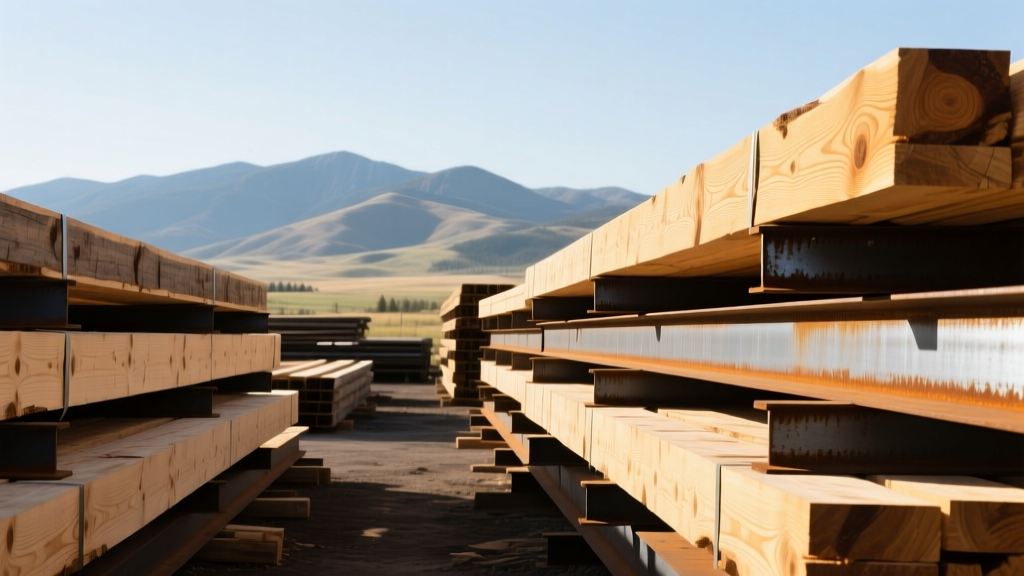
Recycled Concrete Aggregate (RCA) for Expansive Subgrades
The Boise foothills and bench areas (such as the East End and North End) are characterized by highly expansive bentonite clays. Subbase preparation using Recycled Concrete Aggregate (RCA) from demolished local infrastructure requires strict adherence to Idaho Transportation Department (ITD) Standard Specifications to prevent differential heaving.
ITD Section 703 Compliance for RCA
Crushed recycled concrete used as structural fill or aggregate base course must meet the following technical parameters to mitigate clay expansion:
- Gradation: Must conform to ITD Class II or III aggregate base gradation, with a maximum particle size of 1.5 inches and a minimum of 4% passing the #200 sieve to ensure proper interlock without retaining excess moisture.
- Los Angeles (LA) Abrasion: Maximum loss of 50%. RCA derived from low-strength residential flatwork often fails this test and must be rejected for structural subbase use.
- Water Absorption: Must not exceed 10%. High-absorption RCA will wick groundwater from the expansive clay subgrade, triggering soil swelling beneath the foundation slab.
- Deleterious Materials: Asphalt content in the RCA mix must not exceed 5% by weight, and wood/gypsum contamination must be strictly 0%.
Masonry and Brick Reuse: Freeze-Thaw Durability
Boise experiences approximately 130 days per year where temperatures drop below freezing. Salvaged brick and masonry units must be evaluated for freeze-thaw durability to prevent spalling and structural degradation. Under ASTM C62 and C67 standards, all exterior reused brick in the Treasure Valley must be classified as Severe Weathering (SW).
'Reused masonry units that exhibit a saturation coefficient greater than 0.78 during ASTM C67 testing are classified as Moderate Weathering (MW) and are prohibited for exterior, below-grade, or unprotected horizontal applications in Idaho's climate zone.' — Adapted from ASTM C62 Standard Specification for Building Brick.
Before deploying salvaged brick, a minimum of five units per 10,000-brick lot must undergo 50-cycle freeze-thaw testing. If the compressive strength drops by more than 15% or if the unit exhibits visible cracking, the entire lot must be downgraded to interior veneer use only.
Boise Building Division: Material Approval Matrix
Securing permits for used building materials requires submitting a comprehensive validation package to the City of Boise Building Division. The following matrix outlines the mandatory technical documentation required for plan review approval.
| Material Type | Required Validation Test / Document | Applicable Standard | Plan Review Deliverable |
|---|---|---|---|
| Structural Lumber | Visual Re-grading or Proof-Load Testing | ASTM D245 / WWPA | Stamped Grading Certificate from licensed inspector |
| Structural Steel (SFRS) | Coupon Tensile & Charpy V-Notch Testing | ASTM A370 / AISC 360 | Metallurgical Lab Report mapped to structural nodes |
| Recycled Concrete (Subbase) | LA Abrasion & Proctor Density Testing | ITD Section 703 / ASTM D1557 | Geotechnical Engineer's soil-aggregate compatibility report |
| Exterior Masonry | Freeze-Thaw & Saturation Coefficient Test | ASTM C67 / ASTM C62 | Batch test results verifying Severe Weathering (SW) rating |
By adhering to these exact technical specifications, structural engineers and contractors in Boise can safely integrate reclaimed materials into modern builds, ensuring longevity, code compliance, and structural resilience against the region's unique environmental stressors.
Written by
David NakamuraDavid Nakamura is a licensed architect (AIA) and construction technology writer focused on sustainable building methods, mass timber engineering, and high-performance building envelopes. He holds a Master of Architecture from the University of Washington and is a certified Passive House Consultant (CPHC). David spent eight years at the Seattle firm Mithun, where he led the design of three LEED Platinum projects, before founding his own practice specializing in net-zero residential design. He serves on the editorial advisory board of GreenBuilder Magazine and has authored peer-reviewed papers on cross-laminated timber (CLT) connections for the Journal of Structural Engineering. In his spare time, David teaches woodworking at Pratt Fine Arts Center and kayaks the Puget Sound.
More from David Nakamura
View all
Construction Cost
Labor Cost to Build a Deck Per Sq Ft: 2026 Installation Guide
Discover the exact labor cost to build a deck per sq ft in 2026. This installation guide breaks down contractor rates, complexity factors, and hidden fees.
Aug 4, 2026

Construction Cost
How Much Does It Cost to Build a 3 Bedroom House? Financing Guide
Learn exactly how much it costs to build a 3 bedroom house and explore 2026 financing options, construction loan types, and budget frameworks for your build.
Aug 4, 2026

Construction Cost
Cost to Build a Tennis Court: 2026 Guide
How much does it cost to build a tennis court in 2026? Breakdowns for asphalt, concrete, and synthetic surfaces plus fencing and lighting.
Jul 30, 2026