Building Materials Consulting: 2026 Cost Analysis & ROI Guide
Discover the true ROI of building materials consulting in 2026. Analyze fee structures, cost savings, and decision frameworks for commercial projects.
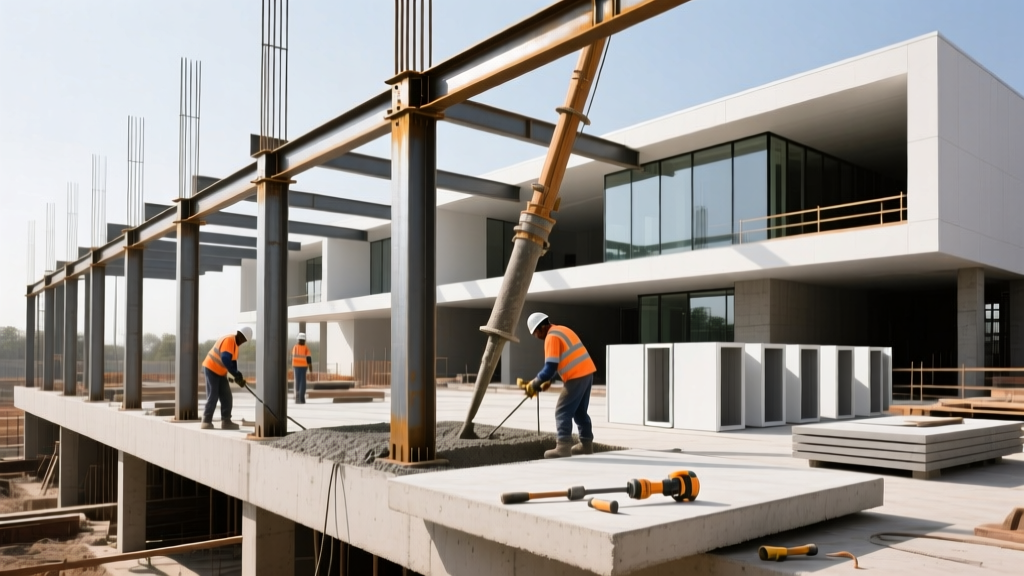
The True Cost of Material Mismanagement in 2026
Commercial construction margins are increasingly dictated by procurement efficiency. With the ENR Materials Price Index continuing to reflect volatility driven by carbon-tax tariffs and global logistics bottlenecks, the traditional approach of relying solely on general contractors for material sourcing is proving financially hazardous. According to recent industry data from the Associated General Contractors of America (AGC), material-related delays and cost overruns account for nearly 22% of budget deviations in mid-sized commercial projects.
This is where building materials consulting transitions from a luxury add-on to a critical risk-mitigation strategy. A specialized materials consultant does not merely pick finishes; they engineer the supply chain, optimize material specifications against local availability, and leverage bulk purchasing networks that are inaccessible to individual firms. The core question for developers and GCs is no longer whether they can afford a consultant, but whether they can afford the 8% to 14% material waste and premium pricing that occurs without one.
Deconstructing Consulting Fee Structures
Understanding how building materials consultants price their services is the first step in calculating potential ROI. In 2026, the market has largely moved away from pure hourly billing toward performance-aligned and fixed-fee models. Below is a breakdown of standard fee structures based on project scale.
| Fee Model | Typical Rate / Range | Best Suited For | Cost Predictability |
|---|---|---|---|
| Hourly / Time & Materials | $175 - $350 / hour | Troubleshooting, forensic material failure analysis, small tenant improvements | Low |
| Percentage of Material Spend | 1.5% - 3.5% of total procurement budget | Large commercial builds, multi-family developments ($15M+ material budgets) | Medium |
| Fixed Retainer + Milestones | $25,000 - $60,000 flat fee | Mid-size projects ($5M - $15M), design-build firms seeking predictable overhead | High |
| Shared Savings (Performance) | 15% - 25% of documented savings | Value-engineering heavy projects, distressed supply chain rescues | Variable |
ROI Recovery Mechanisms: How Consultants Pay for Themselves
The ROI of building materials consulting is rarely found in a single line item. It is synthesized across four distinct phases of the project lifecycle. A competent consultant will typically recover their fee within the first 60 days of procurement planning.
1. Specification Value Engineering (VE)
Architects frequently specify premium materials out of habit or reliance on outdated master specifications. A materials consultant cross-references these specs with current market availability and equivalent performance standards. For example, substituting a specified high-end imported fiber cement panel (ASTM C1186) with a domestically manufactured high-density polyurethane architectural panel (ASTM D635) for non-impact zones can reduce cladding costs by 34% while maintaining the exact same fire-rating and aesthetic profile.
2. Waste Factor Optimization
Standard industry practice applies a 10% to 15% waste factor for materials like structural steel, drywall, and custom milling. Consultants utilize advanced BIM-to-procurement software (such as Procore integrated with Katerra-style supply chain modules) to execute exact-cut ordering. By reducing the waste factor on a $2M structural steel package from 12% to 4%, the consultant instantly recovers $160,000—often covering their entire fee on a single trade package.
3. Tariff and Logistics Routing
With shifting international trade policies in 2026, importing materials like aluminum extrusions or specialized HVAC components can trigger unexpected Section 232 tariffs. Consultants maintain real-time visibility into port congestion and tariff classifications, often rerouting procurement through nearshore suppliers in Mexico or Canada (leveraging USMCA exemptions) to bypass duties that would otherwise add 12% to 18% to the landed cost.
4. Lead Time Arbitrage
Data from Dodge Construction Network consistently highlights that schedule overruns cost commercial developers an average of $12,000 to $25,000 per day in carrying costs and liquidated damages. Consultants secure warehouse staging agreements and early-release manufacturing slots, ensuring long-lead items (like custom switchgear or imported stone) arrive exactly when needed, preventing cascading schedule delays.
Decision Matrix: Does Your Project Require a Materials Consultant?
Not every project justifies the overhead of specialized consulting. Use the following framework to determine if the complexity of your material supply chain warrants external expertise.
- Project Budget (Materials Only): Under $2M (Rarely Justified) | $2M - $8M (Conditionally Justified) | Over $8M (Highly Recommended)
- Design Complexity: Standard box-build (No) | Mixed-use with custom facades (Yes) | Highly specialized (e.g., lab, hospital) (Mandatory)
- Supply Chain Risk: Local, off-the-shelf materials (No) | Regional suppliers, standard lead times (Maybe) | International sourcing, >16 week lead times (Yes)
- Internal Expertise: Dedicated in-house procurement team (No) | Project managers handling sourcing as a secondary duty (Yes)
Case Study Analysis: Self-Procurement vs. Consultant-Led Sourcing
To illustrate the financial impact, consider a recent $14M mid-rise mixed-use development in the Pacific Northwest. The developer initially opted for self-procurement managed by the GC. After severe delays and budget overruns in the building envelope package, a building materials consultant was brought in at the 30% CD phase.
| Metric | GC Self-Procurement (Original Plan) | Consultant-Led Procurement (Revised) | Net Financial Impact |
|---|---|---|---|
| Building Envelope Package Cost | $3,150,000 | $2,680,000 | -$470,000 (Savings) |
| Material Waste Factor | 12% ($378,000 lost) | 4.5% ($120,600 lost) | +$257,400 (Savings) |
| Tariffs on Aluminum Framing | 14% Duty Applied ($82,000) | 0% (USMCA Reroute) | +$82,000 (Savings) |
| Consulting Fee (Fixed) | N/A | $45,000 | -$45,000 (Cost) |
| Total Net Impact | +$764,400 Net Savings |
In this scenario, the consultant's fixed fee of $45,000 yielded a direct, documented return of over $809,000 in hard cost reductions and avoided tariffs, representing an ROI of 1,698%. Furthermore, the consultant's early staging of the envelope materials prevented an estimated 22-day schedule slip, saving the developer an additional $330,000 in carrying costs.

Vetting and Contracting: Protecting Your Investment
The barrier to entry for calling oneself a 'materials consultant' is low. To protect your project, you must rigorously vet candidates and structure contracts that align their incentives with your budget goals.
Critical Questions for the Interview Phase
- 'What is your process for validating the structural and fire-rating equivalency of VE substitutions?' (Look for specific references to UL listings, ASTM testing standards, and AHJ pre-approval workflows. If they rely solely on manufacturer data sheets without independent verification, walk away.)
- 'How do you handle supplier kickbacks or volume rebates?' (Ethical consultants will contractually agree to pass 100% of volume rebates and early-pay discounts back to the client. If they hedge on this question, their true revenue model is hidden in vendor markups.)
- 'Can you provide a sample of a recent supply chain risk matrix?' (They should be able to show a documented matrix evaluating geopolitical risk, port congestion, and raw material scarcity for your specific project type.)
Key Contract Clauses to Demand
Ensure your Master Services Agreement (MSA) includes the following protections:
- Rebate Transparency Clause: Mandates full disclosure and pass-through of all vendor rebates, early payment discounts, and bulk-tier pricing benefits.
- Substitution Liability Limit: Defines the consultant's liability if a value-engineered material fails to gain approval from the local Authority Having Jurisdiction (AHJ) or fails in-field performance testing.
- Data Ownership: Guarantees that all supply chain mapping, vendor contact lists, and negotiated rate cards generated during the project remain the exclusive intellectual property of the client, not the consultant.
Final Strategic Takeaway
Building materials consulting is no longer just about finding cheaper alternatives; it is about engineering a resilient, cost-optimized supply chain from the earliest design phases. In an era where a single delayed shipment of switchgear or an unexpected tariff on structural steel can erase a project's profit margin, the upfront cost of specialized consulting is heavily outweighed by the downstream protection of your capital stack. Evaluate your next project's material complexity against the decision matrix above, and shift from reactive purchasing to proactive material engineering.
Written by
Marcus ChenMarcus Chen is a licensed structural engineer (PE) and building materials analyst with over 12 years of experience across residential, commercial, and industrial construction. He holds a Master of Science in Civil Engineering from UC Berkeley and spent six years at Thornton Tomasetti before transitioning to independent consulting and technical writing. Marcus specializes in material selection for seismic-prone regions, concrete reinforcement strategies, and lifecycle cost analysis. His work has been cited by the American Concrete Institute (ACI) and the Structural Engineers Association of California (SEAOC). When he is not on a job site or at his desk, you will find him hiking the Sierra Nevada or restoring a 1920s craftsman bungalow in Oakland, CA.
More from Marcus Chen
View all
Construction Cost
How Much Did the Eiffel Tower Cost to Build?
How much did the Eiffel Tower cost to build in 1889? We adjust for inflation and compare its budget to modern skyscraper construction.
Aug 4, 2026

Fire Resistance
What Is a Fire Resistant Material? Testing & Certification Guide
Discover what is a fire resistant material through ASTM and UL testing. Learn how fire ratings, certifications, and assemblies work in construction.
Aug 4, 2026

Construction Cost
How Much Did the Burj Khalifa Cost to Build?
How much did the Burj Khalifa cost to build? We break down the $1.5B project and extract 5 money-saving strategies for your next build.
Jul 30, 2026