Core Building and Construction Materials: 2026 Sourcing Guide
Explore core building and construction materials for 2026. Compare structural, finishing, and insulation options with real costs and performance data.
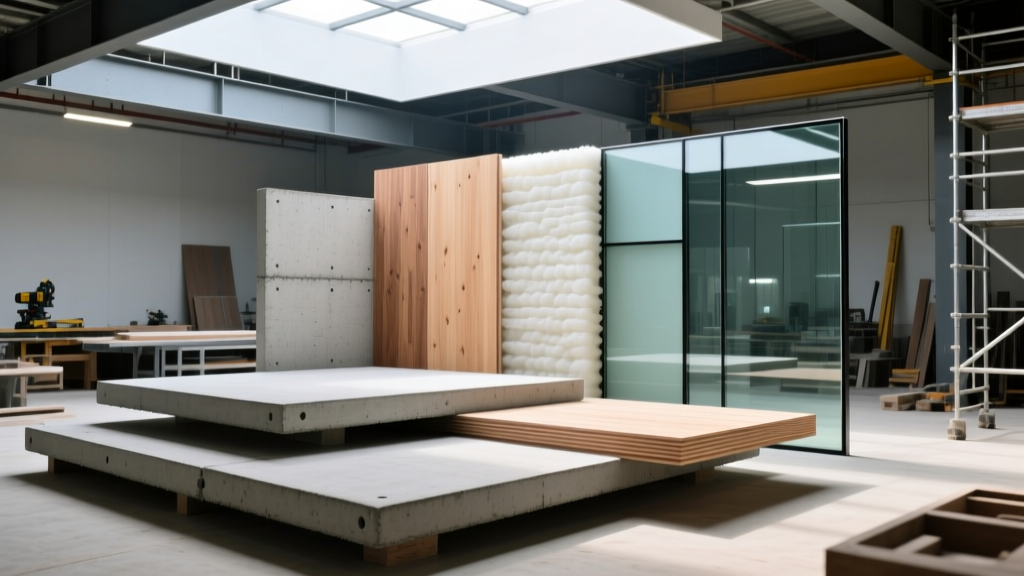
The Structural Core: Concrete Mixes and Engineered Timber
Selecting the right building and construction materials for a project's structural skeleton requires moving beyond generic specifications. In 2026, the focus has shifted heavily toward material resilience, embodied carbon reduction, and precise load-bearing optimization. The two dominant players in commercial and high-end residential framing—ready-mix concrete and engineered wood—demand highly specific procurement strategies to avoid costly mid-project substitutions.
Ready-Mix Concrete: Beyond the Basic Bag
Ordering concrete based solely on compressive strength (e.g., 3000 PSI vs. 4000 PSI) is an outdated practice that often leads to premature structural degradation. According to guidelines maintained by the Portland Cement Association, durability is governed by the water-to-cementitious materials ratio (w/cm) and the inclusion of Supplementary Cementitious Materials (SCMs).
- Foundation Walls & Footings: Specify a 4000 PSI mix with a maximum w/cm of 0.45. Expect to pay between $135 and $155 per cubic yard delivered, depending on regional aggregate availability.
- Suspended Slabs & Post-Tensioned Decks: Require 5000 to 6000 PSI mixes. To mitigate thermal cracking during the curing process, specify a ternary blend incorporating 20% fly ash and 10% slag cement. This not only lowers the heat of hydration but reduces the embodied carbon footprint by up to 30%.
- Flatwork (Driveways & Sidewalks):strong> A standard 3500 PSI air-entrained mix (targeting 5-7% air content) is mandatory in freeze-thaw climates to prevent surface spalling. Air-entrainment typically adds $5 to $8 per cubic yard.
Engineered Wood Products (EWP): Sizing LVL and PSL
Dimensional lumber (SPF #2) is increasingly restricted to non-load-bearing partitions and short-span joists. For primary beams, headers, and long-span rafters, the industry relies on Structural Composite Lumber. The APA – The Engineered Wood Association provides rigorous grading standards for these materials, which offer predictable structural performance without the warping or crowning inherent in solid sawn timber.
Laminated Veneer Lumber (LVL): Manufactured by peeling logs into thin veneers and laminating them with parallel grain orientation. LVLs (like Boise Cascade's Versa-Lam or Weyerhaeuser's Microllam) are ideal for headers and rim boards. Standard 1.75" x 11.875" LVL beams cost approximately $4.50 to $6.20 per linear foot in 2026.
Parallel Strand Lumber (PSL): Made from long, thin wood strands compressed under high pressure. PSL (such as Weyerhaeuser's Parallam) boasts higher shear strength than LVL and is the mandatory choice for heavily loaded columns and long-span, exposed architectural beams. Expect to pay a 20% to 35% premium over equivalent LVL sizing.
When anchoring engineered wood or treated sill plates to concrete foundations, a common failure point is moisture wicking. Even pressure-treated wood (UC4A or UC4B categories) will degrade if submerged in standing water against the slab. Always specify a 1/4-inch closed-cell polyethylene foam sill sealer (like Protecto Wrap) between the concrete and the sill plate. This acts as both a capillary break and an air seal, preventing the $8,000+ structural repairs associated with rotted rim joists.
The Thermal Envelope: Insulation and Air Barrier Integration
Modern energy codes (such as the 2024 IECC, widely adopted by 2026) mandate continuous insulation (ci) and strict air leakage rates (often below 2.0 ACH50). Selecting building and construction materials for the envelope requires balancing R-value, vapor permeability, and installation precision.
| Insulation Material | R-Value per Inch | Cost (per Board Foot) | Vapor Permeability | Best Application |
|---|---|---|---|---|
| Closed-Cell Spray Foam | R-6.5 to R-7.0 | $1.50 - $2.20 | Class II Vapor Retarder | Rooflines, rim joists, flood zones |
| Mineral Wool (Batt) | R-4.2 to R-4.3 | $0.85 - $1.15 | Vapor Permeable | Exterior walls, fire-stopping, acoustic |
| Polyiso Rigid Board | R-5.6 to R-6.0 | $0.70 - $0.95 | Low (Foil-faced) | Exterior continuous insulation (ci) |
| Open-Cell Spray Foam | R-3.5 to R-3.8 | $0.90 - $1.30 | Vapor Permeable | Interior wall cavities, sound dampening |
Procurement Insight: When specifying exterior continuous insulation, avoid using expanded polystyrene (EPS) in below-grade applications where hydrostatic pressure is present. Extruded polystyrene (XPS) or high-density mineral wool boards (like Rockwool Comfortboard 80) maintain their R-value when exposed to soil moisture, whereas EPS can absorb water and lose up to 20% of its insulating capacity over time.
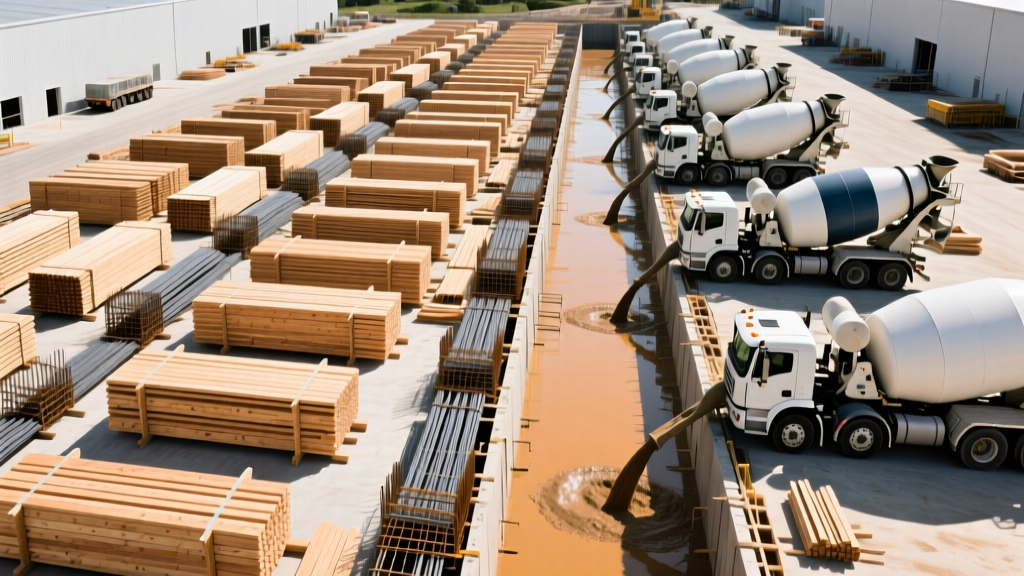
Interior Fire and Acoustic Ratings: Gypsum Board Selection
Interior finishes are rarely just aesthetic; they are critical life-safety and acoustic components. The Gypsum Association categorizes drywall based on core density, glass fiber reinforcement, and moisture resistance. Choosing the wrong panel type can result in failed fire inspections or severe noise complaints in multi-family dwellings.
Fire-Rated Assemblies
For commercial corridors, elevator shafts, and multi-family demising walls, standard 1/2-inch drywall is insufficient. You must specify fire-resistant panels governed by ASTM C1396.
- Type X (5/8-inch): Contains glass fibers that hold the calcined gypsum core together when exposed to fire. Provides a baseline 1-hour fire rating for standard wood-stud assemblies. Cost: ~$18 to $22 per 4x8 sheet.
- Type C (5/8-inch): Features a higher density of glass fibers and vermiculite additives. It offers superior shrinkage resistance at high temperatures, often achieving a 2-hour rating on the same stud framing that Type X only rates for 1 hour. Cost: ~$28 to $34 per 4x8 sheet.
Acoustic Control in Multi-Family
Achieving an STC (Sound Transmission Class) of 50 or higher between residential units requires more than just thick drywall. It requires mass and decoupling. Specify 5/8-inch Type X gypsum board applied over resilient channels, combined with a layer of viscoelastic damping compound (like Green Glue) and a second layer of 5/8-inch drywall. Alternatively, specialized acoustic panels (such as USG's SheetRock Brand Soundcode) feature a constrained-layer damping core, achieving STC 50+ in a single, thinner panel application, saving crucial floor space in tight urban builds.
When hanging ceiling drywall attached to engineered wood trusses, fastener pops are a primary callback issue caused by truss uplift and lumber shrinkage. Use 1-5/8-inch coarse-thread drywall screws (not nails) and maintain a strict 12-inch on-center fastening pattern in the field. More importantly, utilize floating angles at wall-ceiling intersections to allow the truss to move independently of the partition wall without cracking the joint compound.
2026 Procurement Strategy: Lead Times and Substitutions
The post-pandemic supply chain shocks have evolved into a new normal characterized by localized bottlenecks and raw material fluctuations. Sourcing building and construction materials in 2026 requires proactive substitution planning.
"General contractors who wait until the framing stage to verify LVL lead times are effectively gambling their project schedules. In 2026, engineered timber and specialized HVAC equipment require 12 to 16-week lead times. Pre-ordering and utilizing bonded warehousing is no longer optional for commercial builds." — National Institute of Building Sciences Supply Chain Report
Actionable Sourcing Framework:
- Identify Long-Lead Items Early: During the design phase, flag all custom EWP beams, structural steel connections, and specialized fenestration. Issue purchase orders for these materials before ground is even broken.
- Pre-Approve Substitutions: Work with the architect to pre-approve equivalent material substitutions in the contract documents. For example, if Weyerhaeuser Microllam LVL is on a 14-week backorder, ensure the specs explicitly allow for Boise Cascade Versa-Lam or LP SolidStart LVL without requiring a formal, time-consuming RFI (Request for Information) process.
- Leverage Regional Hubs: Heavy materials like concrete, masonry, and gypsum are highly sensitive to freight costs. Source these from suppliers within a 100-mile radius of the job site. For specialized materials (like high-performance air barriers or acoustic sealants), utilize national distributors with localized break-bulk facilities to avoid LTL (Less Than Truckload) freight surcharges.
By treating material selection as a data-driven science rather than a habitual purchasing routine, project managers can drastically reduce structural callbacks, pass energy code blower-door tests on the first attempt, and maintain strict budget adherence in a volatile market.
Written by
Marcus ChenMarcus Chen is a licensed structural engineer (PE) and building materials analyst with over 12 years of experience across residential, commercial, and industrial construction. He holds a Master of Science in Civil Engineering from UC Berkeley and spent six years at Thornton Tomasetti before transitioning to independent consulting and technical writing. Marcus specializes in material selection for seismic-prone regions, concrete reinforcement strategies, and lifecycle cost analysis. His work has been cited by the American Concrete Institute (ACI) and the Structural Engineers Association of California (SEAOC). When he is not on a job site or at his desk, you will find him hiking the Sierra Nevada or restoring a 1920s craftsman bungalow in Oakland, CA.
More from Marcus Chen
View all
Construction Cost
How Much Did the Eiffel Tower Cost to Build?
How much did the Eiffel Tower cost to build in 1889? We adjust for inflation and compare its budget to modern skyscraper construction.
Aug 4, 2026

Fire Resistance
What Is a Fire Resistant Material? Testing & Certification Guide
Discover what is a fire resistant material through ASTM and UL testing. Learn how fire ratings, certifications, and assemblies work in construction.
Aug 4, 2026

Construction Cost
How Much Did the Burj Khalifa Cost to Build?
How much did the Burj Khalifa cost to build? We break down the $1.5B project and extract 5 money-saving strategies for your next build.
Jul 30, 2026