When to Hire a Building Materials Consultant: ROI and Costs
Discover when to hire a building materials consultant, typical 2026 fee structures, ROI on material optimization, and supply chain logistics.
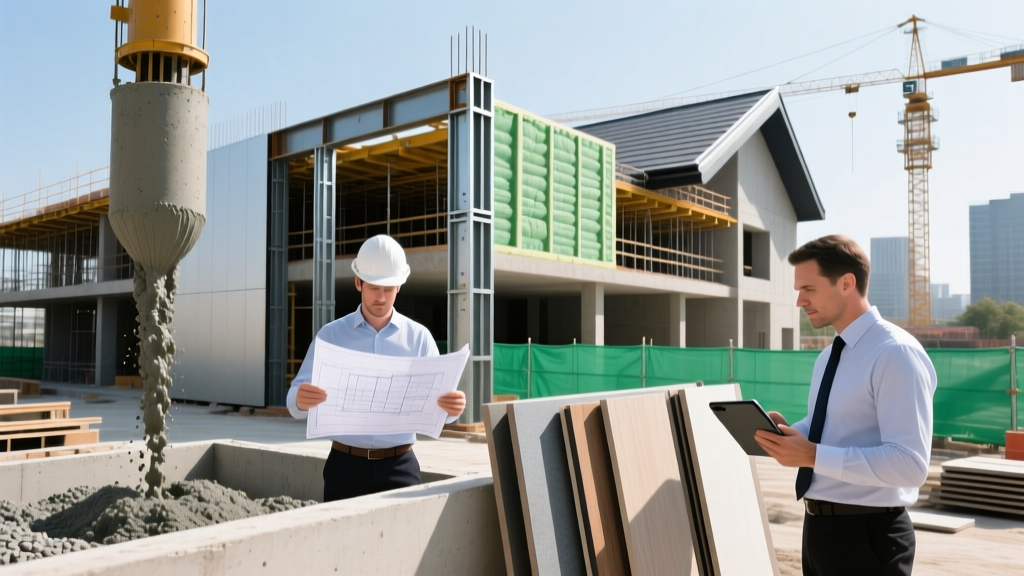
The Core Function of a Building Materials Consultant
Architects design for aesthetics and spatial flow; structural engineers calculate load paths and seismic resilience. A building materials consultant bridges the critical gap between these disciplines and the physical reality of the supply chain. Their primary mandate is to optimize material selection based on lifecycle cost, procurement lead times, embodied carbon, and local code compliance. Rather than simply picking finishes, they perform multi-criteria decision analysis (MCDA) to ensure that the specified products can actually be sourced, installed, and maintained within the project's strict budget and schedule parameters.
Material Evaluation Framework: How Consultants Select Products
Top-tier consultants do not rely on manufacturer brochures. They utilize rigorous, data-driven frameworks to evaluate materials across four distinct vectors. This process often involves querying databases like the Embodied Carbon in Construction Calculator (EC3) to compare the global warming potential (GWP) of competing products.
| Evaluation Vector | Key Metrics Analyzed | Standard / Tool Used |
|---|---|---|
| Embodied Carbon | kgCO2e per functional unit, A1-A5 lifecycle stages | ISO 14025 (EPDs), EC3 Tool |
| Procurement Risk | Manufacturing lead time, shipping distance, tariff exposure | Custom supply chain mapping |
| Lifecycle Costing | Initial CapEx, 50-year maintenance, replacement frequency | NIST BEES Software |
| Code & Compliance | Fire rating, VOC limits, local Buy Clean mandates | ASTM, ICC, LEED v4.1 |
Cost Breakdown: What Does a Building Materials Consultant Charge?
Fee structures vary significantly based on project scale and the consultant's involvement phase. In 2026, the market has shifted away from pure hourly billing toward value-based and percentage-of-budget models, aligning the consultant's incentives with the developer's cost-saving goals.
Standard Fee Models
- Hourly Rate: $175 to $400 per hour. Typically reserved for forensic material failure analysis or targeted scope reviews (e.g., evaluating a single facade system).
- Fixed Retainer (Phase-Based):strong> $15,000 to $45,000 for mid-rise commercial projects. This covers schematic design through construction administration, ensuring specifications remain intact during value engineering (VE) rounds.
- Percentage of Material Budget: 1.0% to 2.5% of the total hard-cost material procurement budget. Common in large-scale infrastructure or high-rise developments where material optimization can yield millions in savings.
ROI Calculation: Do They Pay for Themselves?
The return on investment is usually realized during the Value Engineering (VE) phase, where general contractors often propose cheap, high-maintenance substitutions to cut initial costs. A consultant prevents 'false economy' substitutions and identifies high-performance alternatives that lower both initial and operational costs.
Total Material Budget: $12,000,000
Consultant Fee (1.5%): $180,000
Savings Identified:
- Substituted imported curtain wall glazing with domestically manufactured triple-pane units (avoided 12-week port delay + 8% tariff): $210,000 saved
- Optimized concrete mix design using CarbonCure technology, reducing cement content while maintaining 4,000 PSI compressive strength: $85,000 saved
- Prevented VE substitution of TPO roofing with inferior EPDM, avoiding projected $120,000 in 10-year HVAC energy penalties.
Total Hard Savings: $295,000 | Net ROI: +$115,000 (excluding soft costs like schedule acceleration).
Navigating 2026 Supply Chain and Sustainability Mandates
The regulatory landscape for building materials has tightened considerably. Public projects and large private developers are now subject to strict embodied carbon reporting. Organizations tracking these shifts, such as the Carbon Leadership Forum, note that compliance with 'Buy Clean' policies requires meticulous documentation of material origins and manufacturing emissions.
A specialized consultant ensures your project does not fail final environmental audits. They source materials with verified Type III EPDs and navigate complex incentives, such as the IRA (Inflation Reduction Act) Section 1606 tax credits for low-embodied-carbon materials. Without this expertise, developers risk losing millions in federal tax offsets or facing penalties for non-compliance with municipal green building ordinances.
Red Flags When Vetting a Materials Consultant
Not all advisors operate with strict objectivity. When issuing an RFP for consulting services, watch for these critical warning signs:
- Manufacturer Affiliations: If the consultant frequently specifies products from a single parent company or lacks transparency about referral kickbacks, their specifications are compromised. True consultants maintain strict vendor neutrality.
- Ignoring Division 01 Requirements: A consultant who only focuses on Division 02-33 (Facility Construction) but ignores Division 01 (General Requirements) will miss critical integration issues, such as temporary weather enclosures required for sensitive mass timber installations.
- Lack of LCA Proficiency: If a consultant cannot fluently discuss Life Cycle Assessment boundaries (cradle-to-gate vs. cradle-to-grave) or dismisses the importance of EPDs as 'greenwashing,' they are not equipped for modern commercial development.
- Over-Reliance on Master Specs: Consultants who simply copy-paste legacy master specifications without adapting them to the specific micro-climate, local labor skill level, and regional supply chain of your site will cause severe friction during construction.

Decision Matrix: Do You Actually Need One?
Determining whether to hire a building materials consultant depends on your project's complexity, risk tolerance, and internal capabilities. Use this framework to make your decision:
- Hire One If: Your project exceeds $15M in hard costs, targets LEED Platinum or Living Building Challenge certification, utilizes novel structural systems (e.g., mass timber, 3D-printed concrete), or faces severe local supply chain constraints.
- Skip or Use Hourly If: You are building a standard wood-frame multifamily prototype that your firm has built 20 times before, the local labor force is intimately familiar with the standard spec, and you are not pursuing advanced environmental certifications.
- Hybrid Approach: Retain a consultant strictly for the Schematic Design (SD) and Design Development (DD) phases to establish the material palette and performance criteria, then transition the execution to your internal specification writer during Construction Documents (CD).
Integrating a materials expert early in the design phase shifts procurement from a reactive, stressful bottleneck into a strategic advantage. By aligning material science with market realities, developers protect their margins, accelerate schedules, and deliver structures that perform as intended over a 50-year lifecycle.
Written by
David NakamuraDavid Nakamura is a licensed architect (AIA) and construction technology writer focused on sustainable building methods, mass timber engineering, and high-performance building envelopes. He holds a Master of Architecture from the University of Washington and is a certified Passive House Consultant (CPHC). David spent eight years at the Seattle firm Mithun, where he led the design of three LEED Platinum projects, before founding his own practice specializing in net-zero residential design. He serves on the editorial advisory board of GreenBuilder Magazine and has authored peer-reviewed papers on cross-laminated timber (CLT) connections for the Journal of Structural Engineering. In his spare time, David teaches woodworking at Pratt Fine Arts Center and kayaks the Puget Sound.
More from David Nakamura
View all
Construction Cost
Labor Cost to Build a Deck Per Sq Ft: 2026 Installation Guide
Discover the exact labor cost to build a deck per sq ft in 2026. This installation guide breaks down contractor rates, complexity factors, and hidden fees.
Aug 4, 2026

Construction Cost
How Much Does It Cost to Build a 3 Bedroom House? Financing Guide
Learn exactly how much it costs to build a 3 bedroom house and explore 2026 financing options, construction loan types, and budget frameworks for your build.
Aug 4, 2026

Construction Cost
Cost to Build a Tennis Court: 2026 Guide
How much does it cost to build a tennis court in 2026? Breakdowns for asphalt, concrete, and synthetic surfaces plus fencing and lighting.
Jul 30, 2026